
Rewritten on: July 18, 2024
This article details a 1977 wrongful conviction case in the United States, in which an innocent young man was imprisoned for 12 years due to a false statement about sexual assault. It provides an expert explanation of how DNA testing, made possible by the 1985 invention of the PCR method, proved his innocence, and of the dramatic advances in modern DNA profiling technology.
- ・Full Account of a 1977 US Wrongful Conviction Case Caused by a False Statement
- └ Structural Problems in the Justice System of the Time
- ・The DNA Testing Revolution and Release from Wrongful Conviction Brought About by the Invention of PCR
- └ Major Changes PCR Brought to DNA Testing
- └ The Innocence Project and the Spread of DNA-Based Relief for Wrongful Convictions
- ・The Accuracy of Modern DNA Profiling Technology and the Possibility of Identity Testing
- └ Key Applications of DNA Profiling
- ・What Is STR Analysis? The Core Technology Behind Modern Forensic DNA Profiling
- ・Quality Control and International Standards That Support the Reliability of DNA Testing
Full Account of a 1977 US Wrongful Conviction Case Caused by a False Statement
 In 1977, in the United States, a high school girl came forward claiming she had been sexually assaulted. The statement given by the alleged victim was extremely specific and detailed, containing content that investigators and the judge found credible enough to believe she was indeed a victim of sexual assault. Furthermore, a sample of bodily fluid believed to belong to the assailant had been collected from the girl's body, so the physical evidence appeared to be in place as well.
However, the reality of the case was entirely different. After having consensual sex with her boyfriend, the girl became terrified that she might be pregnant, and she gave a false statement in order to obtain a contraceptive (an emergency contraceptive pill). At the time, minors in the United States faced significant barriers to obtaining contraceptives, whereas victims of sexual assault could more easily receive medical assistance. This girl's false statement would end up completely overturning the life of an innocent young man.
Based solely on the girl's testimony and circumstantial evidence, a young man was indicted as the assailant and faced a demand for a sentence of as much as 50 years. At the time, DNA testing technology did not yet exist, so it was impossible to identify the true culprit by determining the DNA type from the bodily fluid sample. As a result, only circumstantial evidence and the victim's statement served as the basis for the court's judgment, and the young man was convicted and imprisoned [ref:1].
About five years after the young man was imprisoned, the girl who had given the statement began to be tormented by her conscience. Wracked with guilt over having confined an innocent person for so long, she submitted a petition to the court stating that her original statement had been false. However, overturning a conviction that has already been finalized is far from easy. The barriers of the justice system were formidable, and the petition was not readily accepted. As a result, the young man was forced to endure a further seven years of imprisonment, ultimately losing his freedom for a total of approximately 12 years.
Structural Problems in the Justice System of the Time
Behind the fact that this wrongful conviction went uncorrected for so long lay several structural problems within the American justice system of the 1970s. First, in trials of that era, the testimony of eyewitnesses and victims was given extremely heavy weight. Because methods for scientifically evaluating evidence were still underdeveloped, there were limited means of objectively verifying the credibility of a statement.
Second, the forensic science of the time relied mainly on blood typing and serological testing of bodily fluids, and these tests made it technically difficult to "completely exclude a suspect." For example, because a large portion of the population shares the same ABO blood type, blood typing could only suggest that "a person of this blood type could be the culprit" — it could not definitively prove the involvement of a specific individual [ref:3].
Third, there were also major hurdles in the system for reopening a case once a guilty verdict had become final. Even when a wrongfully convicted person submitted new evidence, it took an extremely long time and a complex legal process before a court would accept it and reopen the case, and many wrongfully convicted people ended up serving out their sentences without ever receiving relief. The fact that the girl's petition in this case had no practical effect for seven years vividly illustrates precisely this structural problem.
The DNA Testing Revolution and Release from Wrongful Conviction Brought About by the Invention of PCR
 In 1985, a revolutionary discovery was brought to the world of science. American biochemist Kary Mullis invented the polymerase chain reaction (PCR) method. This groundbreaking technology made it possible to amplify (copy) large quantities of DNA even from a dried, trace amount of a bodily fluid sample. The PCR method was such a monumental discovery that it later earned Mullis the Nobel Prize in Chemistry (1993), and it had an immeasurable impact on the fields of forensic science and criminal investigation [ref:2].
The principle behind PCR involves heating DNA's double-helix structure to separate it into single strands (denaturation), binding short DNA fragments called primers, and then repeating a cycle in which an enzyme called DNA polymerase synthesizes a complementary DNA strand. By repeating this cycle 30 to 40 times, it is theoretically possible to generate billions of copies of DNA from a single DNA molecule. In other words, it became possible to obtain a sufficient quantity of DNA for analysis even from just a few cells left behind at a crime scene.
The advent of PCR opened the way to scientifically proving the innocence of the young man who had been imprisoned for so many years. DNA was amplified from the bodily fluid sample collected and preserved at the time of the incident, and a precise analysis clearly revealed that the DNA left at the scene did not come from the young man. In other words, it was scientifically confirmed that the bodily fluid taken from the girl's body did not belong to the young man, but to her boyfriend. In this way, the young man was finally proven innocent and released from his long ordeal of wrongful imprisonment.
This case is one of the symbolic examples that showed the world that DNA testing could be a powerful tool for exonerating the wrongfully convicted. In the United States, an organization called "The Innocence Project" was established, which works to help wrongfully convicted people gain relief through DNA testing. To date, more than 375 innocent people have been exonerated through DNA testing, including some who had been on death row [ref:1].
Major Changes PCR Brought to DNA Testing
- Made it possible to analyze DNA even from trace samples (bodily fluids, hair, skin fragments, etc.)
- Made it possible to amplify and analyze DNA even from old, dried, or degraded samples
- Dramatically improved analytical accuracy, increasing the certainty of personal identification
- Significantly reduced the time and cost required for testing
- Made it possible to provide scientific grounds for exonerating the wrongfully convicted and identifying the true perpetrator
- Made it possible to obtain DNA profiles from decades-old evidence when reinvestigating cold cases
The Innocence Project and the Spread of DNA-Based Relief for Wrongful Convictions
The Innocence Project was founded in 1992 by Benjamin Cardin and Barry Scheck at the Benjamin N. Cardozo School of Law at Yeshiva University in New York. The organization's activities focus specifically on using DNA testing technology to prove the innocence of people who have been convicted, and it now has a network of affiliated organizations spanning the United States and countries around the world [ref:1].
According to the Innocence Project's research, the leading causes of wrongful conviction include the following. Eyewitness misidentification is the most common (accounting for roughly 70% of cases), followed by improper use of forensic evidence, false confessions, inadequate legal defense, and false informant testimony. DNA testing is an extremely powerful tool for resolving wrongful convictions by scientifically verifying these kinds of human error and revealing objective facts.
In Japan too, advances in DNA testing technology have had a major impact on criminal justice. For example, in the Ashikaga case (which occurred in 1990), a wrongful conviction resulted because the original DNA test was performed using a method with low accuracy; however, when the case was later retested using modern STR analysis technology, it was found that the defendant's DNA type did not match that of the perpetrator, leading to a final not-guilty verdict on retrial in 2010 [ref:4]. This case was a landmark event that demonstrated, within Japan as well, that advances in DNA testing technology play an important role in both preventing and correcting wrongful convictions.
The Accuracy of Modern DNA Profiling Technology and the Possibility of Identity Testing
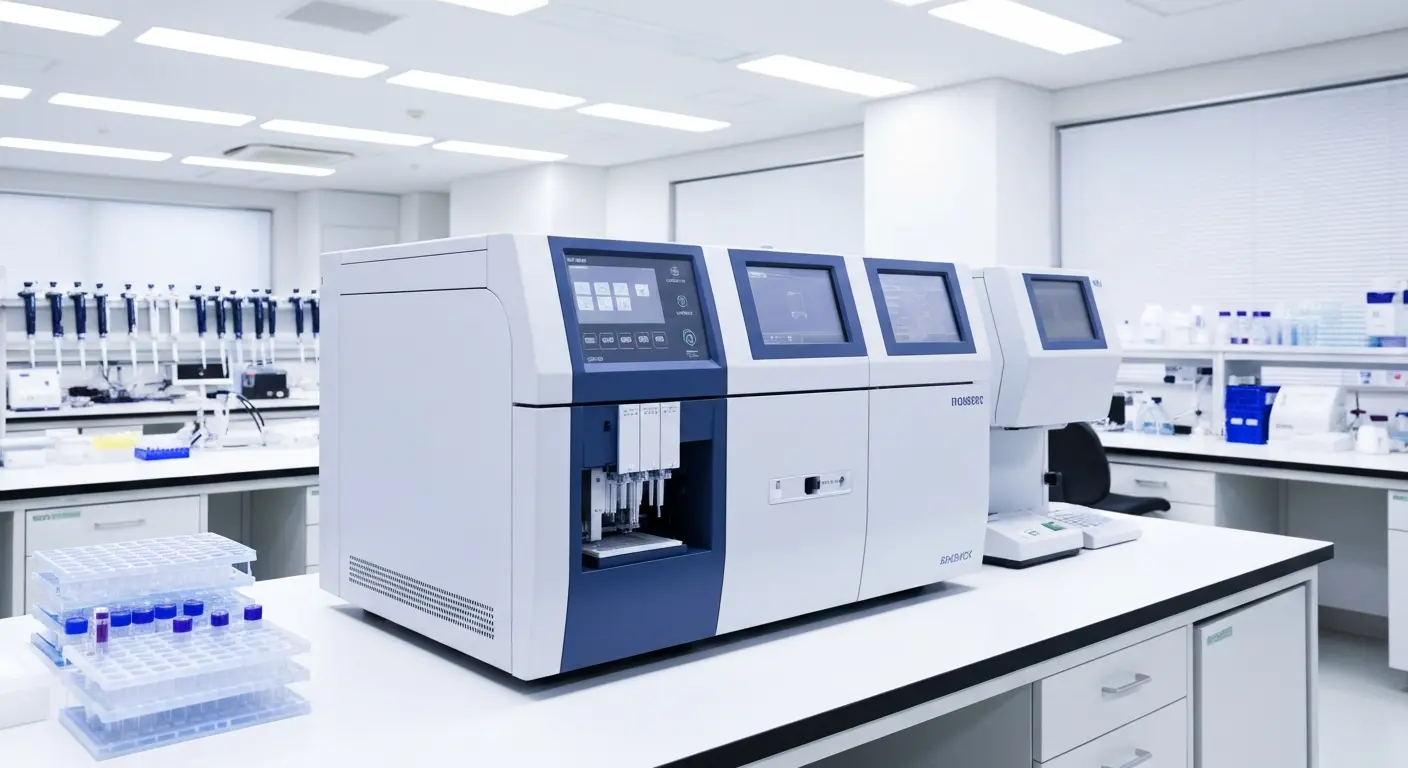 Every person has a unique DNA sequence, and the particular combination of base sequences differs from individual to individual. This holds true for every human being on Earth, with the exception of identical twins. By analyzing DNA and taking advantage of these individual differences, it becomes possible to identify a specific perpetrator, determine parent-child relationships, or identify an individual.
The human genome consists of approximately 3 billion base pairs, of which only about 0.1% differs between individuals (polymorphisms). Yet it is precisely this 0.1% difference that forms the foundation of DNA profiling. Widely used in the forensic science field in particular is STR (Short Tandem Repeat) analysis, which detects differences in the number of times a 2-to-6-base sequence repeats at specific regions of the genome, enabling extremely accurate identification of individuals [ref:5].
Most importantly, unlike at the time of the 1977 case described earlier, the accuracy of today's DNA analysis technology has improved dramatically. Using the latest instruments and analytical methods, it is now possible to obtain accurate results even from extremely trace amounts of DNA that could not have been analyzed in the past. Modern DNA profiling is theoretically sensitive enough to obtain a profile from just a few cells (about 100 picograms of DNA). The time required for testing has also been significantly shortened, making it possible to obtain fast, reliable results.
Furthermore, with the advent of next-generation sequencing (NGS) technology, the accuracy of analyzing mixed samples (samples containing DNA from multiple people), which were difficult to distinguish using conventional STR analysis, has also improved dramatically. Because NGS technology can simultaneously read millions to billions of DNA fragments, it has become possible to detect even the subtle genetic differences that were previously overlooked by conventional methods.
Key Applications of DNA Profiling
- Identifying a perpetrator in a criminal investigation (identity testing): Matching biological samples such as bodily fluids or hair left at the scene against the suspect's DNA
- Confirming a parent-child relationship (parentage DNA testing): Scientifically proving the biological relationship between a father or mother and a child
- Relief for the wrongfully convicted: Proving the innocence of a previously convicted person through DNA evidence
- Identity confirmation: Performing DNA matching to identify victims of disasters or accidents
- Inheritance and legal proceedings: Submitting DNA test results as evidence in legal matters that require proof of a blood relationship
What Is STR Analysis? The Core Technology Behind Modern Forensic DNA Profiling
The method most widely used in modern DNA profiling is STR (Short Tandem Repeat) analysis. STR refers to short repeating base-sequence structures scattered throughout the human genome; for example, the number of times a 4-base sequence such as "AGAT" repeats differs from person to person. By simultaneously detecting these differences in repeat number across multiple genetic loci, it is possible to identify an individual with a high degree of accuracy.
The STR analysis systems used as the standard in Japanese criminal investigations employ multiplex PCR kits that simultaneously analyze 15 to 20 or more genetic loci. As a result, the probability that two unrelated individuals would coincidentally show the same DNA type is theoretically less than one in several trillion — an extremely low figure. In other words, aside from identical twins, it is possible to distinguish virtually every human being on an individual basis [ref:5].
A major advantage of STR analysis is that, because it is based on the PCR method, it can be performed on trace amounts of DNA sample, and because it targets relatively short DNA fragments, results can be obtained even from degraded samples. Because DNA profiles can be obtained from trace biological samples routinely left behind — a cigarette butt discarded at a crime scene, saliva on a beverage container, or minute skin cells on clothing — this technology has become indispensable in modern criminal investigation.
Quality Control and International Standards That Support the Reliability of DNA Testing
For DNA testing results to be accepted as evidence in court or official proceedings, it is essential that the testing institution maintain a rigorous quality control system. Internationally, operation in compliance with international standards such as ISO/IEC 17025 (general requirements for the competence of testing and calibration laboratories) and ISO 9001 (quality management systems) is required, and testing accuracy is maintained and improved through regular external audits and participation in proficiency testing.
Key points of quality control in DNA testing include preventing contamination when handling samples, regularly calibrating and maintaining analytical instruments, standardizing the testing process and ensuring traceability, and implementing a double-check system for results. Preventing contamination in particular is one of the most critical concerns, and thorough measures are taken, such as having all staff involved in testing work in a clean-room environment and wear disposable gloves, masks, and protective clothing.
The seeDNA Genetic Medical Research Institute offers a range of DNA profiling services, including identity testing. In addition to identity testing, which identifies a specific perpetrator, we offer a variety of testing options tailored to diverse needs, such as parentage DNA testing, and we have helped resolve the lifelong concerns of many people to date. As a trusted testing institution that has obtained the international quality standard ISO 9001 certification and the Privacy Mark for privacy protection, we deliver accurate testing results grounded in scientific evidence. Many of our clients have shared candid feedback such as, "The anxiety I had carried for years was finally resolved" and "Scientific evidence let me learn the truth."
DNA testing technology has made dramatic progress in the roughly half-century since the 1977 wrongful conviction case. Analysis from trace samples that was once impossible has become possible, and both accuracy and speed have improved beyond comparison. If you have any concerns or questions regarding DNA testing, please do not hesitate to consult the seeDNA Genetic Medical Research Institute. We are here to help resolve your questions and concerns through the power of science.
Frequently Asked Questions
Q1. How many cases have there been in which DNA testing proved a wrongful conviction?
A. According to a report by the Innocence Project in the United States, more than 375 wrongfully convicted people have been proven innocent through DNA testing. Some of them had been on death row, and DNA testing is recognized around the world as a powerful means of correcting judicial errors [ref:1]. In Japan too, cases such as the Ashikaga case show that DNA retesting has helped correct wrongful convictions.
Q2. What kind of technology is the PCR method?
A. The PCR method (polymerase chain reaction) is a DNA amplification technology invented by Kary Mullis in 1985. Because it can copy (amplify) a trace DNA sample by more than a million times over, it became possible to perform DNA analysis even from old, dried samples or an extremely small amount of bodily fluid [ref:2]. This invention led to dramatic advances in DNA analysis in fields such as criminal investigation and medicine.
Q3. What is identity testing?
A. Identity testing is a type of DNA profiling that scientifically determines whether two or more DNA samples originate from the same individual. By matching biological samples such as bodily fluids or hair left at a crime scene against the DNA of a specific person, it is possible to confirm with high accuracy whether that person was present at the scene. The seeDNA Genetic Medical Research Institute also offers identity testing services.
Q4. From how small a sample can DNA testing be performed?
A. Thanks to advances in the PCR method, modern DNA testing technology can theoretically analyze a sample from as little as a few cells (about 100 picograms of DNA). DNA profiles can be obtained from extremely small biological samples, such as saliva on a cigarette butt, trace skin cells left on clothing after contact, or old, dried bodily fluid. That said, the accuracy of the results depends on the sample's storage condition and degree of degradation, so proper storage is important.
Q5. How long does it take to get DNA testing results?
A. The time required for DNA testing varies depending on the type of test and the condition of the sample, but for a typical parentage DNA test, results are often available within 3 to 5 business days after the sample arrives. Identity testing or cases involving special samples may require additional analytical steps and can take somewhat longer. Please contact the seeDNA Genetic Medical Research Institute for detailed turnaround times.
Q6. Are there cases in Japan as well where DNA testing has corrected a wrongful conviction?
A. Yes, there are cases in Japan where DNA testing has helped correct a wrongful conviction. A representative example is the Ashikaga case (which occurred in 1990). The original testing used the low-accuracy MCT118 method, but when it was retested using modern STR analysis, it was found that the defendant's DNA type did not match that of the perpetrator, leading to a final not-guilty verdict on retrial in 2010 [ref:4].
seeDNA Genetic Medical Research Institute's Trusted Support
The seeDNA Genetic Medical Research Institute is a trusted specialist institution for DNA testing and genetic testing that has obtained the international quality standard ISO 9001 certification and the Privacy Mark for privacy protection.
If you are troubled by questions about family or parent-child blood relationships, or a partner's infidelity, our DNA testing specialists are here to support you and put your mind at ease, so please feel free to contact us.
[Free Consultation with Our Specialist Staff]

If you have any questions,
please feel free to contact our toll-free number.
/Open every day, including weekends/
Business hours: Monday–Sunday 9:00-18:00
(excluding holidays)
 Author
Kihan Tomikane, M.D., Ph.D.
Completed his master's and doctoral studies in Biological Regulation and Molecular Informatics Medicine at the University of Tsukuba
In 2017, developed Japan's first trace-DNA analysis technology (Patent 7121440), which was used to develop prenatal DNA testing (Patent 7331325)