
Revised: August 17, 2024
Identifying a baby's father from the menstrual cycle or ovulation date is medically inaccurate, and when there has been intercourse with multiple men, DNA testing is the only reliable method. Prenatal DNA testing can determine paternity from as early as 6 weeks of pregnancy.
- ・The baby's father cannot be determined from the menstrual cycle or ovulation date
- ・Ovulation date and conception timing — the limits of the Ogino (rhythm) method
- ・Determining conception from ovulation date is not accurate — an obstetrician's view
- └ Why the father cannot be identified from the ovulation date — a concrete scenario
- ・DNA testing can be easily requested by phone or online
- └ Types of samples that can be used for DNA testing
- ・Prenatal DNA testing — an option that lets you determine the father during pregnancy
- └ Cases where prenatal DNA testing is needed
- ・The accuracy and reliability of DNA testing
- ・Prenatal DNA testing from seeDNA, a specialist DNA testing institute
The baby's father cannot be determined from the menstrual cycle or ovulation date
 "If I calculate the ovulation date, surely I can figure out who the baby's father is" — we receive this kind of question quite often. However, to cut to the conclusion, identifying the father from the menstrual cycle or ovulation date calculation alone is medically almost impossible. The timing of ovulation varies considerably from person to person and even month to month depending on physical condition, and when you factor in how long sperm can survive, the date of intercourse alone cannot pin down the date of conception [ref:1]. This article explains, based on medical evidence, why estimating paternity from the ovulation date is unreliable, and introduces DNA testing as the only method that can reliably determine paternity.
Ovulation date and conception timing — the limits of the Ogino (rhythm) method
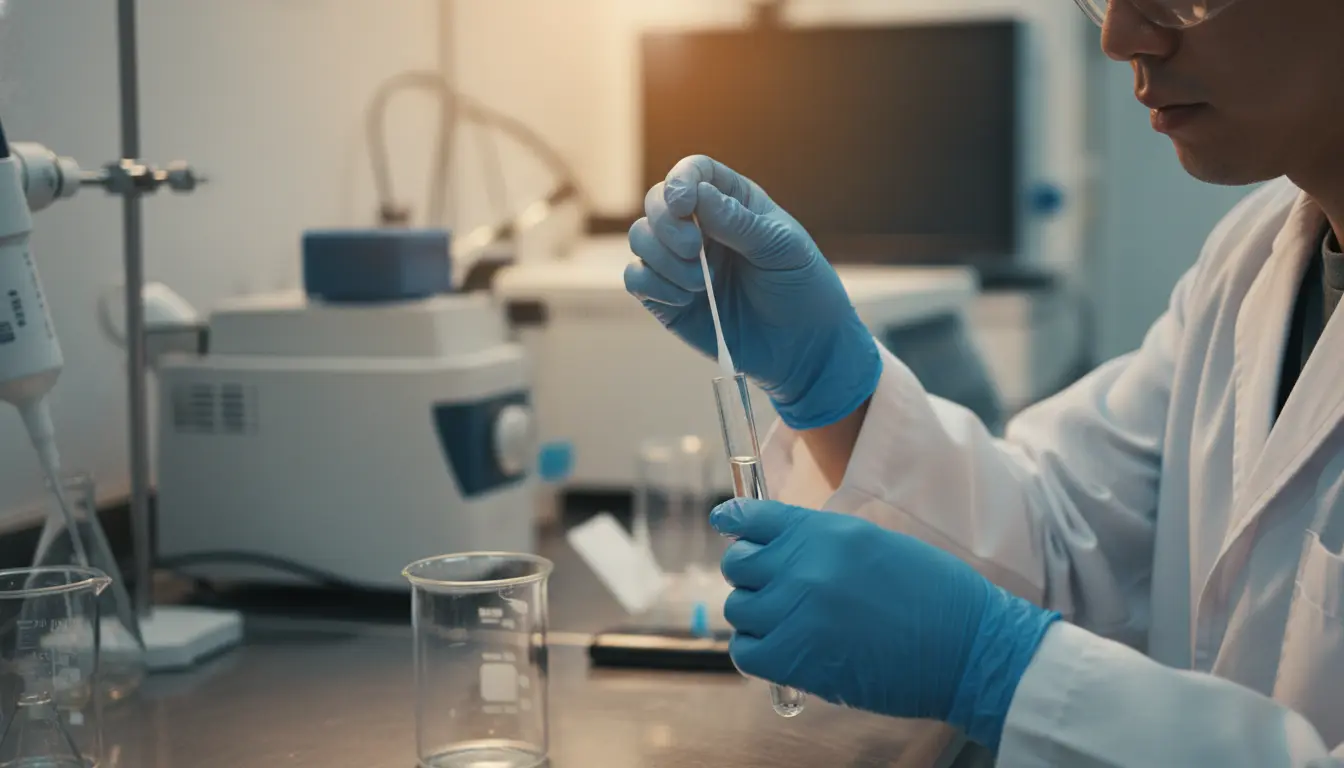 On a personal note, my wife and I had a baby in the 15th year of our relationship. Since neither of us had the capacity to raise a child at the time, we were being thorough about contraception, and for the two months around conception we were relying on the ovulation-based rhythm method (the Ogino method). I came to keenly appreciate just how difficult it is to calculate the ovulation date from the cycle and use it for contraception.
The Ogino method is a contraceptive approach based on a theory published in 1924 by Japanese obstetrician Dr. Kyusaku Ogino, which holds that "ovulation occurs 12 to 16 days before the start of the next period," and involves avoiding intercourse during the period when ovulation is expected [ref:2]. However, this method has the following medical limitations.
- Variation in ovulation date: Even in women with a regular 28-day cycle, the ovulation date commonly shifts by several days from cycle to cycle. Stress, poor health, and hormonal changes can cause ovulation to occur earlier or later than expected [ref:3].
- Sperm survival time: Sperm have been confirmed to survive inside a woman's body for up to 5 to 7 days [ref:4]. This means conception is possible even if ovulation occurs a full week after intercourse.
- Window during which the egg can be fertilized: Once released, an egg can be fertilized for roughly 12 to 24 hours. Combined with the long survival time of sperm, the window during which fertilization can occur is wider than most people imagine.
- Irregular menstrual cycles: For women with irregular cycles, predicting the ovulation date in the first place is extremely difficult.
For these reasons, the typical-use failure rate of the Ogino method is reported at around 24% per year, and it is not a particularly reliable form of contraception [ref:3]. And if the method is unreliable as contraception, that also means, conversely, that an estimate of "conception must have occurred on this day" is equally unreliable.
Determining conception from ovulation date is not accurate — an obstetrician's view
 When I later asked an obstetrician I knew about this, they said something like, "You didn't actually take the ovulation date, how many days into the pregnancy, or the due date at face value, did you?"
In clinical obstetric practice, ultrasound measurement of fetal size is used to confirm gestational age. The method of calculating from the first day of the last menstrual period (Naegele's rule) is only a rough guide, and it is standard practice to make corrections based on the crown-rump length (CRL) measured by ultrasound, especially in early pregnancy [ref:5]. Even so, it is impossible to pinpoint the date of conception to an exact day, and a margin of error of several days to a week always exists.
If a baby was conceived through intercourse with multiple men, it's better to clarify the father through DNA testing. Relying on an estimated ovulation date lacks scientific grounding and carries a very high risk of leading to the wrong conclusion.
Why the father cannot be identified from the ovulation date — a concrete scenario
For example, consider a woman with a 28-day cycle who is assumed to ovulate on day 14 after the start of her period. Suppose she had intercourse with Mr. A on day 10 and with Mr. B on day 13. At first glance, it might seem that Mr. B, whose encounter is closer to the ovulation date, is the father. In reality, however, the following possibilities all need to be considered.
- If ovulation was pushed earlier to day 12 due to stress or other factors, Mr. A's sperm (which survives for 2 days) could have reached the egg first
- Mr. A's sperm could survive in the uterus for 5 days and still fertilize the egg at the day-14 ovulation
- The ovulation date itself might not have been day 14 at all, but day 11 or day 16
Given the length of sperm survival and the uncertainty of the ovulation date, it is fundamentally impossible to identify the father based on a difference of just a few days [ref:1].
DNA testing can be easily requested by phone or online
Some people still think of DNA testing as expensive and complicated, but a test for personal identification purposes can be done at an affordable price. There are no documents to prepare, so you can apply easily by phone or online. With expedited testing, results can be available in as little as 3 days.
After applying, all you need to do is use the test kit: press a swab firmly against the inside of your cheek and rub it back and forth 10 times, or include a hair with the root attached, then mail it back. The test kit can be received not only at home but also via registered mail held for pickup at the post office, addressed only to the named recipient. Testing is also possible using nail clippings, toothbrushes, and other items, making it easy to get a reliable result.
Types of samples that can be used for DNA testing
A variety of sample types can be used for DNA testing. Below are some representative samples and their characteristics.
| Sample type | Collection method | Notes |
|---|---|---|
| Oral cells (swab) | Rub the inside of the cheek with a swab | Most common, high accuracy |
| Hair (with root) | Pull out from the root | Root must be attached |
| Nails, toothbrushes, etc. | Submit an item that has already been used | Handled as a special sample |
Prenatal DNA testing — an option that lets you determine the father during pregnancy
For cases where you can't wait until the baby is born and want to know the father during pregnancy, prenatal DNA testing is an effective option. Thanks to recent technological advances, analyzing cell-free DNA (cfDNA) of fetal origin found in the mother's blood makes it possible to non-invasively determine paternity from as early as 6 weeks of pregnancy [ref:6].
Traditional prenatal testing required invasive procedures such as amniocentesis or chorionic villus sampling, but non-invasive prenatal paternity testing (NIPPT) using maternal blood is completed with just a blood draw, so there is almost no risk to the mother or fetus. This technology works by analyzing fragments of fetal DNA in the mother's blood using next-generation sequencing (NGS) and comparing them against the alleged father's DNA profile to determine the paternal relationship [ref:6].
Cases where prenatal DNA testing is needed
- When there has been intercourse with multiple men within a short period and the father cannot be determined from the ovulation date
- When determining the father will affect decisions about continuing the pregnancy or arrangements for raising the child after birth
- When early proof of paternity is needed for legal proceedings (such as a claim for legal acknowledgment of paternity or child support)
- When you want to relieve emotional anxiety early on and spend the rest of the pregnancy with peace of mind
The accuracy and reliability of DNA testing
DNA testing mainly relies on analyzing specific regions of DNA known as STRs (Short Tandem Repeats). By examining multiple genetic loci at the same time, STR analysis can confirm a paternal relationship with a probability of 99.99% or higher when one exists, and can rule it out with 100% certainty when it does not exist [ref:4].
seeDNA holds the international quality standard ISO 9001 certification and the Privacy Mark for personal information protection, maintaining strict quality control over testing and protection of customers' personal information. The results of DNA testing are extremely reliable scientifically, and are widely accepted as evidence in family court hearings and mediation.
Prenatal DNA testing from seeDNA, a specialist DNA testing institute
Find out who the baby's father is
from as early as 6 weeks of pregnancy
Frequently Asked Questions
Q1. Can the baby's father be identified by calculating the ovulation date?
A. No, identifying the father from the ovulation date calculation alone is medically almost impossible. The ovulation date can shift by several days from month to month, and because sperm can survive inside a woman's body for up to 5 to 7 days, the date of intercourse alone cannot pin down the date of conception. DNA testing is needed to reliably determine paternity.
Q2. From how many weeks of pregnancy is prenatal DNA testing possible?
A. seeDNA's prenatal DNA testing (NIPPT) can be performed from as early as 6 weeks of pregnancy. Since it only requires a blood draw from the mother, no invasive procedure such as amniocentesis is needed, and there is almost no risk to the mother or fetus.
Q3. How accurate is DNA testing?
A. DNA testing can confirm a paternal relationship with a probability of 99.99% or higher when one exists, and can rule it out with 100% certainty when it does not exist. It is a scientifically extremely reliable testing method.
Q4. Do I need to prepare documents to apply for DNA testing?
A. No, for DNA testing intended for personal identification purposes, there are no documents to prepare. You can apply easily by phone or online, and you can choose to have the test kit delivered to your home or held at the post office for pickup addressed only to the named recipient.
Q5. Why does the Ogino (rhythm) method have such a high failure rate?
A. The Ogino method predicts the ovulation date from the menstrual cycle to avoid conception, but the ovulation date shifts month to month due to stress and changes in physical condition. Furthermore, given that sperm can survive in the body for up to 5 to 7 days, it is difficult to pin down safe days, and the typical-use failure rate is reported at around 24% per year.
Q6. Can DNA testing be done with samples other than a swab?
A. Yes, DNA testing is possible with a variety of samples, including hair with the root attached, nails, and toothbrushes. Oral cells (via swab) are the most recommended sample, but if direct collection is difficult, we can also accommodate special samples. Please feel free to contact us for details.
The reassuring support of seeDNA Genetic Medical Research Institute
seeDNA Genetic Medical Research Institute is a trusted DNA testing and genetic testing institute that holds the international quality standard ISO 9001 certification and the Privacy Mark for personal information protection.
Whether you're concerned about family or parent-child blood relationships or a partner's infidelity, our DNA testing specialists are here to support you so you can feel at ease — please feel free to contact us.
[Free consultation with specialist staff]

If you have any questions,
please feel free to contact our toll-free number.
/Open every day, including weekends/
Business hours: Mon–Sun 9:00 AM–6:00 PM
(except public holidays)
 Author
Kihan Tomikane, Ph.D. in Medicine
Graduated from the master's/doctoral program in Biosystems and Molecular Medical Science, Graduate School of Comprehensive Human Sciences, University of Tsukuba
In 2017, developed Japan's first prenatal DNA test(Patent 7331325) using a trace-DNA analysis technology(Patent 7121440)