
Rewritten on: December 27, 2024
We explain the full story of an international project that tackled the mystery of Loch Ness's unidentified creature "Nessie" using the cutting-edge genetic science technique of environmental DNA analysis. We cover everything from the history of sightings to the investigation methods and the species detected in detail.
- ・What comes to mind when you think of unidentified mysterious animals (UMAs)?
- ・What is Nessie? The history of sightings and the 20th century's greatest mystery
- ・The history of scientific investigations that tried to prove Nessie's existence
- ・The project to analyze the DNA of Loch Ness water ― What is environmental DNA (eDNA) technology?
- └ The specific investigation method
- ・"We cannot rule out that Nessie doesn't exist" ― An interim report on the investigation
- └ Final results ― Was Nessie really a giant eel?
- ・The possibilities environmental DNA analysis opens up for discovering unknown species
- ・The evolution of DNA testing technology and our lives
What comes to mind when you think of unidentified mysterious animals (UMAs)?
 A UMA (Unidentified Mysterious Animal) is a creature whose existence is claimed through sightings or rumors, but which has not been scientifically confirmed to exist biologically. In Japan, well-known examples include the Tsuchinoko and the Yeti (the Abominable Snowman of the Himalayas). Around the world, countless UMA legends exist, including Bigfoot, the Chupacabra, and Mokele-mbembe [ref:3].
Among these UMAs, one with a particularly long history and worldwide fame is Nessie. This time, of the many rumored UMAs, we focus on Nessie and explain in detail an investigation project that used cutting-edge genetic science technology.
What is Nessie? The history of sightings and the 20th century's greatest mystery
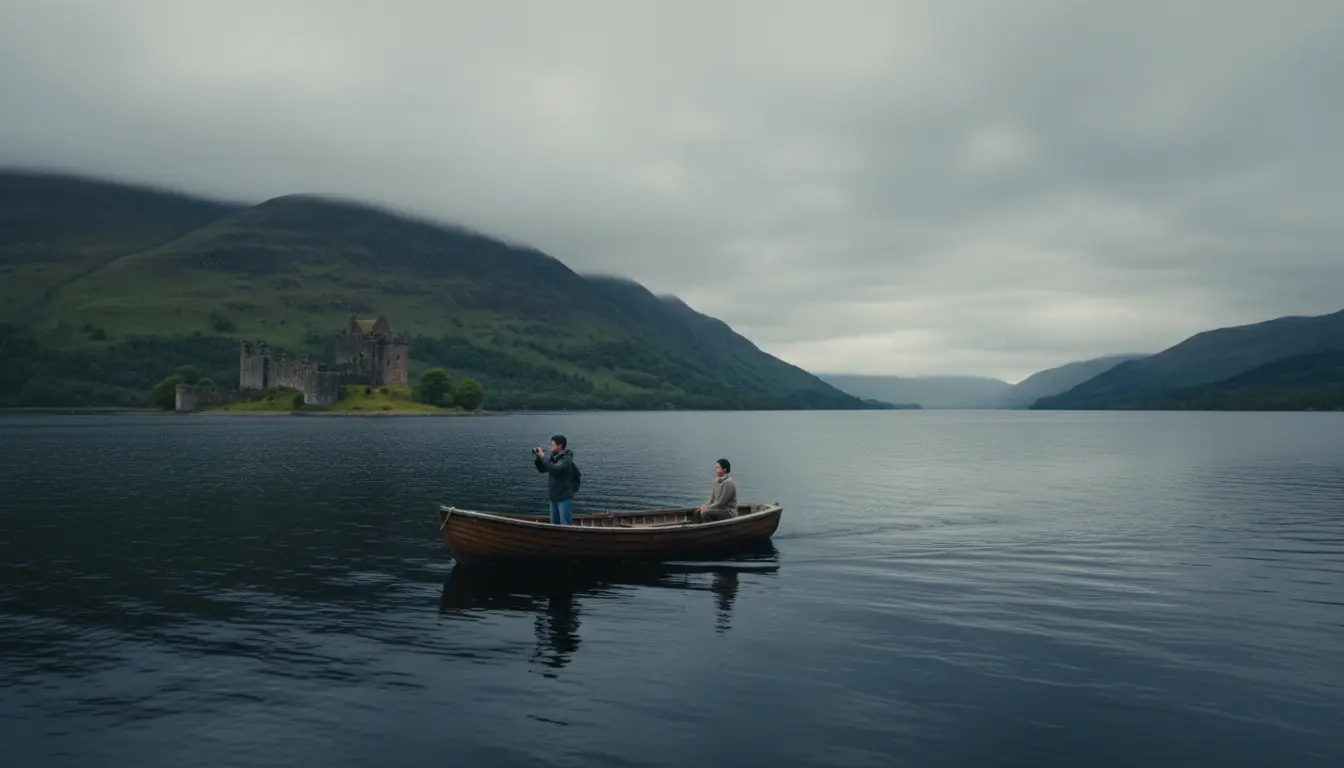
 Nessie is the common name for an unidentified animal, "the Loch Ness Monster," said to have been sighted in Loch Ness, located in the northern Scottish region of the United Kingdom. Loch Ness is a long, narrow freshwater lake formed along the Great Glen Fault, approximately 37km long with a maximum depth of about 230m, making it the largest body of freshwater in the UK by volume. Its water is extremely dark and murky due to peat, and underwater visibility is only a few meters. This unique environment has fueled the romantic notion that a giant creature might be lurking within it.
The oldest record of Nessie dates back to the year 565 AD. The Irish monk Columba's encounter with a huge water beast in the River Ness is recorded in the "Life of Saint Columba." Sighting accounts were passed down among local residents for centuries afterward, but it became major worldwide news in 1934. When the "Surgeon's Photograph," said to have been taken by London surgeon Robert Kenneth Wilson, was published in a newspaper, the world was captivated by the dinosaur-like image with its long neck rising above the water's surface, and sighting reports followed one after another. This is how Nessie became the 20th century's greatest mystery [ref:3].
Note that in 1994, this famous "Surgeon's Photograph" was confessed to be a hoax by a relative of the person who took it, but even this did not diminish people's interest in Nessie.
The history of scientific investigations that tried to prove Nessie's existence
 As time passed, people appeared who tried to scientifically prove Nessie's existence. In 1972, the Academy of Applied Science in Boston introduced underwater cameras and sonar to Loch Ness and conducted a thorough investigation. As a result, something resembling the fin of a roughly 50cm creature was photographed. However, because the image resolution was low, the possibility that it was the fin of a known creature could not be ruled out, so it did not become definitive proof of Nessie's existence.
Later, in the 1987 "Operation Deepscan," 24 boats used sonar to simultaneously scan the entirety of Loch Ness, and something large moving near the lakebed was reportedly detected, but its identity could not be determined. With conventional investigation methods, it proved extremely difficult to fully uncover the secrets of the dark, deep Loch Ness.
The project to analyze the DNA of Loch Ness water ― What is environmental DNA (eDNA) technology?
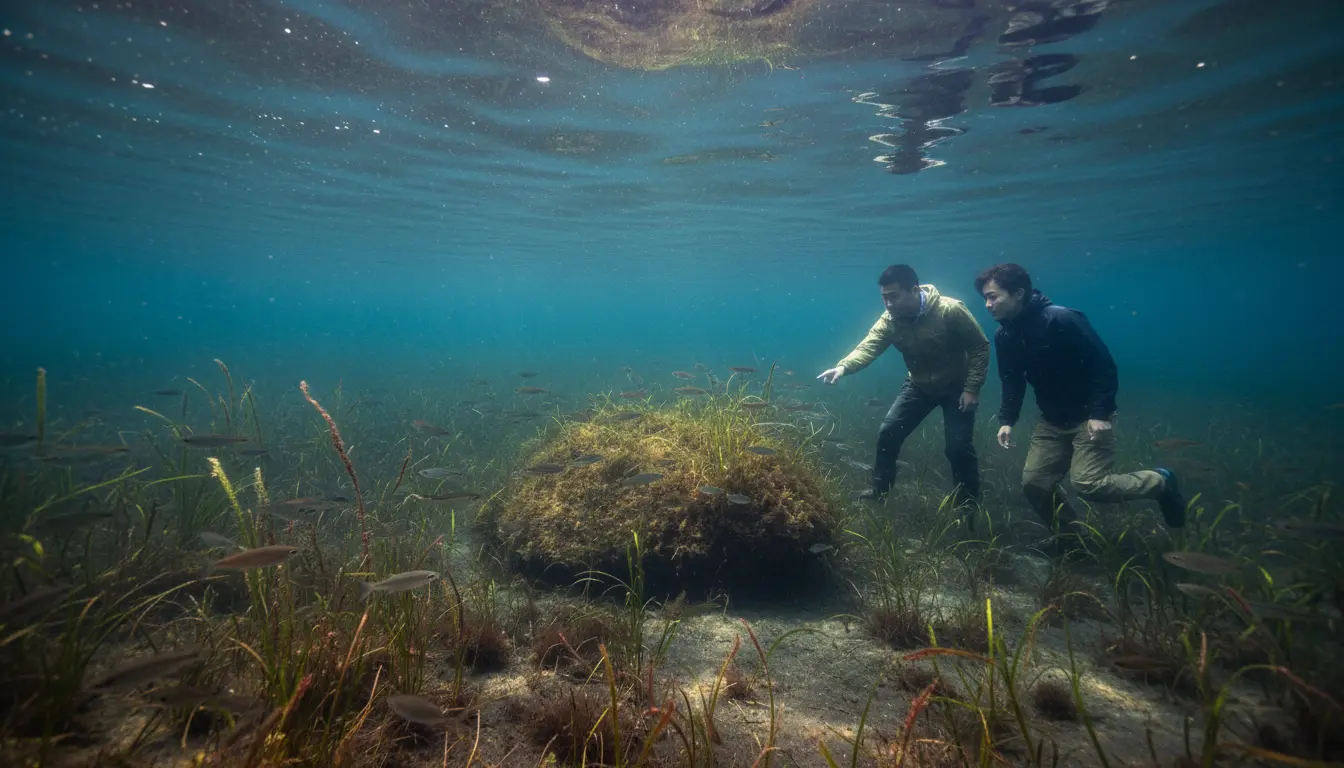
Then in 2018, an international team led by Professor Neil Gemmell, a geneticist at the University of Otago in New Zealand, took on the mystery of Nessie with a groundbreaking approach. This was a project to analyze environmental DNA (eDNA) from the water of Loch Ness [ref:1].
Environmental DNA analysis is a technique for detecting and analyzing traces of DNA left behind by living organisms in environmental samples such as water and soil. All living creatures release skin fragments, scales, feathers, fur, mucus, and excrement into the environment as they go about their lives. By reading the DNA contained in these tiny biological materials using cutting-edge genetic analysis technology, it is possible to reveal what kinds of creatures live (or once lived) in a given location [ref:2].
This technology has been rapidly developing in recent years in ecology and biodiversity surveys, achieving results in discovering rare species and monitoring invasive species. It is a revolutionary method that makes possible what previously required directly capturing and observing organisms, simply by collecting water.
The specific investigation method
In this project, a total of about 300 water samples were collected from three different depths in Loch Ness, and DNA was extracted by collecting fine particles with filters. The extracted DNA fragments had their base sequences read using next-generation sequencing (NGS) technology, and by comparing the resulting sequence information against DNA databases of known organisms worldwide, the mechanism analyzes what creatures live in Loch Ness, or lived there in the past.
- Collect sample water from three depths in Loch Ness: surface, middle, and deep layers
- Use filters to recover fine particles and organic matter in the water
- Extract and purify DNA from the recovered particles
- Perform large-scale reading of the DNA sequences with a next-generation sequencer
- Cross-reference against existing databases to identify the species
"We cannot rule out that Nessie doesn't exist" ― An interim report on the investigation
According to some analysis results reported at the interim stage, it was confirmed that Loch Ness's waters are home to as many as approximately 3,000 species of microorganisms (bacteria, plankton, and the like), and DNA from 15 species of fish was detected. This was a discovery showing that Loch Ness's ecosystem is richer than imagined.
The researchers made comments hinting at positive findings, saying "we cannot rule out that Nessie doesn't exist." This comment drew attention as suggesting the possibility that DNA information had been detected that could not be fully explained by known species. The final results were expected to be announced sometime within 2019 [ref:1].
Final results ― Was Nessie really a giant eel?
In the final results announced in September 2019, no DNA from large creatures such as plesiosaurs, sharks, sturgeon, or giant catfish was detected in Loch Ness whatsoever. However, it became a major topic that a large amount of DNA from the European eel (Anguilla anguilla) was detected. Professor Gemmell stated, "We cannot rule out the possibility that the identity of Nessie is a giant eel that has grown far larger than usual" [ref:1].
Eels can grow to over one meter in length, and the view is that in an environment as nutrient-rich and low in predators as Loch Ness, it would not be surprising for individuals to grow even larger. In other words, it is possible that someone who witnessed the moment a giant eel surfaced in Loch Ness's dark, murky water reported having "seen a monster."
The possibilities environmental DNA analysis opens up for discovering unknown species
This Loch Ness project became an opportunity to widely demonstrate to the world the usefulness of environmental DNA analysis technology, beyond simply clarifying the identity of Nessie. This technology is expected to be increasingly utilized going forward in fields such as the following.
- Non-invasive monitoring of the habitat status of endangered and rare species
- Early detection of invasive species and assessment of their impact on ecosystems
- Biodiversity surveys of environments difficult for humans to access, such as the deep sea and caves
- Detection of traces of creatures previously thought to be extinct (potential for rediscovery)
- Long-term tracking surveys of the impact of water pollution on ecosystems
In fact, there have been cases in which creatures believed to be extinct have been rediscovered thanks to environmental DNA technology [ref:4]. Like the Loch Ness project, attempts to scientifically clarify the identity of UMAs also result in accumulating valuable data about the ecosystem of that region.
The evolution of DNA testing technology and our lives
The genetic analysis technology used in the Loch Ness environmental DNA analysis project is also closely connected to our daily lives. DNA testing is applied in a wide range of fields, including confirming parent-child relationships (paternity testing), personal identification, forensic evidence analysis, and even prenatal genetic testing (NIPT).
The technology to accurately read DNA information even from tiny samples has been advancing year by year, reaching a level where species can be identified even from environmental samples like Loch Ness water. Advances in this technology are bringing great benefits not only to solving the mysteries of unidentified creatures, but also to the fields of medicine and forensic science [ref:5].
seeDNA offers a variety of DNA testing services that utilize the latest DNA analysis technology. If you have any questions or would like to consult us about DNA testing, please feel free to contact us.
Frequently Asked Questions
Q1. So what was Nessie's true identity in the end?
A. In the final results of the University of Otago's environmental DNA analysis announced in 2019, a large amount of European eel DNA was detected in Loch Ness. The research team has pointed out the possibility that Nessie's identity is a giant eel that grew larger than usual. However, this remains at the stage of "possibility" and has not been fully confirmed.
Q2. What kind of technology is environmental DNA (eDNA) analysis?
A. Environmental DNA analysis is a technology that detects and analyzes DNA contained in skin fragments, scales, excrement, and other material left by living organisms, from environmental samples such as water and soil. Since there is no need to directly capture creatures, and species inhabiting a location can be identified just by collecting water, it is drawing attention as a non-invasive and efficient survey method.
Q3. What kinds of creatures were found in the Loch Ness DNA investigation?
A. The investigation detected DNA from about 3,000 species of microorganisms and 15 species of fish. On the other hand, no DNA from large creatures such as plesiosaurs, sharks, sturgeon, or giant catfish was detected. Of particular note is that a large amount of European eel DNA was confirmed.
Q4. What other fields is environmental DNA analysis used in?
A. Environmental DNA analysis is used in a wide range of fields, including confirming the habitats of endangered species, early detection of invasive species, biodiversity surveys of the deep sea and caves, and water quality environmental monitoring. There have also been cases where it triggered the rediscovery of creatures thought to be extinct, and its range of applications is expected to expand further in the future.
Q5. How is DNA testing technology involved in daily life?
A. DNA testing technology is utilized in a wide range of fields, including confirming parent-child relationships (paternity testing), personal identification, forensic analysis in criminal investigations, and prenatal genetic testing (NIPT). Advances in the technology for reading DNA information from tiny samples, like that used in the Loch Ness investigation, are bringing great benefits to medicine and forensic science as well.
The reassuring support of seeDNA Genetic Medical Research Institute
seeDNA Genetic Medical Research Institute is a trusted and reliable specialist institution for DNA testing and genetic testing, holding the international quality standard ISO9001 and the Privacy Mark for privacy protection.
If you have concerns about blood relationships within your family, between parent and child, or about a partner's infidelity, our DNA testing experts will provide the support you need to feel reassured, so please feel free to contact us.
[Free consultation with specialist staff]

If you have any questions,
please feel free to contact our toll-free number.
/Open every day including weekends/
Business hours: Mon–Sun 9:00-18:00
(excluding public holidays)
 Author
Dr. Kihan Tomikane, M.D.
Graduated from the Master's/Doctoral program in Biosystem Control and Molecular Information Medicine at the University of Tsukuba Graduate School
In 2017, developed Japan's first trace DNA analysis technology(Patent 7121440)-based prenatal DNA testing(Patent 7331325)