
Last revised: November 24, 2024
A detailed explanation of the features and differences between the DNA markers (STR and SNP) used in DNA testing. We introduce STR's individual identification power, SNP's advantages for prenatal testing, and seeDNA's ultra-high-precision testing technology.
- ・What is a "DNA Marker"? ─ A key concept underlying DNA testing
- ・STR (Short Tandem Repeat) ─ High discriminating power from repeat sequences
- └ The basic workflow of STR analysis
- ・Resolution fine enough to distinguish every human being except identical twins
- ・SNP (Single Nucleotide Polymorphism) ─ Polymorphism from a single base substitution
- └ Low risk of misjudgment from mutation
- └ Why SNP is ideal for prenatal DNA testing
- ・Comparing STR and SNP ─ Understanding the characteristics of each
- ・seeDNA's prenatal DNA testing ─ World-class ultra-high precision
- ・The choice of DNA marker determines testing accuracy
What is a "DNA Marker"? ─ A key concept underlying DNA testing
 In DNA-based testing such as paternity testing and prenatal paternity testing, individuals are identified and biological relationships determined by analyzing specific DNA sequences called "DNA markers." A DNA marker refers to a region (a specific DNA sequence) that can reveal genetic differences between individuals, and is also known as a "genetic marker" or "hereditary marker." [ref:1]
The human genome consists of approximately 3 billion base pairs, but only about 0.1% of this sequence differs between individuals [ref:6]. However, it is precisely this 0.1% difference that holds the key to identifying individuals and determining parent-child relationships. The DNA markers primarily used in DNA testing are broadly divided into two types: STR (Short Tandem Repeat) and SNP (Single Nucleotide Polymorphism), each with distinct characteristics. [ref:2]
The concept of DNA markers was established in the 1980s, and analytical technology has advanced dramatically alongside the development of molecular biology since then. In particular, the spread of PCR (polymerase chain reaction) technology from the 1990s onward has made highly accurate analysis possible even from trace amounts of DNA, leading to its widespread use in forensic science and paternity testing. [ref:7]
STR (Short Tandem Repeat) ─ High discriminating power from repeat sequences
 STR (Short Tandem Repeat) is a region of DNA consisting of a simple repeat of 2 to 5 bases unique to each person. For example, if a 4-base sequence such as "AGAT" repeats consecutively, one person might have 8 repeats while another has 12 — a difference that varies from person to person. This individual variation in the number of repeats makes it possible to identify each person.
The STR markers generally used in human DNA testing typically repeat the same DNA sequence anywhere from a few times to several dozen times, so even a single STR marker can classify people into multiple patterns. A major advantage of STR markers is that the polymorphism (variety of variations) at a single locus is extremely high. In other words, an extremely high level of individual discriminating power can be achieved by combining a relatively small number of markers. [ref:3]
The basic workflow of STR analysis
- Extract DNA from a sample (oral mucosa, blood, hair, etc.)
- Amplify the target STR region using PCR (polymerase chain reaction)
- Measure the length (number of repeats) of the amplified DNA fragments using a capillary electrophoresis (CE) device
- Determine the alleles for each STR locus and create a DNA profile
- Compare profiles between subjects to determine a match or mismatch
Resolution fine enough to distinguish every human being except identical twins
 Under the current global standard, an individual's genetic profile is determined by checking 15 or more STR patterns. For example, the CODIS (Combined DNA Index System) used in the United States has adopted 20 STR loci since 2017, and Japan's forensic science field also uses a comparable number of loci as its standard. [ref:4]
When 15 STR markers are combined, an individual's DNA profile achieves a resolution (1015 or higher: precise enough to distinguish one person among 1015 people) sufficient to distinguish every human being except identical twins. Considering that the current world population is about 8 billion (8×10⁹), it becomes clear just how overwhelming this discriminating power is. Since the probability of two unrelated people sharing the same DNA profile is considered practically impossible, DNA left at a crime scene can be used to identify the perpetrator. [ref:2]
Equally important, a DNA profile is inherited from parent to child. Humans inherit one allele from their father and one from their mother at each STR locus, for a total of two. Therefore, by comparing differences in the number of repeats, DNA testing can be used to confirm biological relationships such as those between parent and child. If the STR profiles of two subjects match, a biological parent-child relationship is established; if three or more mismatches are found, a biological relationship is ruled out.
SNP (Single Nucleotide Polymorphism) ─ Polymorphism from a single base substitution
SNP (Single Nucleotide Polymorphism) refers to a region where a single base in the DNA sequence has been replaced by another type (A, T, G, or C). For example, a sequence such as "AATAA" might become "AAGAA." There are estimated to be approximately 3 to 5 million SNPs across the entire human genome, making it the most common type of genetic polymorphism. [ref:5]
Because this is a mutation in which one base is replaced by another, most single SNPs have only two possible variations — the original base and the substituted base. For example, if a specific position can only be A or G, a single SNP can only divide people into two groups. However, combining multiple SNPs dramatically increases discriminating power. Combining 7 SNPs yields 27 = 128 patterns, and 20 SNPs yield 220 ≈ about 1 million patterns.
As such, one weakness of SNP is that a larger number of markers must be analyzed than with STR to achieve sufficient discriminating power for individual identification. However, recent advances in next-generation sequencing (NGS) technology have made it possible to rapidly analyze thousands to tens of thousands of SNPs at once, largely overcoming this weakness. [ref:8]
Low risk of misjudgment from mutation
SNP has an important advantage that STR does not. Because it targets the substitution of a single base, the risk of misjudgment due to mutation is extremely low. With STR, slippage during replication of the repeat sequence occurs relatively easily, causing mutations in which the number of repeats changes by one between parent and child at a relatively high frequency. In contrast, the mutation rate of SNP is roughly 1/1,000 that of STR, allowing for much more stable testing results. [ref:5]
Furthermore, SNP has the major advantage of being usable for analyzing DNA that includes short fragments. STR analysis requires relatively long DNA fragments of several hundred base pairs, whereas SNP analysis can be performed adequately even on short fragments of about 50 to 100 base pairs. This characteristic is especially important for prenatal DNA testing.
Why SNP is ideal for prenatal DNA testing
Maternal blood during pregnancy contains trace amounts of fetal-derived cell-free DNA (cfDNA), but this DNA exists in a highly fragmented state. Fetal-derived cfDNA fragments are generally about 160 to 170 base pairs in size, which in many cases falls short of the several-hundred-base-pair length required for STR analysis. When analyzing fragmented, degraded fetal DNA as in prenatal DNA testing, SNP — which can be accurately detected even from short fragments — is the more suitable choice.
- SNP can be analyzed even from short DNA fragments (about 50–100 bp)
- The mutation rate is extremely low, minimizing the risk of misjudgment
- SNP is highly compatible with next-generation sequencing (NGS)
- Analyzing numerous SNPs simultaneously ensures high statistical reliability
- Well suited to damaged or trace-amount samples
Comparing STR and SNP ─ Understanding the characteristics of each
STR and SNP each have their own strengths and weaknesses. The table below summarizes the main differences.
| Comparison item | STR | SNP |
|---|---|---|
| Type of polymorphism | Difference in number of repeats (many variations) | Base substitution (usually 2 types) |
| Mutation rate | Relatively high | Very low (about 1/1000 of STR) |
There are also differences in the following areas.
- Required fragment length: STR requires several hundred bp or more, while SNP can be analyzed with about 50–100 bp
- Number of markers needed for identification: STR requires 15–20 loci, while SNP requires several dozen to several thousand loci
- Main applications: STR is suited to forensic individual identification and general paternity testing, while SNP is suited to prenatal testing and analysis of damaged samples
- Analysis equipment: STR mainly uses capillary electrophoresis (CE) devices, while SNP is highly compatible with next-generation sequencers (NGS)
As such, STR and SNP each have their own strengths, and it is important to select the optimal marker according to the purpose of the test and the condition of the sample. [ref:3]
seeDNA's prenatal DNA testing ─ World-class ultra-high precision
We at seeDNA (seeDNA Co., Ltd.) have independently developed SNP analysis technology using next-generation DNA sequencing devices (next-generation sequencers: NGS), and are a testing institution that can guarantee a paternity probability of 99.99% or higher in prenatal DNA testing. By using NGS, we can simultaneously analyze thousands to tens of thousands of SNPs from the trace amounts of fetal cfDNA contained in maternal blood, achieving extremely high statistical reliability.
Our SNP-based prenatal DNA testing method is also effective not only for prenatal testing but also for postnatal DNA testing using samples that have been damaged, such as hospital pathology specimens or samples affected by storage conditions. Even in cases where conventional STR testing cannot adequately analyze fragmented DNA, SNP analysis can read genetic information from short fragments.
By applying our prenatal DNA testing method to postnatal DNA testing, we have achieved a world-class ultra-high-precision test with a paternity probability of 99.9999999999% or higher — a level of accuracy that is difficult to achieve with conventional STR testing. This level of precision is effectively as close to "100%" as practically possible, and is sufficient to serve as legal evidence.
The choice of DNA marker determines testing accuracy
The accuracy and reliability of DNA testing is greatly influenced by which DNA marker is used and what analytical technology is employed. Selecting the optimal marker and analysis method according to the purpose of the test and the condition of the sample is key to obtaining accurate results. [ref:3]
For ordinary postnatal paternity testing, STR analysis — with its long track record and advanced international standardization — is generally the first choice. However, under special conditions such as prenatal testing or testing of damaged samples, the advantages of SNP analysis become prominent. In recent years, hybrid analysis approaches combining both STR and SNP have also been studied, aiming to achieve even higher accuracy by leveraging the strengths of each. [ref:8] At seeDNA, we propose the optimal testing method tailored to each customer's situation and deliver results with world-class precision.
About prenatal paternity DNA testing
Frequently Asked Questions
Q1. What is a DNA marker?
A. A DNA marker is a specific DNA sequence region that can reveal genetic differences between individuals. It is also known as a "genetic marker" or "hereditary marker." DNA testing primarily uses two types of markers: STR (short tandem repeat) and SNP (single nucleotide polymorphism). Analyzing these markers makes it possible to identify individuals and determine parent-child relationships.
Q2. What is the biggest difference between STR and SNP?
A. STR is a marker that uses differences in the number of repeats in a DNA sequence; polymorphism at a single locus is high, so high discriminating power can be achieved with a small number of markers. SNP, on the other hand, is a marker that detects a single base substitution; polymorphism per marker is low, but it has the advantage of an extremely low mutation rate and the ability to be analyzed even from short DNA fragments. The choice depends on the application and the condition of the sample.
Q3. Why is SNP suited to prenatal DNA testing?
A. Fetal-derived cell-free DNA (cfDNA) contained in maternal blood exists in a highly fragmented state. STR analysis requires relatively long DNA fragments of several hundred base pairs, but SNP analysis can be performed on short fragments of about 50–100 base pairs. In addition, because SNP has an extremely low mutation rate, the risk of misjudgment is small, making it ideal for prenatal testing.
Q4. How accurate is seeDNA's prenatal DNA testing?
A. seeDNA has independently developed SNP analysis technology using next-generation sequencing (NGS), and guarantees a paternity probability of 99.99% or higher in prenatal DNA testing. Furthermore, when this technology is applied to postnatal testing, it achieves a world-class ultra-high precision with a paternity probability of 99.9999999999% or higher.
Q5. Is DNA testing possible even with a damaged sample?
A. Yes, it is possible. Samples damaged due to hospital pathology processing or poor storage conditions often have fragmented DNA, which can make it difficult to obtain sufficient results with conventional STR testing. However, seeDNA's SNP analysis technology can accurately analyze even short DNA fragments, making it possible to handle such damaged samples.
Q6. Why can 15 STR markers identify every human being?
A. Each STR locus has numerous alleles, with several to dozens of variations at each locus. When 15 loci are combined, this theoretically produces more than 10 to the 15th power (1 quadrillion) patterns — a discriminating power far exceeding the current world population of about 8 billion. This makes it possible to distinguish every human being except identical twins.
Q7. How are STR analysis and SNP analysis used differently?
A. For ordinary postnatal paternity testing or forensic individual identification, STR analysis — with its long track record and advanced international standardization — is generally the first choice. On the other hand, when dealing with trace amounts of fragmented fetal-derived DNA, as in prenatal testing, or when testing damaged samples, SNP analysis, which can be accurately analyzed even from short fragments, is superior. Choosing the optimal method according to the purpose of the test and the condition of the sample is important.
Reliable Support from seeDNA Genetic Medical Research Institute
seeDNA Genetic Medical Research Institute is a trusted and reliable specialist institution for DNA testing and genetic testing, certified with the international quality standard ISO 9001 and the Privacy Mark for personal information protection.
If you have concerns about family or parent-child biological relationships, or a partner's infidelity, our DNA testing experts are here to provide the support you need for peace of mind — please feel free to contact us.
[Free Consultation with Specialist Staff]

If you have any questions,
please feel free to contact our toll-free number.
/Open every day, including weekends/
Business hours: Monday–Sunday 9:00 AM–6:00 PM
(excluding holidays)
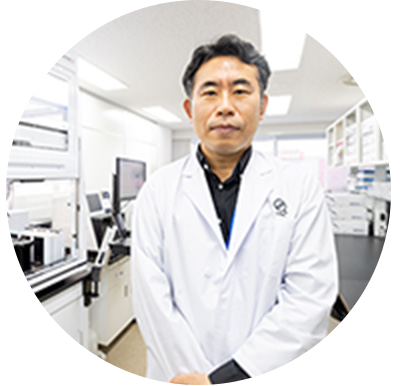 Author
Kihan Tomikin, Ph.D. in Medicine
Completed master's/doctoral program in Biosystems Science and Molecular Medicine, University of Tsukuba Graduate School
Developed Japan's first prenatal DNA testing(Patent 7331325) in 2017 using proprietary trace-DNA analysis technology(Patent 7121440)
[References]
(2) Nature, October 2015
(3) Surg Clin North Am, February 2007
(4) Matsumura General Legal Office (Locus Osaka) — a website for an administrative scrivener office in Chuo-ku, Osaka, handling visa matters for foreign nationals, DNA testing, contract drafting, and more, January 2025
(5) Proc Natl Acad Sci U S A, September 2015
(6) Genetic Testing & DNA Testing seeDNA, January 2021
(7) Is a combination of SNPs and STRs superior to SNPs alone for prenatal paternity testing?