
Rewritten: October 28, 2024
A comprehensive overview of scientific methods to determine whether a stain on clothing or tissue is semen. Covers the principles and accuracy of UV testing, acid phosphatase, PSA immunoassay, microscopic observation, and DNA profiling, along with cautions about commercial test kits.
Last updated: 2025.06.20
If you're wondering whether a suspicious stain on clothing or tissue paper is male semen, a professional semen test can confirm it. There are many situations where you might want to determine whether a stain is semen — discovering an unfamiliar stain on a partner's belongings, or needing to identify a bodily fluid as evidence in a legal dispute. If the stain turns out to be semen, DNA profiling can even identify whose semen it is.
In recent years, many simplified semen-detection products marketed as "infidelity test kits" have been sold online, but their scientific accuracy varies widely by product, and there have been cases of serious trouble arising from misinterpreted results. Semen detection is a specialized field that has been studied for decades within forensic science, and accurate judgment requires combining multiple scientific tests in stages(1).
This article clearly explains every method of semen detection, from simple techniques anyone can use to the high-precision scientific tests employed in forensic settings. Use it to understand the principles, accuracy, and limitations of each test so you can choose the right method for your purpose.
- ・Main components of semen and detection points
- ・Simple methods for detecting semen
- └ ◆ UV light testing
- └ ◆ Using a commercial semen test kit
- └ ◆ Requesting testing from a specialized institution
- ・Molecular biological detection methods (detecting specific proteins in semen)
- └
- └
- ・Chemical detection methods (confirming enzyme activity)
- └
- └
- ・Detection methods using a microscope (confirming sperm cells)
- └
- └
- ・Cautions about simple semen test kits sold online
- ・Limitations and cautions of semen testing
- └
- └
- └
- └
- └
- ・Can DNA testing identify an individual from semen?
- ・Conclusion
Main components of semen and detection points

First, let's cover what semen is actually made of. Although "semen" often conjures images of "sperm," in fact sperm itself makes up only about 10% of semen.(1) The remaining roughly 90% is a fluid component called seminal plasma.
Seminal plasma contains fluid secreted by organs such as the prostate and seminal vesicles, which is rich in enzymes and proteins unique to semen. Representative examples are "acid phosphatase" (an enzyme derived from the prostate) and a protein called "PSA (prostate-specific antigen)." Because these are present in semen at high concentrations, they are used in testing as "markers unique to semen." PSA in particular is a glycoprotein produced by the prostate, and its concentration in semen is said to be hundreds of thousands of times higher than in blood(2). It is precisely this overwhelming concentration difference that makes PSA such a valuable, high-precision marker for identifying semen in forensic science.
Sperm are the male reproductive cells and contain DNA (genetic information) in their heads. Sperm are extremely small — the head measures only about 5 micrometers (0.005 mm) across. That's orders of magnitude smaller than the thickness of a human hair (about 50 micrometers), making it a laborious task to search directly for sperm within a stain. For this reason, actual forensic science practice does not begin by searching for sperm under a microscope; instead, it starts with a screening test for the presence of semen-specific components (enzymes or antigens). If those characteristic components are detected, the sample is judged "likely to be semen," and the next step is to confirm the presence of sperm under a microscope(1).
Methods for detecting semen can broadly be classified into the following categories.
- Simple tests: UV light or commercial kits allow easy preliminary assessment even at home
- Molecular biological tests: Detect specific proteins such as PSA using antibodies, identifying semen with high accuracy
- Chemical tests: Use the enzyme activity of acid phosphatase for rapid screening
- Microscopic tests: Directly visually confirm stained sperm to definitively prove the presence of semen
- DNA profiling: Analyzes DNA derived from semen to identify "whose semen it is" down to the individual
Each of these detection methods is based on a different principle and differs in sensitivity (the smallest detectable amount) and specificity (the degree to which it reacts only to semen). In general, tests with higher sensitivity and specificity tend to require specialized equipment and advanced techniques, and tend to be more expensive. Below, we introduce simple methods anyone can use, followed by the more rigorous scientific tests used in forensic science.
Simple methods for detecting semen

There are several simple methods for detecting semen that you can try yourself. Here we introduce some representative ones. Since accuracy and cost vary by method, it's important to choose according to your purpose.
◆ UV light testing
The simplest method is using ultraviolet (black) light. When UV light is shone on a stain in a dark room, if it is semen it may glow blue-white. Indeed, UV lights are used at actual crime scenes to spot suspected semen stains on sheets and clothing. This happens because substances such as flavins and choline-binding proteins in semen fluoresce under UV light(3).
However, glowing under UV light does not necessarily mean it is semen. Substances such as detergents, sweat, and certain foods can also fluoresce under UV light, so this method should be considered only a preliminary screening to "locate a suspicious stain." In addition, older stains may fluoresce less, and depending on the color or material of the fabric, the fluorescence may be hard to see(3). In particular, dark-colored fabrics (black, navy, etc.) absorb fluorescence, making it difficult to confirm semen even if present. Conversely, white fabric may itself contain fluorescent brighteners, causing the whole fabric to glow and making it hard to pinpoint the stain.
Key points when conducting a UV light test are as follows.
- A black light with a wavelength around 365nm is best for observing fluorescence
- Shining the light in complete darkness makes even faint fluorescence visible
- Mark the location of any fluorescing stains to prepare for follow-up testing
- Failure to observe fluorescence is not grounds to rule out the presence of semen
◆ Using a commercial semen test kit
Recently, products marketed as infidelity test kits are sold online. For example, with a spray-type kit, spraying two types of reagent onto a stain will cause a color change if semen is present. Many of these commercial kits utilize the activity of an enzyme called acid phosphatase, which is present in large amounts in semen. If the reagent applied to a stain turns reddish-purple, it is judged positive — meaning acid phosphatase was detected, indicating a possible presence of semen — as a simple test.
In fact, the "SM reagent," long used in forensic science, works on the same principle, turning purple when it detects acid phosphatase in semen(3). Commercial kits can be described as a simplified, consumer-facing version of this procedure. However, as explained below, acid phosphatase is also present in bodily fluids other than semen, so this method alone cannot definitively confirm semen. Commercial kit prices range from a few thousand to tens of thousands of yen, but price and accuracy are not necessarily correlated, so care is needed when choosing a product.
◆ Requesting testing from a specialized institution
Instead of testing it yourself, there are also services where you can send stained clothing to a specialized testing company for analysis. For example, some DNA testing companies first check whether semen is present in a sample, and then, if necessary, go on to perform DNA profiling and report the results. This costs money, but it's an option if you want a more definitive answer. Specialized institutions perform multiple tests in stages, minimizing the risk of false positives and false negatives to produce highly reliable results. Institutions that hold international quality standards such as ISO 9001 have quality-controlled testing processes, making the results easier to use as legal evidence.
A typical flow for simple semen detection is as follows.
- Shine a UV light in a dark room to identify the location of any fluorescing stains
- Check for enzyme reaction using a commercial kit or SM reagent on any fluorescing stains
- If positive, send the sample to a specialized institution for confirmation via PSA immunoassay or microscopic examination
- If confirmed as semen, perform DNA profiling for individual identification if needed
Molecular biological detection methods (detecting specific proteins in semen)
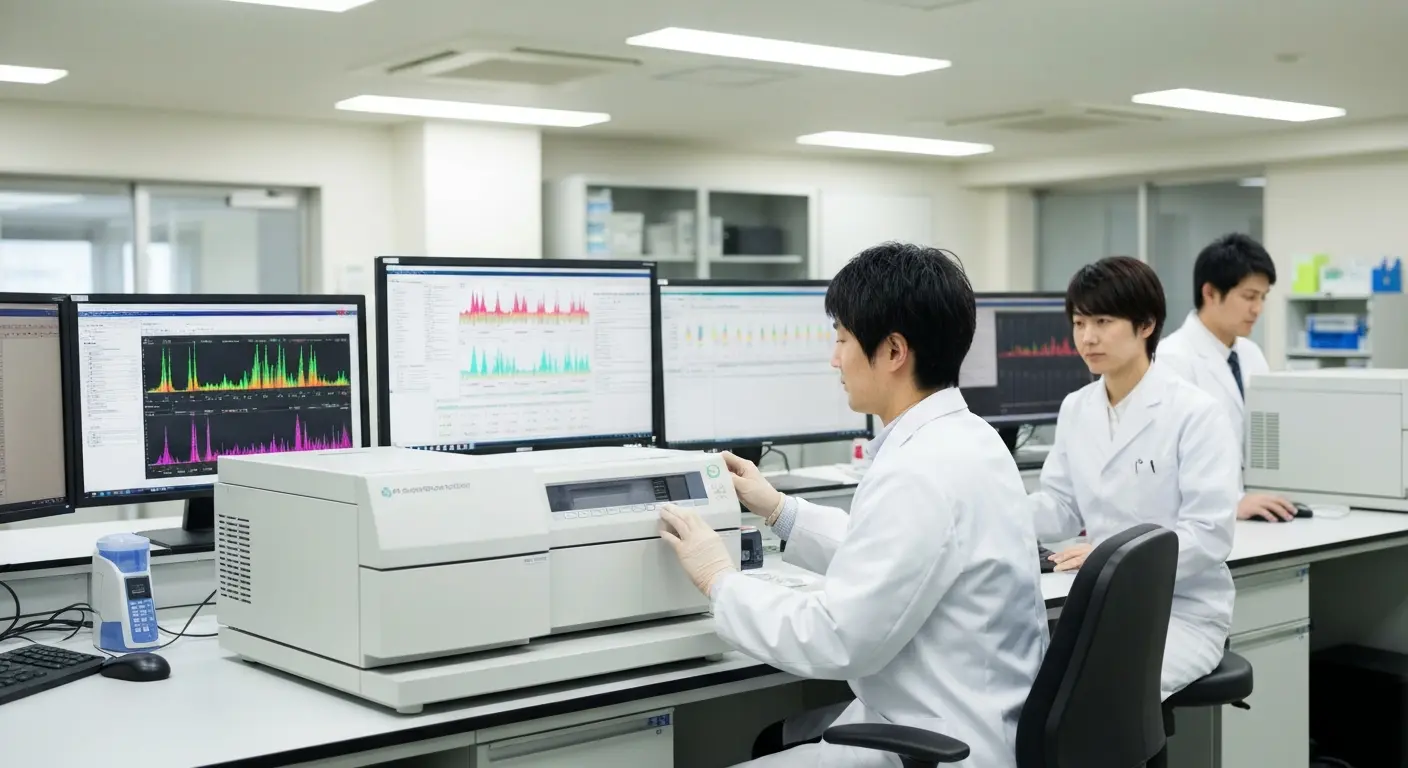
This method detects a protein specific to human semen (a prostate-derived antigen known as P30 or PSA)(1). This method treats a specific protein in semen as an antigen, and uses testing methods (such as immunochromatography or ELISA) employing monoclonal antibodies that bind to it.
Immunochromatography works on a principle similar to pregnancy test strips, giving results within minutes to a dozen or so minutes simply by running the sample across a test strip, making it suitable for rapid on-site testing. ELISA, on the other hand, allows for more quantitative evaluation, enabling numerical measurement of semen component concentration, making it suitable for precise analysis of trace samples. In recent years, test kits targeting a protein derived from the seminal vesicles called semenogelin have also been developed, and using them alongside PSA enables even higher-precision judgments(4).
Because it has extremely high specificity and sensitivity for human semen, it basically does not react to other bodily fluids (such as saliva or blood) or animal semen, detecting only human semen. Even a small amount of semen can be detected, and samples containing trace amounts of semen components can still show a positive reaction, so it can identify semen even in highly diluted (extremely small) amounts. Because of its high reliability, it is widely adopted as a confirmatory test for semen in forensic settings, including by criminal investigation agencies around the world such as the FBI in the United States(3). Additionally, since PSA testing does not destroy the sample, DNA profiling can still be performed on the sample afterward.
The detection sensitivity of PSA testing is extremely high, with multiple studies reporting positive results even when semen is diluted several thousandfold(2). This means it may be possible to detect traces of semen even from laundered clothing or samples with only minute amounts present.
Because the reagents (antibody kits, etc.) used in testing are expensive, the cost of analysis is high. It may also require specialized equipment and advanced techniques, so it is not an easily performed test. Furthermore, there have been rare reports of false positives in bodily fluids containing unusually high concentrations of PSA (e.g., some women's breast milk or the urine of patients with certain conditions). Nevertheless, it is an indispensable method where certainty is required, and is considered the gold standard for semen detection in current forensic science.
\ The most accurate semen test, using this principle /
Chemical detection methods (confirming enzyme activity)
This is a classical forensic science technique that detects semen using special reagents based on the activity or reaction of enzymes contained in semen. Specifically, a reagent (such as the so-called "SM reagent") that confirms the presence of acid phosphatase (a prostate-derived acid phosphate enzyme abundant in semen) is applied to the stained area, and judgment is made based on the color change.
Because acid phosphatase is present at very high concentrations in semen, this activity can be used to quickly and easily check for the presence of semen. When using SM reagent, if semen is present the reaction with the reagent turns purple, typically producing results within 30 seconds to a minute. This fast reaction speed is a major advantage as a preliminary test. Note that acid phosphatase has been used continuously in forensic science for over 80 years, ever since it was first introduced as a semen screening test by Kaye et al. in 1935(5).
Testing time is short, and the reagents used are relatively inexpensive. It excels as a screening (preliminary) test used to narrow down which parts of a stain are likely to contain semen. At crime scenes, police sometimes conduct this test on the spot to help decide whether a full forensic analysis is needed. Because a large number of samples can be processed in a short time, it is particularly useful for screening many stains at once. The reagents are also easy to store, requiring no special temperature control, giving them the portability advantage of being usable on-site.
Because acid phosphatase itself is also present in human blood (blood cell components), animal semen, saliva, vaginal secretions, and other bodily fluids and substances, a positive reaction with this reagent alone is not enough to confirm semen. It remains only a preliminary judgment of "possible semen," and other methods must be used in combination for definitive confirmation. There is also a risk of false positives (a reaction occurring even though it is not semen) because the enzyme reacts to substances other than semen. While the acid phosphatase test is simple, its accuracy is limited, and it is insufficient on its own especially for legal proof such as in court(1). Note that some plant-derived substances (such as juice from cauliflower or turnips) are also known to show acid phosphatase activity, and there have been reports of false positives when testing fabric stained with food.
Detection methods using a microscope (confirming sperm cells)
This method involves observing a collected sample under a microscope to directly confirm the presence of sperm (sperm cells) in semen. The sample collected from the stain is spread on a glass slide and subjected to special staining to search for sperm. Staining methods include the Christmas tree stain (a nuclear staining method that dyes the sperm head red and the tail green), which makes it easier to distinguish sperm from background tissue(6). If sperm can be confirmed, this directly proves that the stain originated from semen.
The Christmas tree staining method is a two-step staining process: first, Nuclear Fast Red stains the sperm head's nucleus red, and then Picroindigocarmine stains the tail green. This vivid contrast makes it possible to efficiently identify sperm even in complex samples containing epithelial cells and other cellular debris.
Because sperm are actually visually observed under a microscope, it is possible to directly and clearly determine whether a sample is semen. Microscopic confirmation is regarded forensically as the final confirmatory evidence, and the discovery of sperm is recognized in criminal cases as strong physical evidence of sexual intercourse (semen deposition). Observation using staining methods is highly reliable — for example, the Christmas tree staining method has been reported to be one of the most useful methods for sperm detection(7). Additionally, because the microscope allows detailed observation of sperm morphology (the structure of the head, midpiece, and tail), the presence of sperm can be confirmed with morphological certainty.
This method is time-consuming and labor-intensive, requires specialized skill, and is therefore relatively costly. It also requires a certain amount of semen sample for sperm to be found at all, making detection difficult with trace amounts of semen.
Additionally, there is the problem of how to interpret cases where no sperm is found. In other words, "no sperm detected" does not necessarily mean "not semen" — it may simply be that detection failed. In fact, sperm cells are fragile once dried, and can decrease or disappear over time or depending on conditions within the body. Furthermore, in men with azoospermia (no sperm in semen) or oligospermia (low sperm count), few or no sperm may be present in the semen to begin with, meaning that sperm may not be confirmable even if the sample is indeed semen. According to WHO (World Health Organization) statistics, about 10-15% of male infertility patients are diagnosed with azoospermia, so this is by no means a rare case(4). Therefore, failing to find sperm under a microscope does not rule out the presence of semen, and results must be judged in combination with other supplementary tests.
As shown, using both molecular biological protein detection (particularly rapid PSA detection kits) and microscopic observation (staining methods) together has become common practice in recent years(7). The typical procedure is to first conduct an inexpensive chemical screening test, and then, for samples that test positive, perform a definitive confirmatory test using immunoassay or microscopic examination. This allows for efficient identification of the presence of semen, followed by high-precision final confirmation.
Cautions about simple semen test kits sold online
Simple test kits marketed online as "semen detection reagents" or "infidelity investigation kits" are sometimes sold. However, apart from the methods described above, no other means currently exist to accurately identify semen. Some commercial simple kits are merely simplified versions of the acid phosphatase test, or lack solid scientific basis.
As a result, some low-quality products show positive reactions to things other than semen, such as tap water or saliva, leading to frequent trouble caused by misjudgment. For example, some products give false positives when used on clothing containing residual detergent, while others have low sensitivity and fail to react even when semen is present.
Indeed, there have been reports overseas of vendors who sold large quantities of such reagent kits being arrested on suspicion of fraud. There have also been cases where a commercial kit's instructions claim it "does not react to anything other than semen," a claim that is scientifically inaccurate, creating a dangerous false sense of security for consumers.
Points to consider when purchasing a commercial kit are summarized below.
- Avoid products whose detection principle is not scientifically explained
- Products that target only acid phosphatase carry a high risk of false positives
- Be cautious of products with exaggerated claims such as "reacts only to semen, 100% of the time"
- Check product reviews and third-party evaluations before purchasing
- Understand that the results of a simple kit are only a preliminary judgment, not a definitive diagnosis
Placing too much trust in the results of a simple kit can lead to serious misunderstanding, so if you need a reliable, definitive result, we recommend consulting a trustworthy specialized institution.
Limitations and cautions of semen testing
We have introduced various methods for detecting semen so far, but it's also important to understand the limitations and cautions when interpreting the results. Even scientific tests are not infallible, and there are factors that can lead to misjudgment.
Even if a test shows a positive reaction, it doesn't necessarily mean it is due to semen. In particular, the acid phosphatase reaction is prone to false positives. Since this enzyme is also present in women's bodily fluids (such as vaginal secretions) and saliva, it is theoretically possible, for example, that testing a stain on women's underwear with an enzyme kit could show a positive result even without any infidelity.
Indeed, forensic science research has also reported cases of false positives when acid phosphatase kits were used on women's sanitary products. While molecular biological tests (such as PSA kits) have relatively high specificity, as noted above, the possibility of false positives due to exceptional physical conditions is not zero. Therefore, taking action against a partner based solely on a single test result carries the risk of causing irreversible misunderstanding, and careful judgment is required.
Conversely, there are also cases where semen is actually present but is missed by testing. If a stain is old and degraded, or if the components have been diluted by washing or cleaning, only a trace amount below the detection limit may remain. In such cases, an enzyme test may react slowly or weakly and miss the sample, and even a PSA kit may fail to react (a false negative).
Especially when using a commercial simple kit, be aware that even if you follow the instructions and no positive result appears, this is not absolute proof that semen is not present. Repeatedly laundered clothing has a significant amount of organic matter removed, making detection even more difficult.
How easily semen components can be detected is also affected by elapsed time and environmental conditions. For example, acid phosphatase remains relatively active for a long time when dry, but degrades within days when exposed to humidity or high temperatures, making it harder to detect. Sperm can also retain their shape for quite a long time on a dry fabric, but conversely are more easily destroyed by bacteria in a moist environment(8).
Keep in mind that detection rates vary depending on how a stain has been stored. It is not surprising if an old stain fails to yield a detection reaction, and conversely a stain from several years ago may still test positive depending on storage conditions. When storing a sample, it is recommended to avoid direct sunlight and keep it dry in a breathable container, such as a paper bag. Sealing it in a plastic bag should be avoided, as trapped moisture can promote mold and bacterial growth.
Proper sample storage methods are summarized below.
- If the sample is damp, let it air-dry in a clean location before storing
- Place it in a breathable container such as a paper bag or envelope, avoiding plastic bags
- Store it in a cool place away from direct sunlight (ideally at or below room temperature)
- Wear gloves to avoid touching the sample directly, preventing contamination
- Send it to a specialized institution for testing as promptly as possible
It is important not to draw a conclusion based on a single test result alone. Even if an enzyme reaction is positive, the absence of visible sperm may point to a different cause, and even if no sperm is found, a positive PSA test may still suggest the presence of semen. Since each test has its own strengths and weaknesses, it is ideally best to combine multiple methods for cross-checking whenever possible(9).
For example, one procedure would be: if a commercial kit tests positive, request immunoassay or DNA testing from a specialized institution for further confirmation. In forensic science practice as well, it is common to progressively increase precision — first screening with enzyme or immune tests, then microscopic confirmation of sperm, followed by DNA profiling if necessary(1). This approach of conducting multiple tests in stages is called "cascade testing," and it is established as a standard protocol in modern forensic science.
Finally, care should also be taken in how test results are handled. For example, testing a partner's belongings without their knowledge risks damaging trust, and in some cases may constitute an invasion of privacy. Additionally, for a test result to serve as legal evidence, the sample must have been collected and stored using appropriate procedures. If your purpose is to investigate a suspected affair, it may be best to limit yourself to a personal check, and if you intend to pursue the matter formally, it is advisable to consult a professional investigation agency or lawyer. In Japan, laws such as the Act on the Protection of Personal Information and the Unfair Competition Prevention Act may carry legal risk regarding the unauthorized acquisition or use of another person's genetic information, so it's recommended to consult a professional before taking action.
In particular, as DNA testing technology has become more widespread in recent years, legal frameworks concerning the handling of genetic information are being developed in various countries. In Japan too, the amended Act on the Protection of Personal Information, which took effect in 2023, classifies genetic information as "sensitive personal information," and conducting genetic testing without the subject's consent may raise legal issues. Therefore, when requesting semen testing or DNA profiling, it is important to seek professional advice in advance regarding the purpose of testing and its legal validity.
Can DNA testing identify an individual from semen?
Once the presence of semen has been confirmed, many people naturally wonder, "whose semen is this stain?" Because semen contains the nuclear DNA of sperm, performing DNA profiling — a method known as STR (short tandem repeat) analysis — makes it possible to identify an individual with high accuracy.
In DNA profiling, specific regions (loci) of DNA extracted from semen are amplified, and the pattern of repeat counts, which varies between individuals, is analyzed. Current standard tests analyze 15 to 20 or more loci simultaneously, resulting in a chance-match probability of less than one in several trillion — effectively allowing certain identification of an individual, except in the case of identical twins. Japan's National Research Institute of Police Science and the FBI both standardly use 20 or more STR loci as defined by the Combined DNA Index System (CODIS), achieving an extremely high level of discrimination accuracy.
However, DNA profiling requires a certain amount of good-quality DNA. If the amount of semen is minute, or if the DNA has been degraded by heat, UV light, or chemicals, analysis can become difficult. Additionally, when a sample contains bodily fluids from multiple people (a mixed sample), analysis becomes more complex — but thanks to recent technological advances, techniques such as differential extraction (a method for separating sperm cells from non-sperm cells) increasingly make it possible to isolate a sperm-derived DNA profile even from a mixed sample.
Differential extraction is a separation technique that takes advantage of the different DNA extraction conditions required for sperm cells versus epithelial cells (such as vaginal epithelium). Because sperm have a strong shell (the acrosome) held together by disulfide bonds in the head, they are not lysed by ordinary cell lysis solutions. Taking advantage of this property, non-sperm cell DNA is first extracted and collected under mild conditions, and then sperm DNA is extracted using a strong lysis solution containing a reducing agent (such as DTT). This technique makes it possible, for example, to isolate and analyze only the perpetrator's sperm DNA from a victim's vaginal swab in a sexual assault case(2).
Note that even in the semen of a man with azoospermia, individual identification may sometimes still be possible using DNA from epithelial cells or white blood cells present in the seminal plasma. However, since the amount of DNA in such cases is very small, more sensitive analysis techniques (such as low-copy-number DNA analysis) may be required.
Conclusion
We've broadly covered the scientific methods for determining whether a suspicious stain on clothing or tissue is semen, from enzyme reactions and microscopic examination to immunoassay kits and DNA profiling. Semen contains unique components that allow even simple commercial kits to provide some degree of judgment. However, as we've seen, each testing method has its own strengths and weaknesses, and careful interpretation of results is required.
In particular, if a preliminary test comes back positive, it's important to follow up with additional confirmatory testing as needed. The staged approach — chemical screening via acid phosphatase, immunological confirmation via PSA antigen, microscopic sperm confirmation via Christmas tree staining, and individual identification via DNA profiling — is the method that leads to the most reliable results.
Science can bring us remarkably close to identifying the true nature of a stain, but it's essential to correctly understand its accuracy and its limits. Don't jump to conclusions based on test results alone — seek confirmatory testing from a specialized institution if needed, and consult a professional such as a lawyer if legal action becomes necessary. We hope this article has been of some help to our general readers.
\ Infidelity testing that includes semen testing /
 Apply / Purchase Kit
Frequently Asked Questions
Q1. Can a semen stain still be detected even after time has passed?
A. Yes, depending on storage conditions, semen components can sometimes be detected even in stains from several years ago. If kept dry and away from direct sunlight or high heat, proteins such as acid phosphatase and PSA can remain relatively intact for a long time. However, if exposed to moisture or high heat, or if the clothing has been laundered, the components may break down or wash out, making detection difficult. Store samples in a breathable container such as a paper bag, and avoid sealing them in a plastic bag.
Q2. Can the results of a commercial semen test kit be used as legal evidence?
A. Results from a simple commercial kit alone are insufficient as evidence in a legal setting such as a court case. This is because the acid phosphatase reaction carries a risk of false positives and cannot definitively confirm the presence of semen. If you need legally valid evidence, we recommend undergoing confirmatory tests such as PSA immunoassay or DNA profiling at an ISO-certified specialized institution. To use test results as legal evidence, it is also important that the chain of custody — from sample collection through analysis — is properly managed.
Q3. If semen is detected, can you determine whose semen it is?
A. Yes, since sperm in semen contain DNA (genetic information), performing DNA profiling (STR analysis) can identify an individual with high accuracy. Current standard tests analyze 15 to 20 or more STR loci, resulting in a chance-match probability of less than one in several trillion. However, a sufficient quantity and quality of DNA is required, and depending on the degradation of the sample, analysis can sometimes be difficult. At seeDNA, it is also possible to request semen testing and DNA profiling as a set.
Q4. Can semen still be detected in men with azoospermia?
A. Yes, it can. Since semen detection targets components in the seminal plasma such as PSA (prostate-specific antigen) and acid phosphatase, the presence of semen can be confirmed regardless of whether sperm are present. However, since direct microscopic confirmation of sperm is not possible in these cases, PSA immunoassay becomes an especially important method of judgment. As for DNA profiling, individual identification may sometimes be possible using DNA from trace epithelial cells or white blood cells in the seminal plasma, though analysis tends to be more difficult than usual.
Q5. Can semen still be detected on laundered clothing?
A. Laundering removes most semen components, so detection generally becomes difficult. However, depending on factors such as the number of washes, type of detergent, and water temperature, trace amounts of semen components (particularly PSA) may still remain deep within the fibers. Highly sensitive testing at a specialized institution may be able to detect components that were not fully removed by a single wash, so we recommend consulting a professional even for laundered clothing.
Q6. If a stain doesn't glow under UV light, can it be assumed not to be semen?
A. No, the absence of visible fluorescence under UV light alone cannot rule out the presence of semen. Depending on the color or material of the fabric (especially dark-colored fabric), fluorescence may be absorbed and invisible, and fluorescence may also be weaker if the amount of semen is small or has degraded over time. Since UV testing is only a preliminary screening, if you have a stain you're concerned about even after a negative UV result, we recommend confirming with another method such as PSA immunoassay.
Trusted Support from seeDNA Genetic Medical Research Institute
seeDNA Genetic Medical Research Institute is a trusted specialist institution for DNA testing and genetic testing that has obtained the international quality standard ISO 9001 and the Privacy Mark for privacy protection.
If you're troubled by questions of family or parent-child blood relationships, or a partner's infidelity, our DNA testing experts are here to provide reassuring support, so please feel free to contact us.
[Free Consultation with Specialized Staff]

If you have any questions,
please feel free to contact our toll-free number.
\ Open every day, including weekends /
Business hours: Monday-Sunday 9:00-18:00
(Excluding holidays)
 Author
Ph.D. Kihan Tomikane
Graduate of the Master's/Doctoral Program in Biological Regulation and Molecular Medicine, University of Tsukuba
In 2017, developed Japan's first prenatal DNA testing(Patent 7331325) using trace DNA analysis technology(Patent 7121440)
[References]
(2) Journal of Forensic Sciences, September 2014
(3) West Indian Medical Journal, 2010
(4) The Journal of Sexual Medicine, November 2014
(5) General and Comparative Endocrinology, May 2006
(6) KEYENCE, "Sperm Testing via Christmas Tree Staining"
(7) Journal of Forensic Sciences, March 2014
(8) Forensic Resources
(9) seeDNA Co., Ltd. "Wouldn't you like to prove your innocence in an infidelity case?", 2024