
Last revised: July 12, 2024
A detailed explanation of the risk of sperm and egg mix-ups in fertility treatment, and of DNA testing as a second opinion. We introduce the methods and procedures for scientifically confirming parent-child relationships, whether prenatally or after birth.
- ・What is the risk of sperm and egg mix-ups in fertility treatment?
- ・Specific situations where mix-up incidents can occur
- ・DNA testing as a second opinion option
- ・The technical background of prenatal DNA testing (NIPPT)
- ・The general process for undergoing DNA testing
- ・How to read test results and their accuracy
- ・Because pregnancy and childbirth are major life events, confirm it for yourself
What is the risk of sperm and egg mix-ups in fertility treatment?
 In recent years, Japan has seen a rapid trend toward later marriage, with both the average age at first marriage and the average age at first childbirth continuing to rise. According to statistics from the Ministry of Health, Labour and Welfare, the average age of women at first marriage reached 29.7 as of 2023, and the age at first childbirth exceeding 30 has become the norm. Along with this trend, social awareness and understanding of fertility treatment have expanded significantly. It has become increasingly common to hear of people around us who gave birth after undergoing fertility treatment, and assisted reproductive technology (ART) such as in vitro fertilization (IVF) and intracytoplasmic sperm injection (ICSI) is no longer a special form of medicine — it has become a realistic option for many couples [ref:1].
According to a report by the Japan Society of Obstetrics and Gynecology, more than approximately 490,000 IVF and ICSI treatment cycles were performed in Japan in 2021, resulting in the birth of about 70,000 babies. This corresponds to roughly 1 in every 11 births that year, clearly demonstrating just how common assisted reproductive technology has become as a route to childbirth [ref:1].
Fertility treatment involves several stages, ranging from relatively simple methods such as timed intercourse and artificial insemination, to advanced assisted reproductive technologies such as in vitro fertilization (IVF) and intracytoplasmic sperm injection (ICSI). In IVF and ICSI in particular, treatment proceeds through numerous steps: collection of sperm and eggs, sperm washing and selection, fertilization procedures performed outside the body, embryo culture, and finally embryo transfer into the mother's body. All of these steps are carried out by human hands, involving multiple specialists such as obstetricians, nurses, and embryologists.
A question that naturally comes to mind amid this complex process is: "Are the sperm and egg actually used truly those of this couple?" Sperm and eggs are extremely tiny cells, and it is impossible to identify an individual by sight. They cannot be directly labeled with a name. Of course, each medical institution takes the utmost care in managing samples, and an increasing number of facilities have introduced double-check systems and barcode management systems. Even so, it remains difficult to completely eliminate the possibility of human error.
In fact, cases of sample mix-up incidents in fertility treatment have been reported both in Japan and abroad. Rather than relying solely on the presumption of good faith that "doctors never make mistakes," knowing that there is a way to confirm things for yourself is extremely important for facing pregnancy and childbirth with peace of mind [ref:4].
Specific situations where mix-up incidents can occur
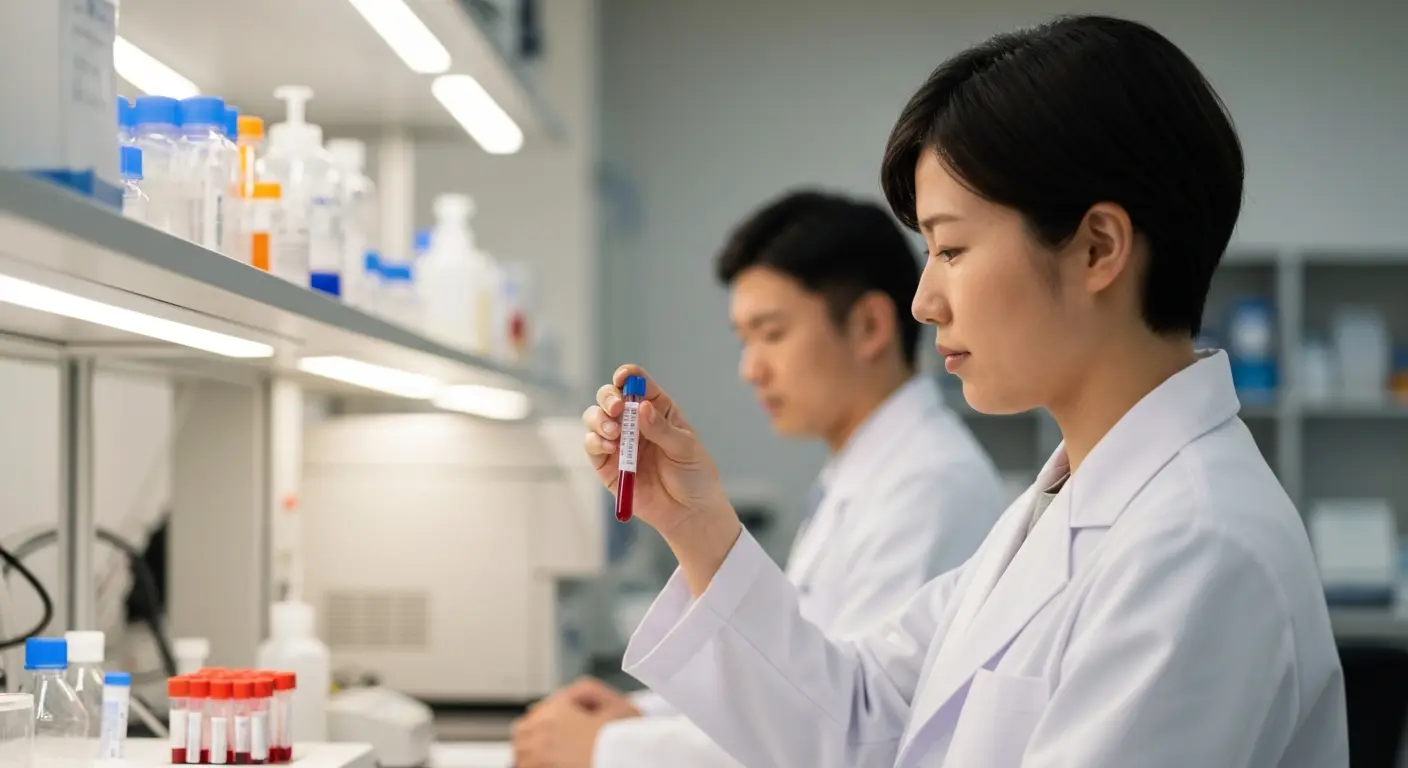 There are several points in the IVF and ICSI process where the risk of a mix-up may arise. Reviewing each step of assisted reproductive technology makes clear where these risks lie [ref:5].
- Sperm and egg collection stage: Because sperm and eggs are collected from multiple patients on the same day, container mix-ups are theoretically possible. At large clinics during busy periods, dozens of egg retrievals may be performed in a single day, making strict labeling and verification essential.
- Sperm washing and selection stage: Collected sperm undergoes washing and concentration to prepare it for fertilization. When multiple samples are processed simultaneously during this step, there is a risk of container confusion.
- Fertilization stage: In conventional IVF, sperm is introduced to the egg to achieve fertilization; in ICSI, an embryologist injects a single sperm directly into the egg. At this stage, it is critically important to confirm that the dish and pipette being used belong to the correct patient.
- Embryo culture stage: Fertilized eggs (embryos) are cultured in an incubator for several days, and if identification management during this period is not handled properly, there is a risk of confusion with another patient's embryo.
- Embryo transfer stage: When the cultured embryo is transferred into the uterus, a final check is needed to confirm that the correct embryo is being transferred to the correct patient.
At each of these steps, modern medical institutions have introduced various safety management technologies, such as barcode systems, RFID tags, and integration with electronic medical records. In the end, however, it is human hands that ultimately handle the samples, and it is fundamentally difficult to eliminate human error 100%. Just as in the aviation and nuclear power industries, accepting the premise that "zero risk" does not exist in medicine, too, can actually bring peace of mind to patients themselves.
DNA testing as a second opinion option
 DNA testing is one method available for scientifically confirming that a child born through fertility treatment does indeed carry the couple's own genes. DNA testing analyzes an individual's unique genetic information and can demonstrate the biological connection between parent and child with a high degree of accuracy.
Human DNA consists of approximately 3 billion base pairs, and by analyzing multiple regions where individual variation appears (polymorphic regions), it becomes possible to identify individuals and determine parent-child relationships with near certainty. In particular, regions known as STRs (Short Tandem Repeats) — where the number of repeats varies between individuals — are used worldwide as extremely valuable markers in parentage testing [ref:3].
One especially noteworthy point is that parentage testing can be performed even before birth. It is scientifically known that from the 7th week of pregnancy onward, a pregnant woman's blood contains a sufficient amount of fetal-derived DNA (cell-free fetal DNA, or cffDNA) for testing purposes [ref:2]. A groundbreaking study published by Dr. Lo and colleagues in 1997 was the first to demonstrate the presence of cell-free fetal DNA in maternal plasma, and since then this technology has been applied to various fields, including non-invasive prenatal testing (NIPT) and non-invasive prenatal paternity testing (NIPPT).
Using this technology, it is possible to perform prenatal paternity testing between a fetus and father using a blood sample from the pregnant mother and a sample easily collected from the father, such as an oral cheek swab. Traditional prenatal paternity testing required invasive procedures such as amniocentesis or chorionic villus sampling, but advances in cffDNA technology have made it possible to perform testing safely using only a blood draw from the mother.
The main situations in which DNA testing can be useful can be summarized as follows.
- Prenatal paternity testing: From the 7th week of pregnancy onward, fetal DNA can be extracted from the mother's blood to confirm the parent-child relationship with the father
- Postnatal paternity testing: As long as samples (such as oral cells) are available from both the child and the father, paternity can be tested at any time after birth
- Postnatal maternity testing: By adding a sample from the mother, it is also possible to confirm the maternal relationship (particularly important in cases such as egg donation or surrogacy)
- Non-invasive testing: Prenatal testing can be performed using only a blood draw from the mother, posing no direct risk to the fetus
- High-precision results: The latest DNA analysis technology allows the presence or absence of a parent-child relationship to be determined with extremely high accuracy
The technical background of prenatal DNA testing (NIPPT)
The core technology that makes prenatal DNA testing possible is the analysis of cell-free fetal DNA (cffDNA) contained in maternal blood. cffDNA is a DNA fragment released into maternal blood mainly when placental villous cells (trophoblasts) undergo apoptosis (programmed cell death), and it exists as short fragments of about 160 to 170 base pairs on average [ref:2].
The fetal DNA fraction in maternal blood during early pregnancy (from 7 weeks onward) is said to be approximately 10 to 15% of the total cell-free DNA, but by using cutting-edge analysis technologies such as next-generation sequencing (NGS) and digital PCR, it is now possible to accurately determine genotypes even from this minute amount of DNA. The seeDNA Genetic Medicine Research Institute applies its proprietary trace DNA analysis technology (Patent No. 7121440) to prenatal DNA testing (Patent No. 7331325), achieving highly accurate parentage testing from maternal blood.
As a result of these technological advances, prenatal DNA testing now has the following characteristics.
- Completely non-invasive: Since it only requires drawing blood from the mother's vein and does not require a uterine puncture like amniocentesis, it does not increase the risk of miscarriage
- Can be performed early: Testing can be carried out from the relatively early stage of the 7th week of pregnancy, providing peace of mind sooner
- High reliability: By simultaneously analyzing multiple STR markers and single nucleotide polymorphisms (SNPs), extremely statistically accurate parentage determination is possible
The general process for undergoing DNA testing
When you hear the words "DNA testing," you may feel that the procedure is complicated and has a high barrier to entry. In reality, however, if you request it through a specialized institution, the test can proceed relatively smoothly. Below is a general overview of the process for undergoing prenatal DNA testing.
- Inquiry and consultation: First, contact a specialized institution that provides DNA testing and explain your situation (such as the number of weeks pregnant and the purpose of the test) for consultation. Specialized staff will carefully advise you on which test is most suitable. Preparing information in advance — such as the background of your fertility treatment, your current number of weeks pregnant, and your desired schedule — will help the consultation go smoothly.
- Application and receiving the sample collection kit: After agreeing to the testing details and fees, you submit your application and receive a sample collection kit. The kit includes sample containers, an oral swab (cotton swab), collection instructions, and a consent form, and is mailed to your home.
- Sample collection: For prenatal testing, the mother has blood drawn at a medical institution (typically about 10 to 20 ml of venous blood). The father can easily collect his own sample using an oral cheek swab, which can be done at home. Blood draws can often be performed at the same time as a regular prenatal checkup, minimizing the burden of additional hospital visits.
- Sending the samples and analysis: The collected samples are sent to the specialized institution, where DNA analysis is carried out. The latest trace DNA analysis technology is used to compare and analyze the genotypes of the fetal DNA in the mother's blood and the father's DNA. The time from sample arrival to receiving the results is typically about 2 to 3 weeks.
- Receiving the results: After the analysis is complete, the test results are delivered as a report. The presence or absence of a paternity (or maternity) relationship is clearly stated based on scientific evidence. The report includes the typing results for each analyzed genetic locus, the parentage index (PI value), and a probabilistic evaluation, presenting the conclusion with expert-level support.
The basic process is the same when testing is performed after birth. Since it only requires swabbing the inside of the child's cheek with a cotton swab, there is virtually no pain or burden. Samples can be safely collected even from newborns, and testing can be requested immediately after birth.
How to read test results and their accuracy
The results of DNA testing are not simply expressed as a binary "is" or "is not" a parent-child relationship, but rather as a statistical probability. Specifically, two indicators are commonly used: the "Paternity Index (PI)" and the "Probability of Paternity (W value)."
The Paternity Index (PI) is calculated by dividing "the probability that this combination of DNA types would be observed if the tested individual is the true father" by "the probability that this combination of DNA types would be observed if the tested individual is an unrelated man who is not the father." The more genetic loci analyzed, the more accurate this value becomes. Current DNA testing typically analyzes 15 to 20 or more STR loci, so when a parent-child relationship exists, the PI value becomes an extremely large number, ranging from several million to several billion [ref:3].
The Probability of Paternity (W value) is calculated by applying Bayes' theorem to the PI, and is expressed as a probability such as "99.99% or higher." Generally, if the W value is 99.99% or higher, the parent-child relationship is judged to be confirmed, and if inconsistencies (exclusions) are found at three or more genetic loci, the parent-child relationship is judged to be denied.
The seeDNA Genetic Medicine Research Institute conducts DNA analysis under a rigorous quality management system compliant with the international quality standard ISO 9001, ensuring the maximum reliability of test results. The institute has also obtained Privacy Mark (P Mark) certification, providing thorough protection of customers' personal information and testing data.
Because pregnancy and childbirth are major life events, confirm it for yourself
Pregnancy and childbirth are irreplaceable events that profoundly change one's life. This is all the more true for a life conceived after undergoing fertility treatment, and the joy it brings is immeasurable. Precisely for this reason, rather than leaving it to others with the assumption that "there couldn't possibly be a mistake," it is important to have the option of confirming it scientifically for yourself.
DNA testing serves as a "second opinion" on the outcome of fertility treatment. This is not about doubting the medical institution; rather, it is a proactive step taken purely for the peace of mind of yourself and your family, backed by objective data confirming the parent-child relationship. Just as people sometimes visit multiple medical institutions to compare results from a health checkup, we hope you will think of DNA testing as "reassurance material for confirmation."
In particular, advances in non-invasive prenatal paternity testing (NIPPT) technology in recent years have made it possible to achieve highly accurate testing while minimizing the burden on the mother's body. Being able to scientifically confirm a parent-child relationship from early in pregnancy — something that could previously only be confirmed after birth — is a major benefit of technological innovation.
In addition, discussions surrounding a child's "right to know their origins" have become increasingly active in the context of assisted reproductive technology [ref:5]. Knowing the circumstances of one's own birth is also an important identity issue for a child. Objectively confirming the parent-child relationship through DNA testing also has value in that it allows scientific evidence to be provided in the future should the child themselves have questions about their origins.
For those who have become pregnant or given birth after fertility treatment, or those who are considering fertility treatment, please remember that DNA testing is available as a means of preparing for the risk of a possible mix-up. Please consider it as one option for welcoming your new family with peace of mind.
<Prenatal Fetal DNA Testing (Blood)>
<Parent-Child DNA Testing (Paternity)>
<Parent-Child DNA Testing (Maternity)>
Frequently Asked Questions
Q1. Do sperm and egg mix-ups actually happen in fertility treatment?
A. While each medical institution maintains strict management systems, since every step of the process is carried out by human hands, it is difficult to completely eliminate the possibility of human error. Cases of mix-ups have been reported both in Japan and abroad, so it is important to be aware of DNA testing as a means of self-confirmation.
Q2. From how many weeks of pregnancy is prenatal DNA parentage testing possible?
A. It is said that fetal-derived DNA (cell-free fetal DNA) in a pregnant woman's blood can be detected in sufficient quantities for testing from the 7th week of pregnancy onward. Because it can be performed using only a blood draw from the mother, it is a non-invasive test that poses no direct risk to the fetus.
Q3. What kind of samples are needed for DNA testing?
A. For prenatal testing, it is common for the mother to have blood drawn at a medical institution (typically about 10 to 20 ml of venous blood), while the father provides a sample via an oral cheek swab (wiping the inside of the cheek with a cotton swab). After birth, the child's sample can also be easily collected using an oral swab, with virtually no pain or burden.
Q4. How accurate are DNA testing results?
A. Current DNA testing typically analyzes 15 to 20 or more STR loci, so when a parent-child relationship exists, a result confirming the relationship is obtained with a probability of 99.99% or higher. Conversely, if no parent-child relationship exists, inconsistencies are detected at multiple loci and the relationship is clearly denied. The seeDNA Genetic Medicine Research Institute conducts its analysis under a quality management system compliant with ISO 9001.
Q5. Can I undergo DNA testing without my fertility treatment doctor knowing?
A. Yes, it is possible. Since DNA testing can be requested directly from a specialized institution independent of the medical facility where the fertility treatment was performed, you can undergo testing without your attending physician being informed. For prenatal testing, a blood draw is required, but this can be done at a different medical institution or with your regular doctor who provides prenatal checkups.
Q6. How long does it take to receive DNA testing results?
A. After the sample arrives at the specialized institution, the test results are typically delivered as a report within about 2 to 3 weeks. This may vary somewhat depending on the type of test and the analysis involved, so please confirm the detailed turnaround time at the time of application.
Reliable Support from the seeDNA Genetic Medicine Research Institute
The seeDNA Genetic Medicine Research Institute is a trusted and reliable DNA testing and genetic testing institution that has obtained the international quality standard ISO 9001 and the Privacy Mark for data protection.
If you have concerns about family or parent-child blood relationships, or a partner's infidelity, our DNA testing experts are here to support you and provide peace of mind, so please feel free to contact us.
[Free Consultation with Specialized Staff]

If you have any questions,
please feel free to contact our toll-free number.
/Open every day, including weekends/
Business hours: Mon-Sun 9:00 AM - 6:00 PM
(except public holidays)
 Author
Dr. Yoshinori Tomikin, M.D., Ph.D.
Graduate of the Master's/Doctoral program in Biological Regulation and Molecular Informatics Medicine at the University of Tsukuba
In 2017, developed Japan's first prenatal DNA testing method(Patent No. 7331325) using proprietary trace DNA analysis technology(Patent No. 7121440)