
Last revised: February 26, 2026
The sample most commonly used for parent-child DNA testing is buccal (oral mucosa) epithelium. What matters is a collection method that scrapes cells rather than relying on saliva, and everyday items such as toothbrushes and hair can also be used. This article explains the characteristics and precautions for each type of sample in detail.
- ・Introduction
- ・The Sample Most Commonly Used in DNA Testing
- ・Why "Buccal Epithelium" Is Needed Instead of Saliva
- ・Everyday Items That Can Be Used Besides Buccal Epithelium
- ・List of Commonly Used Samples
- ・Sample Storage Conditions Determine the Success of DNA Testing
- ・Precautions When Choosing a Sample
- ・Consulting a Testing Institution to Avoid Failure
- ・Summary
Introduction
In parent-child DNA testing, which scientifically confirms a parent-child relationship, what kind of sample is used most often? Among the inquiries received by the seeDNA Genetic Medical Research Institute, questions such as "Which sample is most reliable?" and "Can everyday items be used?" are extremely common. When people hear "DNA testing," many picture a blood test drawn via needle, but with today's technology, much simpler and safer methods have been established. This article introduces, in order of frequency of use, the samples most commonly used in practice, and explains in detail why each sample is suitable for DNA testing and what to watch out for during collection, in a way that is easy for the general public to understand. This is a practical guide for anyone considering DNA testing or unsure which sample to choose.
The Sample Most Commonly Used in DNA Testing
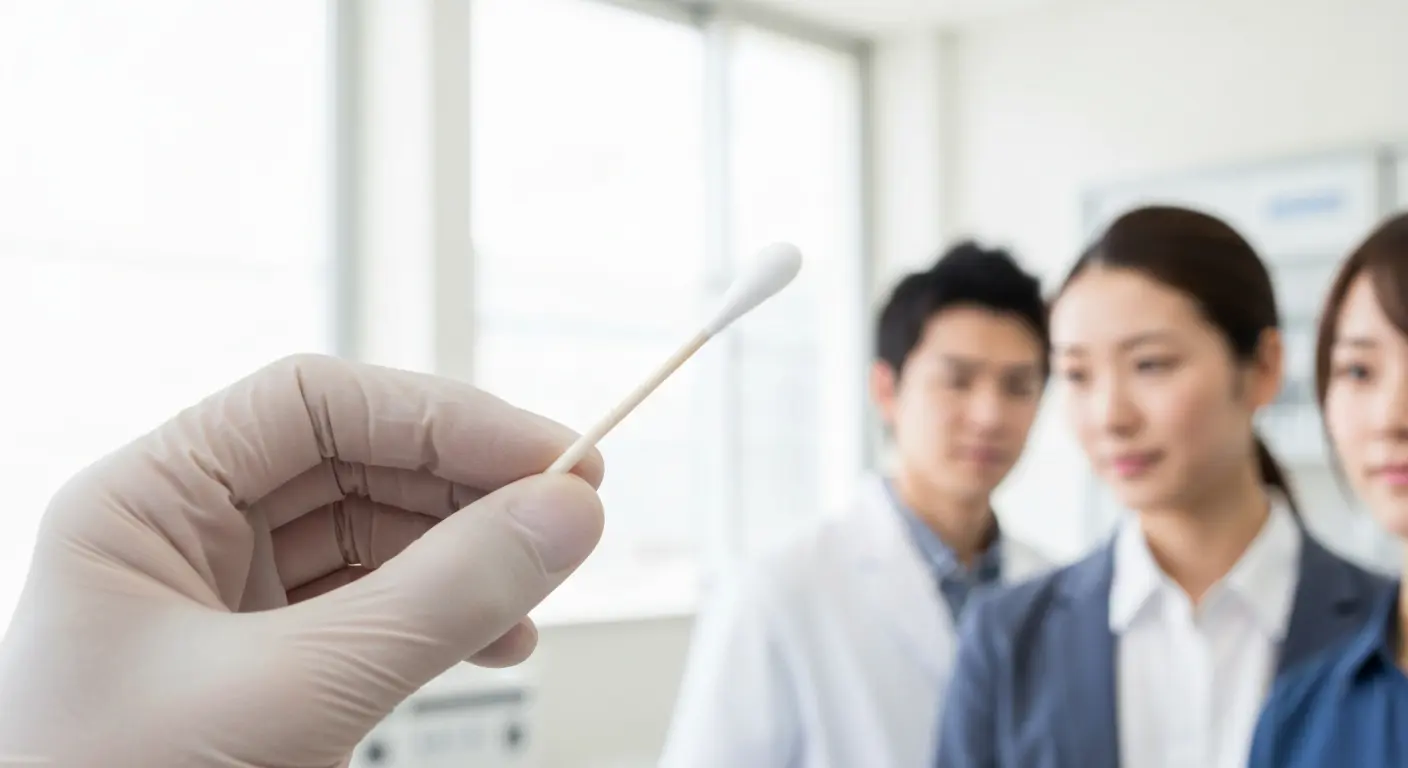
To cut to the conclusion, the most commonly used sample is "buccal epithelium (oral mucosa)." Blood was once the mainstream sample for DNA testing, but today, considering infection risk and the burden of drawing blood, buccal epithelium — which can be collected non-invasively — has become the global standard [ref:1]. Buccal epithelium refers to the mucous membrane lining the inside of the cheek, where new epithelial cells are continuously generated. Because each of these cells contains the subject's complete DNA information, a stable and sufficient amount of genetic information for testing can be obtained.
The reasons buccal epithelium has become the mainstream sample for DNA testing are as follows:
- Collection is simple and painless — it is completed simply by rubbing a dedicated sterile swab against the inside of the cheek
- The necessary amount of DNA can be stably secured — the inside of the cheek has active cell turnover, so a sufficient amount of fresh cells is always present
- It resists degradation and is easy to transport — a properly dried swab can withstand mailing at room temperature, and DNA quality is maintained for several weeks
- Can be collected across a wide age range — it can be safely collected from newborns to the elderly, regardless of age
As for the specific collection method, rubbing the inside of the cheek firmly with a swab about 10 to 20 times causes buccal epithelial cells to adhere all over the swab. What is important here is that if only saliva is soaked onto the swab, the DNA amount may be insufficient, resulting in cases where re-collection is needed [ref:1]. By extracting DNA from the buccal epithelial cells attached to the swab, high-purity DNA needed for testing can be obtained. The seeDNA Genetic Medical Research Institute includes detailed instructions with its collection kits so that even first-time users can collect samples accurately.
Why "Buccal Epithelium" Is Needed Instead of Saliva
A common misconception is that "soaking a swab in saliva in the mouth is enough for testing." However, this is not accurate. Saliva is composed almost entirely of water (about 99%), and DNA is not dissolved in large quantities in the saliva itself. The source of DNA contained in saliva is the very small amount of epithelial cells and white blood cells that have naturally sloughed off from inside the mouth [ref:1]. Therefore, simply holding a swab in the mouth and soaking it with saliva is highly likely to fail to secure the amount of DNA needed for testing.
The specific reasons why saliva alone is insufficient can be summarized as follows:
- Saliva itself contains almost no DNA — the main components of saliva are water and digestive enzymes, and its DNA content is extremely small
- There is a shortage of cell fragments (epithelial cells) needed for testing — cases have been reported in which a swab merely soaked in saliva cannot secure enough DNA for PCR amplification
- DNA extraction becomes difficult, and in some cases no result is obtained — if the DNA amount falls below the standard threshold, loci cannot be determined and the test may be ruled "unable to be conducted"
- Digestive enzymes in saliva risk breaking down DNA — enzyme activity such as amylase can cause DNA fragmentation to progress over time
To conduct testing reliably, a collection method that "scrapes off cells" rather than relying on saliva is essential. By pressing the swab firmly against the inside of the cheek and rubbing it back and forth several times, epithelial cells on the surface of the mucous membrane are physically dislodged and adhere to the swab. This "scraping" action is precisely the key point that greatly affects the success rate of DNA testing.
Everyday Items That Can Be Used Besides Buccal Epithelium
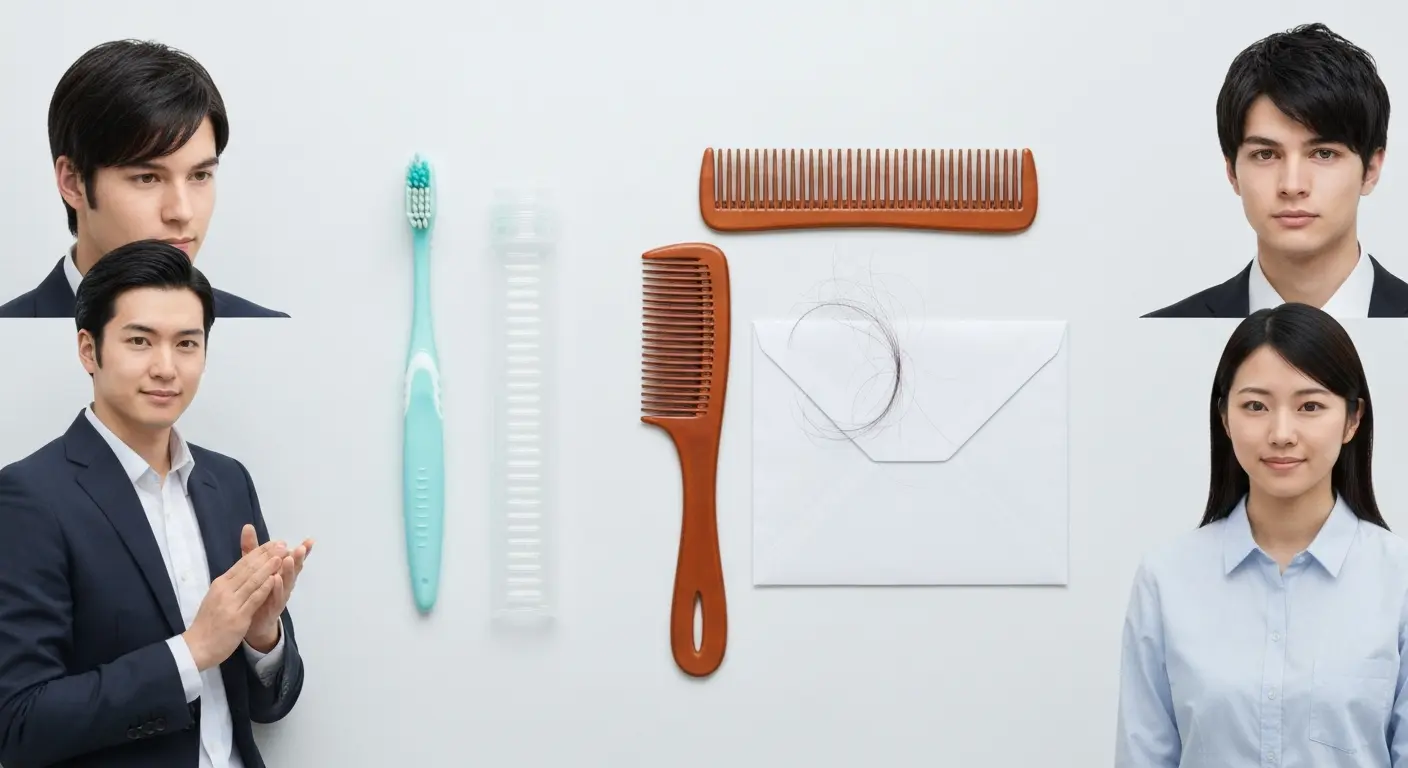
Besides buccal epithelium, there are many everyday items that carry the subject's own cell fragments and can be used for DNA testing. These are sometimes called "special samples," and they are used in cases where collecting buccal epithelium is difficult for some reason, or when testing needs to be conducted without the subject's knowledge (in the case of private testing) [ref:4].
Everyday items commonly used in actual testing requests include the following:
- Toothbrush [ref:2]
- Interdental brush
- Hair (with root) [ref:3]
- Tissue with semen
- Underwear
- Umbilical cord
- Cigarette (butt)
- Nail
- Bloodstain
- Condom
- Sanitary product
- Disposable chopsticks
- Paper cup
- Shaver
- Diaper
- Pacifier
- Chewing gum
- Tissue with nasal mucus
- Earwax
All of these share a common feature: "items likely to have cells attached." For example, toothbrushes accumulate gum and oral mucosa cells from daily brushing, and research has shown they are also an effective DNA source in the field of forensic science [ref:2]. In the case of hair, the hair shaft alone makes it difficult to obtain DNA, so it must be collected with the hair root (bulb) attached [ref:3]. Cigarette butts carry epithelial cells from the lips and mouth, and good-quality DNA is often obtained particularly from the filter portion.
On the other hand, testing using these everyday items tends to have a somewhat less stable success rate compared to collecting buccal epithelium. This is because of variable factors such as how the item was used, storage conditions, and elapsed time. According to data published by the seeDNA Genetic Medical Research Institute, the analysis success rate for special samples varies greatly depending on the type of sample [ref:4]. For a reliable testing result, it is recommended to prioritize buccal epithelium whenever possible and treat everyday items as supplementary samples.
List of Commonly Used Samples
Below is a summary of the samples most frequently used in testing requests, along with their "ease of obtaining DNA." For easy viewing on smartphones as well, the main samples are organized in a three-column table.
| Sample Type | Characteristics / Ease of Collection | Ease of Obtaining DNA |
|---|---|---|
| Buccal epithelium (swab) | Easy to collect, no pain | Very high |
| Toothbrush | Item used at home | High |
| Hair (with root) | Can be collected at home | High |
| Cigarette butt | Lip cells attached | Medium to high |
| Tissue with semen | Large amount of DNA | Very high |
| Umbilical cord | Retains cells from birth | High |
| Sanitary product | Large amount of DNA due to blood | Very high |
| Nail / earwax | Contains DNA even in small amounts | Medium |
| Paper cup / disposable chopsticks | Cells attached from eating/drinking | Low to medium |
| Shaver | Beard/skin fragments attached | High |
(*Whether testing is possible and the success rate vary depending on the condition and storage of the sample. The above are general tendencies only.)
As shown in the table, buccal epithelium, semen, and sanitary products all boast "very high" DNA recovery rates. This is because these samples contain a large amount of nucleated cells (cells that carry DNA). On the other hand, paper cups and disposable chopsticks show variability in the amount of cells attached during eating or drinking, and depending on usage, sufficient DNA may not always be obtained. For this reason, when using everyday items as samples, it is best to choose items used as recently as possible and to dry and store them promptly to improve the success rate.
Sample Storage Conditions Determine the Success of DNA Testing
Another factor often overlooked in DNA testing is the storage condition of the sample. No matter how much DNA a sample contains, if it is stored improperly, the DNA can degrade and break down, making testing impossible. Because DNA is a biological molecule, it is rapidly damaged under conditions such as moisture, high heat, ultraviolet light, and bacterial growth [ref:5].
The following three points are especially important regarding storage:
- Drying is the most important step — if a sample is sealed while still damp, bacteria and mold will multiply and break down the DNA. Be sure to let the sample fully air-dry naturally before storing it
- Avoid direct sunlight and high heat — ultraviolet light damages the double-helix structure of DNA, and high-temperature environments increase the activity of DNA-degrading enzymes. A cool, dark place at room temperature is ideal
- Store in a breathable container — paper bags or paper envelopes are breathable and suitable for initial storage. Avoid using plastic bags or plastic containers before the sample is dry, as they tend to trap moisture
For example, with a used toothbrush, it is ideal to shake off excess water, let it air-dry in a well-ventilated place for several hours, and then store it in a paper bag. For hair, wrap it in tissue paper and store it in a paper envelope. In either case, the shorter the period from collection to shipping to the testing institution, the better.
Precautions When Choosing a Sample
Many samples have the potential to be used for DNA testing, but it is not necessarily true that "if you send it, testing will always be possible." Please note the following points.
- DNA degrades easily if the sample is wet
Moisture rapidly breaks down DNA. It also causes bacterial growth, so avoid shipping a sample in a damp condition.
→ Storing and shipping in a dried state is the basic rule. - Do not seal the sample immediately after use
Trapped moisture leads to mold growth, which further destroys DNA. Sealing immediately in a plastic bag in particular is strictly prohibited.
→ Store temporarily in a paper bag → seal only after drying, which is safer. - Avoid items that may have been touched by multiple people
This can result in "mixed DNA" containing DNA from multiple individuals, making it impossible to accurately determine one person's genetic profile.
→ Do not use a sample that may have been touched by anyone other than the subject. - The success rate of testing differs by sample type
Buccal epithelium has the most consistently high success rate. With everyday items, the amount of DNA varies greatly depending on usage, and DNA may not be detected at all from items that are extremely old or have been washed [ref:4].
→ If in doubt, we recommend consulting a testing institution in advance.
Consulting a Testing Institution to Avoid Failure
When requesting DNA testing, if you are unsure about which sample to choose, consulting with a testing institution's specialized staff in advance is the shortcut to success. The seeDNA Genetic Medical Research Institute offers free advice tailored to each customer's circumstances on the best sample to use, and carefully answers questions such as "Can this sample be tested?" and "How should it be stored?"
Also, if you are unsure about the quality of a sample, sending a "backup sample" together is one option. For example, by using a toothbrush as the primary sample while also including hair as a backup sample, testing can proceed using the backup sample even if the primary sample fails to yield sufficient DNA. This kind of precaution can help prevent the need for re-collection or additional costs.
In DNA testing, the quality of the sample directly affects the reliability of the results. A testing institution that holds the international quality standard ISO9001 certification enforces strict quality control over sample acceptance criteria and testing processes, so you can trust your testing to it with confidence [ref:5].
Summary
The sample most commonly used in parent-child DNA testing is "buccal epithelium," and the most reliable collection method is rubbing the inside of the cheek with a dedicated swab. Note that simply applying saliva to a swab results in an insufficient amount of cells. On the other hand, DNA also remains on everyday items such as toothbrushes, hair, and cigarettes, and in many cases these can be used for testing. However, the success rate can drop depending on the condition and storage method of the sample, so proper handling is important.
In particular, please remember these three points: "store the sample in a dried state," "choose a sample that has not been touched by anyone other than the subject," and "consult a testing institution if in doubt." To conduct DNA testing with peace of mind, it is important to choose the optimal sample while consulting with a specialized institution. The seeDNA Genetic Medical Research Institute provides careful support tailored to each customer's situation, so please feel free to contact us with any questions.
\Resolve your parent-child relationship concerns in as little as 2 days/
 Apply / Purchase Kit
Frequently Asked Questions
Q1. What is the most reliable sample for DNA testing?
A. The most reliable sample is "buccal epithelium (oral mucosa)." By rubbing the inside of the cheek 10 to 20 times with a dedicated sterile swab, a stable and sufficient amount of DNA for testing can be collected. There is no pain during collection, and it can be used across a wide age range, from newborns to the elderly.
Q2. Is it not enough to just put saliva on a swab?
A. Saliva alone is not sufficient. About 99% of saliva is water, and it contains only a very small amount of cells with DNA. Only by pressing the swab against the inside of the cheek and "scraping off cells" can the amount of DNA needed for testing be secured. Simply soaking the swab with saliva may result in an insufficient amount of DNA, requiring re-collection.
Q3. Can DNA testing be done with a toothbrush or hair?
A. Yes, it is possible. A toothbrush accumulates oral mucosa cells through daily brushing and can be used for DNA testing. In the case of hair, it must be collected with the hair root (bulb) attached. Please note that cut hair or hair that has fallen out naturally often lacks the hair root, which may result in insufficient DNA.
Q4. What should I be careful about when storing a sample?
A. The most important thing is "drying." If a sample is sealed while still damp, bacteria and mold will grow and break down the DNA. Let the sample air-dry naturally in a well-ventilated place, then store it in a paper bag or paper envelope in a cool, dark place at room temperature. Also avoid direct sunlight and high-temperature environments.
Q5. Can a sample that may have been touched by multiple people be used?
A. In principle, please avoid using it. If DNA from multiple people becomes mixed, resulting in "mixed DNA," it may become impossible to accurately determine an individual's genetic profile. Be sure to choose a sample used only by the subject, and take care during collection and storage to ensure no one else touches it.
Q6. What should I do if I am unsure which sample to choose?
A. The seeDNA Genetic Medical Research Institute offers free consultations regarding sample selection. We will advise you on the best sample for your situation, so please feel free to contact our toll-free number (0120-919-097). If you are concerned, it is also effective to send a backup sample along with the main one.
seeDNA Genetic Medical Research Institute's Trusted Support
The seeDNA Genetic Medical Research Institute is a trusted and reliable specialized institution for DNA testing and genetic testing, holding the international quality standard ISO9001 certification and the Privacy Mark for privacy protection.
If you are troubled about family or parent-child blood relationships, a partner's infidelity, or similar concerns, our DNA testing experts will provide reassuring support, so please feel free to contact us.
[Free Consultation with Specialized Staff]

If you have any questions,
please feel free to contact our toll-free number.
\Open every day, including weekends/
Business hours: Monday to Sunday 9:00 AM - 6:00 PM
(excluding holidays)
 Author
Ph.D. / Test Analyst: L. L.
After earning a Ph.D. in Clinical Medicine from the Graduate School of International University of Health and Welfare, joined seeDNA as a test analyst.
Responsible for testing and data analysis for prenatal parent-child DNA testing.
[References]
(2) Press Release / News Release Distribution Share No.1|PR TIMES
(3) Japanese Journal of Science and Technology for Identification, August 1997
(4) Genetic Testing & DNA Testing seeDNA
(5) J Biol Chem, March 1997