
Last revised: October 1, 2024
This article details the history of DNA, from its discovery through to modern genome analysis technologies. It covers Miescher's discovery of DNA, Griffith's transformation experiment, Watson and Crick's double helix model, and explains the next-generation sequencing technology used by seeDNA.
- ・The History of DNA Research and Current Technology
- ・The Discovery of DNA ― Johannes Friedrich Miescher (1869)
- ・The Discovery of Transformation ― Frederick Griffith's Experiment (1928)
- ・Proving the Identity of the Transforming Factor ― Oswald Avery's Achievement (1944)
- ・Why Avery's Discovery Was Not Accepted
- └ Decisive Evidence from the Bacteriophage Experiment (1952)
- ・Elucidating the DNA Double Helix Structure ― A Landmark Achievement in Scientific History
- ・Completion of the Human Genome Project and Modern DNA Testing Technology
- └ Next-Generation Sequencers (NGS) and DNA Testing
- ・Timeline of DNA Research History
- ・The Social Contribution seeDNA Strives For
The History of DNA Research and Current Technology
 DNA (deoxyribonucleic acid), present in every cell that makes up our bodies, is a critically important substance that serves as the blueprint of life. Today, DNA testing and genetic testing are used across a wide range of fields, including medicine, forensic science, and paternity testing, but the DNA research underlying these applications has a grand history spanning more than 150 years.
DNA stores all the genetic information necessary for life within the human genome, which is composed of approximately 3 billion base pairs. It is said that about 0.1% of the genome differs between individuals, and this small difference forms the basis for individual identification and paternity testing [ref:6]. This article provides a detailed explanation of the journey of DNA research, from its discovery to the use of today's cutting-edge next-generation sequencing (NGS) technology.
The Discovery of DNA ― Johannes Friedrich Miescher (1869)
 DNA was first discovered in 1869. Swiss biochemist Johannes Friedrich Miescher collected white blood cells from pus found on hospital bandages and isolated an unknown substance rich in phosphorus contained within their cell nuclei. Because it originated from the nucleus, Miescher named this substance "nuclein." It was later redefined as "nucleic acid," and because it contains the sugar deoxyribose, it came to be called "deoxyribonucleic acid (DNA)" [ref:1].
Miescher's discovery was groundbreaking, but at the time, the biological function DNA performed had not yet been clarified. From the late 19th century through the early 20th century, the prevailing view was that proteins were the substances responsible for heredity, and DNA—which appeared to have a relatively simple structure—was not considered to be the carrier of genetic information. Miescher himself never fully grasped the biological significance of nuclein, but the method he established for extracting nucleic acid from cell nuclei became a foundational technique in subsequent biochemical research [ref:7].
The Discovery of Transformation ― Frederick Griffith's Experiment (1928)
 The discovery that revealed DNA to be the carrier of heredity came from a famous experiment conducted in 1928 by British bacteriologist Frederick Griffith. Using Streptococcus pneumoniae, Griffith discovered a surprising phenomenon.
There are two types of pneumococcus: the S-type (Smooth type: pathogenic, possesses a capsule) and the R-type (Rough type: non-pathogenic, lacks a capsule). When Griffith mixed heat-killed S-type bacteria with living R-type bacteria and injected the mixture into mice, the normally harmless R-type bacteria transformed into the pathogenic S-type, and the mice developed pneumonia and died [ref:2].
This experiment showed that "some substance" had transferred from the dead S-type bacteria to the R-type bacteria, permanently changing the R-type's characteristics. Griffith passed away before he could identify this "transforming factor," but his experiment became a crucial starting point in the effort to determine the true identity of genetic material.
Proving the Identity of the Transforming Factor ― Oswald Avery's Achievement (1944)
The identity of the transforming factor discovered by Griffith was determined by Oswald Avery, of Rockefeller University in the United States, along with his collaborators Colin MacLeod and Maclyn McCarty. In 1944, Avery and his colleagues carefully isolated each component contained in S-type bacteria one by one, mixing each with R-type bacteria to examine whether transformation into the S-type would occur [ref:1].
Specifically, when enzymes that break down protein (protease), enzymes that break down lipids (lipase), and RNA-degrading enzymes (RNase) were each added to the extract from S-type bacteria, transformation was not inhibited. However, when DNA-degrading enzyme (DNase) was added, transformation was blocked. This result proved that the substance causing transformation was neither protein nor RNA, but DNA itself. Avery and his colleagues' paper was published in the Journal of Experimental Medicine and remains highly regarded today as a landmark achievement symbolizing the dawn of molecular biology [ref:8].
Why Avery's Discovery Was Not Accepted
Although Avery and his colleagues' experiment was a groundbreaking achievement demonstrating that DNA is the substance responsible for heredity, the scientific community did not immediately accept this result at the time. The biggest reason was the fact that DNA is composed of only four types of bases: adenine (A), thymine (T), guanine (G), and cytosine (C) [ref:3]. Many researchers found it hard to believe that all the complex genetic information of living organisms could be recorded using combinations of just four types of bases.
Under the "tetranucleotide hypothesis" that was prevalent at the time, it was thought that the four bases could only form a monotonous structure arranged in equal proportions, and it seemed impossible that such a simple molecule could encode diverse genetic information. This hypothesis would later be disproven by the research of Erwin Chargaff.
Decisive Evidence from the Bacteriophage Experiment (1952)
DNA came to be widely recognized as the substance of the gene following an experiment conducted in 1952 by Alfred Hershey and Martha Chase using bacteriophages (viruses that infect bacteria). Using radioactive isotopes, they labeled DNA and protein separately and investigated which substance was injected into the bacterial cell when a bacteriophage infected E. coli.
The results revealed that it was DNA that entered the bacterium and directed the production of new phages, while the protein shell remained outside the bacterium. This "Hershey-Chase experiment" made the recognition that DNA is the carrier of genetic information decisive within the scientific community [ref:2].
Elucidating the DNA Double Helix Structure ― A Landmark Achievement in Scientific History
The structure of DNA was revealed in 1953. The contributions of the following researchers combined to uncover the essential nature of DNA.
- James Watson and Francis Crick: Proposed the double helix structure model of DNA. Their paper, published in Nature in 1953, became a monumental achievement that changed the history of life science [ref:4].
- Erwin Chargaff: Conducted detailed analysis of the base composition of DNA and discovered "Chargaff's rules," which state that the amounts of adenine (A) and thymine (T), and of guanine (G) and cytosine (C), are each equal. This revealed the complementary correspondence between purine and pyrimidine bases.
- Rosalind Franklin: Used X-ray diffraction to capture images of DNA's crystal structure, obtaining the famous "Photo 51." This X-ray diffraction image became decisive evidence of DNA's helical structure.
- Robert Hooke: In the 17th century, observed thin slices of cork through a microscope he built himself and discovered the "cell," laying the foundation of cell biology.
Through the accumulation of these researchers' contributions, it became clear that DNA stores genetic information as a sequence of bases within its double helix structure, and that this information is accurately replicated during cell division. Watson and Crick received the Nobel Prize in Physiology or Medicine in 1962 [ref:4]. The discovery of the double helix model became the starting point for the subsequent establishment of the concept of the central dogma (the flow of genetic information from DNA to RNA to protein), the deciphering of the genetic code, and the further development of genetic engineering.
Completion of the Human Genome Project and Modern DNA Testing Technology
The Human Genome Project, an international research initiative that began in 1990, aimed to decode the entire sequence of the roughly 3 billion base pairs contained in human DNA. The project declared completion in 2003, with the entire human DNA sequence decoded [ref:5].
Decoding the human genome yielded many important insights, including that humans have approximately 20,000 to 25,000 genes, and that protein-coding regions account for only about 1.5% of the entire genome. It also became clear that there is an enormous number of variants—differences in DNA sequence between individuals—which forms the basis of modern DNA testing technology. In 2022, the Telomere-to-Telomere (T2T) Consortium reported a complete human genome sequence, including the previously undecoded centromere and telomere regions, advancing genome science to a new stage [ref:6].
Next-Generation Sequencers (NGS) and DNA Testing
Today, seeDNA Co., Ltd. utilizes next-generation sequencing (NGS), a cutting-edge genetic analysis technology, to conduct highly accurate DNA testing. Compared to the conventional Sanger method, next-generation sequencers offer a dramatically higher throughput (processing capacity), capable of reading hundreds of millions to billions of base sequences in parallel.
By detecting the slight differences in DNA sequence between individuals with high precision, DNA testing for a variety of purposes has become possible. Representative tests offered by seeDNA include the following.
- Paternity testing using STR (Short Tandem Repeat): STRs are short repeated sequences of bases found in DNA, and the number of repeats varies between individuals. By analyzing multiple STR loci simultaneously, it is possible to determine parent-child relationships with extremely high accuracy.
- Prenatal testing using SNPs (single nucleotide polymorphisms): SNPs are variations where a single base in the DNA sequence differs between individuals. By analyzing the millions of SNPs present across the human genome, it becomes possible to non-invasively obtain fetal DNA information from the mother's blood and perform testing during pregnancy.
- Other genetic testing: The range of applications for next-generation sequencers is rapidly expanding, including disease risk assessment and drug sensitivity prediction. As NGS technology continues to advance, both a significant reduction in analysis costs and an improvement in accuracy are being achieved simultaneously, and the possibilities for DNA testing are expected to continue expanding in the future.
Timeline of DNA Research History
| Year | Event | Researcher |
|---|---|---|
| 1869 | Discovery of DNA (nuclein) | Miescher |
| 1928 | Discovery of transformation | Griffith |
| 1944 | Proof that the transforming factor is DNA | Avery |
| Year | Event | Researcher |
|---|---|---|
| 1952 | Bacteriophage experiment | Hershey & Chase |
| 1953 | Elucidation of the double helix structure | Watson & Crick |
| 2003 | Completion of the Human Genome Project | International joint project |
The Social Contribution seeDNA Strives For
seeDNA Co., Ltd. holds as its corporate philosophy the swift adoption of the latest scientific advances to make possible testing and analysis that were previously technically impossible, thereby contributing to society through new scientific technology. Roughly 150 years since the discovery of DNA and about 70 years since the elucidation of the double helix structure, DNA testing technology continues to advance day by day [ref:4].
We are committed to providing accurate and reliable DNA testing across all fields of genetic medicine, forensic science, and personal identification, and to helping resolve the questions and concerns of each and every one of our customers. If you have any questions or concerns regarding DNA testing, please feel free to contact seeDNA.
Frequently Asked Questions
Q1. When and by whom was DNA discovered?
A. DNA was discovered in 1869 by Swiss biochemist Johannes Friedrich Miescher. He collected white blood cells from pus on hospital bandages and isolated a phosphorus-rich substance contained in their cell nuclei, naming it "nuclein." This substance was later recognized as DNA (deoxyribonucleic acid).
Q2. When was DNA proven to be the genetic material?
A. In 1944, Oswald Avery and his colleagues examined each component isolated from S-type pneumococcus and showed that transformation was blocked only when a DNA-degrading enzyme was added, proving that DNA is the carrier of genetic information. Decisive evidence was further provided by the Hershey-Chase experiment in 1952.
Q3. What is the difference between STR and SNP used in DNA testing?
A. STR (Short Tandem Repeat) refers to a repeating short base sequence, and the individual variation in the number of repeats is used for paternity testing and similar applications. SNP (single nucleotide polymorphism), on the other hand, refers to a difference in a single base in the DNA sequence and is used for non-invasive analysis from maternal blood, such as in prenatal testing.
Q4. What is a next-generation sequencer (NGS)?
A. A next-generation sequencer (NGS) is a DNA sequencing device with dramatically higher processing capacity compared to the conventional Sanger method. It can read hundreds of millions to billions of base sequences simultaneously and detect slight differences in DNA sequence between individuals with high precision. seeDNA uses this NGS technology to conduct various types of DNA testing.
Q5. What is the Human Genome Project?
A. The Human Genome Project is an international research initiative that began in 1990, aiming to decode the entire sequence of the approximately 3 billion base pairs contained in human DNA. Its completion was declared in 2003, yielding vast amounts of genomic information that forms the foundation of modern DNA testing and genetic medicine.
Q6. In what situations is DNA testing used?
A. DNA testing is used in a wide range of fields, including paternity testing, forensic testing (criminal investigation), prenatal testing, disease risk assessment, and drug sensitivity prediction. In particular, paternity determination through STR analysis and non-invasive prenatal testing through SNP analysis are representative services offered by seeDNA.
Q7. How was the double helix structure of DNA discovered?
A. In 1953, James Watson and Francis Crick proposed the double helix structure model. This discovery was achieved by integrating the results of multiple researchers, including Rosalind Franklin's X-ray diffraction photograph "Photo 51" and Erwin Chargaff's rules of base composition (A=T, G=C). Watson and Crick received the Nobel Prize in Physiology or Medicine in 1962.
The Reassuring Support of seeDNA Genetic Medicine Research Institute
seeDNA Genetic Medicine Research Institute is a trusted and reliable DNA testing and genetic testing institution that has obtained ISO9001 international quality certification and the Privacy Mark for privacy protection.
If you have concerns about family or parent-child blood relationships, or a partner's infidelity, our DNA testing specialists will provide thorough support to give you peace of mind, so please feel free to contact us.
[Free Consultation with Specialist Staff]

If you have any questions,
please feel free to contact our toll-free number.
/Open every day, including weekends/
Business hours: Monday-Sunday 9:00-18:00
(excluding holidays)
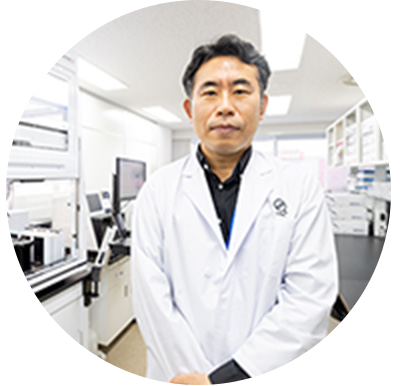 Author
Dr. Kihan Tomikane, M.D., Ph.D.
Graduated from the Master's/Doctoral program in Biosystem Studies, Molecular and Biomedical Sciences at the University of Tsukuba Graduate School
In 2017, developed Japan's first prenatal DNA testing(Patent 7331325) using a trace-DNA analysis technology(Patent 7121440)
[References]
(2) The Story of DNA, August 2009
(3) Nature, February 2001
(4) Kazusa DNA Research Institute - Aiming to be an institute that broadly contributes to society.
(5) Cancer Manag Res, 2020
(6) Asahi Shimbun, April 2023
(7) Science, May 2003
(8) Geological Society of Japan, June 2022