
Last revised: August 14, 2024
The reason a private DNA test isn't accepted in court isn't about accuracy — it's because there's no third-party witness present at sample collection. We explain in detail the differences from legal testing and how accuracy is guaranteed.
- ・The real reason private testing isn't admissible in court
- ・Private testing accuracy is also plenty high
- ・With private testing, the individual handles everything from sample collection to consent forms
- ・With legal testing for court use, specialist staff are involved at every step
- ・Key differences between private and legal testing
- ・The same accuracy guarantee as court testing is also available
- ・Which test should you choose
The real reason private testing isn't admissible in court
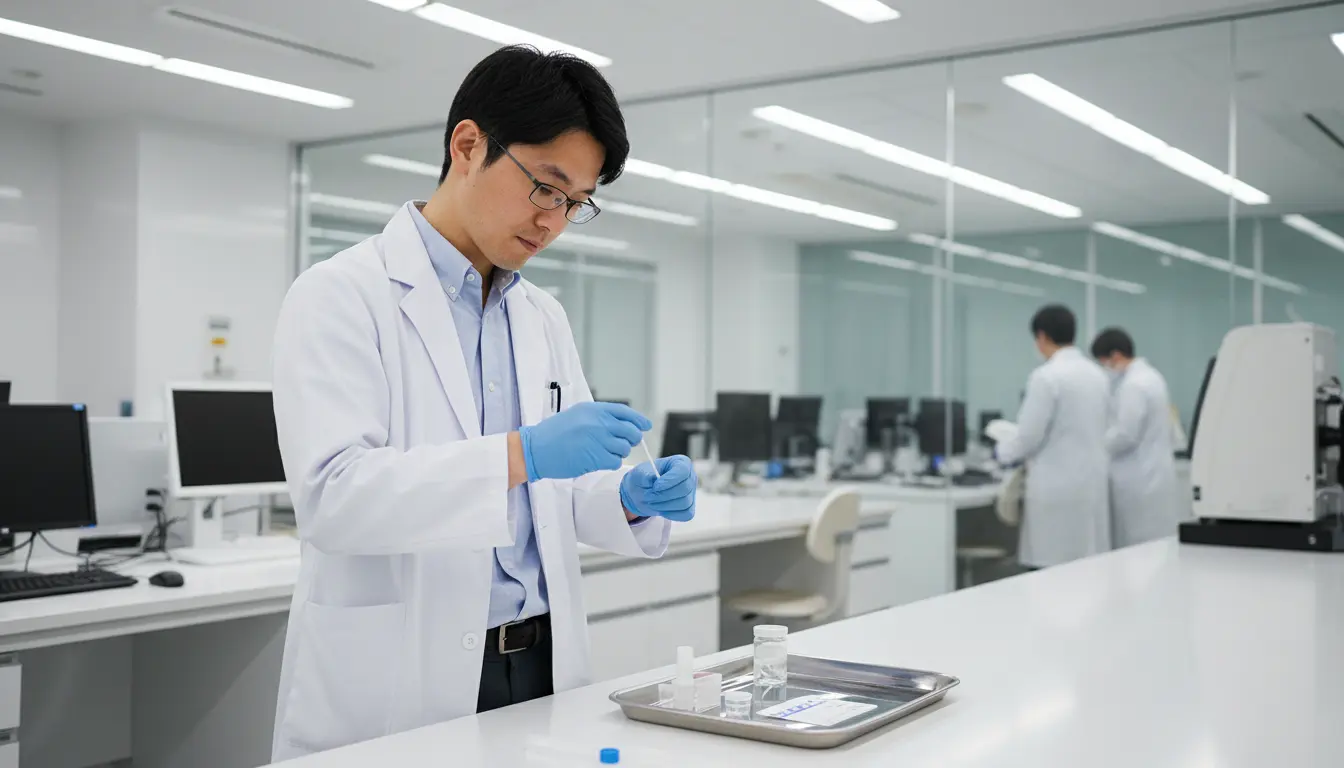 Many people have probably heard that "a private DNA test can't be used in court." So why can't it be used? The answer is "because there was no third-party witness present when the sample was collected." In other words, it isn't because the accuracy of the DNA analysis itself is low — it's a "procedural issue": there is no objective way to prove that the sample was collected from the right person, following the right procedure [ref:1].
In court, the "reliability" and "authenticity" of evidence are taken extremely seriously. No matter how high the accuracy of the test result, if there's no guarantee that the submitted sample truly belongs to the person concerned, the court cannot admit that result as formal evidence. Understanding this point correctly is extremely important for anyone requesting a DNA test.
Private testing accuracy is also plenty high
 At our seeDNA Genetic Medicine Research Institute, even for private testing we guarantee accuracy higher than the FBI (US Federal Bureau of Investigation) guidelines. Private testing is not inadmissible in court "because its accuracy is low."
The accuracy of DNA testing is determined by the number of genetic loci (STR markers) used in the analysis and the analytical methods employed. Under CODIS (Combined DNA Index System), which the FBI recommends, analyzing 13 to 20 loci is the standard [ref:2], but our private testing analyzes more loci than that, giving it scientific reliability equivalent to legal testing. Therefore, the notion that "private testing is less accurate" is a misconception — it is purely a difference in procedure that separates the two in terms of legal validity.
With private testing, the individual handles everything from sample collection to consent forms
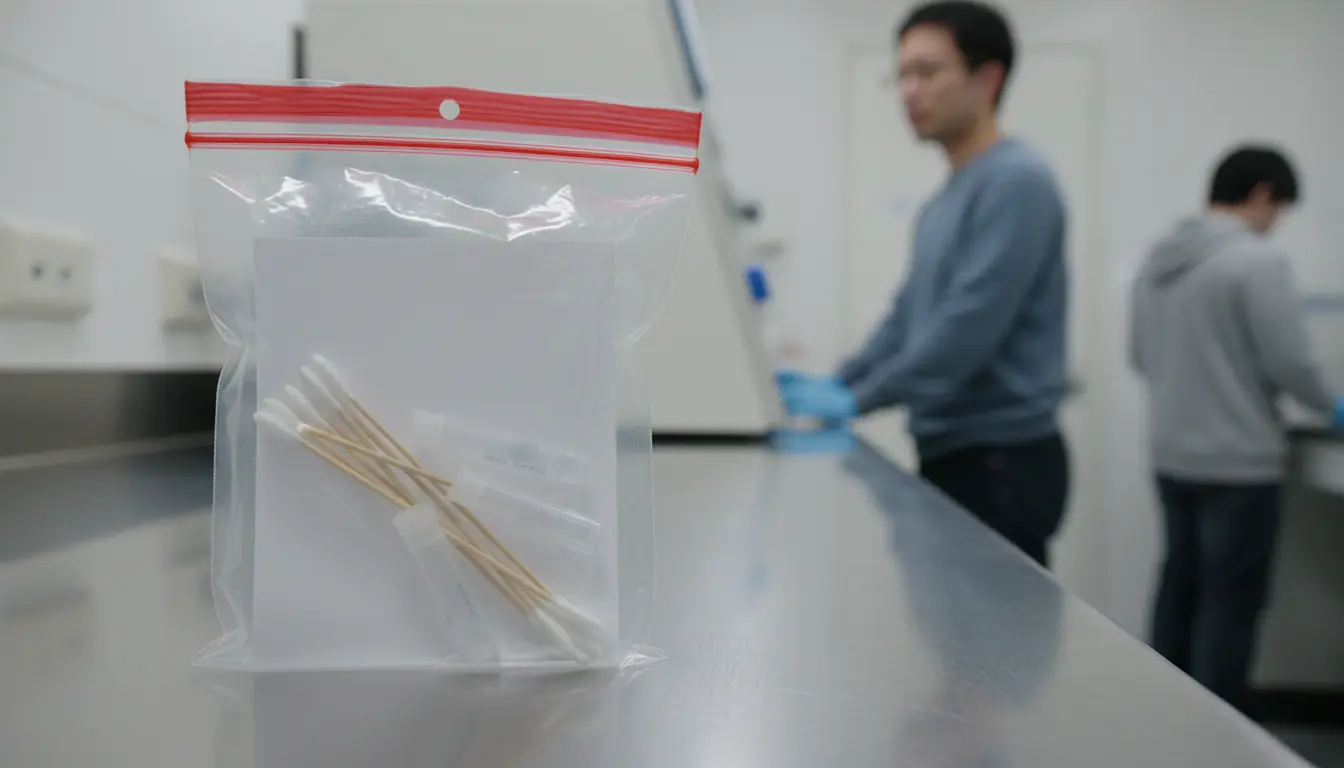 For private testing, the client uses a "DNA testing kit" we send out and collects the sample themselves. This offers the convenience of collecting the sample at home or wherever is convenient, at a time that suits you.
In accordance with the Ministry of Economy, Trade and Industry's "Guidelines on the Protection of Personal Information," we obtain signatures from all subjects participating in the test on the consent form, but we are unable to directly confirm identity with the subjects ourselves [ref:3]. Because the entire process of preparing the consent form and collecting the sample is entrusted to the client, we are unable to certify the following two points:
- Whether the sample used in the test was correctly collected from the subject themselves
- Whether the subjects participating in the test have truly given their consent
This "absence of identity verification" is precisely the biggest reason the results of private testing are not accepted as formal evidence in court. In court, it is an essential requirement that the "chain of custody" of evidence be established [ref:4], and with private testing, this chain is broken.
Learn how DNA testing works here
With legal testing for court use, specialist staff are involved at every step
Legal testing for court use (legal testing) is naturally more accurate than private testing, and on top of that specialist staff handle everything from sample collection through document preparation. Because specialist staff witness the sample collection, we are able to formally certify the identity of the subject who provided the sample and prove the biological relationship.
The specific procedure for legal testing is as follows.
- Identity verification via ID document: Specialist staff check and record ID documents (driver's license, passport, etc.) for all subjects.
- Photography: A photo of each subject's face is taken and linked to their sample.
- Sample collection witnessed by a third party: Samples such as oral cells are collected in the presence of specialist staff.
- Signing of the consent form: All subjects sign the consent form in front of staff, confirming their participation is voluntary.
- Strict sample management: Collected samples are sealed and sent directly to the analysis lab. The chain of custody is maintained at every step.
In this way, because third-party involvement and record-keeping are guaranteed at every step, from sample collection through to the reporting of analysis results, courts are able to accept legal testing as evidence [ref:1].
Key differences between private and legal testing
The differences between the two are summarized below.
| Comparison item | Private testing | Legal testing |
|---|---|---|
| Sample collection | Performed by the client themselves | Witnessed by specialist staff |
| Identity verification | None | Confirmed via ID document |
| Use in court | Generally not possible | Possible |
Note that, regarding analysis accuracy, by selecting an option, even private testing can receive the same accuracy guarantee as legal testing.
The same accuracy guarantee as court testing is also available
Even for private testing intended purely for personal confirmation, if you select the "same accuracy as court testing" option when applying, we guarantee an accuracy level of 99.99% or higher (0% in the case of exclusion), the same as legal DNA testing for court use.
This level of accuracy is considered sufficient internationally as a probability of paternity, and greatly exceeds even the standard required by the American Association of Blood Banks (AABB) (99.0% or higher) [ref:5]. Where paternity is confirmed, we report it at a probability of 99.99% or higher, and where it is excluded, we report it as a complete 0%.
For those who think "I just want to check for myself for now, but there's a chance I might need to use it in court in the future," we recommend choosing legal testing from the outset. Because the results of private testing cannot later be "converted" into legal testing, it's important to choose the type of test that matches your purpose.
Which test should you choose
It's important to choose the appropriate type of test according to the purpose of the DNA test. Please refer to the following points.
- For personal confirmation purposes (you just want to know the result for yourself) → private testing is sufficient
- Where use in court is anticipated, such as paternity claims, custody disputes, or inheritance issues → please choose legal testing
- If it's currently just for personal confirmation, but there's a chance it could develop into legal proceedings in the future → we recommend legal testing just in case
- If you cannot get the other party's cooperation → we recommend first checking with private testing, then consulting a lawyer based on the results
Whichever type of test you choose, our seeDNA Genetic Medicine Research Institute uses the latest analytical equipment and a rigorous quality control system to deliver accurate, reliable DNA testing results. Please feel free to contact us with any questions.
Frequently Asked Questions
Q1. Can the results of a private test later be used as evidence in court?
A. In principle, no. Because there is no third-party witness present at sample collection in private testing, the chain of custody of evidence is not established. If you plan to use the results in court, please choose legal testing from the start.
Q2. Is there a difference in analysis accuracy between private and legal testing?
A. Our private testing guarantees accuracy exceeding FBI guidelines, and if you select the "same accuracy as court testing" option, a probability of paternity of 99.99% or higher (0% in the case of exclusion) is guaranteed. The difference in legal validity does not stem from a difference in accuracy.
Q3. What specific identity verification is performed for legal testing?
A. For legal testing, specialist staff check the ID documents (driver's license, passport, etc.) of all subjects and take a photograph of their face. Then, samples are collected in the presence of staff, and the consent form is also signed in front of them.
Q4. What should I do if the other party does not consent to testing?
A. Even if you cannot get the other party's cooperation, we recommend first carrying out whatever confirmation is possible with private testing, then consulting a lawyer based on the results. There are also cases where a court issues a testing order.
Q5. Does the result of a private test have no legal meaning at all?
A. While the result of a private test is not, in principle, accepted as "formal evidence" in court, there are cases where it is used as reference material for consultation with a lawyer or for considering future legal action. However, if the matter is ultimately contested in court, legal testing must be carried out again.
Reassuring support from seeDNA Genetic Medicine Research Institute
seeDNA Genetic Medicine Research Institute is a trusted, reliable DNA testing and genetic testing institute that has obtained the international quality standard ISO9001 and the Privacy Mark for personal information protection.
If you're troubled by questions about family or parent-child biological relationships, or a partner's infidelity, our DNA testing specialists will support you so you can feel reassured — please feel free to contact us.
[Free consultation with specialist staff]

If you have any questions,
please feel free to contact our toll-free number.
/Open every day, including weekends/
Business hours: Mon–Sun 9:00-18:00
(except public holidays)
 Author
Dr. Tomikane Yukinori, M.D., Ph.D.
Graduate of the master's/doctoral program in Biological Systems and Molecular Information Medicine, University of Tsukuba Graduate School
In 2017, developed Japan's first prenatal DNA test(Patent 7331325) using a trace-DNA analysis technology(Patent 7121440)