
Rewritten on: October 20, 2025
Over seven years, 130 cases of DNA testing fraud and falsification were uncovered at the Saga Prefectural Police forensic science institute. We explain in detail the multi-layered fraud prevention measures implemented by seeDNA Genetic Medical Laboratory, including ISO 9001 certification, a double-check system, and automated testing systems.
The "inappropriate handling and falsified reporting of DNA testing" scandal at the Saga Prefectural Police forensic science institute is said to have involved as many as 130 cases over seven years, becoming a serious problem that shook the very foundations of trust in forensic science [ref:1]. DNA testing is often treated as decisive evidence in criminal investigations and trials, and any erosion of its reliability could become a breeding ground for wrongful convictions [ref:2]. To prevent this kind of fraud, simply "strengthening oversight" as a matter of principle is not enough—a multi-layered defense combining operational systems, organizational culture, external oversight, and technical controls is essential.
This article explains in detail the quality management framework and fraud prevention measures published by seeDNA Genetic Medical Laboratory, and examines how these best practices from a private testing organization could be applied to a public institution such as a forensic science institute. Ensuring the reliability of DNA testing is an extremely important theme, not only for individuals requesting testing but for the fairness of the entire judicial system.
- ・Overview and background of the Saga Prefectural Police forensic science institute DNA testing fraud scandal
- ・seeDNA Genetic Medical Laboratory's fraud prevention and quality management framework
- ・Detailed explanation of each measure
- └ Organizational quality management through ISO 9001 certification
- └ The importance of the double-check system
- └ Eliminating human intervention through automated testing systems
- └ Preventing sample contamination and swapping through physical separation
- ・Points to consider when applying seeDNA Genetic Medical Laboratory's methods to forensic science institutes: limitations and extensions
- └ Differences in purpose of use and interests involved
- └ Rigor of physical and operational separation
- └ Strengthening logging and tamper-prevention technology
- └ Introducing external audits and third-party verification
- └ Introducing anomaly detection systems
- └ Incentive design and penalty systems
- ・Points to check when choosing a DNA testing organization
- └ Whether international quality certification has been obtained
- └ Whether a double-check system is in place
- └ Transparency of the report
- └ Status of automated system adoption
- └ Whether there is a retest/refund guarantee system
- └ Commitment to privacy protection
- ・The process behind reliable DNA testing
- ・Future outlook for improving the reliability of DNA testing
Overview and background of the Saga Prefectural Police forensic science institute DNA testing fraud scandal
 It came to light that a staff member in his 40s at the Saga Prefectural Police Forensic Science Institute had repeatedly engaged in inappropriate handling and falsified reporting of DNA testing over a period of roughly seven years [ref:1]. The employee was dismissed for disciplinary reasons, but the fact that the fraud reached as many as 130 cases—and went unnoticed within the organization for so long—is extremely serious [ref:3].
DNA testing is regarded as one of the most reliable forms of scientific evidence in modern criminal investigation today. However, its results depend heavily on the integrity of the people and organizations conducting the analysis. What this scandal exposed is the obvious but crucial fact that the assumption "it's scientific, so it's accurate" holds true only when an appropriate quality management system is functioning properly [ref:2]. If sample mix-ups, data tampering, or falsified analysis results occur anywhere in the testing process, no amount of superior scientific technology can produce a correct outcome.
In response to this scandal, the need to re-examine fraud prevention systems has been recognized anew at every organization that conducts DNA testing—public or private. Below, we organize the concrete mechanisms and policies that can be confirmed from seeDNA Genetic Medical Laboratory's published information.
seeDNA Genetic Medical Laboratory's fraud prevention and quality management framework
 As a specialized organization for DNA testing and genetic testing, seeDNA Genetic Medical Laboratory has introduced multiple mechanisms to ensure the accuracy and reliability of its test results. The table below summarizes the main initiatives and their contribution to fraud prevention.
| Item | Description | Contribution to fraud prevention |
|---|---|---|
| ISO 9001 certification | Holds the international quality assurance standard "ISO 9001" | Quality management systems, standardized procedures, and record management are third-party certified, strengthening deterrence and verification capability |
| Double-check system | Every paternity test is analyzed twice as a double-check | A verification system that does not rely on a single analyst guards against both fraud and error |
| Sample photos and DNA profiles in reports | Reports clearly state photos of the samples used and the DNA profiles | Fulfills accountability and provides material for verification during external review |
| Automated testing system | Operates world-class automated testing systems on two units | Reduces the scope for manual operation, human error, and fraudulent alteration |
| Separate laboratories and separate examiners | Fetal and parental DNA testing is analyzed twice each, in separate laboratories by separate examiners | Reduces the risk of sample mixing or swapping, and avoids concentration of control in a single examiner |
| Retest/refund guarantee system | Free retesting when testing is not possible, and a full refund guarantee if results are suspected to be incorrect | Clarifies responsibility to customers and provides an internal incentive to ensure reliability |
| Accountability and transparency | Publishes all customer feedback, both positive and negative, and clearly shows the testing process | Extends a sense of external oversight into internal operations |
Detailed explanation of each measure

Organizational quality management through ISO 9001 certification
ISO 9001 is an international standard for quality management systems set by the International Organization for Standardization (ISO). The fact that seeDNA Genetic Medical Laboratory holds this certification means that a third-party body has certified that its business processes are documented and operated based on standardized procedures. Specifically, this requires the maintenance of testing procedure manuals, proper record management, regular internal audits, and the implementation of a PDCA cycle for continuous improvement.
Among the contributing factors to the fraud at the Saga Prefectural Police forensic science institute, the personalization of business processes and inadequate audit systems have been pointed out. A quality management system based on international certification such as ISO 9001 enables organizational operation that does not depend on any specific individual, and can be expected to structurally suppress the occurrence of fraud.
The importance of the double-check system
seeDNA Genetic Medical Laboratory performs two independent analyses (a double-check) for every paternity test. This method serves as a powerful defense against both fraud and human error, in that even if one examiner produces an incorrect result—whether intentionally or unintentionally—re-analysis by a different examiner can detect the anomaly.
In the forensic science institute fraud case, it is believed that a single employee's consistent control over the testing process is what allowed the long-term falsification to continue. Inserting an independent verification step such as a double-check system makes it difficult for fraud by a lone actor to persist. However, this is premised on ensuring genuine independence between the checkers.
Eliminating human intervention through automated testing systems
seeDNA Genetic Medical Laboratory operates "world-class automated testing systems" on two units. Introducing automated systems is extremely effective for fraud prevention in that it minimizes the points of human intervention in the testing process. The more a process relies on manual operation, the more room there is for fraud such as data tampering or sample swapping. By systematically controlling the process through automation, such risks can be greatly reduced.
Furthermore, automated systems generally come with a feature that automatically records operation logs, making it possible to trace "who operated what, and when." This traceability also makes it easier to detect fraud during after-the-fact audits.
Preventing sample contamination and swapping through physical separation
Particularly for fetal and parental DNA testing, a system is in place whereby "the fetus (child) and the parent are analyzed twice each, in separate laboratories by separate examiners." This physical and personnel-based separation is a measure designed to structurally eliminate the risk of sample mixing (contamination) or swapping.
Sample contamination in DNA testing is a factor that fatally undermines the reliability of results. In a system where a single examiner carries out every step of the process in one laboratory, there is not only a risk of unintentional sample mixing but also the difficulty of detecting intentional manipulation even if it occurs. A system that combines physical isolation with access control is extremely rational from a fraud prevention standpoint [ref:4].
Points to consider when applying seeDNA Genetic Medical Laboratory's methods to forensic science institutes: limitations and extensions
seeDNA Genetic Medical Laboratory's methods cannot be directly transplanted to a forensic science institute, but there are points that can be referenced as well as points of caution, both of which we note here. This is because private testing organizations and public forensic science institutes differ greatly in their organizational purpose, legal responsibility, and the structure of interests involved. That said, common ground exists in the principles of quality management and the technical approaches to fraud prevention, and there is much the two can learn from each other.
Differences in purpose of use and interests involved
seeDNA Genetic Medical Laboratory operates in a client-service provider relationship, which differs in structure of responsibility and risk from litigation or investigative contexts. A forensic science institute bears an obligation to maintain consistency with the state's burden of proof and criminal procedure, and carries an extremely heavy responsibility in that test results are directly linked to a suspect's guilt or innocence. As such, it is required to implement even stricter fraud prevention measures than a private organization.
Rigor of physical and operational separation
The method of "separate laboratories, separate examiners" is effective, but it becomes meaningless unless they are physically isolated and access is strictly controlled. At the level of a forensic science institute, more advanced security measures are essential—such as evidence storage management rooms, barriers between laboratories, logging of entry and exit, and the installation of surveillance cameras.
Strengthening logging and tamper-prevention technology
Rather than simply including photos in reports, tamper-detection logs (timestamped, write-protected log records) should be kept for all sample photography, equipment operation, and data analysis. The use of blockchain technology or WORM (Write Once Read Many) storage is also worth considering.
Introducing external audits and third-party verification
Unlike commercial testing organizations, forensic science institutes are public bodies, so it is important to introduce not only internal checks but also a system of regular third-party audits (by academia, independent researchers, national inspection bodies, etc.). Regular blind testing (proficiency testing) by outside experts is also an effective measure.
Introducing anomaly detection systems
seeDNA Genetic Medical Laboratory uses automated systems to achieve speed and cost efficiency, and it can be inferred that this also serves to suppress the possibility of fraudulent alteration. Forensic science institutes should likewise introduce mechanisms that automatically detect anomalies in database totals, frequencies, and inconsistencies. Introducing algorithms that detect statistically unnatural patterns can provide clues for the early discovery of systematic fraud that persists over a long period.
Incentive design and penalty systems
No matter how robust a system is built, it can still be broken if internal incentives exist—such as a belief that "fraud won't be discovered" or "the risk is low," or pressure from performance evaluations. When designing the system, penalties, investigative responsibility, and accountability should be clearly documented, and an internal whistleblowing system (a public-interest whistleblower protection system) that protects the reporting of fraud should also be enhanced.
Points to check when choosing a DNA testing organization
For anyone considering requesting a DNA test, judging the reliability of the testing organization is extremely important. Use the checklist below as a reference for choosing a trustworthy testing organization.
Whether international quality certification has been obtained
Check whether third-party certifications such as ISO 9001 or ISO/IEC 17025 have been obtained. These certifications are objective proof that the quality management system meets international standards.
Whether a double-check system is in place
Whether test results are independently verified by multiple examiners is a critical point directly linked to the reliability of the results.
Transparency of the report
Check whether the report includes the DNA profile and photos of the samples. An organization that makes the process visible, not just the result, can be considered more reliable.
Status of automated system adoption
The introduction of automated testing systems is an important factor in reducing the scope for human error and fraudulent intervention.
Whether there is a retest/refund guarantee system
The existence of a guarantee system for results is proof that the testing organization takes responsibility for its own findings.
Commitment to privacy protection
Check whether there is a clear commitment to protecting personal information, such as obtaining the Privacy Mark. DNA information is the ultimate form of personal information, and its handling requires the highest level of care.
The process behind reliable DNA testing
At a highly reliable testing organization such as seeDNA Genetic Medical Laboratory, DNA testing is carried out through the process described below. A distinguishing feature is that a fraud prevention mechanism is built into each step.
- Sample receipt and photographic record: Upon receipt, the sample is immediately photographed and recorded together with a reception number. At this stage, traceability of the sample is secured.
- Primary analysis in the first laboratory: The first DNA analysis is carried out by the assigned examiner in the first laboratory. Operation logs are automatically recorded by the automated system.
- Secondary analysis in the second laboratory (double-check): A different examiner independently performs a second analysis in a separate laboratory. Ideally, this is carried out without knowledge of the first analysis's result.
- Cross-checking and determination of results: The results of the primary and secondary analyses are cross-checked, and once agreement is confirmed, a final determination is made. If a discrepancy arises, additional verification is carried out.
- Report preparation and delivery: A detailed report including the DNA profile and sample photos is prepared and delivered to the client.
Future outlook for improving the reliability of DNA testing
The fraud scandal at the Saga Prefectural Police forensic science institute has once again shown society just how important it is to ensure the reliability of DNA testing [ref:1]. Going forward, the following initiatives are expected to progress, regardless of whether an organization is public or private.
First is the unification of testing standards and the establishment of a certification system at the national level. Currently, forensic science institutes lack a unified third-party certification system comparable to the ISO certifications used by private organizations. It is important to establish uniform standards for forensic science institutes nationwide and mandate regular external evaluation [ref:5].
Next is advancing anomaly detection using AI and machine learning. Systems are being considered that would continuously monitor the statistical patterns in testing data and automatically detect unnatural trends. This would increase the likelihood of early detection even for systematic fraud that persists over a long period.
Furthermore, regular mutual verification between testing organizations (proficiency testing) is also an effective measure. By regularly conducting blind tests using known samples, the testing accuracy of each organization can be objectively evaluated, helping to catch problems early.
The quality management methods that private organizations like seeDNA Genetic Medical Laboratory have pioneered can serve as a model case for such reforms. The reliability of forensic science is the foundation supporting the fairness of the judicial system, and continuous effort toward its improvement is required.
Frequently Asked Questions
Q1. What was the Saga Prefectural Police forensic science institute DNA testing fraud scandal?
A. It is a case in which a staff member in his 40s belonging to the Saga Prefectural Police Forensic Science Institute repeatedly engaged in inappropriate handling and falsified reporting of DNA testing over a period of about seven years. The number of fraudulent cases reached approximately 130, and the employee was dismissed for disciplinary reasons. Because DNA testing serves as important evidence in criminal trials, this has drawn attention as a serious problem affecting the reliability of the judicial system.
Q2. What is seeDNA Genetic Medical Laboratory's "double-check system"?
A. The double-check system is a quality management method in which every paternity test undergoes two independent analyses. Different examiners perform the analysis separately, and by cross-checking their results, a verification system is achieved that does not depend on a single examiner. This makes it possible to detect not only intentional fraud but also unconscious human error.
Q3. Why is an automated system important for DNA testing?
A. An automated testing system plays the role of minimizing the points of human intervention in the testing process. The more a process relies on manual operation, the more room there is for fraud such as data tampering or sample swapping. Because automation also automatically records operation logs, it becomes easier to detect fraud during after-the-fact audits. seeDNA Genetic Medical Laboratory operates world-class automated testing systems on two units.
Q4. What does holding ISO 9001 certification signify?
A. ISO 9001 is an international standard for quality management systems set by the International Organization for Standardization. Holding this certification means that business processes are documented and standardized, and have passed review by a third-party body. It serves as proof of an organized quality management system, including the maintenance of testing procedure manuals, proper record management, regular internal audits, and the implementation of a PDCA cycle for continuous improvement.
Q5. What are the key points for identifying a trustworthy organization when requesting DNA testing?
A. The main checkpoints include: (1) whether international quality certifications such as ISO 9001 have been obtained, (2) whether a double-check system is in place, (3) whether the report includes the DNA profile and photos of the samples, (4) the status of automated testing system adoption, (5) whether there is a retest/refund guarantee system, and (6) commitment to personal information protection, such as obtaining the Privacy Mark. An organization that has all of these elements in place can be judged to have a high degree of reliability in its results.
Q6. Can seeDNA Genetic Medical Laboratory's measures be applied to forensic science institutes?
A. Many of seeDNA Genetic Medical Laboratory's quality management methods contain elements that could serve as a reference for forensic science institutes. However, because private organizations and public institutions differ greatly in their purpose of use, legal responsibility, and the structure of interests involved, these methods cannot simply be applied as-is—adaptation to the specific characteristics of forensic science institutes is necessary. In particular, mandating external audit systems, introducing tamper-prevention logs, and regularly conducting blind tests (proficiency testing) are considered effective measures for application to forensic science institutes.
seeDNA Genetic Medical Laboratory's Reassuring Support
seeDNA Genetic Medical Laboratory is a trusted and reliable specialized organization for DNA testing and genetic testing that holds the international quality standard ISO 9001 and the Privacy Mark for privacy protection.
If you are troubled by questions of family or parent-child blood relationships, or a partner's infidelity, our DNA testing experts are here to provide you with reassuring support—please feel free to contact us.
[Free consultation with specialist staff]

If you have any questions,
please feel free to contact our toll-free number.
/Open every day, including weekends/
Business hours: Monday–Sunday 9:00 AM–6:00 PM
(except public holidays)
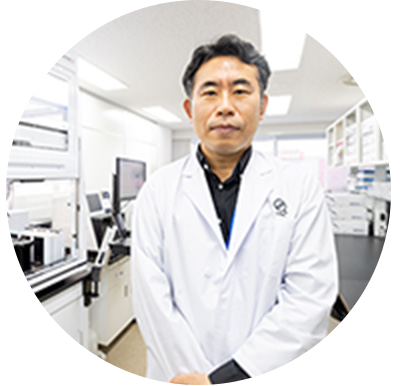 Author
M.D., Ph.D. Yoshinori Tomikin
Graduated with a master's/doctoral degree in Biosystems and Molecular Medicine from the University of Tsukuba
In 2017, developed Japan's first prenatal DNA testing(Patent 7331325) using trace DNA analysis technology(Patent 7121440)