
Revised: September 29, 2025
Prenatal DNA testing during pregnancy cannot be performed at an OB-GYN — you need to apply through a DNA testing specialist. This article explains in detail the difference from NIPT, how to apply, what you need, and points to keep in mind.
Can an OB-GYN perform fetal DNA testing during pregnancy? Where can you get a prenatal DNA test?
Many people wonder, during pregnancy, "I want to know who the biological father of the baby is" or "Can I get a DNA test at my OB-GYN?" It's surprisingly common for people to want to confirm the father of their unborn child for various reasons, from early to mid-pregnancy, and seeDNA receives many inquiries about this every day.
To answer directly: a standard prenatal checkup at an OB-GYN cannot perform a test to identify the father of the fetus (prenatal DNA testing). OB-GYNs primarily focus on managing the health of the mother and fetus, and they typically do not have the genetic analysis equipment or specialized expertise needed to determine parentage. [ref:1]
To undergo prenatal DNA testing, a blood sample must be drawn from the mother at a medical institution, but the actual paternity testing is carried out by a specialized genetic testing institution. In other words, it's important to understand that "where the blood is drawn" and "where the testing is performed" are different places. When you apply for testing through a DNA testing specialist, they can introduce you to a partner medical institution where the blood draw can be done. It is also possible to have blood drawn at your regular OB-GYN, but there have been reports of being asked detailed questions about the purpose of the DNA test or being charged an unusually high fee for the blood draw, so having the blood drawn at a medical institution partnered with the testing organization is generally the safest and smoothest option. [ref:1]
This article explains, in a way that's easy to understand even for first-time readers, the types and purposes of genetic tests available at an OB-GYN, the difference between prenatal DNA testing and Non-Invasive Prenatal Testing (NIPT), and how to apply for prenatal DNA testing and what you'll need.
- ・What genetic tests can be done at an OB-GYN?
- └ ◇ NIPT (Non-Invasive Prenatal Testing)
- └ ◇ Quad screen (maternal serum marker test)
- └ ◇ Amniocentesis
- ・The difference between prenatal DNA testing and NIPT
- ・Where can you apply for prenatal DNA testing?
- ・What you need to undergo prenatal DNA testing
- ・Points to consider when thinking about DNA testing during pregnancy
- ・Summary
What genetic tests can be done at an OB-GYN?

The genetic tests performed at an OB-GYN during pregnancy are mainly aimed at checking the fetus's health status and the risk of chromosomal abnormalities. Collectively known as "prenatal tests," their purpose is to determine whether the fetus may have a specific genetic condition. This is fundamentally different from prenatal DNA testing (identifying the father), so care should be taken not to confuse the two. [ref:2]
◇ NIPT (Non-Invasive Prenatal Testing)
NIPT analyzes cell-free DNA (cfDNA) derived from the fetus that is present in the mother's blood, to assess the risk of chromosomal abnormalities. It can check for risks such as Down syndrome (trisomy 21), Edwards syndrome (trisomy 18), and Patau syndrome (trisomy 13). It can be performed from week 10 of pregnancy onward, and since it only requires a blood draw from the mother, a major advantage is that it poses no direct risk to the fetus. [ref:3]
Point: NIPT is a screening test, not a definitive diagnosis. If the result is positive, additional testing such as amniocentesis or chorionic villus sampling is required. For trisomy 21, a sensitivity of over 99% has been reported. [ref:3] [ref:6]
◇ Quad screen (maternal serum marker test)
The quad screen measures the levels of four hormones and proteins in the mother's blood (AFP, hCG, uE3, and Inhibin A) from week 15 of pregnancy onward, and statistically estimates the likelihood of chromosomal abnormalities or neural tube defects. It is relatively inexpensive and easy to undergo, but it only provides a probabilistic assessment and is not a definitive diagnosis. [ref:4]
◇ Amniocentesis
Amniocentesis is a definitive diagnostic test performed from week 16 of pregnancy onward, in which a thin needle is inserted into the mother's abdomen to collect amniotic fluid and directly analyze the fetus's chromosomes. It is generally performed as a follow-up test when NIPT or the quad screen returns a positive result. However, because it carries a small risk of miscarriage (approximately 0.1–0.3%), it is performed only with thorough explanation and informed consent. [ref:4]
Note: These prenatal tests available at an OB-GYN are only for checking the fetus's health status and risk of chromosomal abnormalities. Their purpose is entirely different from prenatal DNA testing, which identifies the father of the fetus. Some people mistakenly believe that, because "genetic testing can be done at an OB-GYN," paternity DNA testing can also be done there — but an OB-GYN can only handle tests related to the fetus's disease risk.
The difference between prenatal DNA testing and NIPT
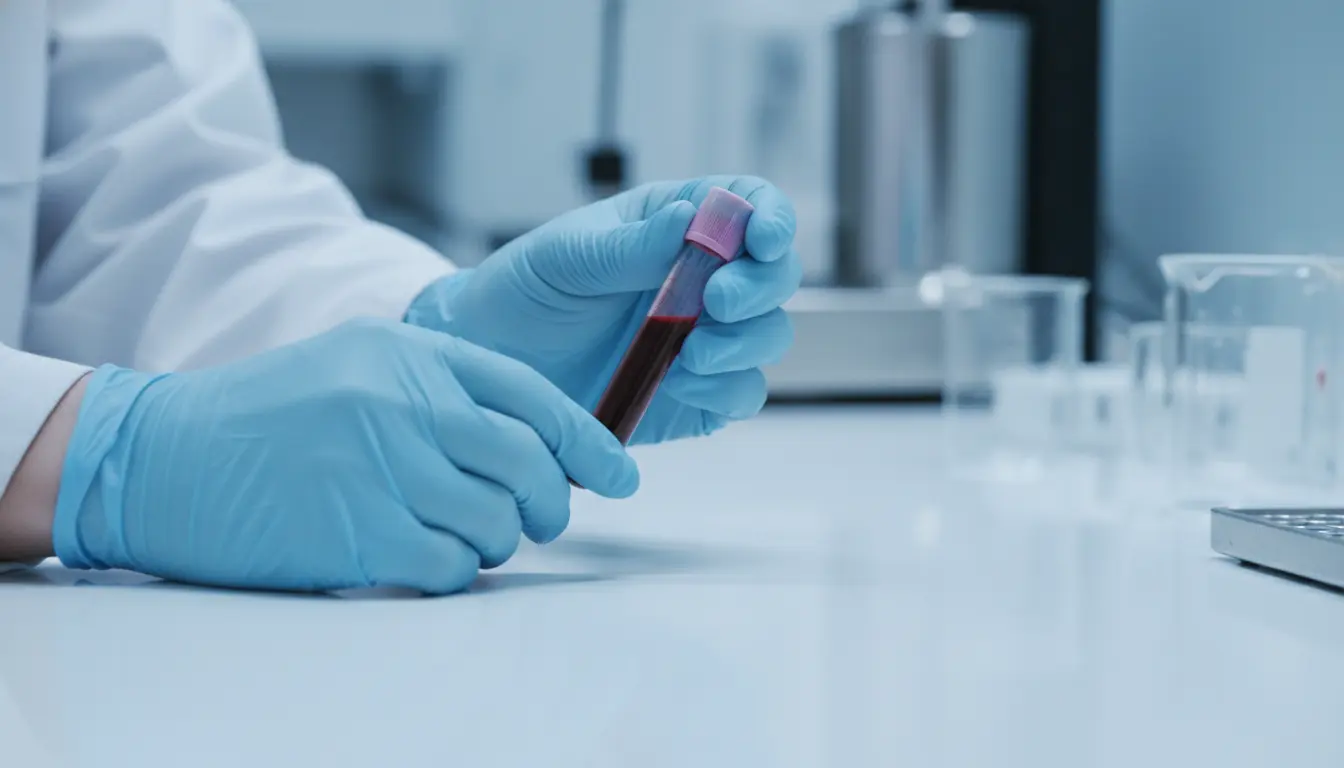
NIPT and prenatal DNA testing are both tests that use the mother's blood during pregnancy. They are easily confused because both share the common feature of obtaining DNA information derived from the fetus from the mother's blood, but their purposes are very different.
Prenatal DNA testing compares the fetal-derived DNA present in the mother's blood with the DNA of the candidate father to determine whether there is a biological parent-child (blood) relationship. The accuracy of the test is over 99.99%, and thanks to recent advances in technology, testing has become possible from as early as week 7 of pregnancy. Technology to analyze fetal cfDNA present in maternal blood with high sensitivity has been established, making it possible to avoid the miscarriage risk associated with conventional amniocentesis. [ref:5] [ref:7]
NIPT, on the other hand, is a test that checks the risk of chromosomal abnormalities in the fetus, and it cannot identify the father. Its purpose is to screen for specific chromosomal abnormalities such as Down syndrome. [ref:3]
| Comparison item | Prenatal DNA testing | NIPT |
|---|---|---|
| Purpose | Identifying the father (paternity test) | Assessing the risk of chromosomal abnormalities in the fetus |
| Timing available | From week 7 of pregnancy | From week 10 of pregnancy |
| Where to apply | DNA testing specialist | OB-GYN / accredited facility |
Both tests use the mother's blood, but there is a clear difference in purpose: prenatal DNA testing identifies the father, while NIPT checks the fetus's health status. It's important to correctly understand which test you actually need and consult the appropriate institution accordingly.
Where can you apply for prenatal DNA testing?

DNA testing during pregnancy cannot be performed at a typical OB-GYN. This is because OB-GYNs do not have the genetic analysis equipment required for DNA testing, and paternity testing falls outside the scope of OB-GYN medical care. If you wish to undergo testing, you'll need to apply directly to a DNA testing specialist, who will have the mother's blood collected at a partnered OB-GYN. [ref:1]
- Apply to a DNA testing specialist: Apply via website or phone. A test kit will be delivered to your home.
- Have the mother's blood drawn at a partnered medical institution: Blood is drawn at a partner facility introduced by the specialist. The method is the same as a regular blood test, with almost no pain involved.
- Mail the sample to the testing lab along with the candidate father's DNA: The candidate father's DNA can be easily collected via a cheek swab (rubbing a cotton swab on the inside of the cheek). Place the collected samples in the test kit and mail it back to the specialist.
- Results are reported by email or in writing: Results are typically reported within about 5–10 business days after the samples arrive. Full consideration is given to privacy as well.
seeDNA can introduce you to partner medical institutions across the country, allowing you to have your blood drawn somewhere close to where you live. For those who wish to have blood drawn at their regular doctor, we also provide instructions explaining the blood draw procedure.
What you need to undergo prenatal DNA testing
To ensure prenatal DNA testing goes smoothly, check the following items in advance.
- Mother's blood: Drawn at a medical institution from week 7 of pregnancy onward. Because the fetal-derived cfDNA in the mother's blood is used for analysis, the concentration of fetal DNA increases as the pregnancy progresses, but sufficient accuracy can be achieved even from week 7.
- Candidate father's DNA: Collected from the oral mucosa. This is a simple method that only requires rubbing a dedicated swab on the inside of the cheek, and it can be done at home. Some institutions also accept special samples such as nails or hair.
- Choice of test type: Choose between a private test or a legal test. A private test is convenient for personal confirmation purposes. A legal test issues an official report that can be used as evidence in mediation or court proceedings, and it requires identity verification and the presence of a third-party witness.
- Cost: Prenatal DNA testing is not covered by insurance, so the full cost is out of pocket. A private test typically costs around 110,000–170,000 yen, and a legal test around 190,000–250,000 yen.
If you choose a legal test, the results become important evidence in legal proceedings such as paternity acknowledgment claims or child support claims. If you anticipate using the results in court, be sure to choose the legal test option. [ref:1]
Points to consider when thinking about DNA testing during pregnancy
DNA testing during pregnancy is highly accurate and safe, but there are several important points to keep in mind.
- A standard prenatal checkup at an OB-GYN cannot perform prenatal DNA testing. DNA testing must always be conducted through a specialized institution.
- Request testing from a trustworthy specialist institution. Choosing an institution that has obtained quality and privacy-related certifications such as ISO certification or a privacy mark helps ensure the safety of sample handling and data management. [ref:8]
- A "legal test" is required for use in legal proceedings. Since the results of a private test may not have legal evidentiary value, choose the legal test option from the outset if that's your purpose.
- While accuracy is over 99.99%, this figure applies when the test is conducted by an institution with a properly established quality control system. Be cautious of institutions with little track record or that do not disclose their testing methods in detail. [ref:5]
- Psychological preparation is also important. The results of DNA testing can have a significant impact on family relationships and partnerships. Trustworthy specialist institutions offer counseling and consultation support both before and after testing.
Summary
Let's recap the key points of this article.
- DNA testing during pregnancy is performed by a specialist institution, not an OB-GYN: OB-GYNs specialize in managing the health of the mother and fetus, and do not handle DNA testing to identify the father.
- Genetic tests at an OB-GYN aim to check the fetus's health status: Tests such as NIPT, the quad screen, and amniocentesis assess the risk of chromosomal abnormalities, and cannot identify the father.
- Prenatal DNA testing is a safe, highly accurate test that compares the mother's blood with the candidate father's DNA: It can be performed from week 7 of pregnancy onward and poses no direct risk to the fetus.
- To undergo testing, you need to apply through a DNA testing specialist: The mother's blood is collected (at a partnered medical institution), the candidate father's DNA is collected, and the samples are sent to the testing lab.
If you are considering DNA testing during pregnancy, it's important to proceed safely based on reliable information. If you have any questions or concerns, we recommend first consulting a DNA testing specialist.
\Find out who the baby's father is, even during pregnancy/
 Apply / Purchase kit
Frequently Asked Questions
Q1. Can an OB-GYN perform DNA testing (to identify the father) during pregnancy?
A. No, a standard OB-GYN cannot perform DNA testing to identify the father of the fetus. The genetic tests carried out at an OB-GYN (such as NIPT, the quad screen, and amniocentesis) are intended to check for chromosomal abnormalities and the health status of the fetus. To undergo prenatal DNA testing, you need to apply through a DNA testing specialist. [ref:1]
Q2. From how many weeks of pregnancy can you have prenatal DNA testing done?
A. Prenatal DNA testing can be performed from week 7 of pregnancy onward. Because it analyzes fetal-derived cfDNA (cell-free DNA) present in the mother's blood, testing is possible from a very early stage of pregnancy. As the pregnancy progresses, the concentration of fetal DNA increases, making it easier to obtain a more stable result. [ref:5]
Q3. What is the difference between prenatal DNA testing and NIPT (Non-Invasive Prenatal Testing)?
A. Prenatal DNA testing is a test to identify "who the fetus's biological father is," while NIPT is a test to check "whether the fetus has a risk of chromosomal abnormality." Both use the mother's blood, but the purpose and content of the analysis are completely different. [ref:3]
Q4. How much does prenatal DNA testing cost? Is it covered by insurance?
A. Prenatal DNA testing is not covered by insurance, so the full cost is out of pocket. As a rough guide, a private test costs around 110,000–170,000 yen, and a legal test around 190,000–250,000 yen. Pricing structures vary by testing institution, so please check in advance.
Q5. Can the results of prenatal DNA testing be used in court?
A. If you want to use DNA test results as evidence in legal proceedings such as court cases or mediation, you need to choose a "legal test." A legal test requires identity verification at the time of sample collection (presenting ID and taking a photo) and the presence of a third-party witness, and results in the issuance of an official report with evidentiary value. [ref:1]
Q6. Is prenatal DNA testing dangerous for the mother or the fetus?
A. Current prenatal DNA testing can be performed using only a blood draw from the mother, so it poses no direct invasive risk to the fetus. There is no miscarriage risk as with amniocentesis, and the test can be undergone safely. The blood draw is done using the same method as a regular blood test, so the burden on the mother is minimal. [ref:7]
Reassuring support from the seeDNA Institute of Genetic Medicine
The seeDNA Institute of Genetic Medicine is a trusted and reliable DNA testing and genetic testing specialist that holds ISO9001, the international quality standard, and the Privacy Mark for personal information protection.
If you have concerns about blood relationships within your family, parent-child relationships, or a partner's infidelity, our DNA testing experts are here to support you and put your mind at ease, so please feel free to contact us.
【Free consultation with our specialist staff】

If you have any questions,
please feel free to contact our toll-free number.
\Open every day, including weekends/
Business hours: Monday–Sunday 9:00 AM–6:00 PM
(except public holidays)
 Author
Yoshinori Tomikin, Ph.D.
Graduate of the master's/doctoral program in Biosystem Studies, Molecular and Genomic Medicine at the University of Tsukuba
In 2017, developed Japan's first trace DNA analysis technology(Patent 7121440), which was used to develop prenatal DNA testing(Patent 7331325)