
Rewritten on: May 8, 2025
This article explains the causes of misjudgments in DNA testing and why it's important to assess a testing laboratory's accuracy and management system to obtain reliable results. It also covers the significance of international accreditation, measures to prevent human error, and seeDNA's quality control system.
DNA testing can resolve worries that have weighed on you for a lifetime. But if a DNA test used to check a parent-child or blood relationship gives a mistaken result, the consequences can be irreversible — potentially leading to divorce, family breakdown, or litigation. Given how profoundly DNA testing can change a person's life, here is important information to keep in mind when undergoing it.
Why accuracy and management matter in DNA testing
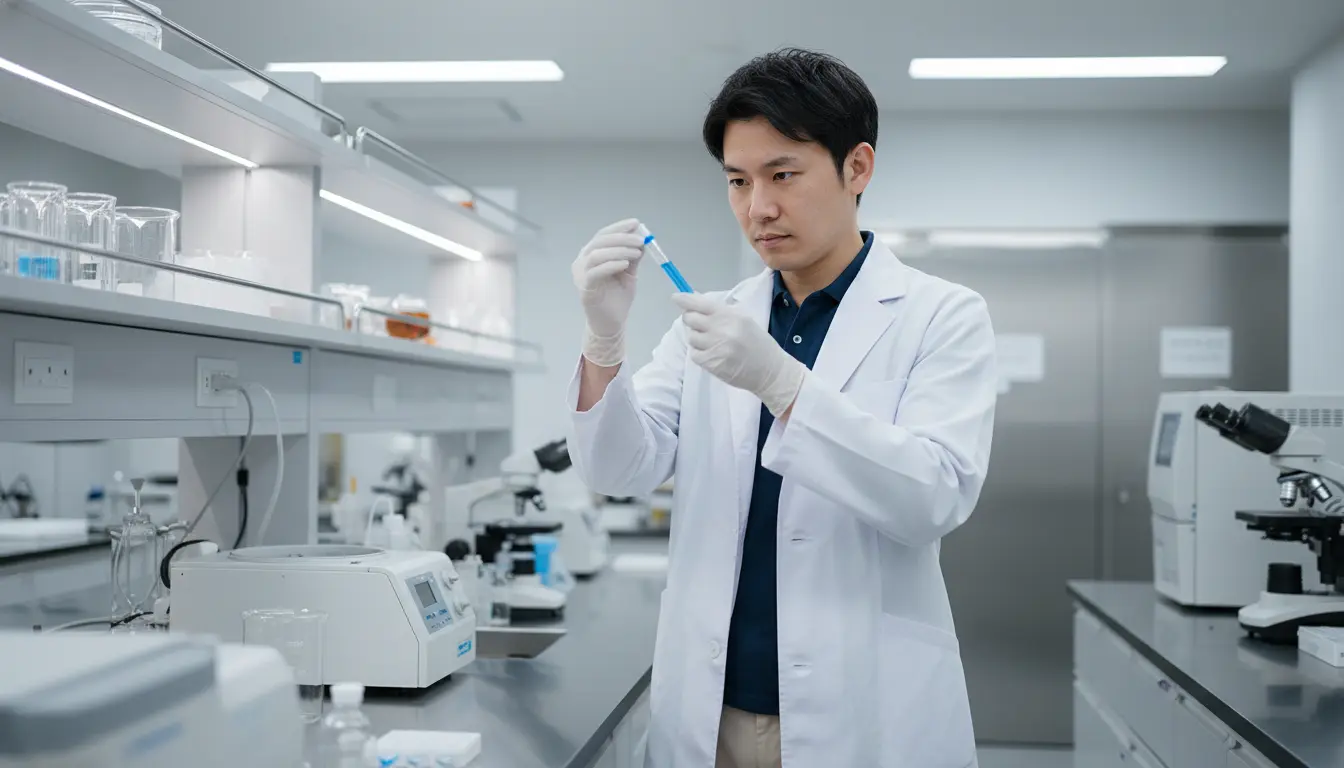
When choosing a DNA testing laboratory or a test kit, cost and turnaround time aren't the only things that matter. Above all, "whether accurate testing can be performed" is the most important factor. Even though DNA testing has an image of using advanced technology to precisely determine parent-child or blood relationships, misjudgment-related trouble does actually occur in practice. Overseas, DNA testing troubles have been a recognized problem for more than a decade, and there have been reported cases developing into damages claims worth as much as 3.5 billion yen.[ref:1] [ref:5]
A mistake in DNA testing, which can have such a major impact on a person's life, is absolutely unacceptable. A DNA testing laboratory needs both the technical capability to produce accurate results with high precision and a management system that prevents errors from occurring in the first place.
DNA testing generally analyzes DNA regions called STR (Short Tandem Repeat). STRs are repeating sequences of 2 to 6 base pairs scattered throughout the human genome, and because the number of repeats differs from person to person, they are widely used for personal identification and paternity testing.[ref:3] In paternity testing, the child's STR profile is compared against those of the presumed father and mother to statistically determine whether a parent-child relationship exists. The fewer STR markers used in the test, the higher the probability of a coincidental match, which raises the risk of a misjudgment. International standards recommend using at least 15 to 20 STR marker loci, but because Japan has no law mandating this, the quality of testing varies considerably from one laboratory to another.[ref:4]
What causes mistakes in DNA testing?
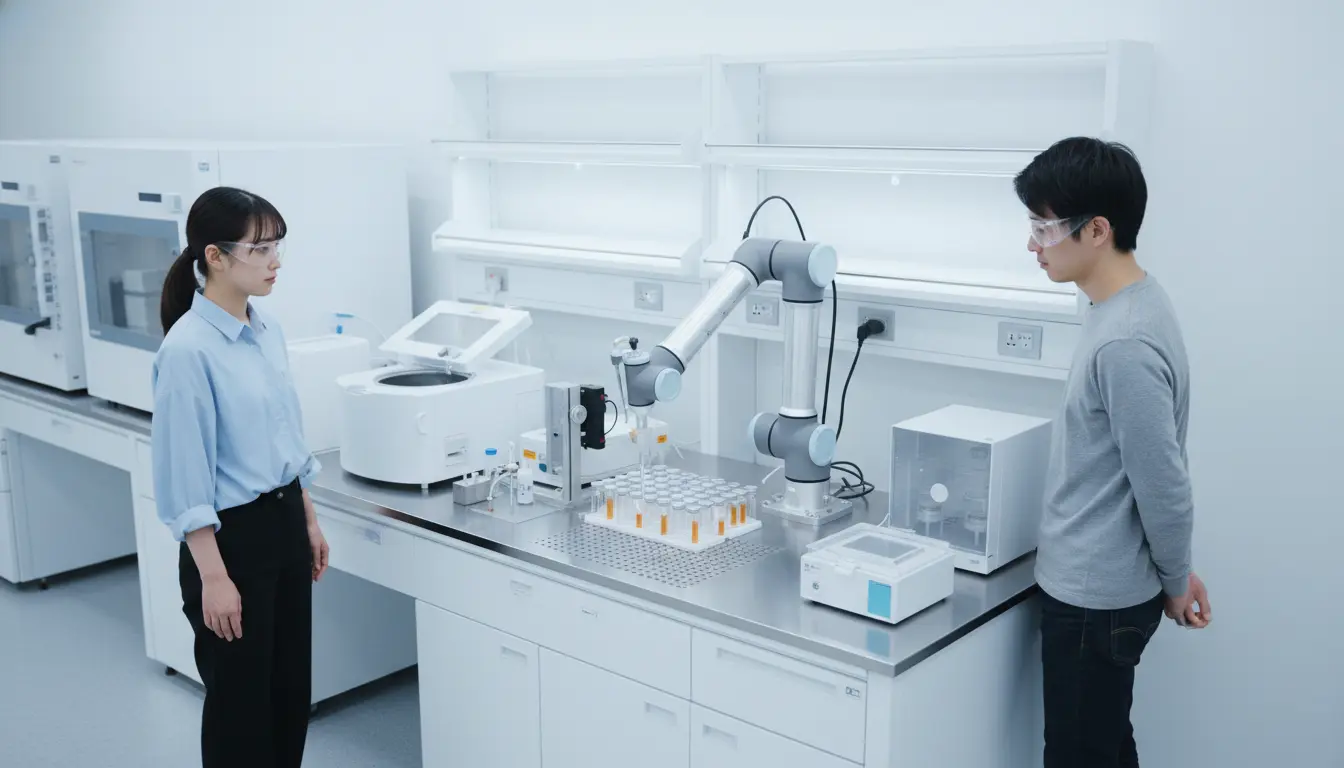
In an age of remarkable technological progress, why do misjudgments still occur in DNA testing? The causes include issues with the systems and regulations governing DNA testing, as well as human error.[ref:3] No matter how high the precision of the testing itself, a mix-up with another person's sample will cause a genuine blood relationship to be denied, and there may also be cases where another person's results are simply reported incorrectly.
The causes of misjudgment in DNA testing can broadly be classified as follows.
- Sample mix-up or contamination: This occurs when, between receiving a sample and analyzing it, it gets swapped with another sample or trace amounts of foreign DNA are introduced. This is more likely to happen when samples are processed manually.
- Misreading of analysis results: STR analysis separates DNA fragments by electrophoresis and outputs them as peak patterns, but misidentifying a stutter peak (an artifact) as a genuine allele peak can seriously affect the outcome of the judgment.[ref:6]
- Insufficient number of test loci: A smaller number of STR markers raises the coincidental match rate, increasing the risk of erroneously concluding "parent-child relationship confirmed" when no true relationship exists.
- Transcription errors in the report: Even when the analysis itself is accurate, clerical human error can occur at the report-writing stage, such as accidentally transcribing another client's data.
- Lack of a quality control system: At laboratories without third-party audits or regular participation in proficiency testing, mistakes can go unnoticed for a long time.[ref:7]
Even a company advertising with an attractive-looking website may lack basic management practices and experience frequent trouble, so it's essential to be careful when choosing a testing laboratory.[ref:4]
Differences between Japan's and other countries' systems
 In the United States, a major player in DNA testing, the AABB (American Association of Blood Banks) sets strict quality control standards for labs conducting paternity testing, requiring regular external audits and participation in proficiency testing. In the United Kingdom, there is an accreditation system through UKAS (United Kingdom Accreditation Service), which guarantees the quality of DNA testing laboratories based on the ISO 17025 standard.[ref:7]
However, no such regulations or standards currently exist in Japan, and there is no regulatory oversight of DNA testing. In practice, each laboratory conducts testing according to its own internal standards, and some laboratories fall short of international accuracy standards.[ref:4] Caution is needed, as there are providers that report results without checking their analysis in order to cut costs, and laboratories that have no system in place to prevent sample mix-ups.
Cases where another company's test result was overturned
Many customers come to seeDNA because they have doubts about a result obtained at another DNA testing laboratory and want to request a re-test to confirm it. Among these cases, there have been several where the result was indeed overturned — in other words, cases where a misjudgment by the other company was suspected.[ref:1]
Because the reasons people seek DNA testing are often complex and sensitive, there may be cases where a person notices something odd about the result but simply accepts it without raising the issue, and cases where the person never even realizes the result was wrong. This suggests that the actual number of misjudgments occurring may be at least ten times higher than what is officially recognized.[ref:3]
Key points for choosing a trustworthy DNA testing laboratory
Because a DNA test result can shape the rest of a person's life, choosing a testing laboratory deserves careful consideration. Use the following steps as a guide to determine whether a laboratory is trustworthy.
- Check whether it holds international accreditation: Whether a laboratory has obtained international accreditation such as AABB or ISO 17025 is an objective indicator of its quality control. Accredited laboratories undergo regular external audits, ensuring a certain level of quality.
- Check the number of test loci: Check whether the laboratory discloses how many STR marker loci it uses for testing. International standards recommend at least 15 loci.
- Check whether there is a double-check system: It is very important to confirm whether the laboratory performs the analysis on the same sample two or more times and verifies that the results match.
- Check the sample management system: Confirm whether traceability is established from the moment a sample is received until it is disposed of. Laboratories that use barcode tracking or automated systems significantly reduce the risk of human error.
- Check the quality of consultation and after-sales support: Whether specialist staff are available to carefully explain the results when questions arise is also an important indicator of reliability.
seeDNA's quality control system
seeDNA is the only DNA testing laboratory in Japan to hold international accreditation. We provide DNA testing that guarantees ten times the accuracy of international standards, using our latest fully automated system combined with a two-analysis double-check process to prevent human error, delivering the most accurate and reassuring results possible.
At seeDNA, we maintain strict quality control standards at every stage of the process, from sample intake through analysis to report preparation.
- Fully automated system: By fully automating most of the sample processing, we minimize the risk of human error.
- Two-analysis double-check: Every sample is independently analyzed twice, and the report is only prepared once both results match.
- Adherence to international accreditation standards: We maintain a quality control system compliant with AABB regulations and undergo regular external audits.
- Support from specialist staff: Knowledgeable staff carefully address any questions or concerns you may have about your results.
If you have any doubts or concerns about a DNA test result from another company, please feel free to consult seeDNA.
[Toll-free] 0120-919-097
[Business hours] Monday–Sunday, 9:00 AM – 6:00 PM (excluding public holidays)
Frequently Asked Questions
Q1. What is the probability of a misjudgment occurring in DNA testing?
A. At a reliable, internationally accredited laboratory, the probability of a misjudgment is extremely low, and the probability of confirming a parent-child relationship is stated as 99.99% or higher. However, at laboratories with inadequate quality control systems, incorrect results can occur due to sample mix-ups or misreading of data. Including mistakes that never come to light, it is presumed that a considerable number of misjudgments occur.[ref:1]
Q2. What should I do if I have doubts about a DNA test result obtained from another company?
A. If you have doubts about a DNA test result obtained elsewhere, please consult seeDNA. By conducting a re-test, we can verify the accuracy of the previous result. In fact, there have been cases where a re-test performed at seeDNA overturned another company's judgment. Feel free to contact us via our toll-free number (0120-919-097).
Q3. Are there any legal regulations concerning DNA testing in Japan?
A. Currently, there are no specialized legal regulations or accreditation systems for DNA testing laboratories in Japan. In the United States, there is accreditation through AABB, and in the United Kingdom, through UKAS, but in Japan each laboratory conducts testing according to its own independent standards. For this reason, when choosing a testing laboratory, it is important to thoroughly check its international accreditation status and quality control system.[ref:4]
Q4. What is a double-check in DNA testing?
A. A double-check is a quality control method in which the same sample is independently analyzed twice and both results are confirmed to match. seeDNA performs a two-analysis double-check for every test, preventing misjudgments caused by analysis errors or sample mix-ups. This system allows us to deliver test results with greater reliability.
Q5. What difference does it make if more STR markers are used in a DNA test?
A. The more STR markers used, the higher the precision in identifying an individual, and the lower the risk of a misjudgment due to a coincidental match. International standards recommend at least 15 to 20 loci, and seeDNA conducts testing that guarantees ten times the precision of international standards. Tests that use fewer markers carry a higher risk of producing incorrect results, particularly in testing between close relatives, so caution is required.[ref:6]
Q6. What is international accreditation (AABB) in DNA testing?
A. AABB stands for American Association of Blood Banks, an international accrediting body that sets strict quality control standards for laboratories conducting paternity testing. Laboratories accredited by AABB are required to undergo regular external audits and participate in proficiency testing, objectively guaranteeing a certain level of testing quality. seeDNA is the only laboratory in Japan to hold AABB accreditation.[ref:7]
Reassuring support from seeDNA Genetic Medicine Research Institute
seeDNA Genetic Medicine Research Institute is a trusted DNA testing and genetic testing specialist that has obtained the international quality standard ISO 9001 and the Privacy Mark for personal data protection.
If you are troubled by questions about family or parent-child blood relationships, or a partner's infidelity, our DNA testing specialists are here to support you with reassurance — please feel free to contact us.
[Free consultation with specialist staff]

If you have any questions,
please feel free to contact our toll-free number.
/Open every day, including weekends/
Business hours: Monday–Sunday 9:00 AM–6:00 PM
(excluding public holidays)
 Author
Kihan Tomikane, Ph.D. (Medicine)
Completed his master's and doctoral studies in Biosystem Regulation and Molecular Medicine at the University of Tsukuba Graduate School.
In 2017, developed Japan's first prenatal DNA testing method(Patent 7331325) using trace DNA analysis technology(Patent 7121440).