
Rewritten on: January 11, 2025
PCR (Polymerase Chain Reaction) is a groundbreaking technology invented by Kary Mullis in 1983 that amplifies DNA millions to tens of millions of times over. It is used as an indispensable foundational technology across a wide range of fields, including DNA testing and infectious disease testing.
What Is PCR (Polymerase Chain Reaction)?
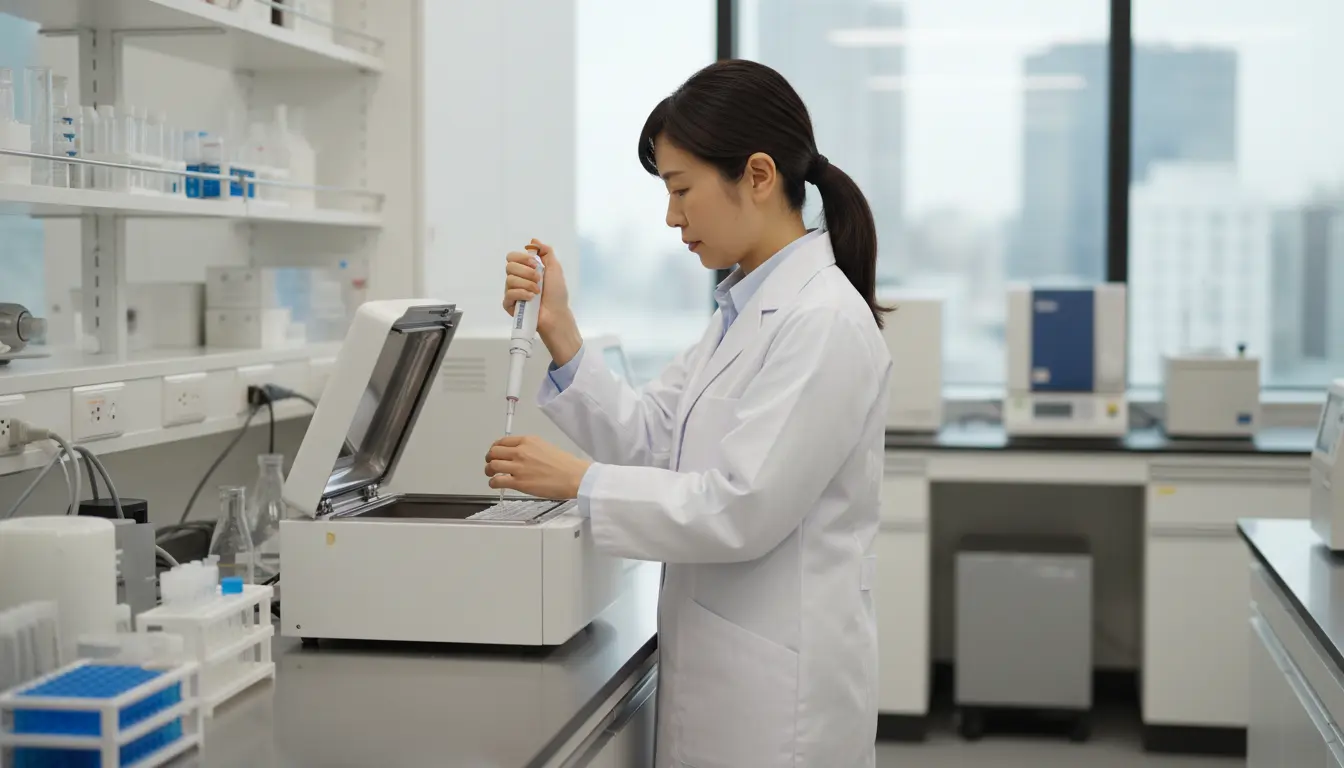 "PCR (Polymerase Chain Reaction)," which became widely known as a testing method for COVID-19, is a groundbreaking technology invented in 1983 by Kary Banks Mullis, who was then a researcher at the biotech venture company Cetus Corporation. Mullis received the 1993 Nobel Prize in Chemistry for developing PCR. [ref:1] [ref:2]
Before PCR existed, obtaining large quantities of a specific DNA sequence was extremely difficult, and this was a major bottleneck in molecular biology and genetics research. However, the advent of PCR made it possible to amplify a target sequence from a minute DNA sample by millions to tens of millions of times, revolutionizing every field of the life sciences.
The basic principle of PCR involves repeating three steps: the DNA double helix dissociates into single strands under heat (denaturation), short DNA fragments (primers) bind to complementary base sequences as the temperature is lowered (annealing), and an enzyme called DNA polymerase then extends the DNA strand (extension). By repeating this "denaturation → annealing → extension" cycle typically 25 to 35 times, the amount of DNA increases exponentially—in theory, 2 to the power of n, where n is the number of cycles. For example, with 30 cycles, the theoretical yield is roughly a billion-fold increase in DNA copies. [ref:3]
A major turning point in the practical application of PCR was the introduction of "Taq polymerase," a heat-stable DNA polymerase isolated from the thermophilic bacterium Thermus aquaticus. In early PCR, the DNA polymerase was deactivated by each heating step, requiring the enzyme to be added again every time. However, because Taq polymerase remains stable and active even at temperatures above 90°C, automation using a thermal cycler (a temperature-control device) became possible. This technological advance transformed PCR into a standard technique that could be readily performed in laboratories and clinical testing facilities around the world. [ref:4]
The Episode of the Sudden Flash of Insight Behind PCR
 There is a memorable episode, passed down in the history of science, about how Mullis came up with the idea for PCR. One night in 1983, while driving his girlfriend along a highway in California, Mullis is said to have suddenly conceived of the principle of PCR—repeatedly copying a specific sequence by taking advantage of the complementary nature of DNA. Mullis himself has said in numerous interviews and in his own writings that as he drove along the winding road under the moonlight, turning the mechanism of DNA replication over and over in his mind, this simple yet revolutionary idea came to him.
Later, Mullis received the Japan Prize in 1992 (the year the award was announced), and this driving episode was recounted at a party held after the award ceremony. The Empress at the time (Empress Michiko) reportedly asked Mullis, "Is the person who came with you today the one from that story?" Mullis honestly replied, "No, the person with me today is someone else."
It is unclear how the room reacted to this remark from Mullis, but the Empress is said to have immediately responded as follows.
"Then perhaps you can make 'one more' great discovery."
—A truly graceful reply from the Empress. This witty exchange is a wonderful episode, still recounted in Japan's scientific community, that captures both Mullis's unique personality and the Empress's wit. Mullis was known for his unconventional character, his love of surfing, and his consistently free-spirited approach to science. He passed away on August 7, 2019, at the age of 74, but the PCR method he invented is still performed millions of times every day around the world, continuing to contribute to human health and scientific progress. [ref:6]
The Specific Steps of PCR
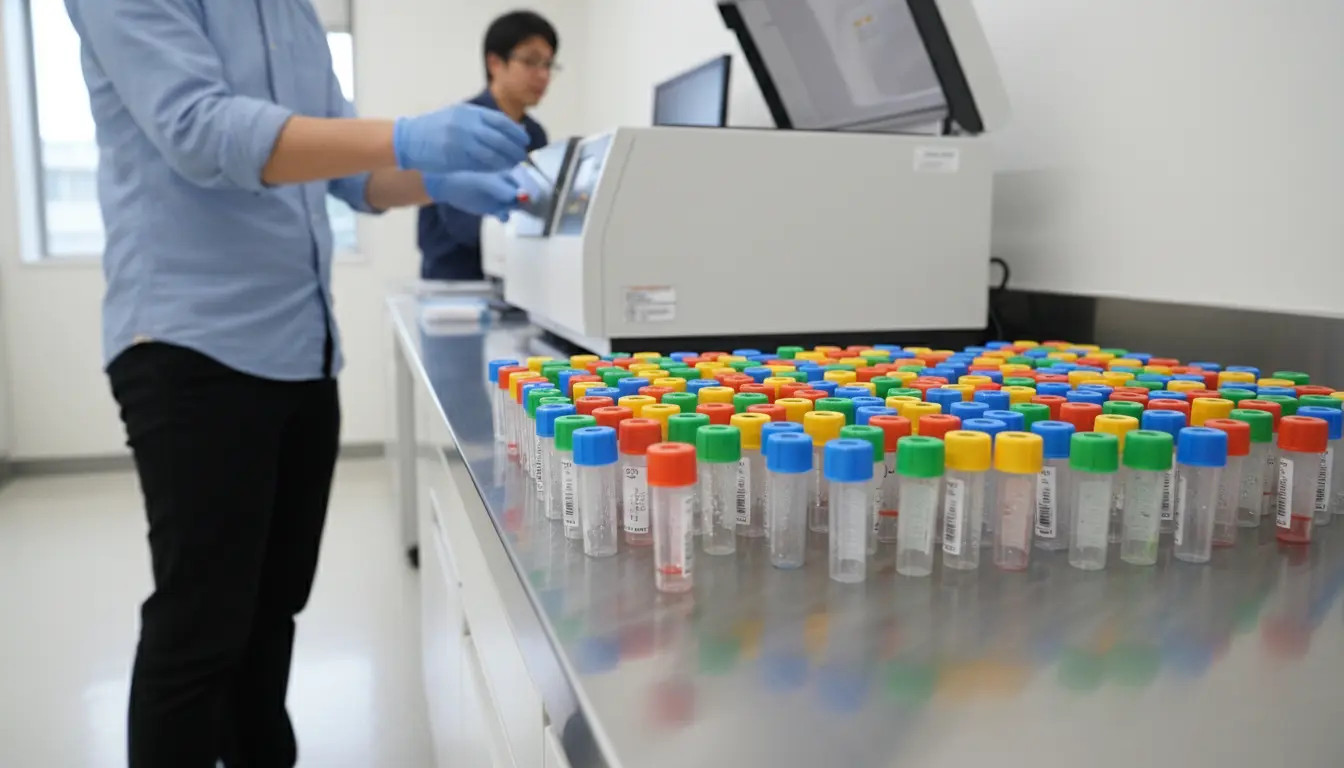 PCR is based on a principle that appears simple at first glance, but each step must be carefully controlled to obtain accurate results. The three basic steps of PCR are outlined below.
- Denaturation: The reaction mixture is heated to approximately 94–98°C, dissociating the double-stranded DNA into single strands. This creates the single-stranded DNA templates to which the primers can bind. Heating typically takes 15 seconds to 1 minute, and it is important to reliably break the hydrogen bonds of the DNA.
- Annealing: The temperature is lowered to approximately 50–65°C, allowing short synthetic DNA fragments (primers) complementary to the target sequence to bind to the single-stranded DNA. Because the base sequence and length of the primers determine the specificity of the PCR, the temperature setting in this step is extremely important. The optimal annealing temperature is set based on the primers' melting temperature (Tm value).
- Extension: The temperature is set to approximately 72°C (the optimal temperature for Taq polymerase), and DNA polymerase adds nucleotides from the 3' end of the primer to synthesize a new DNA strand. Extension time is adjusted according to the length of the DNA fragment being amplified, with roughly 1 minute per kilobase generally used as a guideline.
By repeating this three-step cycle 25 to 35 times, the target DNA fragment is amplified exponentially. Because the entire process is automatically temperature-controlled by a dedicated device called a thermal cycler, once it is set up the process can be left to run on its own. [ref:5]
The PCR Technology Essential to Our DNA Testing
What began as an introduction to the Mullis episode ended up becoming an introduction to the Empress's episode instead, so let's return to the main topic here.
Put simply, PCR is a method for amplifying DNA by up to about ten million times. And this PCR technology is also indispensable to our company seeDNA's DNA testing.
Specifically, we use PCR to amplify the extremely small amount of DNA obtained from a sample up to the quantity needed for analysis. Even from a buccal epithelial (inner cheek mucosa) sample, from which a relatively large amount of DNA can be extracted, only about 1/10,000,000 g (roughly 100 nanograms) of DNA is typically obtained. Without this PCR amplification, it would be impossible to read the DNA base sequence at all.
In DNA testing, the DNA fragments amplified by PCR are used to analyze a DNA profile unique to each individual (such as STR: Short Tandem Repeat types). STRs are regions of DNA where a short sequence of about 2 to 6 bases is repeated, and the number of repeats varies between individuals. By using multiplex PCR, which analyzes multiple STR loci simultaneously, extremely high-precision individual identification becomes possible. [ref:2] [ref:7]
This analysis allows accurate determination of biological relationships between the individuals being tested, meaning that if PCR does not function properly, it becomes impossible to reach a testing conclusion at all. The accuracy and reliability of DNA testing depend heavily on the quality of this PCR step.
The Diverse Applications of PCR
The use of PCR is not limited to DNA testing. Below are some of the main fields in which PCR is currently widely used.
- Infectious disease testing: In COVID-19 testing, RT-PCR (reverse transcription PCR) is used to amplify the extremely small amount of SARS-CoV-2-specific RNA sequence present in a sample to confirm whether infection is present. It is also applied to the diagnosis of many other infectious diseases, including influenza and HIV. [ref:8]
- Forensic science and criminal investigation: DNA is amplified from tiny traces of blood, hair, saliva, and other material left at crime scenes, and used to identify suspects or confirm the identity of unidentified individuals.
- Diagnosis of hereditary diseases: By detecting specific gene mutations, early detection of hereditary diseases and carrier testing become possible.
- Food safety testing: PCR is also used to detect pathogens and allergens in food and to determine whether crops have been genetically modified.
- Ancient DNA research: PCR is an essential technology for amplifying trace amounts of DNA from fossils and ancient remains in order to decode the genetic information of ancient humans.
- Cancer research and diagnosis: PCR is also applied to detecting mutations in cancer-related genes and to liquid biopsy (detection of circulating tumor DNA in blood), supporting early cancer diagnosis and monitoring of treatment effectiveness.
PCR remains widely used today as a fundamental technology underlying not only our services but a great variety of testing services and research more broadly. In recent years, technologies that further build on conventional PCR, such as real-time PCR (quantitative PCR) and digital PCR, have emerged, enabling even more sensitive and quantitative analysis. [ref:5]
The DNA Testing Process and the Role of PCR
Below is a summary of where PCR fits into the typical DNA testing process at our company, seeDNA.
| Stage | Step | Overview |
|---|---|---|
| 1 | Sample collection | Cells are collected using a buccal epithelial swab or similar method |
| 2 | DNA extraction | DNA is purified and isolated from the cells |
| 3 | PCR amplification | The target STR region is amplified by PCR |
| Stage | Step | Overview |
|---|---|---|
| 4 | Electrophoresis analysis | The amplified DNA fragments are separated by size and detected |
| 5 | Data analysis | DNA profiles are compared and evaluated |
| 6 | Reporting of results | The presence or absence of a biological relationship is presented in a report |
As shown above, PCR sits at the core of the entire DNA testing process, and the accuracy of this step determines the reliability of the final result. We perform PCR amplification using the latest thermal cyclers under a strict quality control system, ensuring highly accurate and reproducible results.
The Evolution of PCR and Next-Generation Technologies
Since its invention in 1983, PCR has given rise to numerous improvements and derivative technologies. A representative example is real-time PCR (qPCR), which enables quantitative analysis by monitoring the amplification process in real time using fluorescence. In infectious disease testing, this technology allows viral load to be expressed numerically, greatly contributing to understanding a patient's condition and evaluating treatment effectiveness. [ref:8]
Also drawing significant attention in recent years is digital PCR (dPCR). This technology divides a sample into tens of thousands to millions of tiny partitions and performs an independent PCR reaction in each partition, enabling absolute quantification of DNA without the need for a standard curve. Because it offers excellent sensitivity for detecting extremely rare mutant DNA—something conventional real-time PCR struggles with—its use is expanding in fields such as cancer liquid biopsy and prenatal genetic testing.
Furthermore, as next-generation sequencing (NGS) technology continues to advance, PCR continues to play an indispensable role as a preliminary step in library preparation. From decoding entire genomes to analyzing specific gene panels, PCR-based target amplification will remain important going forward as a foundational technology supporting the accuracy and efficiency of NGS. [ref:7]
If you are currently concerned about a biological relationship, please feel free to use our DNA testing services at seeDNA. Our experienced, specialized staff will carefully support you from sample collection through to the reporting of results.
Frequently Asked Questions
Q1. What kind of technology is PCR?
A. PCR (Polymerase Chain Reaction) is a technology that amplifies a specific DNA sequence by millions to tens of millions of times through repeated cycles of three steps: "denaturation → annealing → extension." It was invented by Kary Mullis in 1983, who received the Nobel Prize in Chemistry for it in 1993. Today it is used as an indispensable foundational technology across a wide range of fields, including DNA testing, infectious disease testing, and genetic research.
Q2. Why is PCR necessary for DNA testing?
A. The amount of DNA obtained from a typical sample, such as buccal epithelial cells, is extremely small (roughly 100 nanograms), and it is not possible to read the DNA base sequence directly from such a small amount. PCR amplifies the target DNA region, making analysis possible for the first time and allowing confirmation of the DNA profile needed for individual identification and determination of biological relationships.
Q3. What kind of person was Kary Mullis, who invented PCR?
A. Kary Banks Mullis (1944–2019) was an American biochemist. In 1983, while working as a researcher at the biotech venture company Cetus Corporation, he conceived of PCR. He received the Japan Prize in 1992 and the Nobel Prize in Chemistry in 1993. He was also known for his free-spirited personality and love of surfing, and he left a major mark on the scientific world.
Q4. Is the PCR used in COVID-19 testing the same technology as the PCR used in DNA testing?
A. The underlying principle is the same PCR technology, but the purpose and target of analysis differ. In infectious disease testing such as for COVID-19, virus-specific RNA/DNA sequences are amplified to determine whether infection is present. DNA testing, on the other hand, amplifies regions of human DNA known as STRs (short tandem repeats), which vary between individuals, and uses them for individual identification and determination of biological relationships.
Q5. How accurate is DNA testing based on PCR?
A. Current DNA testing uses multiplex PCR, which simultaneously analyzes multiple STR loci (typically 15 to 20 or more), enabling extremely high-precision individual identification. In paternity testing, the probability of paternity commonly reaches 99.99% or higher. At seeDNA, we perform PCR amplification under a strict quality control system to provide highly reliable results.
Q6. What types of PCR are there?
A. Representative types include standard PCR as well as real-time PCR (quantitative PCR: a method that monitors and quantifies the amplification process in real time), RT-PCR (reverse transcription PCR: a method that converts RNA into DNA before amplification), digital PCR (a method that divides a sample into tiny partitions for absolute quantification), and multiplex PCR (a method that amplifies multiple target sequences simultaneously). The optimal method is selected depending on the purpose.
Q7. What is Taq polymerase?
A. Taq polymerase is a heat-stable DNA polymerase isolated from the thermophilic bacterium Thermus aquaticus, which lives in high-temperature environments such as hot springs. Because it retains its enzymatic activity even at temperatures above 90°C, it continues to function even after the denaturation step of PCR (94–98°C). The introduction of this enzyme enabled the automation of PCR, making it a standard technology used in laboratories around the world.
The Trusted Support of the seeDNA Genetic Medical Research Institute
The seeDNA Genetic Medical Research Institute is a trusted specialist institution for DNA testing and genetic testing, certified with the international quality standard ISO9001 and the Privacy Mark for personal information protection.
If you have concerns about family or parent-child biological relationships, or a partner's infidelity, our DNA testing specialists are here to provide the support you need for peace of mind—please feel free to contact us.
[Free Consultation with Specialized Staff]

If you have any questions,
please feel free to contact our toll-free number.
/Open every day, including weekends/
Business hours: Mon–Sun 9:00 AM–6:00 PM
(excluding holidays)
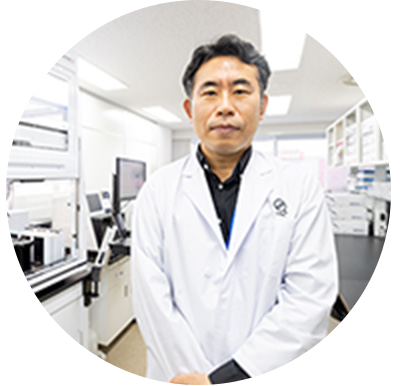 Author
Dr. Yoshinori Tomikane, M.D.
Completed his master's and doctoral studies in Integrative Physiology and Molecular Medicine at the University of Tsukuba Graduate School.
In 2017, he developed Japan's first prenatal DNA testing method(Patent No. 7331325) using a trace-DNA analysis technology(Patent No. 7121440).
[References]
(2) How Is PCR Used in Paternity Testing?, September 2024
(3) Aichi Industrial Technology Institute, February 1999
(4) Science, January 1988
(5) Sci Am, April 1990
(6) Collabo Knowledge Co., Ltd., April 2025
(7) J Biol Chem, March 1997
(8) Kanagawa Prefectural Institute of Public Health