
Last revised: December 30, 2024
Some prenatal DNA testing providers do not clearly state the probability of paternity, and cases where results are later overturned are common. This article explains how to choose a trustworthy testing institution and the international standard.
- ・The problem of providers that don't clearly state the probability of paternity in prenatal DNA testing
- ・Cases where results were overturned: more than a dozen confirmed in 2019 alone
- ・Why disclosing the probability of paternity is essential
- └ Risks that can arise when the probability of paternity is not stated
- ・For those considering prenatal DNA testing: key points to check when choosing a provider
- └ A checklist for choosing a trustworthy testing institution
- ・Testing institutions that guarantee the international standard of "99.9% probability of paternity"
- ・How prenatal DNA testing works and the factors affecting its accuracy
- ・If you have doubts about your results, consider a retest
The problem of providers that don't clearly state the probability of paternity in prenatal DNA testing
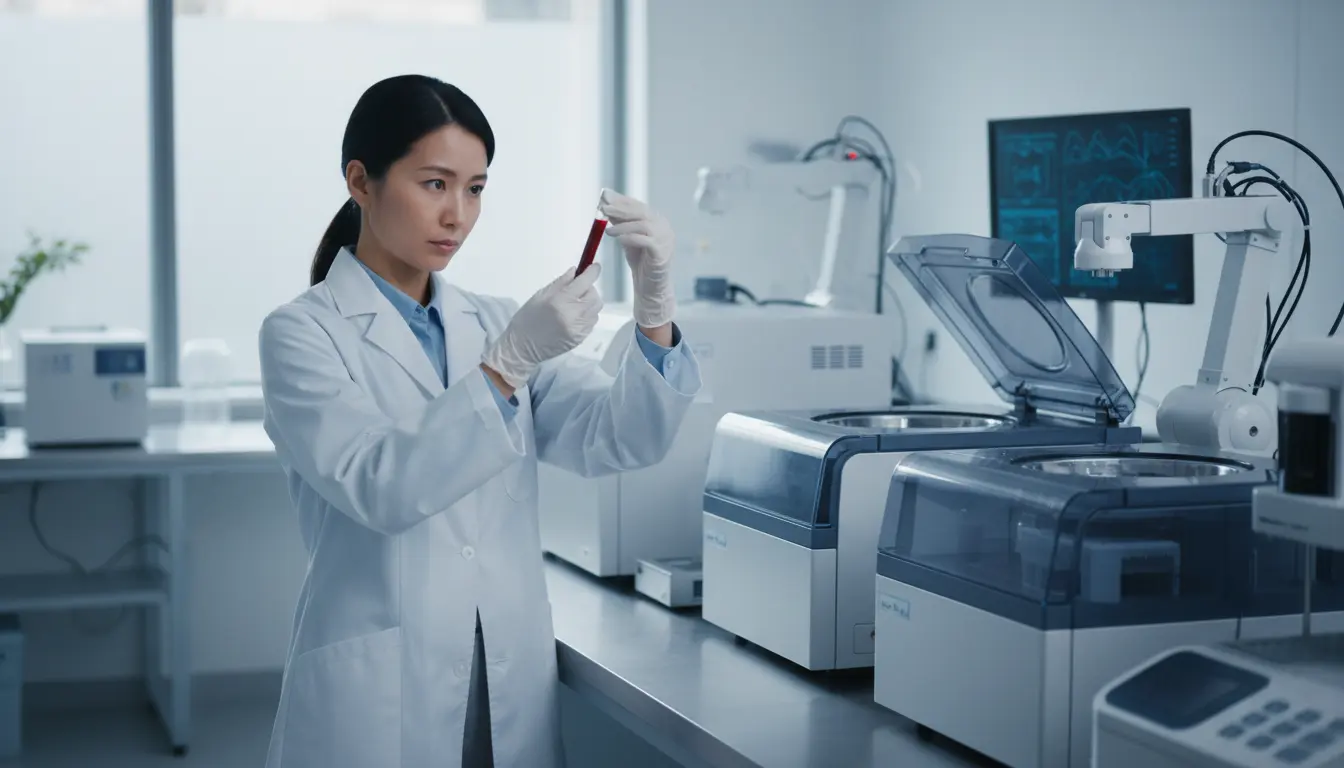 Prenatal DNA testing is an important test used to determine the biological parent-child relationship between a fetus and an alleged father during pregnancy. In recent years, demand for this kind of testing has been steadily increasing, but at the same time, a serious problem has emerged: some providers do not clearly state the "Probability of Paternity (POP)" in their result reports [ref:1].
The probability of paternity is a numerical value, calculated from the genotype data obtained through DNA testing, representing the likelihood that the tested individual is the biological father. This figure is the single most important indicator for objectively demonstrating the reliability of a test result, and international quality standards for DNA testing require it to be included in every report [ref:2]. Nevertheless, some providers fail to state this probability, or use vague wording instead, creating a serious risk for their clients.
Cases where results were overturned: more than a dozen confirmed in 2019 alone
 In practice, clients who underwent prenatal DNA testing through brokers or clinics that did not state the probability of paternity later came to us (seeDNA Genetic Medical Laboratory) for a retest, and the original results were overturned in more than a dozen cases in 2019 alone. This is by no means a small number.
Of course, not every client who was tested by such providers received an incorrect result. However, when a test lacks sufficient precision, or when the reported probability of paternity falls short of 99.9% or higher, a retest at a highly reliable testing institution is necessary.
Learn more about prenatal paternity testing here
If these clients had not questioned their results and had never undergone a retest, the true biological relationship would never have come to light. DNA testing is a test that can profoundly affect a person's life, and "testing errors" should never be allowed to occur. Yet the misjudgments confirmed at our laboratory are likely only the tip of the iceberg — the actual number of erroneous results is believed to be many times higher.
Why disclosing the probability of paternity is essential
 The probability of paternity is the only quantitative indicator that scientifically and objectively substantiates a DNA test result. A conclusion stated simply as "a parent-child relationship exists" or "does not exist," without more, gives the client no way to judge how reliable that determination actually is [ref:2].
For example, if the probability of paternity is reported as 99.99%, it means the parent-child relationship has been proven with an extremely high degree of certainty. On the other hand, if this figure is only around 90% or 95%, it is insufficient as scientific evidence, and further testing would be warranted. If the probability of paternity is not included in the report at all, the client has no means of verifying the validity of the result [ref:3].
Risks that can arise when the probability of paternity is not stated
- The testing accuracy may fall below the international standard
- The number of genetic loci (STR markers) analyzed may be insufficient to produce a reliable probability
- A conclusion may be presented despite an ambiguous determination, creating a very high risk of misjudgment
- Without probability data, it becomes difficult to ask a third party to review or verify a result you have doubts about
- The result may not be accepted as evidence in legal proceedings such as court cases
For those considering prenatal DNA testing: key points to check when choosing a provider
Whichever company you are considering for prenatal DNA testing, be sure to confirm in advance whether the "Probability of Paternity (POP)" will be clearly stated in the result report. This is the bare minimum check when choosing a provider.
A checklist for choosing a trustworthy testing institution
- Confirm that the "probability of paternity" will be stated as a numerical value in the report
- Confirm that the international standard of "99.9% or higher probability of paternity" is guaranteed
- Ask for an explanation of the number of STR markers used and the testing methodology
- Confirm whether the provider holds third-party accreditations such as AABB or ISO 17025
- Confirm whether a retesting system is in place in case of doubts about the result
Testing institutions that guarantee the international standard of "99.9% probability of paternity"
As of 2019, only three testing institutions worldwide — including our own — guaranteed the general international standard for paternity testing of "99.9% probability of paternity" [ref:1].
| Testing institution | Country | Probability of paternity |
|---|---|---|
| seeDNA / Natera / DDC | Japan / United States | 99.9% or higher |
| GTL | Australia | 99.9% or higher |
| *Institution added in 2020 | United Kingdom | 99.9% or higher |
Update (as of January 2020): A UK institution has since joined the group of testing institutions guaranteeing the general international standard for paternity testing of "99.9% probability of paternity," bringing the worldwide total to four.
At seeDNA Genetic Medical Laboratory, in prenatal DNA testing, we clearly report a probability of paternity of 99.99% when the biological relationship is affirmed, and 0% when it is denied — as a clear numerical value in every report. We never use vague wording, ensuring maximum transparency so our clients can receive their results with peace of mind.
How prenatal DNA testing works and the factors affecting its accuracy
Prenatal DNA testing (NIPPT: Non-Invasive Prenatal Paternity Test) analyzes fetal-derived cell-free DNA (cfDNA) contained in a pregnant woman's blood, allowing the parent-child relationship to be determined without invasive procedures such as amniocentesis or chorionic villus sampling [ref:4]. This technology offers the major advantage of achieving highly accurate results while ensuring the safety of both the mother and the fetus.
However, testing accuracy depends on many factors, including the number of genetic loci (STR markers or SNPs) used, the analytical technology, and the quality control system for samples. At less reliable providers, these factors may not be adequately managed, creating a risk of inaccurate results. In prenatal DNA testing in particular, analysis can become difficult when the proportion of fetal DNA in the maternal blood (fetal fraction) is low, making advanced technology and rigorous quality control essential [ref:5].
If you have doubts about your results, consider a retest
If you are not satisfied with your prenatal DNA test results, if your report does not state the Probability of Paternity (POP), or if you have even the slightest doubt about your results, please feel free to contact us. There is a real possibility that a retest could overturn your results.
DNA testing is a test directly tied to some of the most important decisions in life. To obtain an accurate and reliable result, it is essential above all to choose an established testing institution that meets international standards. Our specialized staff are happy to answer any questions or concerns you may have about prenatal DNA testing, so please feel free to reach out.
Learn more about prenatal paternity testing here
Frequently Asked Questions
Q1. What is the Probability of Paternity (POP)?
A. The Probability of Paternity (POP) is a numerical value, calculated from the genotype data obtained through DNA testing, that represents the likelihood that the tested individual is the biological father of the fetus. The international standard requires 99.9% or higher, and having this figure stated in the report is a mark of a trustworthy test.
Q2. Why do some providers not state the probability of paternity?
A. It may be because the number of genetic loci used in testing is insufficient, or the analytical technology is inadequate, making it impossible to calculate a probability that meets the international standard. It's also possible that when a broker outsources testing to an overseas institution, the probability data gets omitted during the translation of the report.
Q3. What should I do if I have doubts about a test result I received from another provider?
A. We recommend a retest at our laboratory (seeDNA Genetic Medical Laboratory). We have a track record of overturning more than a dozen results in 2019 alone, and a retest is especially advisable if the report does not clearly state the probability of paternity. Please feel free to consult with us.
Q4. Is prenatal DNA testing risky for the mother or the fetus?
A. The NIPPT (Non-Invasive Prenatal Paternity Test) we perform requires only a blood sample from the pregnant woman, with no invasive procedures such as amniocentesis required at all. It is a safe testing method that poses no risk to either the mother or the fetus.
Q5. How many testing institutions worldwide guarantee the international standard of "99.9% probability of paternity"?
A. As of January 2020, only four testing institutions worldwide guarantee a probability of paternity of 99.9% or higher in prenatal DNA testing: our own seeDNA (Japan), Natera/DDC (United States), GTL (Australia), and an institution in the United Kingdom.
Q6. What is the difference between a probability of paternity of 99.99% and 99.9%?
A. 99.9% means "there is a chance of 1 in 1,000 that the match occurred by coincidence," while 99.99% means "1 in 10,000." We report results with an accuracy of 99.99% or higher, ensuring even greater reliability. The higher the figure, the lower the risk of a misjudgment caused by a coincidental match.
Reassuring Support from seeDNA Genetic Medical Laboratory
seeDNA Genetic Medical Laboratory is a trusted and reliable specialist institution for DNA testing and genetic testing, certified with the international quality standard ISO 9001 and the Privacy Mark for personal information protection.
If you have concerns about family or parent-child biological relationships, or a partner's infidelity, our DNA testing specialists are here to provide the reassurance and support you need, so please feel free to contact us.
[Free Consultation with Our Specialist Staff]

If you have any questions,
please feel free to contact our toll-free line.
/Open every day, including weekends/
Business hours: Monday to Sunday 9:00-18:00
(except holidays)
 Author
Dr. Tomikane Yoshinori, M.D., Ph.D.
Graduate of the Master's/Doctoral program in Biosystems and Molecular Medicine, University of Tsukuba Graduate School
In 2017, developed Japan's first prenatal DNA testing method(Patent 7331325) using trace-DNA analysis technology(Patent 7121440)