
Rewritten: August 2, 2024
Beyond father-child DNA parentage testing, a wide range of biological relationships can be determined — siblings, grandparents, aunts and uncles, and more. This article explains the characteristics of methods using autosomal, sex chromosome, and mitochondrial DNA, and the importance of clearly organizing the relationships between test subjects to obtain accurate results.
- ・What Is DNA Parentage Testing (Father-Child)?
- ・Kinship Testing Beyond Father-Child Testing
- ・Three Methods Used in Kinship Testing
- └ 1. Autosomal STR Analysis (the Most Common Method)
- └ 2. Sex Chromosome (Y Chromosome / X Chromosome) Analysis
- └ 3. Mitochondrial DNA Analysis
- ・Understanding Statistical Indicators in Kinship Testing
- ・For Accurate Results — the Importance of Organizing the Relationships Between Test Subjects
- ・seeDNA Genetic Medical Laboratory's DNA Testing Services
What Is DNA Parentage Testing (Father-Child)?
 seeDNA Inc. (seeDNA Genetic Medical Laboratory) provides DNA testing services that scientifically prove parent-child relationships. Among these, the two most frequently requested are "prenatal blood DNA testing" and "DNA parentage testing (father-child)." Both are highly accurate tests to determine "who is the biological father of the child," and are used for a variety of purposes, including legal proceedings and personal confirmation.
In DNA parentage testing (father-child), the DNA types of the alleged father and the child are compared to statistically determine whether a parent-child relationship exists. Human cells contain a genome of approximately 3 billion base pairs, and by analyzing multiple regions known as STR (Short Tandem Repeat), where individual differences are especially pronounced, an extremely high level of accuracy can be achieved [ref:2]. Typically, by testing 20 or more STR markers, a parent-child relationship, when present, can be proven with an accuracy of 99.99% or higher.
An STR marker is a region of DNA where a short sequence of about 2 to 6 base pairs repeats. Because the number of repeats varies between individuals, comparing multiple STR loci allows each individual to be identified with high probability. In parentage testing, whether the child's DNA type is consistent with the alleged father's DNA type is verified at each locus, and a parent-child relationship is concluded when there is no inconsistency at any locus. The International Society for Forensic Genetics (ISFG) recommends using multiple STR markers to obtain sufficient statistical certainty in parentage testing [ref:1].
Furthermore, recent advances in DNA analysis technology have made it possible to test even minute DNA samples that were once considered too difficult to analyze. Our seeDNA Genetic Medical Laboratory uses its own proprietary trace-DNA analysis technology, allowing us to handle cases that were previously difficult to test using conventional methods.
Kinship Testing Beyond Father-Child Testing
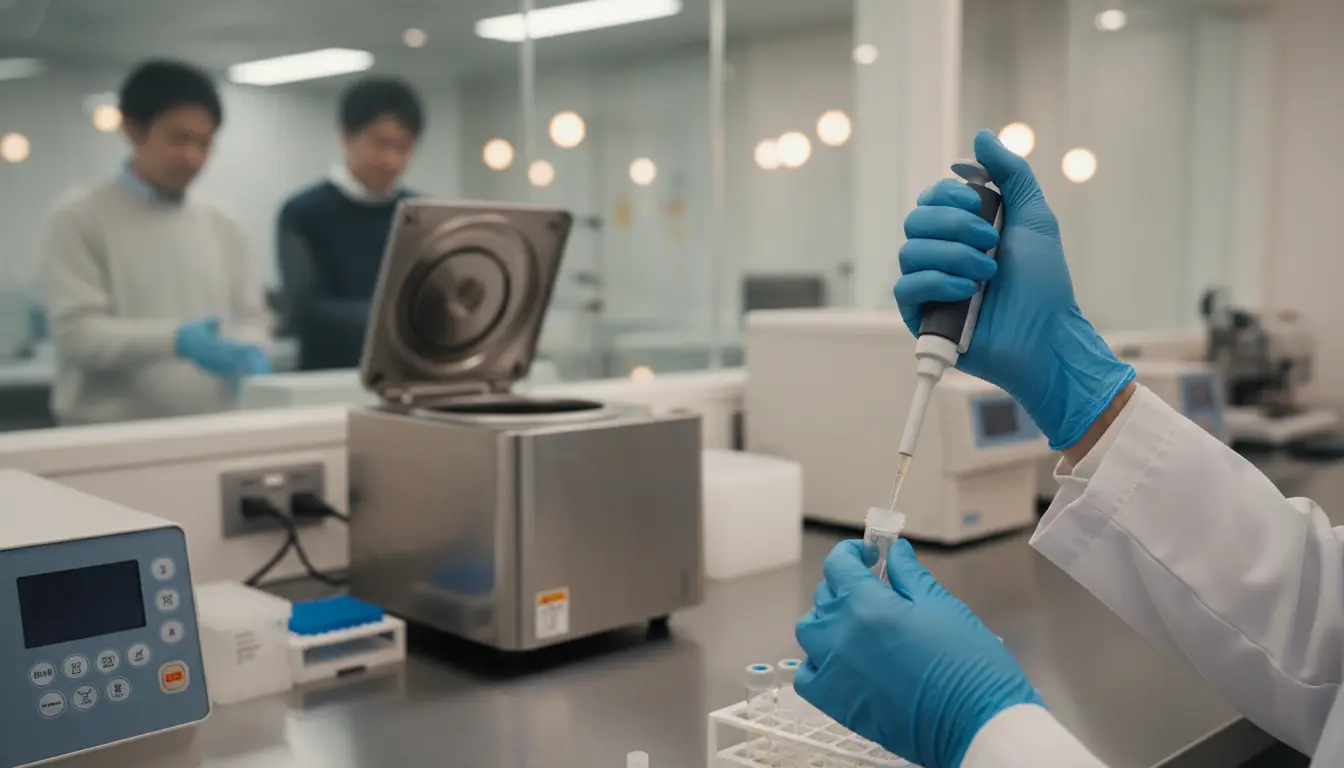 When people think of DNA testing, many picture "identifying the father," but in fact, a wide range of biological relationships beyond father-child can also be examined. Because human DNA is inherited half from each parent, blood relatives share DNA sequences in certain proportions. By analyzing the amount of shared DNA and characteristic patterns, it is possible to estimate a variety of family relationships.
Specifically, the following relationships can be tested.
- Sibling testing: Determines whether individuals are siblings born of the same parents (or one shared parent). Full siblings share an average of about 50% of their DNA, while half-siblings share an average of about 25%.
- Grandparent testing: Determines whether a biological relationship exists between grandparent and grandchild. Grandparents and grandchildren share an average of about 25% of their DNA.
- Aunt/uncle testing: Determines the biological relationship between an aunt or uncle and a niece or nephew. Aunts/uncles and nieces/nephews also share an average of about 25% of their DNA.
- Maternity testing: Confirms the parent-child relationship between mother and child. This is in demand in cases where birth records are unclear or in matters related to adoption.
- Cousin testing: Estimates whether a biological relationship exists between cousins. Cousins are said to share an average of about 12.5% of their DNA.
First-degree relationship testing (between parent and child) can achieve highly accurate results with relatively simple analysis. However, for second-degree or more distant relationships (such as siblings, or grandparent and grandchild), the proportion of shared DNA regions decreases, requiring more advanced statistical analysis using a greater number of markers [ref:3]. Even so, with appropriate testing methods and a sufficient number of markers, highly reliable results can still be obtained.
The table below summarizes the major biological relationships and their approximate shared DNA proportions.
| Biological Relationship | Degree | Shared DNA Proportion (Average) |
|---|---|---|
| Parent-Child (Father-Child / Mother-Child) | 1st degree | ~50% |
| Full Siblings | 2nd degree | ~50% |
| Grandparent-Grandchild / Aunt-Uncle-Niece-Nephew | 2nd degree | ~25% |
Note that half-siblings share an average of about 25% of their DNA, while cousins share an average of about 12.5%. The lower the shared DNA proportion, the more advanced statistical analysis is required for testing, but detection power can be increased by adding more test subjects.
Three Methods Used in Kinship Testing
 There are broadly three methods for examining biological relationships. Each method has different characteristics and applicable situations, so the optimal method must be selected according to the purpose of the test and the combination of subjects involved. Below, we explain the principles, benefits, and precautions of each method in detail.
1. Autosomal STR Analysis (the Most Common Method)
As with father-child testing, this method uses STR loci on the autosomes. Human chromosomes consist of 22 pairs of autosomes and one pair of sex chromosomes, and each autosome is inherited one copy from the father and one from the mother. As a result, between parent and child, at least one allele at each STR locus is always shared [ref:2]. In sibling testing and grandparent testing as well, the pattern and frequency of shared alleles are statistically analyzed to estimate whether a biological relationship exists.
This method is the most versatile, offering the major advantage of being applicable to a wide range of biological relationships. Current forensic testing commonly uses 20 or more STR markers as defined by the U.S. FBI's CODIS system, achieving an extremely high level of discriminating power [ref:4].
However, because shared DNA regions decrease for second-degree or more distant relationships, it is recommended to increase the number of test subjects (for example, adding the mother's sample) to improve accuracy. For instance, in sibling testing, even when a father's sample cannot be obtained, adding the mother's DNA alone can dramatically improve statistical detection power in many cases.
2. Sex Chromosome (Y Chromosome / X Chromosome) Analysis
The Y chromosome is a special chromosome passed almost unchanged from father to son. Women have two X chromosomes, while men have one X and one Y chromosome. Because the Y chromosome undergoes very little recombination, it is extremely well-suited for tracing paternal lineage. For this reason, it is highly effective for examining paternal-line relationships (for example, a paternal grandfather and grandson, or a paternal uncle and nephew — a paternal line between males). If the STR loci on the Y chromosome match, it can be determined that the individuals likely belong to the same paternal line [ref:5].
On the other hand, the X chromosome is inherited as one copy from the mother to a son, and one copy each from both parents to a daughter, so it is sometimes used to test certain biological relationships (such as between a paternal grandmother and granddaughter). Because a father always passes his single X chromosome to his daughter, X chromosome analysis can be useful in cases where paternal-line relationships need to be examined through a female subject.
However, testing using sex chromosomes is limited in applicability. It cannot be used for all biological relationships — whether it can be applied depends on the sex of the subjects and the assumed line of descent, so expert judgment is essential.
3. Mitochondrial DNA Analysis
Mitochondrial DNA (mtDNA) is DNA contained not in the cell nucleus but in an organelle called the mitochondrion, located in the cytoplasm. Mitochondria are organelles responsible for producing energy within the cell, and each possesses its own circular DNA of approximately 16,500 base pairs. The most notable characteristic of mitochondrial DNA is that it is passed only from mother to child (maternal inheritance) [ref:3]. In other words, individuals belonging to the same maternal line will, in principle, retain the same mitochondrial DNA sequence across generations.
For this reason, it is a particularly effective method for examining maternal-line relationships (such as a maternal grandmother and grandchild, or a maternal aunt and niece/nephew). For example, even in situations where the mother's DNA sample cannot be obtained directly, comparing the mitochondrial DNA of maternal relatives can sometimes indirectly prove a maternal-line connection.
Mitochondrial DNA also exists in hundreds to thousands of copies within a single cell, giving it the advantage of being analyzable even from trace samples or old specimens where nuclear DNA has degraded or broken down. Mitochondrial DNA analysis is also used for testing specimens from which nuclear DNA is difficult to extract, such as skeletal remains or hair (hair shafts without a root).
However, because mitochondrial DNA has a low mutation rate, it may not be suitable for identifying specific individuals or for first-degree parentage testing. Since individuals of the same maternal line are assumed to share the same sequence, it is difficult to distinguish between "a different person of the same maternal line" and "mother and child." It is therefore positioned as an auxiliary or supplementary method for confirming maternal lineage.
Understanding Statistical Indicators in Kinship Testing
In DNA testing, the reliability of the results depends not only on the genotype data obtained experimentally but also on the statistical methods used to interpret it. Statistical indicators frequently used in kinship testing include the Likelihood Ratio (LR) and the Probability of Relationship (PP: Probability of Paternity / Probability of Relationship) [ref:1].
The likelihood ratio is a numerical expression of which hypothesis — "a biological relationship exists" or "no biological relationship exists" — better fits the data. For example, if the likelihood ratio in a father-child test is 10,000, this means that "the observed DNA type pattern is 10,000 times more likely to occur if the parent-child relationship exists than if it does not."
ISFG guidelines recommend that, in parentage testing, a conclusion scientifically supporting a parent-child relationship be drawn when the likelihood ratio is sufficiently high (generally 1,000 or greater) [ref:1]. In kinship testing involving second-degree or more distant relationships, increasing the number of loci analyzed or obtaining additional test subject samples can raise the likelihood ratio and lead to a more definitive determination.
Our seeDNA Genetic Medical Laboratory conducts statistical analysis in accordance with international standards, and provides a report that clearly states the likelihood ratio and probability values for every test result. This ensures that the scientific basis of the test result is communicated clearly to our customers.
For Accurate Results — the Importance of Organizing the Relationships Between Test Subjects
As explained above, there are various methods for kinship testing, each with a different scope of application. Determining which method to choose requires advanced expertise in genetics, and it is not easy for the average person to select the optimal method on their own. Please feel free to consult us regarding this expert judgment.
When consulting with us, the most important thing is to accurately convey the relationship between the test subjects. For example, in a case where you would like to determine "whether Person A and Person B are biologically related," the optimal testing method and sample collection approach will differ greatly depending on the assumed relationship between A and B (whether it is father-child, half-siblings, uncle and nephew, etc.).
If the wrong method is selected, there is a risk of insufficient statistical detection power, resulting in an ambiguous outcome. Conversely, if the relationship between subjects is accurately organized and the appropriate method is chosen, even a second-degree or more distant biological relationship can yield sufficiently reliable results.
For this reason, we recommend that customers organize the relationship using the following steps.
- Clarify the relationship to be examined: Organize exactly whose biological relationship you want to confirm
- Create a simple family tree: Try drawing the positional relationship of the subjects as a family tree (a hand-drawn sketch is fine)
- Check available test subjects: Confirm whether anyone else (such as the mother or other relatives) is available to provide a DNA sample
- Consult with us: Based on the organized information, consult with us by phone, email, or our online form
The more test subjects who are able to participate, the higher the statistical detection power, and the more definitive the test result. In particular, for kinship testing involving second-degree or more distant relationships, adding a sample from an intermediate relative alone can dramatically improve accuracy in many cases. For example, when examining the biological relationship between a grandparent and grandchild, having a sample from the intermediate parent (the grandparent's child and the grandchild's parent) can significantly improve the accuracy of the test.
seeDNA Genetic Medical Laboratory's DNA Testing Services
Our company performs highly accurate DNA testing under a quality control system that complies with international standards. We hold the international quality standard ISO 9001 certification and the Privacy Mark for personal information protection, ensuring not only the accuracy of test results but also thorough protection of our customers' personal information.
In addition to father-child testing, we handle a wide range of biological relationship confirmations, including sibling testing, grandparent testing, and aunt/uncle testing. We also offer "prenatal blood DNA testing," which can confirm a father-child relationship before birth, and we provide careful support for consultations with expectant mothers.
In our testing process, our specialized staff first carefully listen to your inquiry, organize the relationships between the test subjects, and then propose the optimal testing method. As for DNA sample collection, the basic method is a simple, at-home collection using an oral mucosa swab (cotton swab), which is painless and can be used with peace of mind.
Through our DNA testing services, if we can help resolve even one more person's anxiety or concerns and provide an answer based on accurate scientific evidence, there is no greater joy for us as a DNA testing institution. If you have any questions or concerns regarding biological relationships, please do not hesitate to contact us. We sincerely look forward to hearing from you.
Frequently Asked Questions
Q1. What kinds of biological relationships other than father-child testing can be examined?
A. In addition to father-child relationships, a variety of biological relationships can be tested, including siblings (full siblings and half-siblings), grandparent and grandchild, aunt/uncle and niece/nephew, mother and child, and cousins. We select the optimal method for each relationship, including autosomal STR analysis, sex chromosome analysis, and mitochondrial DNA analysis.
Q2. Do sibling testing and grandparent testing produce results with the same accuracy as father-child testing?
A. Second-degree or more distant biological relationship testing tends to have somewhat lower detection power than first-degree father-child testing, because the shared DNA region is smaller. However, accuracy can be significantly improved by adding a sample from an intermediate relative, such as the mother. Our specialized staff will propose the optimal method for your case.
Q3. What should I prepare before requesting a test?
A. First and foremost, it is most important to accurately organize the relationship between the subjects you wish to examine. Please create a simple hand-drawn family tree, check whether anyone else is available to provide a DNA sample, and then consult with us. By accurately conveying the relationship, we can advise you on the optimal testing method and the number of samples required.
Q4. When are Y chromosome analysis and mitochondrial DNA analysis used?
A. Y chromosome analysis is effective for examining paternal-line biological relationships between males (such as a paternal grandfather and grandson, or a paternal uncle and nephew). Mitochondrial DNA analysis, on the other hand, is used to confirm maternal-line biological relationships (such as a maternal grandmother and grandchild, or a maternal aunt and niece/nephew). Both methods have limited applicability, so our experts determine the optimal method based on the sex of the subjects and the assumed relationship.
Q5. In what format will I receive the test results?
A. Test results are provided in a formal report that clearly states the Likelihood Ratio and Probability of Relationship. Since the figures are based on scientific evidence, you can objectively assess the reliability and certainty of the results. If the results are to be used for legal proceedings, we can also provide a report in a format suitable for submission to a court.
Q6. Is the DNA sample collection method painful?
A. The basic method involves lightly rubbing an oral mucosa swab (cotton swab) against the inside of the cheek, so there is virtually no pain. No blood draw is required, and even young children can safely provide a sample. Typically, the sample is easily collected at home and sent to us by mail.
seeDNA Genetic Medical Laboratory's Trusted Support
seeDNA Genetic Medical Laboratory is a trusted specialist institution for DNA testing and genetic testing, holding the international quality standard ISO 9001 certification and the Privacy Mark for personal information protection.
If you have concerns about family or parent-child biological relationships, or a partner's infidelity, our DNA testing experts are here to provide reassuring support, so please feel free to contact us.
[Free Consultation with Specialized Staff]

If you have any questions,
please feel free to contact our toll-free number.
/Open every day, including weekends/
Business hours: Mon–Sun 9:00 AM–6:00 PM
(excluding public holidays)
 Author
Dr. Yoshinori Tomigane, Ph.D. in Medicine
Completed a master's and doctoral course in Biosystem Control and Molecular Information Medicine at the University of Tsukuba
In 2017, developed Japan's first prenatal DNA testing(Patent No. 7331325) using proprietary trace-DNA analysis technology(Patent No. 7121440)