
Last revised: January 2, 2025
When people with a history of blood transfusion or bone marrow transplant undergo DNA testing, another person's DNA may be mixed into their blood, preventing accurate results. This article explains in detail the precautions for sample selection and submission timing, as well as the effects of chimerism.
- ・Can someone else's DNA really be detected in your own body? The relationship between transfusion history and DNA testing
- ・The mechanism of DNA mixing from transfusions and the forensic risks involved
- ・The serious impact of a bone marrow transplant history on DNA testing
- └ The difference between how transfusions and bone marrow transplants affect DNA testing
- ・What is chimerism? The changes that occur in the body after a bone marrow transplant
- ・The steps needed to obtain an accurate DNA test result, and the importance of consulting with us beforehand
- └ For those considering testing — your information is the key to accurate results
- ・Characteristics and selection criteria for different sample types in DNA testing
Can someone else's DNA really be detected in your own body? The relationship between transfusion history and DNA testing
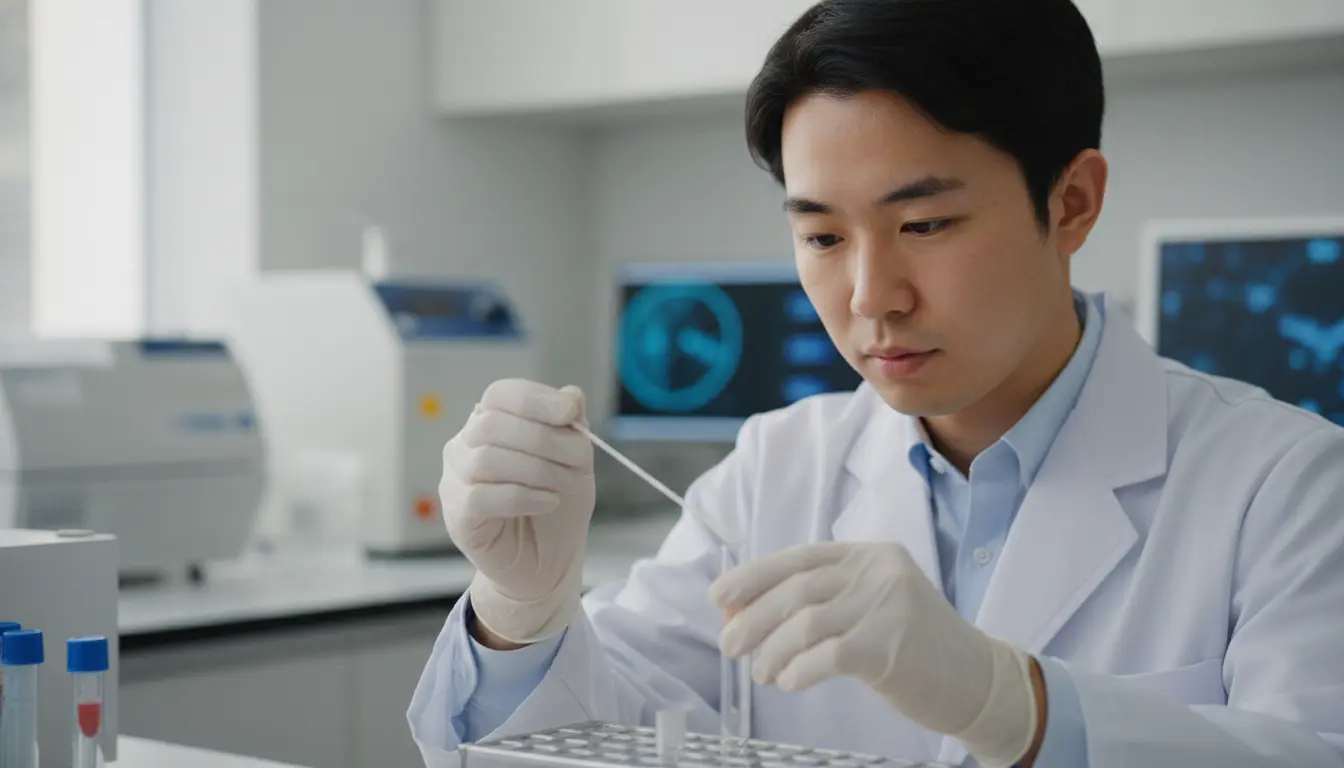 Many people are surprised to hear that "someone else's DNA can be detected in your own body." Under normal circumstances, all the DNA present in our bodies belongs to us alone. However, for those with a history of blood transfusion, this is by no means impossible. A transfusion is a medical procedure in which another person's blood is introduced into your body, and the donated blood naturally contains the donor's white blood cells and other nucleated cells. Because these cells carry the donor's DNA, if DNA is extracted from blood shortly after a transfusion, the sample will contain a mixture of the recipient's own DNA and the donor's DNA.
In Japan, more than three million people are estimated to receive blood transfusions every year, and the situations requiring transfusion are extremely varied — surgery, accidents, treatment for chronic illness, and more. Blood products include red blood cell concentrates, platelet concentrates, and fresh frozen plasma, and red blood cell and platelet concentrates in particular contain small amounts of the donor's white blood cells. In recent years, the use of leukoreduction filters has become standard and has greatly reduced the amount of contamination, but it is difficult to eliminate entirely [ref:1]. For this reason, anyone who has received a transfusion and is considering DNA testing needs to take into account the possibility that donor-derived DNA may still be present, and choose an appropriate sample type and submission timing accordingly.
The mechanism of DNA mixing from transfusions and the forensic risks involved
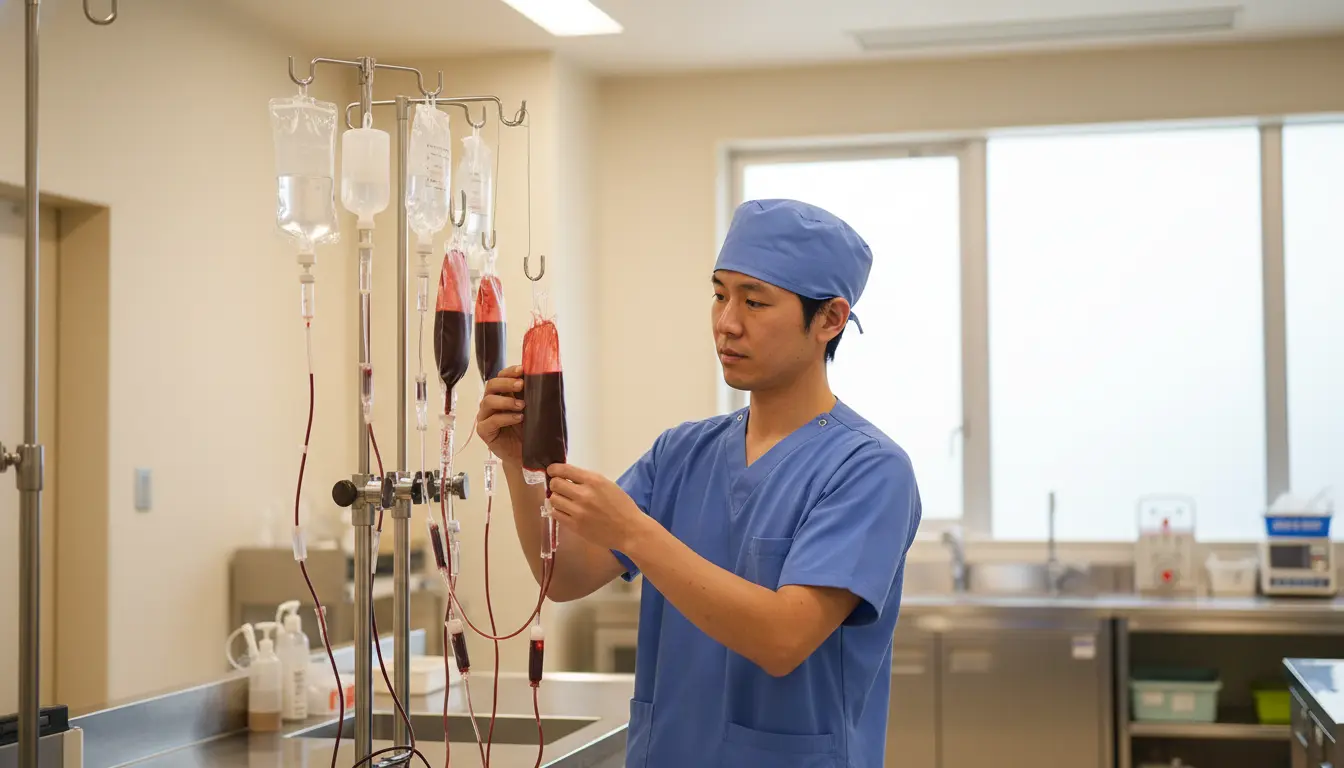 DNA testing works by analyzing specific gene loci (STR markers) to identify an individual. Normally, a maximum of two alleles are detected at a single locus, but if another person's DNA is mixed in, three or more alleles may be detected. When this happens, it becomes impossible to tell which alleles belong to the person being tested, making it extremely difficult to obtain an accurate result. In a paternity test, this can lead to errors in determining the parent-child relationship, and in forensic testing, it can even make it impossible to identify the individual at all.
STR (Short Tandem Repeat) analysis is the mainstream method used in modern forensic DNA testing, and it typically analyzes around 16 to 24 gene loci simultaneously. At each locus, if up to two alleles belong to the person being tested and up to two more belong to the donor, as many as four peaks can appear. Such a "mixed profile" makes the analysis considerably more complex, and there is even a risk of overlooking the mixing altogether if the donor's and the recipient's alleles happen to coincide [ref:1].
When someone has received a transfusion, the direct impact on DNA test results generally occurs only when blood is submitted as the sample. Because the blood contains a mixture of the recipient's own DNA and the donor's DNA, an accurate result cannot be produced. However, caution is also needed even when submitting samples other than blood, such as oral epithelial cells (mucosal cells from the inside of the cheek). If there are small wounds inside the mouth or bleeding from the gums, the possibility that the sample has been contaminated with blood cannot be completely ruled out.
For this reason, seeDNA asks that samples be submitted at least six months after receiving a transfusion. Once enough time has passed since the transfusion, the donor-derived blood cells remaining in the body are naturally metabolized and broken down, and are replaced by the recipient's own hematopoietic function. Red blood cells have a lifespan of about 120 days, while white blood cells last anywhere from a few hours to a few days depending on the type, so it is believed that donor-derived cells are almost entirely gone after about six months [ref:1]. That said, if someone has received a large-volume transfusion or has an impaired immune system, donor-derived cells may remain for a longer period, so it is important to make a judgment based on the individual's specific circumstances.
The serious impact of a bone marrow transplant history on DNA testing
 Even more significant than transfusion is the effect of a bone marrow transplant. Bone marrow transplantation is a treatment for serious blood disorders such as leukemia and aplastic anemia, in which the patient's hematopoietic stem cells are replaced with those of a donor. In other words, once the transplant succeeds, every blood cell newly produced in the patient's body carries the donor's DNA.
There is a notable study conducted by the Washoe County Crime Laboratory in Nevada, USA. According to this study, just a few months after a bone marrow transplant, the DNA obtained from blood had completely changed to that of the donor. Even more strikingly, four years after the transplant, DNA taken from the cheek mucosa, the lips, and even semen had all become the donor's [ref:2]. This case sent shockwaves through DNA testing experts and demonstrated just how far-reaching the effects of "chimerism" after a bone marrow transplant can be.
However, the subject of this study had undergone a vasectomy after the transplant, meaning there was a special circumstance in that no sperm were present in the semen. Sperm each carry their own distinct DNA, but the DNA of the cells found in the components that make up semen itself — such as prostatic and seminal vesicle fluid — may have been replaced with the donor's. If sperm had been present, it is possible that the sperm DNA would still have reflected the recipient, but in any case, the risk of mixing with donor DNA is extremely high.
This study result clearly shows that when a person who has undergone a bone marrow transplant undergoes DNA testing, the chance of failing to obtain an accurate result is very high depending on the type of sample used. In particular, blood is unusable as a sample in most cases, and even oral mucosa requires careful handling.
The difference between how transfusions and bone marrow transplants affect DNA testing
The degree of impact on DNA testing differs greatly between transfusions and bone marrow transplants. The differences are summarized below.
- In the case of transfusion: The donor's blood cells exist in the body only temporarily and are naturally expelled and broken down over time, so after about six months the effect is essentially gone.
- In the case of bone marrow transplant: Because the hematopoietic stem cells themselves are replaced with the donor's, every newly produced blood cell permanently carries the donor's DNA. The effect continues indefinitely.
- Range of affected samples: A transfusion mainly affects blood samples only, whereas a bone marrow transplant can affect a wide range of samples, including not just blood but also oral mucosa and semen.
- Whether testing is possible: With a transfusion, testing using oral mucosa becomes possible after enough time has passed, but with a bone marrow transplant, the samples that can be used may be extremely limited.
- Prospects for recovery: The presence of donor DNA after a transfusion is temporary and resolves naturally as long as the recipient's own hematopoietic function is normal. With a bone marrow transplant, however, the hematopoietic function itself has been replaced with the donor's, so it never returns to its original state.
What is chimerism? The changes that occur in the body after a bone marrow transplant
"Chimerism," which occurs after a bone marrow transplant, refers to a state in which two or more genetically distinct cell populations coexist within a single body [ref:3]. The term originates from the Chimera of Greek mythology — a monster with the head of a lion, the body of a goat, and the tail of a snake — and in medicine it is an especially important concept for patients who have undergone hematopoietic stem cell transplantation.
When an allogeneic hematopoietic stem cell transplant (including bone marrow transplantation) succeeds, the patient's hematopoietic system is gradually replaced by the donor's cells. The degree of this replacement is called "chimerism" and is used to assess treatment efficacy after transplantation and to detect relapse early [ref:1]. In full donor chimerism, 100% of the cells in the blood are donor-derived, while in mixed chimerism, the recipient's (the patient's own) cells and the donor's cells coexist.
From the standpoint of DNA testing, in cases of full chimerism the DNA profile from the blood matches the donor's completely, making it impossible to identify the person being tested. In cases of mixed chimerism, the mixed profile described earlier appears, making analysis significantly more difficult. In either case, DNA testing using blood as the sample cannot produce a reliable result [ref:2].
Notably, chimerism is not always limited to hematopoietic cells. As in the Washoe County Crime Laboratory case described earlier, donor DNA can even be detected in the oral mucosa and semen, which is thought to occur because immune cells derived from the hematopoietic system (such as macrophages and lymphocytes) migrate to and settle in tissues throughout the body. This phenomenon is also related to what is known as "microchimerism," and it has been reported that people who have undergone organ transplants or experienced pregnancy also carry trace amounts of another person's DNA in their bodies [ref:4].
The steps needed to obtain an accurate DNA test result, and the importance of consulting with us beforehand
For anyone with a history of blood transfusion or bone marrow transplant to obtain an accurate DNA test result, it is essential to follow the proper steps. We strongly recommend proceeding according to the flow below.
- Prior consultation: First, please contact seeDNA by phone or email. We will ask in detail about the timing and number of transfusions or transplants, and the details of the treatment.
- Selecting the optimal sample: Based on the information you provide, our specialist staff will recommend the type of sample (oral mucosa, hair, nails, etc.) most likely to produce an accurate result.
- Determining the appropriate collection timing: For transfusions, we allow for a minimum of six months to pass; for bone marrow transplants, we consider the collection timing even more carefully.
- Accurate sample collection and submission: Please collect and submit the sample using the correct method as instructed. When collecting from inside the mouth, first confirm that there is no bleeding.
- Testing and reporting of results: DNA analysis is carried out in our laboratory under strict quality control, and we report the accurate results to you. In the rare event that a mixed profile is detected, we will contact you promptly and suggest retesting or testing with a different sample.
For those considering testing — your information is the key to accurate results
DNA testing is one of the most reliable methods available for identifying an individual. However, a medical history involving procedures such as blood transfusion or bone marrow transplant is a factor that directly affects the accuracy of the results. Information about your medical history is extremely important for us to report an accurate result.
If you have a history of blood transfusion or bone marrow transplant and are considering DNA testing, please be sure to consult with us in advance. We will recommend the optimal sample type and collection timing based on your situation, and do everything we can to support you in obtaining an accurate result. No matter how small the concern, please feel free to contact seeDNA Genetic Medical Laboratory with any questions or worries.
Please note that a history of blood transfusion or bone marrow transplant affects not only paternity testing but also personal identification testing and DNA testing in general. Regardless of the type of test you are considering, if you have a relevant medical history, please be sure to let us know in advance.
Characteristics and selection criteria for different sample types in DNA testing
For those with a history of blood transfusion or bone marrow transplant, the choice of sample greatly affects the reliability of the test result. Each sample type has its own characteristics, and the appropriate choice depends on the individual's medical history.
- Oral mucosa (swab from the inside of the cheek): The most common sample type, and easy to collect. This is usually fine once at least six months have passed since a transfusion, but caution is needed after a bone marrow transplant due to the risk of donor DNA contamination. It is important to confirm there is no bleeding inside the mouth before collection.
- Hair (with root): Hair roots contain DNA from hair matrix cells and are said to be less affected by bone marrow transplants. However, enough of the root must be attached, and hair that has fallen out naturally may not contain enough DNA.
- Nails: Nail cells also contain the person's own DNA and are a tissue less affected by the hematopoietic system. It may be possible to obtain the recipient's own DNA even after a bone marrow transplant, but care is needed regarding the risk of external contamination.
- Blood: Blood yields an abundant amount of DNA, but since donor DNA can be mixed in shortly after a transfusion or bone marrow transplant, it is generally not recommended for people with these medical histories.
Ultimately, which sample to use depends on each individual's specific medical history and circumstances. At seeDNA Genetic Medical Laboratory, our specialist staff carefully listen to each person's situation and recommend the sample type and collection method most likely to produce a reliable result. Please feel free to contact us at any time with questions.
Frequently Asked Questions
Q1. After receiving a transfusion, how long should I wait before I can undergo DNA testing?
A. We ask that you wait at least six months after receiving a transfusion. Once at least six months have passed, donor-derived blood cells have essentially disappeared from the body, making it possible to obtain an accurate result using a sample such as oral mucosa. However, because blood samples carry a risk of donor DNA contamination for some time after a transfusion, we recommend submitting a non-blood sample such as oral mucosa.
Q2. If I have had a bone marrow transplant, does that make DNA testing completely impossible?
A. It does not make testing completely impossible, but it does greatly limit the samples that can be used. After a bone marrow transplant, the DNA in the blood is replaced with the donor's, so blood cannot be used as a sample. In some cases, tissues less affected by the hematopoietic system, such as hair or nails, can be used as samples, so please be sure to consult with us in advance.
Q3. What happens if I don't disclose a history of blood transfusion or bone marrow transplant?
A. If this history is not disclosed, there is a risk that another person's DNA will be mixed into the test result, making an accurate determination impossible. Specifically, extra alleles that would not normally be detected may appear, or the test may be judged inconclusive. To ensure we can provide an accurate result, please always inform us in advance of any history of blood transfusion or bone marrow transplant.
Q4. What is chimerism after a bone marrow transplant? How does it affect DNA testing?
A. Chimerism refers to a state in which multiple genetically distinct cell populations coexist within a single body. After a bone marrow transplant, the hematopoietic stem cells are replaced with the donor's, so all newly generated blood cells carry the donor's DNA. As a result, DNA testing using a blood sample will detect the donor's DNA profile, producing a result that differs from the person being tested. In some cases, the donor's DNA can also spread to the oral mucosa, so anyone with a history of bone marrow transplant should always consult with us beforehand.
Q5. If I have a history of blood transfusion, is it fine to collect a sample from the oral mucosa (inside of the cheek)?
A. If at least six months have passed since the transfusion, collecting from the oral mucosa will usually produce an accurate result without issue. However, if there is a wound inside the mouth or bleeding from the gums, the possibility that a trace amount of blood has contaminated the sample and that donor DNA will be detected cannot be completely ruled out. For this reason, please be sure to confirm there is no bleeding inside the mouth before collection, and submit the sample only once you are certain conditions are ideal.
Q6. Does having an organ transplant also affect DNA testing?
A. In the case of an organ transplant, the transplanted organ itself contains the donor's DNA, but since the hematopoietic cells remain the recipient's own, the effect is usually not as widespread as with a bone marrow transplant. That said, there is a possibility of "microchimerism," in which a trace amount of the donor's cells are released from the transplanted organ into the bloodstream, so as a precaution we recommend letting us know in advance.
Reassuring support from seeDNA Genetic Medical Laboratory
seeDNA Genetic Medical Laboratory is a trusted specialist DNA testing and genetic testing institution that has obtained the international quality standard ISO9001 and the Privacy Mark for personal information protection.
If you are concerned about family or parent-child blood relationships, or a partner's infidelity, our DNA testing specialists will support you every step of the way to give you peace of mind, so please feel free to contact us.
[Free consultation with specialist staff]

If you have any questions,
please feel free to contact our toll-free number.
/Open every day, weekends included/
Business hours: Monday–Sunday 9:00 AM–6:00 PM
(excluding public holidays)
 Author
Dr. Yoshinori Tomikin, Ph.D. in Medicine
Completed his master's and doctoral studies in Biosystem Studies/Molecular and Cellular Biology at the University of Tsukuba
In 2017, developed Japan's first prenatal DNA testing method(Patent No. 7331325) using trace DNA analysis technology(Patent No. 7121440)