
Rewritten on: July 30, 2024
Not only DNA paternity testing (father-child), but also a wide variety of kinship relationships—such as siblings, grandparents, and uncles/aunts—can be tested. This article explains the characteristics of each method using autosomal, sex chromosome, and mitochondrial DNA, and the importance of organizing the relationships between subjects to obtain accurate results.
- ・What is DNA Paternity Testing (Father-Child)?
- ・Kinship Testing Beyond Paternity Testing
- ・Three Methods Used in Kinship Testing
- └ 1. Autosomal STR Analysis (the Most Common Method)
- └ 2. Sex Chromosome (Y Chromosome / X Chromosome) Analysis
- └ 3. Mitochondrial DNA Analysis
- ・Scope of Application and Selection Points for Each Method
- ・For Accurate Test Results — the Importance of Organizing the Relationships Between Subjects
- ・Basic Knowledge of Statistical Indicators in Kinship Testing
- ・seeDNA Genetic Medical Research Institute's DNA Testing Services
What is DNA Paternity Testing (Father-Child)?
 seeDNA Inc. (seeDNA Genetic Medical Research Institute) provides DNA testing services that scientifically prove parent-child relationships. Among these, the most frequently requested are "prenatal blood DNA testing" and "DNA paternity testing (father-child)." Both are highly accurate tests to determine "who is the biological father of the child," and are used for a variety of purposes, including legal procedures and personal confirmation.
In DNA paternity testing (father-child), the DNA types of the candidate father and the child are compared to statistically determine whether a parent-child relationship exists. The human genome contains approximately 3 billion base pairs of DNA, and by analyzing multiple regions called STRs (Short Tandem Repeats), where individual differences are pronounced, an extremely high-precision determination is possible [ref:1]. STRs are regions where short sequences of about 2 to 6 base pairs are repeated many times, and since the number of repeats (repeat number) differs from person to person, they are widely used as highly effective markers for individual identification and kinship determination.
Typically, by testing 20 or more STR marker loci, the probability that a parent-child relationship exists is proven with a precision of 99.99% or higher [ref:2]. The principle behind paternity testing is relatively straightforward. A child inherits half of their DNA from their mother and the other half from their father. Therefore, at each locus, after subtracting the maternal-derived allele from the child's STR marker alleles, the examiner checks whether the remaining allele matches an allele of the candidate father. If there is no discrepancy at any locus, the parent-child relationship is confirmed; if a mismatch is found at multiple loci, the parent-child relationship is denied.
Standard STR kits currently used in forensic genetics include those that cover the 20 loci adopted by the United States' CODIS (Combined DNA Index System), and using these kits provides extremely reliable results. Our company also uses STR kits compliant with these international standards and conducts testing under strict quality control.
Kinship Testing Beyond Paternity Testing
 When people think of DNA testing, many imagine "identifying the father," but in fact, it is also possible to investigate various kinship relationships beyond father-child relationships. Since human DNA is inherited from both parents, not only direct parent-child relationships but also indirect kinship relationships of the second or third degree can be estimated through statistical analysis [ref:3].
Specifically, testing can be performed on the following types of relationships.
- Sibling testing: Determines whether siblings share the same parents (full siblings) or only one parent in common (half siblings). For full siblings, the average shared DNA is about 50%, but for half siblings it drops to about 25%, requiring more advanced statistical analysis.
- Grandparent testing: Determines whether a kinship relationship exists between a grandparent and grandchild. The average DNA shared between a grandparent and grandchild is about 25%, and this method is sometimes used as an alternative when the father is unavailable.
- Uncle/aunt testing: Determines the kinship relationship between an uncle or aunt and a nephew or niece. The shared DNA amount is, like grandparent testing, about 25% on average.
- Maternity testing: Confirms the parent-child relationship between a mother and child. This is in demand in cases where birth records do not exist or in cases related to adoption.
- Cousin testing: Estimates whether a kinship relationship exists between cousins. The shared DNA amount is even smaller, at about 12.5% on average, making this one of the most difficult types of testing.
First-degree (parent-child) testing can achieve highly accurate results with relatively simple analysis, but for second-degree or more distant relationships (such as siblings, or grandparent and grandchild), the proportion of shared DNA regions decreases, requiring more advanced statistical analysis using a greater number of markers. Specifically, as the kinship distance increases by one degree, the amount of shared DNA decreases by roughly half, so the more genetically distant the subjects are, the more care is required in securing sufficient markers and statistical power for the test. Even so, with appropriate testing methods and a sufficient number of markers, highly reliable test results can still be obtained.
Three Methods Used in Kinship Testing
 There are broadly three methods for investigating kinship relationships. Each method has different characteristics and applicable conditions, so the optimal method must be selected according to the purpose of the test and the combination of subjects involved. The International Society for Forensic Genetics (ISFG) also recommends selecting the appropriate analysis method according to the relationship between the subjects and the purpose of testing [ref:1].
1. Autosomal STR Analysis (the Most Common Method)
As with paternity testing, this method uses STR loci on the autosomes. Human chromosomes consist of 22 pairs of autosomes and one pair of sex chromosomes, and autosomes are inherited one from the father and one from the mother. As a result, between a parent and child, at least one allele at each STR locus is always shared. In sibling testing and grandparent testing as well, the pattern and frequency of shared alleles are statistically analyzed to estimate whether a kinship relationship exists.
Autosomal STR analysis analyzes the pattern by which alleles at each locus are inherited from parent to child based on Mendelian inheritance. In paternity testing, one of the child's alleles at each STR locus is always derived from the father, making comparison relatively straightforward. In sibling testing, on the other hand, concepts such as IBS (Identity by State) and IBD (Identity by Descent) are used to statistically evaluate whether the observed pattern of shared alleles is more consistent with the hypothesis of a kinship relationship or with the hypothesis of no relationship [ref:4].
This method is the most versatile, with the major advantage of being applicable to testing a wide variety of kinship relationships. However, for second-degree or more distant relationships, since the shared DNA region decreases, it is recommended to improve accuracy by increasing the number of subjects (for example, adding a sample from the mother). Especially in tests with a small amount of shared DNA, such as half-sibling testing or cousin testing, adding subjects can dramatically improve the statistical power of the analysis in many cases.
2. Sex Chromosome (Y Chromosome / X Chromosome) Analysis
The Y chromosome is a special chromosome that is passed down almost unchanged from father to son. Because the Y chromosome largely consists of a non-recombining region (NRY: Non-Recombining region of the Y chromosome) that undergoes almost no recombination with the X chromosome during meiosis, it is passed down along the paternal line with very little change [ref:5]. For this reason, it is highly effective for investigating paternal-line kinship relationships (for example, a paternal grandfather and grandson, or a paternal uncle and nephew—male-to-male paternal lines). If the STR loci on the Y chromosome match, it is considered highly likely that the individuals belong to the same paternal line.
Meanwhile, the X chromosome is inherited as one copy from the mother to a son, and as one copy from each parent to a daughter, so it can be used to test specific kinship relationships (such as between a paternal grandmother and granddaughter). Since a father's X chromosome is always derived from his mother, a father always passes his single X chromosome to his daughter. Using this property, it becomes a powerful source of supplementary information for standard autosomal analysis when testing the relationship between a father and daughter, or between paternal half-sisters.
However, kinship testing using sex chromosomes has limited applicability. It cannot be used for all kinship relationships—whether it can be used depends on the sex of the subjects and the assumed line of descent, so expert judgment is essential. For example, the Y chromosome cannot be used to confirm a maternal-line kinship relationship, and it is also difficult to apply to confirming a paternal line between two women.
3. Mitochondrial DNA Analysis
Mitochondrial DNA (mtDNA) is DNA contained not in the cell nucleus but in an organelle called the mitochondrion, located in the cytoplasm. Mitochondria are important organelles responsible for energy production within the cell and possess their own circular DNA. Human mitochondrial DNA consists of about 16,569 base pairs and is inherited maternally, independent of nuclear DNA.
The most notable feature of mitochondrial DNA is that it is inherited by the child only from the mother (maternal inheritance). This is because the mitochondria contained in the cytoplasm of the egg are passed to the child at fertilization, while the mitochondria in the sperm are broken down after fertilization. In other words, individuals belonging to the same maternal line will, in principle, retain an identical mitochondrial DNA sequence across generations.
For this reason, this method is particularly effective for investigating maternal-line kinship relationships (such as a maternal grandmother and grandchild, or a maternal aunt and nephew/niece). For example, even in situations where a DNA sample cannot be directly obtained from the mother, comparing the mitochondrial DNA of maternal relatives can indirectly prove a maternal-line connection. Historically, mitochondrial DNA analysis has also been used in famous cases, such as the identification of the remains of Russian Tsar Nicholas II.
However, because mitochondrial DNA has a low mutation rate, it may not be suitable for identifying individuals or for first-degree parent-child testing. Since individuals belonging to the same maternal line have identical mitochondrial DNA sequences, while it can prove "there is a maternal-line connection," it cannot distinguish specifically what degree of relationship exists. It is positioned as a supplementary and complementary method for confirming maternal lines.
Scope of Application and Selection Points for Each Method
Since each of the three methods above has different characteristics, it is important to use them appropriately according to the purpose of the test. Below is a summary of the main characteristics and applications of each method.
| Method | Main Characteristics | Applications |
|---|---|---|
| Autosomal STR analysis | Most versatile, applicable to a wide range of kinship relationships | Father-child, mother-child, siblings, grandparents, and more in general |
| Sex chromosome analysis | Y chromosome effective for paternal line, X chromosome effective for specific relationships | Between paternal-line males (Y), paternal grandmother and granddaughter (X), etc. |
| Mitochondrial DNA analysis | Confirms maternal-line connections through maternal inheritance | Confirming maternal-line kinship (maternal grandmother and grandchild, etc.) |
In actual testing, these methods are not only used independently—combining multiple methods can further increase testing accuracy in some cases. For example, when the likelihood ratio obtained from autosomal STR analysis is near the decision threshold, adding the results of Y chromosome or mitochondrial DNA analysis as supplementary information can enable a more definitive determination [ref:3]. Since this kind of combined judgment requires advanced expertise, it is important to consult an experienced testing organization.
For Accurate Test Results — the Importance of Organizing the Relationships Between Subjects
As described above, there are various methods for kinship testing, each with a different scope of application. Determining which method should be chosen requires advanced genetic expertise, and it is not easy for a layperson to select the optimal method on their own. Please feel free to consult us regarding this expert judgment.
When consulting with us, the most important thing is to accurately convey the relationship between the subjects. For example, in a consultation such as "I want to know whether Person A and Person B are related by blood," the optimal testing method and sample collection method will differ greatly depending on the assumed relationship between A and B (whether it is father-child, half-siblings, or uncle-nephew, etc.). The guidance on kinship testing using DNA testing published by the Japanese Society for DNA Polymorphism Research also states the importance of clarifying in advance the composition of the subjects and the assumed relationship [ref:3].
For this reason, we recommend that customers organize the relationship using the following steps.
- Clarify the relationship you want to investigate: Organize who you want to confirm the kinship relationship between. Please tell us specifically, such as "I want to know if these two people are really parent and child" or "I want to know if these two people are siblings from the same father."
- Create a simple family tree: Try drawing the positional relationships of the subjects as a family tree (a hand-drawn sketch is fine). Visually organizing the relationships clarifies which subjects and samples are needed.
- Confirm which subjects are available to participate: Check whether there are other people who can provide a DNA sample (such as the mother or other relatives). Adding a sample from a relative positioned in between can significantly improve testing accuracy.
- Consult with us: Based on the organized information, contact us by phone, email, or the online form. Our specialized staff will propose the optimal testing plan.
The more subjects who can participate, the higher the statistical power, resulting in more definitive test results. Especially for kinship testing of the second degree or more distant, adding a sample from just one intermediate relative can dramatically improve accuracy in many cases. For example, in sibling testing, adding a sample from the mother allows the maternal-derived allele to be confirmed, enabling a more accurate evaluation of the pattern of shared paternal-derived alleles.
Basic Knowledge of Statistical Indicators in Kinship Testing
The results of kinship testing are not presented as a simple binary of "match" or "no match," but rather as a statistical probability. Here, we briefly introduce the representative indicators listed in test reports.
- Paternity Index (PI): The value obtained by multiplying together the likelihood ratios calculated at each STR locus, also called the Combined Paternity Index (CPI). The larger this value, the higher the likelihood that a parent-child relationship exists [ref:1].
- Probability of Paternity (W): A probability calculated by assuming a prior probability (usually 0.5) and applying the CPI to Bayes' theorem. For example, if the CPI is 10,000, then W = 99.99%.
- Likelihood Ratio (LR): A versatile indicator also used when evaluating kinship relationships other than parent-child, such as sibling testing or grandparent testing. It represents the ratio of the likelihood of the hypothesis "the assumed kinship relationship exists between the subjects" to the hypothesis "no kinship relationship exists."
According to ISFG recommendations, in paternity testing, a CPI of 10,000 or higher (probability of paternity of 99.99% or higher) is recommended to confirm a parent-child relationship [ref:1]. For kinship testing of the second degree or more distant, the likelihood ratio threshold varies case by case, but it is important to secure as much statistical power as possible by adding subjects and increasing the number of analyzed markers. Our company also strives to clearly explain the statistical meaning of test results within the report so that customers can fully understand them.
seeDNA Genetic Medical Research Institute's DNA Testing Services
Our company performs highly accurate DNA testing under a quality control system compliant with international standards. In addition to obtaining the international quality standard ISO 9001, which guarantees the quality of the entire testing process, we have also obtained the Privacy Mark (P Mark), ensuring thorough protection of our customers' personal information.
In addition to paternity testing, we support a wide range of kinship confirmations, including sibling testing, grandparent testing, and uncle/aunt testing. We also offer "prenatal blood DNA testing," which can confirm a father-child relationship before birth, and we provide careful support for consultations from pregnant women. Our prenatal test (Patent No. 7331325), based on the trace DNA analysis technology (Patent No. 7121440) developed by our company's representative, Kihan Tomikane, is a non-invasive method using cell-free fetal DNA in maternal blood, and is safe for both the mother and the fetus.
Through our DNA testing services, if we can relieve the anxieties and worries of even one more person and provide answers based on accurate scientific evidence, there is no greater joy for us as a DNA testing organization. If you have any questions or concerns about kinship relationships, please feel free to contact us. We look forward to hearing from you.
Frequently Asked Questions
Q1. What kinship relationships other than paternity testing can be tested?
A. In addition to father-child relationships, it is possible to test a variety of kinship relationships, including siblings (full siblings and half siblings), grandparent and grandchild, uncle/aunt and nephew/niece, mother-child relationships, and cousins. We select the optimal method according to the relationship, using autosomal STR analysis, sex chromosome (Y chromosome/X chromosome) analysis, and mitochondrial DNA analysis.
Q2. Do sibling testing and grandparent testing produce results with the same accuracy as paternity testing?
A. Kinship testing of the second degree or more distant tends to have somewhat lower detection power than first-degree paternity testing, because less DNA is shared. However, accuracy can be significantly improved by adding a sample from an intermediate relative, such as the mother. Our specialized staff will propose the optimal combination of subjects.
Q3. What should I prepare before requesting a test?
A. First, it is most important to accurately organize the relationship between the subjects you want to test. Please create a simple hand-drawn family tree, check whether there are other people who can provide a DNA sample, and then consult with us. By accurately conveying the relationship, we can recommend the optimal testing method and the necessary number of samples.
Q4. Can a kinship relationship be confirmed using only Y chromosome analysis or mitochondrial DNA analysis?
A. Y chromosome analysis is effective for confirming paternal-line connections, and mitochondrial DNA analysis for maternal-line connections, but there are limits to identifying the specific degree of relationship. Normally, autosomal STR analysis is used as the primary method, with these methods combined as supplementary tools to achieve a more comprehensive and accurate determination.
Q5. What does a "99.99% probability of paternity" in the test result mean?
A. The probability of paternity (W value) is the result of a statistical comparison, based on the DNA type data obtained from testing, between the hypothesis "there is a parent-child relationship between the subjects" and the hypothesis "there is no parent-child relationship." A value of 99.99% means that the likelihood of a parent-child relationship existing is 10,000 times greater than the likelihood of it not existing, which is recognized under international standards as sufficient grounds to confirm a parent-child relationship.
Q6. Is it possible to test kinship relationships even before birth?
A. Yes, our company offers "prenatal blood DNA testing," which analyzes fetal-derived DNA from the mother's blood during pregnancy to confirm a father-child relationship. This is a non-invasive method that is safe for both the mother and the fetus, so pregnant women can use it with confidence.
seeDNA Genetic Medical Research Institute's Reliable Support
seeDNA Genetic Medical Research Institute is a trusted and reliable specialized DNA testing and genetic testing organization that has obtained the international quality standard ISO 9001 and the Privacy Mark for personal information protection.
If you are troubled by family or parent-child kinship relationships, a partner's infidelity, or other concerns, our DNA testing experts will provide reassuring support, so please feel free to contact us.
[Free Consultation with Specialized Staff]

If you have any questions,
please feel free to contact our toll-free number.
/Open every day, including weekends/
Business hours: Monday to Sunday 9:00 AM - 6:00 PM
(excluding holidays)
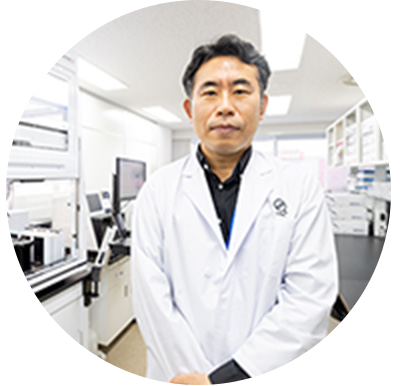 Author
Kihan Tomikane, Ph.D.
Graduated from the master's/doctoral program in Biosystem Studies/Molecular and Cellular Biology at the University of Tsukuba
In 2017, developed Japan's first prenatal DNA testing(Patent No. 7331325) using trace DNA analysis technology(Patent No. 7121440)