
Rewritten on: February 13, 2025
Genetic testing examines an individual's constitution and disease risk, while DNA profiling uses non-gene regions to perform personal identification and prove blood relationships. This article explains the differences and applications of each in detail.
- ・What Is the Difference Between Genetic Testing and DNA Profiling? A Thorough Explanation of Mechanisms, Purposes, and Applications
- ・What Can Genetic Testing Reveal?
- └ ① An Individual's Constitution
- └ ② Presence and Likelihood of Disease
- ・Where Can Genetic Testing Be Applied?
- └ ① Disease Treatment (Personalized Medicine / Genomic Medicine)
- └ ② Preventive Medicine and Healthcare
- ・Difference from DNA Profiling — Gene Regions and Non-Gene Regions
- └ What Is DNA?
- └ The Difference Between Genes and Non-Gene Regions
- └ The Regions and Purposes Each Examines
- ・Summary Comparison of Genetic Testing and DNA Profiling
- ・About seeDNA's DNA Profiling
What Is the Difference Between Genetic Testing and DNA Profiling? A Thorough Explanation of Mechanisms, Purposes, and Applications
 As the name suggests, "genetic testing" refers to testing that examines an individual's genes. In recent years, advances in science and technology have dramatically improved the accuracy and speed of genetic testing, and it is now used in a wide range of settings, including medicine, healthcare, criminal investigation, and paternity testing. However, because the names are similar, "genetic testing" and "DNA profiling" are often confused. This article explains the difference between the two from a biological perspective in detail, and introduces the settings in which each is used.
What Can Genetic Testing Reveal?
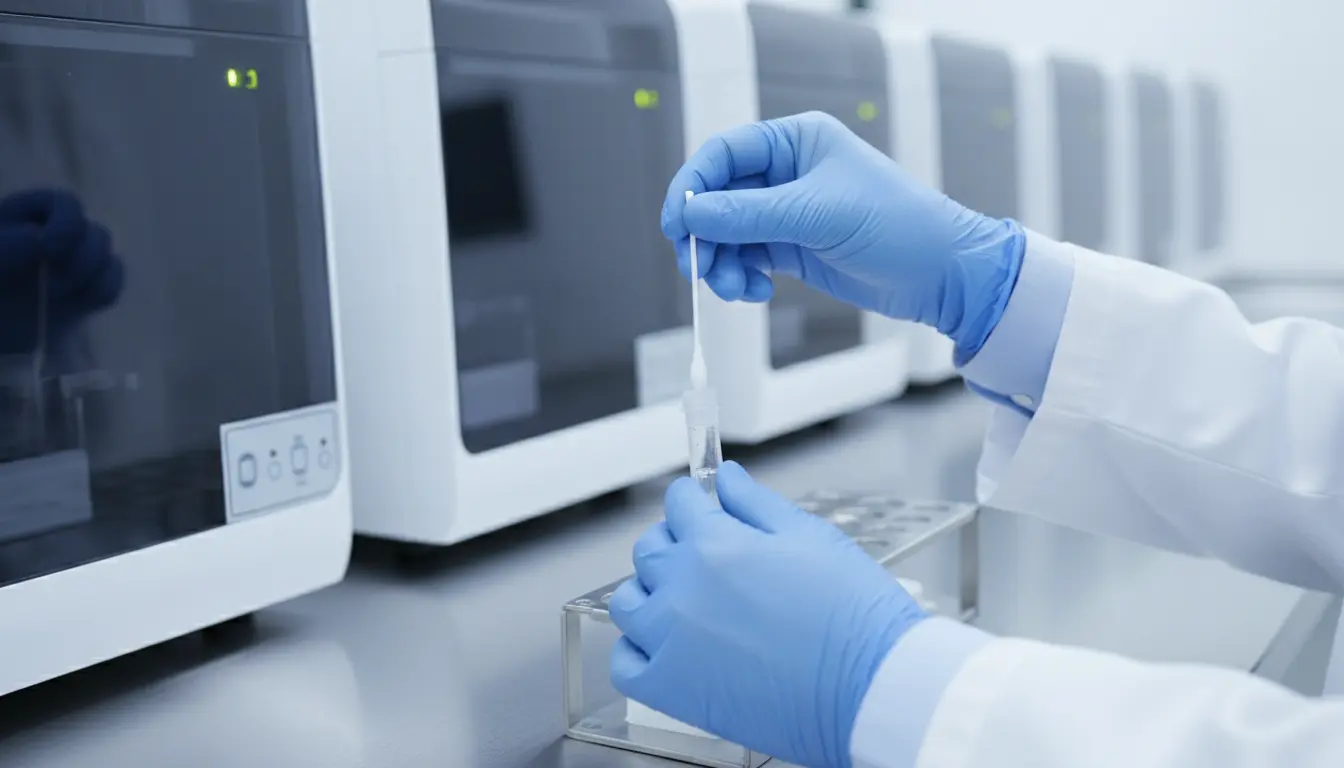
① An Individual's Constitution
Since genes are involved in various reactions within the body, examining genes makes it possible to understand an individual's constitution in detail. For example, examining the gene for the alcohol-metabolizing enzyme (ALDH2: acetaldehyde dehydrogenase 2) can reveal whether a person has a high or low tolerance for alcohol [ref:1]. The ALDH2 gene has active-type and inactive-type variants, and it is known that people who carry the inactive type have a reduced ability to break down acetaldehyde, making them prone to facial flushing and feeling unwell even after drinking small amounts of alcohol. In this way, genetic testing is drawing attention as a means of scientifically clarifying an individual's innate constitution [ref:6].
② Presence and Likelihood of Disease
Genetic testing can determine whether there are gene abnormalities (mutations) that cause disease. For example, when cancer or a congenital disorder is suspected, genetic testing is sometimes used in clinical settings to confirm a diagnosis [ref:2]. Thousands of diseases are said to originate from genetic causes, and genetic testing is increasingly being used not only for single-gene disorders but also for assessing the risk of multifactorial diseases involving multiple genes, such as diabetes and hypertension.
In addition, even if a person has not yet developed a disease, it is possible to predict, to some extent, their future risk of developing one. In fact, the Hollywood actress Angelina Jolie was found to have an abnormality in the BRCA1 gene (a protein involved in repairing DNA damage) and was diagnosed with an 87% future risk of developing breast cancer [ref:7]. Her subsequent decision in 2013 to undergo a preventive double mastectomy to avoid developing breast cancer became major news worldwide. This event, sometimes called the "Angelina Jolie effect," was a catalyst that dramatically raised public awareness of genetic testing.
Where Can Genetic Testing Be Applied?

① Disease Treatment (Personalized Medicine / Genomic Medicine)
Genetic testing is being actively incorporated not only into disease diagnosis but also into treatment planning. In particular, in the field of cancer treatment, uniform treatment was traditionally given for the same type of cancer, but recent research has revealed that even within the same type of cancer, the characteristics of gene mutations differ from person to person, resulting in large individual differences in drug efficacy [ref:2].
Based on these findings, "cancer gene panel testing," which comprehensively analyzes gene mutations in cancer tissue, is now being used in clinical settings. This is making possible "precision medicine," in which the optimal molecular-targeted drugs or immune checkpoint inhibitors are selected for each individual patient. In Japan, "cancer genomic medicine" became covered by public health insurance starting in June 2019, and personalized treatment using genetic testing is expected to become increasingly widespread [ref:2].
② Preventive Medicine and Healthcare
It has become clear that an individual's susceptibility to lifestyle-related diseases such as obesity and diabetes varies depending on their constitution [ref:3]. Building on this research, there is a growing global movement to apply genetic testing to preventive medicine. In fact, a number of DNA testing companies have entered the healthcare field, and consumer-facing genetic testing services (DTC testing: Direct-to-Consumer Genetic Testing), which make it easy to learn about one's constitution and disease risk, are becoming more common [ref:6].
However, it is important to note that there are significant differences in testing accuracy, scope of analysis, and interpretation of results between such consumer-facing genetic testing services and the clinical genetic testing performed at medical institutions. When it comes to disease prevention or determining a course of treatment, it is strongly recommended to consult a specialized physician or genetic counselor [ref:1].
- Genetic testing is an effective means of learning about constitution and disease risk
- In cancer genomic medicine, its use in personalized treatment is advancing
- It is also being applied in preventive medicine to assess lifestyle-related disease risk
- Consumer-facing DTC testing and testing at medical institutions differ in accuracy and purpose
- Consulting a specialist (physician or genetic counselor) is important for interpreting results
Difference from DNA Profiling — Gene Regions and Non-Gene Regions
"DNA profiling" is another method that, like genetic testing, examines genetic information. Although "gene" and "DNA" are terms with very similar meanings, they actually have somewhat different biological definitions [ref:8].
What Is DNA?
First, DNA is the name of the compound that carries the genetic information of a living organism itself; its formal name is deoxyribonucleic acid. DNA consists of four compounds called "bases" — adenine (A), thymine (T), guanine (G), and cytosine (C) — and the specific order in which these are arranged produces a wide variety of sequence patterns. This sequence pattern functions as a "blueprint," building and maintaining the body of an organism with its complex structures.
The Difference Between Genes and Non-Gene Regions
We humans have two sets of DNA (one inherited from each parent), consisting of approximately 3 billion bases arranged in sequence. However, not all of the genetic information contained in it is actually used. More precisely, "genetic information being used" means that proteins and other molecules are synthesized from the DNA information and actually function in various reactions within the body [ref:4].
The units of genetic information that include instructions for proteins and the like in this way are called "genes," but the regions that function as genes make up only about 2% of the entire DNA. The remaining approximately 98% is the "non-gene region" (once also called "junk DNA"), which includes sequences that regulate gene expression as well as repetitive sequences that remain from the evolutionary process [ref:4]. Recent research has revealed that these non-gene regions also have important regulatory functions, showing that not all of it is simply "unnecessary sequence."
The Regions and Purposes Each Examines
- Genetic testing: Primarily analyzes the gene regions of DNA (about 2%) to examine an individual's constitution and the presence or risk of disease. Its purpose is to investigate mutations in genes that encode proteins functioning within the body, such as the alcohol-metabolizing enzyme (ALDH2) or BRCA1.
- DNA profiling: Primarily analyzes repetitive sequences (STR: Short Tandem Repeat) found in the non-gene regions of DNA (about 98%), and is used for personal identification in criminal investigations and for proving blood relationships in paternity testing [ref:5].
- Why the non-gene region is effective: Because the non-gene region does not produce proteins, it is subject to less pressure from natural selection, resulting in extremely rich diversity in base sequence patterns. This diversity is precisely what functions as an extremely effective "genetic fingerprint" for identifying individuals.
In this way, although genetic testing and DNA profiling both examine the same substance — DNA — the regions they analyze and their purposes are clearly different. Genetic testing aims to "understand constitution and disease risk," while DNA profiling aims to "scientifically prove an individual's identity or blood relationship" [ref:8].
Summary Comparison of Genetic Testing and DNA Profiling
| Item | Genetic Testing | DNA Profiling |
|---|---|---|
| Region Analyzed | Gene region (about 2%) | Non-gene region (about 98%) |
| Main Purpose | Assessing constitution and disease risk | Personal identification, proof of blood relationship |
| Fields of Application | Medicine, preventive medicine | Criminal investigation, paternity testing |
About seeDNA's DNA Profiling
seeDNA Corporation (seeDNA Genetic Medical Research Institute) offers high-precision DNA profiling services using the latest genetic techniques. We are equipped to meet a wide range of needs, from paternity testing to sibling testing and proof of other blood relationships. We also provide support for interpreting test results and genetic counseling, so please feel free to contact us with any questions about DNA testing.
Frequently Asked Questions
Q1. What is the difference between genetic testing and DNA profiling?
A. Genetic testing analyzes the gene regions of DNA (about 2% of the whole) to examine constitution and disease risk. DNA profiling, on the other hand, analyzes repetitive sequences (such as STRs) found in the non-gene regions (about 98%) of DNA and is used to prove an individual's identity or blood relationship. The regions examined and the purposes are clearly different.
Q2. Can genetic testing predict the onset of disease?
A. Yes, prediction is possible to some extent. For example, if a mutation is found in the BRCA1 gene, it is known that the risk of developing breast or ovarian cancer increases. However, the results of genetic testing indicate a "level of risk" and do not mean that the disease will definitely occur. It is always recommended to consult a specialized physician or genetic counselor when interpreting results.
Q3. What kind of testing is performed in DNA profiling?
A. DNA profiling mainly analyzes repeat patterns in non-gene regions called STRs (Short Tandem Repeats). Because these repeat patterns differ from person to person, they are used for personal identification in criminal investigations and for proving blood relationships in paternity testing. seeDNA provides highly accurate testing results by analyzing multiple STR loci simultaneously.
Q4. Are consumer genetic tests (DTC testing) the same as genetic testing at medical institutions?
A. No, there are significant differences between the two. Consumer-facing DTC testing is convenient to use, but it differs from the clinical genetic testing performed at medical institutions in terms of the scope and accuracy of the genes analyzed and the depth of result interpretation. Decisions related to disease diagnosis or treatment planning should always be made based on formal genetic testing conducted at a medical institution.
Q5. What kind of samples can be used for DNA profiling?
A. For DNA profiling, oral mucosa (collected by rubbing the inside of the cheek with a cotton swab) is the most common sample. DNA can also be extracted from blood, hair (with the root attached), nails, saliva, and other sources for testing. The availability of testing may vary depending on the type and condition of the sample, so please contact seeDNA for details.
Q6. Is the "non-gene region" entirely meaningless sequence?
A. No. Recent research has revealed that the non-gene region, once called "junk DNA," contains sequences with important functions, such as enhancers and silencers that regulate gene expression. However, since the STR regions used in DNA profiling do not encode proteins, they are effectively used as markers for identifying individuals.
Reliable Support from seeDNA Genetic Medical Research Institute
seeDNA Genetic Medical Research Institute is a trusted DNA testing and genetic testing specialist institution that has obtained the international quality standard ISO 9001 and the Privacy Mark for personal information protection.
If you are concerned about family or parent-child blood relationships, or a partner's infidelity, our DNA testing specialists will provide reassuring support, so please feel free to contact us.
[Free Consultation with Specialized Staff]

If you have any questions,
please feel free to contact our toll-free number.
/Open every day, including weekends/
Business hours: Monday–Sunday 9:00 AM–6:00 PM
(except public holidays)
 Author
Dr. Yoshinori Tomikane, M.D., Ph.D.
Graduated from the master's/doctoral program in Biosystem Studies, Molecular and Genetic Medicine at the University of Tsukuba Graduate School
In 2017, developed Japan's first trace-DNA analysis technology (Patent No. 7121440), which was used to develop prenatal DNA testing (Patent No. 7331325)