
Rewrite date: December 31, 2025
NIPT analyzes fetal-derived DNA in maternal blood and can assess the risk of chromosomal abnormalities such as trisomy 21, 18, and 13 with high accuracy. This article explains, from a doctor's perspective, the test's mechanism, accuracy and limitations, how to clarify your purpose for testing, medical risk factors, and what to do after receiving results.
From the moment you learn you're pregnant, there isn't a day you don't think about the health of the baby inside you. In recent years, Non-Invasive Prenatal Testing (NIPT) has become widely known as a test that places little burden on the mother while assessing the possibility of chromosomal abnormalities with high accuracy. At the same time, many pregnant women wonder, "Should I really get this test?" or "How should I take the results?"
NIPT is a highly convenient and informative test, but it isn't simply something that brings peace of mind once you take it — whether you "should" take it depends on the nature of the test, its limitations, and your family's values. The Japan Society of Obstetrics and Gynecology's guidance also recommends that decisions about undergoing NIPT be made after receiving sufficient genetic counseling [ref:4].
In this article, drawing on medical knowledge and reliable evidence, we explain in an easy-to-understand way the criteria for deciding whether to undergo NIPT. We cover everything from how the test works, its accuracy and limitations, how to clarify your purpose for testing, checking medical risk factors, and guidance on what to do after receiving results — comprehensive information for making a choice you won't regret.
- ・What Is NIPT? The Basics You Should Know First
- ・Correctly Understanding the Accuracy and Limitations of NIPT
- └ Sensitivity
- └ Specificity
- └ Positive Predictive Value (PPV)
- ・Clarifying Your "Purpose" for Getting the Test
- └ ① How much meaning do you find in "knowing"
- └ ② How will you act if a high-risk result comes back
- └ ③ Can you accept the psychological burden of waiting for the test and results
- ・Checking Medical Risk Factors — What Kind of Pregnant Women Is NIPT Suited For?
- └ ① Age (35 and older)
- └ ② Concerning findings on ultrasound
- └ ③ A previous pregnancy with a chromosomal abnormality
- └ ④ High risk indicated by serum marker testing
- ・The Process and Mindset After NIPT Results Come Back
- └ Low risk (negative)
- └ High risk (positive)
- └ Inconclusive result / retesting
- ・Weighing the Pros and Cons of Getting NIPT
- ・Summary
What Is NIPT? The Basics You Should Know First

NIPT is a test that analyzes fetal-derived DNA (cell-free fetal DNA: cffDNA) circulating in the mother's blood to assess the risk of numerical chromosomal abnormalities such as trisomy 21, 18, and 13. It can generally be taken from 10 weeks of pregnancy onward, and by reading fragments of cffDNA circulating in maternal blood using advanced technology such as next-generation sequencing (NGS), it estimates numerical chromosomal abnormalities in the fetus with high accuracy [ref:5].
NIPT has drawn attention mainly for the following two reasons.
- Higher accuracy than conventional maternal serum marker testing — while the sensitivity of maternal serum marker testing is around 80%, NIPT's sensitivity for trisomy 21 has improved dramatically to over 99% [ref:1].
- Because it only requires a blood draw, there is no miscarriage risk as there is with amniocentesis — amniocentesis and chorionic villus sampling are used for definitive diagnosis but carry a miscarriage risk of about 0.1–0.3%. NIPT is performed using the same technique as an ordinary blood draw, so it has no physical impact on the fetus.
Large-scale studies report both sensitivity and specificity of over 99% for trisomy 21. The usefulness of NIPT is further enhanced particularly in older pregnancies, where the positive predictive value is higher. This is a probabilistic property based on Bayes' theorem: the higher the prevalence (prior probability) in the target population, the higher the positive predictive value [ref:1].
However, it must not be forgotten that NIPT is a screening test, not a diagnostic test, and is "not conclusive." Even when a high-risk result is returned, there is a certain rate of false positives, and a definitive diagnosis requires amniocentesis or chorionic villus sampling. Furthermore, because NIPT measures cffDNA in maternal blood, discrepancies can occur when the genetic information of the placenta and the baby do not match (as in placental mosaicism).
Correctly Understanding the Accuracy and Limitations of NIPT
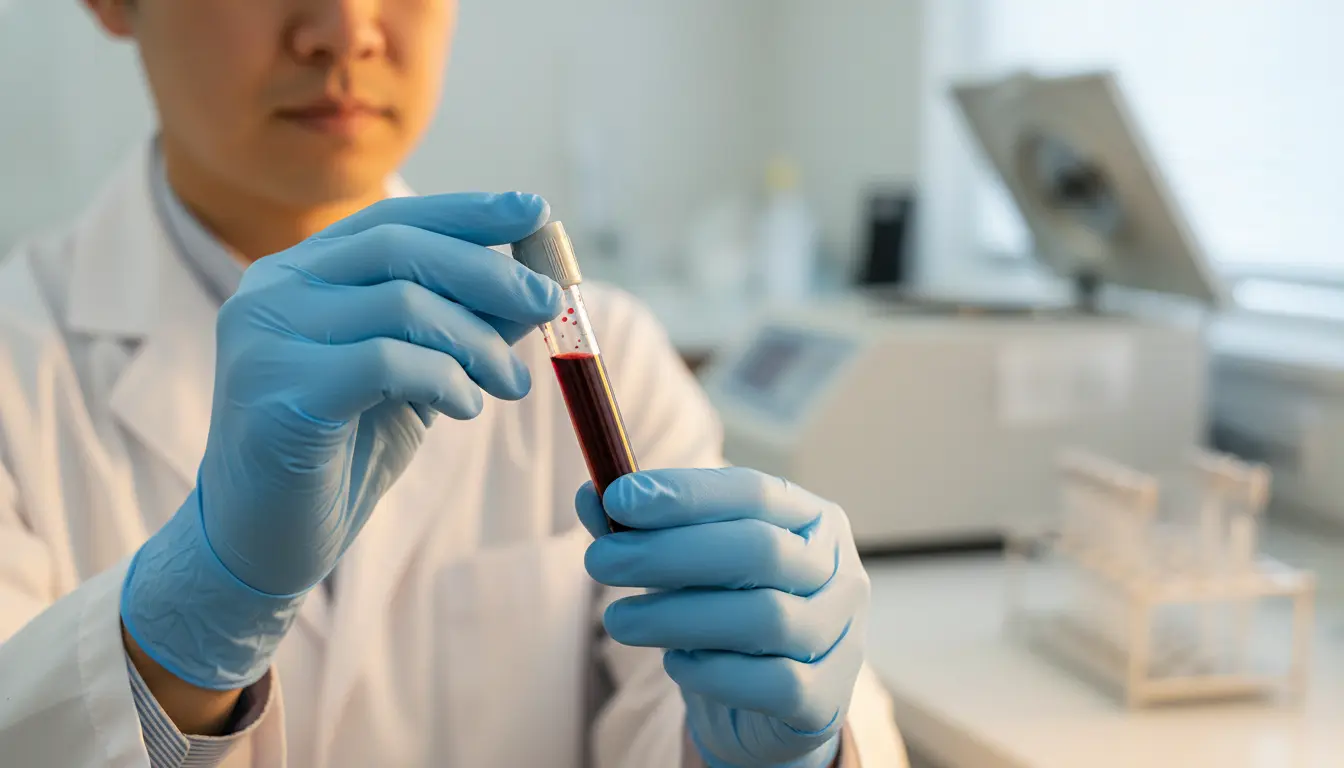 Deciding whether to undergo NIPT requires a correct understanding of the test's accuracy. Here we clarify three commonly confused metrics: "sensitivity," "specificity," and "positive predictive value."
Sensitivity
Sensitivity is the proportion of fetuses that actually have a chromosomal abnormality that NIPT correctly identifies as "high risk." Sensitivity for trisomy 21 is reported at over 99%, meaning it misses very few abnormalities. However, it is somewhat lower for trisomy 18 and 13, at roughly 96–98% and 87–95% respectively [ref:1].
Specificity
Specificity is the proportion of fetuses that do not actually have a chromosomal abnormality that are correctly identified as "low risk." NIPT's specificity also exceeds 99%, meaning cases of a healthy fetus being mistakenly flagged as high risk are very rare. However, when a large number of pregnant women undergo the test, even a small false-positive rate can translate into a non-negligible number of cases in absolute terms.
Positive Predictive Value (PPV)
Positive predictive value is the probability that a fetus actually has a chromosomal abnormality given a "high-risk" result. It is heavily influenced by maternal age and the prevalence within that population. In women 35 and older, the PPV for trisomy 21 can reach about 80–90%, while it may drop to around 50% for women around age 25. In other words, depending on age and risk factors, nearly half of high-risk results can be false positives [ref:5].
Additionally, the chromosomal abnormalities targeted by NIPT are mainly trisomy 21 (Down syndrome), trisomy 18 (Edwards syndrome), and trisomy 13 (Patau syndrome); structural abnormalities, microdeletions/duplications, and single-gene disorders outside of these cannot be detected by standard NIPT. Some facilities offer expanded testing options for sex chromosome abnormalities and certain microdeletions, but note that accuracy is lower compared to trisomy detection.
Clarifying Your "Purpose" for Getting the Test

What matters when considering whether to undergo NIPT is not medical reasons alone. It is essential to clarify "what matters most to us" and reach a shared understanding as a couple. Discussing the following three perspectives can make the decision easier.
① How much meaning do you find in "knowing"
The biggest benefit of undergoing NIPT is being able to learn about your baby's condition at an early stage. Gaining information can help you prepare mentally and, if needed, make it easier to choose a facility equipped for perinatal care. On the other hand, the view of "wanting to spend the pregnancy without knowing" is also a value that deserves respect. First, clarify how much you want "knowing itself."
② How will you act if a high-risk result comes back
Because NIPT is not a definitive test, a high-risk result may still be a false positive. Imagining in advance "what would I do if the result were high-risk" allows you to calmly choose your next step when you actually receive the results. Specifically, it is recommended that you discuss the following options before testing.
- Whether to proceed to a definitive test such as amniocentesis if a high-risk result is returned
- How you would think about continuing the pregnancy if the definitive test confirms a positive result
- Whether to consult a genetic counselor or specialist regardless of the outcome
③ Can you accept the psychological burden of waiting for the test and results
While NIPT only requires a blood draw, the 1–2 weeks until results arrive can be an emotionally unsettled time. Weigh "the reassurance of taking the test" against "the anxiety of waiting for results," and consider which is easier for you to accept. Some studies show that anxiety decreases substantially after receiving a low-risk result, indicating that the psychological impact of testing varies greatly depending on the outcome [ref:6]. If taking the test itself seems likely to be stressful, using genetic counseling beforehand to sort out your feelings with a specialist is also an option.
\ Find out your risk of genetic conditions such as Down syndrome /
Checking Medical Risk Factors — What Kind of Pregnant Women Is NIPT Suited For?
NIPT is available to all pregnant women, but it is considered particularly worth considering for those in the following situations.
① Age (35 and older)
The risk of chromosomal abnormalities increases with maternal age. Past age 35, the risk of trisomy 21 is said to be about 1 in 350, rising to about 1 in 100 at age 40 and about 1 in 30 at age 45. The higher the age, the greater the significance of screening tests [ref:2].
② Concerning findings on ultrasound
Findings such as fetal edema, nasal bone hypoplasia, and increased nuchal translucency (NT) (swelling at the back of the fetal neck) are suggested to be associated with chromosomal abnormalities, leading some to choose NIPT as an additional test. NT thickness is measured at 11–13 weeks of pregnancy, and a measurement of 3.5mm or more is statistically associated with an increased risk of chromosomal abnormality.
③ A previous pregnancy with a chromosomal abnormality
For those with a history of a pregnancy affected by a chromosomal abnormality, the recurrence risk is elevated, making NIPT worth choosing as a screening option. If a past trisomy pregnancy was due to a structural factor on the mother's side, such as a translocation, the risk may be even higher, and a detailed evaluation through genetic counseling is recommended [ref:3].
④ High risk indicated by serum marker testing
Conventional maternal serum marker testing has a sensitivity of around 80% and is less accurate than NIPT. It is common for pregnant women flagged as high-risk by marker testing to choose NIPT for a more accurate assessment. Since NIPT has a false-positive rate of only about 0.1%, it is also effective as a second-tier screening test for those flagged as high-risk by serum marker testing [ref:1].
NIPT becomes a more important option for those who fall under these medical factors, but even without any such factors, choosing to undergo it out of a desire to "reduce anxiety" or "have peace of mind" is entirely valid, and in fact many pregnant women take the test for that very reason.
\ Find out your risk of genetic conditions such as Down syndrome /
The Process and Mindset After NIPT Results Come Back
NIPT results are generally reported as either "low risk (negative)" or "high risk (positive)." Let's understand how to respond in each case.
Low risk (negative)
If the result is low risk, the likelihood of the targeted chromosomal abnormality is considered very low. The negative predictive value for trisomy 21 is said to exceed 99.9%, offering considerable reassurance. However, since this does not completely rule out chromosomal abnormalities or genetic disorders that NIPT does not target, it is important to continue regular prenatal checkups.
High risk (positive)
Even if the result is high risk, as noted above there remains a possibility of a false positive. A high-risk result is not a definitive diagnosis. The generally recommended next step is a definitive diagnosis via amniocentesis or chorionic villus sampling. It is important to proceed calmly while consulting with a genetic counselor or obstetric specialist. Since it is easy to feel shaken immediately after receiving a high-risk result, please don't carry it alone — share your feelings with your partner or a specialist.
Inconclusive result / retesting
In rare cases, a result cannot be determined due to reasons such as a low concentration of cffDNA in maternal blood (insufficient fetal fraction). This tends to happen when the pregnancy is too early or when maternal BMI is high. In many cases, a result can be obtained by redrawing blood a few weeks later.
Weighing the Pros and Cons of Getting NIPT
Based on the information so far, let's once again organize the pros and cons of undergoing NIPT.
Advantages of NIPT
・A non-invasive test requiring only a blood draw, with no miscarriage risk
・High accuracy, with sensitivity over 99% for trisomy 21
・Can be taken as early as 10 weeks of pregnancy
・Substantial psychological reassurance when the result is low risk
・If a high-risk result is returned, allows advance preparation for delivery and medical arrangements [ref:1]
Disadvantages / Points to Note About NIPT
・A screening test, not a definitive diagnosis
・The possibility of false positives or false negatives is not zero
・Cannot detect conditions outside NIPT's scope
・Significant psychological burden if a high-risk result is received
・A 1–2 week anxious waiting period for results
・Cost burden, as it is an out-of-pocket test
After comparing these advantages and disadvantages, it is important to make the choice that you and your partner find most convincing.
Summary
Deciding whether to undergo NIPT requires comprehensive consideration not only of medical information but also of your and your partner's values, life circumstances, and psychological factors.
The first step is to correctly understand the basics of what kind of test NIPT is, what it can and cannot reveal. Understanding statistical concepts such as sensitivity, specificity, and positive predictive value helps you take the results calmly. Then, it is important to clarify your purpose for testing and to thoroughly discuss with your partner what to do after the results come back.
Medical risk factors — maternal age 35 or older, concerning ultrasound findings, a past pregnancy with a chromosomal abnormality, high risk flagged by serum marker testing — are one basis for decision-making, but you don't need to decide based on these alone. Feelings such as "I want to reduce my anxiety" or "I want to gather as much information as possible" are also sufficient reasons to undergo NIPT.
Whatever choice you make, it is the best decision for you and your partner. We hope this article helps guide your decision and serves as a step toward a peaceful pregnancy.
 Apply / Purchase a Kit
Frequently Asked Questions
Q1. From how many weeks of pregnancy can NIPT be taken?
A. NIPT can generally be taken from 10 weeks of pregnancy onward. This is because the concentration of fetal-derived DNA (cffDNA) in maternal blood reaches a sufficient level for analysis after 10 weeks. If the pregnancy is too early, there may be cases where cffDNA concentration is insufficient and no result can be determined, so it is important to take the test at the appropriate time.
Q2. If NIPT returns a high-risk result, is it necessary to undergo amniocentesis?
A. Since NIPT is a screening test and not a definitive diagnosis, if a high-risk result is returned, undergoing a definitive test (amniocentesis or chorionic villus sampling) is recommended. However, whether to ultimately proceed to a definitive test is up to the couple's decision. Please make your decision after thoroughly consulting with a genetic counselor or your attending physician.
Q3. If NIPT results are "low risk (negative)," can it be concluded that the baby has no abnormalities?
A. A low-risk result means the likelihood of the targeted chromosomal abnormalities (trisomy 21, 18, and 13) is very low, but it does not rule out all abnormalities. Since structural abnormalities and single-gene disorders outside NIPT's scope cannot be detected, it is important to continue regular prenatal checkups.
Q4. Is NIPT covered by insurance?
A. In Japan currently, NIPT is carried out as an out-of-pocket test. The cost varies depending on the testing facility and test items, but is generally in the range of tens of thousands to over a hundred thousand yen. Since it is not covered by insurance, we recommend checking the cost in advance. The seeDNA Institute of Genetic Medicine offers free consultations regarding costs and support details.
Q5. Can NIPT be taken by women under 35?
A. Yes, women under 35 can also undergo NIPT. While some facilities previously imposed age restrictions, in recent years the system has expanded so that anyone who wishes to be tested can do so regardless of age. However, since the positive predictive value is somewhat lower in younger pregnant women, a thorough understanding of how to interpret the results is necessary.
Q6. Can NIPT reveal the baby's sex?
A. Depending on the testing facility and plan, it may be possible to learn the fetus's sex from sex chromosome information. However, the primary purpose of NIPT is screening for numerical chromosomal abnormalities, and sex determination is only incidental information. If you wish to know the sex, please select the corresponding plan when applying.
Q7. How long does it take to receive NIPT results?
A. It varies by testing facility, but results generally arrive about 1–2 weeks after the blood draw. The seeDNA Institute of Genetic Medicine provides advance information on the schedule for receiving results, so please feel free to contact us with any questions.
Reassuring Support from the seeDNA Institute of Genetic Medicine
The seeDNA Institute of Genetic Medicine is a trusted DNA testing and genetic testing institution certified under the international quality standard ISO9001 and the Privacy Mark for privacy protection.
If you have concerns about family or parent-child biological relationships, or a partner's infidelity, our DNA testing specialists are here to support you so you can feel fully at ease — please feel free to contact us.
[Free Consultation with Specialized Staff]

If you have any questions
please feel free to contact our toll-free number.
\ Open every day, including weekends /
Business hours: Monday–Sunday 9:00 AM–6:00 PM
(excluding holidays)
Author
M.D., Ph.D.
Tasuku Hiroshige
Ph.D. in Medicine; Board-certified Specialist and Instructor, Japanese Urological Association; Certified Physician, Japanese Society of Medical Oncology; Specialist, Japanese Society of Anti-Aging Medicine; Certified Occupational Physician, Japan Medical Association; Certified Physician, Japanese Society of Chemotherapy; Certified Physician, Japanese Society for Sexually Transmitted Infections; Certificate of da Vinci System Training as a Console Surgeon, among others.
After graduating from Kagoshima University School of Medicine in 2010, he built extensive clinical experience as a urologist. Beyond clinical work, he is also active academically, presenting at conferences, writing papers, and securing research funding. In addition to his urology board certifications, he holds specialist qualifications across a wide range of fields including cancer treatment, anti-aging medicine, and infectious disease treatment. Drawing on his extensive medical knowledge and skills, he provides care tailored to each individual patient.