
Rewritten on: November 13, 2025
NIPT is a test that can assess the risk of fetal chromosomal abnormalities using only a blood draw from the pregnant mother. Experts explain in detail the mechanism by which cell-free DNA (cfDNA) released from placental chorionic cells is analyzed with next-generation sequencers, along with test accuracy and precautions.
Why NIPT doesn't require sampling chorionic or other fetal tissue
"I want to have my baby tested, but a test involving needles feels scary" — for pregnant women, anxiety about invasive testing can be significant. NIPT (Non-Invasive Prenatal Testing) is a groundbreaking test that can estimate the risk of fetal chromosomal abnormalities with high accuracy from just a small amount of blood drawn from the mother's arm, and it is rapidly spreading in use worldwide. So why is it possible to access the fetus's genetic information through a simple blood draw, without directly sampling chorionic villi or amniotic fluid? This article explains the scientific mechanism in detail, along with precautions and the testing process.
- └ Why NIPT doesn't require sampling chorionic or other fetal tissue
- ・What is fetal-derived DNA (cfDNA: cell-free DNA)?
- ・NIPT analyzes this cfDNA
- ・Why chorionic villi and amniotic fluid don't need to be sampled
- ・Because cfDNA comes from the placenta, it isn't necessarily identical to "the fetus itself"
- ・The proportion of fetal-derived cfDNA (fetal fraction) and test accuracy
- ・The NIPT testing flow: from blood draw to results
- ・Summary: why testing is possible with just a blood draw
What is fetal-derived DNA (cfDNA: cell-free DNA)?

During pregnancy, cells of the "placenta (particularly the chorion)" that surrounds the fetus gradually break down in the bloodstream. When this happens, the DNA that was inside those cells fragments into small pieces and flows out into the mother's blood. These DNA fragments are called "cell-free DNA (cfDNA)." [ref:1][ref:2]
Of the cfDNA in maternal blood, the DNA originating from the fetus (fetal-derived cfDNA) accounts for roughly 5–15% of the total. In other words, during pregnancy, the mother's blood contains a mixture of her own DNA and fetal-derived DNA. [ref:1][ref:2]
The existence of cfDNA itself was first reported by Mandel and Metais in 1948, but it wasn't until 1997 that fetal-derived DNA was confirmed to be present in a pregnant woman's blood. Professor Dennis Lo and colleagues at the Chinese University of Hong Kong detected Y-chromosome-derived DNA sequences in maternal plasma, scientifically proving that fetal DNA circulates in the blood of mothers carrying male fetuses. [ref:2] This groundbreaking discovery paved the way for the later development of NIPT.
Fragments of fetal-derived cfDNA are generally short, around 166 base pairs (bp), tending to be shorter than maternal-derived cfDNA. This difference in characteristics is also leveraged to improve analytical accuracy. In addition, cfDNA is continuously released anew through apoptosis (programmed cell death) of placental chorionic cells, and is known to have a very short half-life of about 16 minutes. As a result, the concentration of cfDNA is thought to reflect the fetal condition at the time of blood collection in near real time. [ref:1]
NIPT analyzes this cfDNA

In NIPT (Non-Invasive Prenatal Testing), cfDNA is extracted from maternal blood collected via a blood draw and analyzed using next-generation sequencers (NGS) and similar technologies. By statistically comparing the amount of DNA fragments obtained for each chromosome, the test detects whether a particular chromosome is present in excess. [ref:3][ref:6]
Specifically, all cfDNA fragments extracted from maternal blood are sequenced (their base sequences read), and each fragment is identified as originating from a specific chromosome in the human genome. Under normal conditions, the proportion of DNA fragments derived from each chromosome falls within a certain range, but if the fetus has trisomy (an extra copy of a chromosome), the DNA fragments derived from that chromosome become statistically significantly more numerous. Detecting this subtle quantitative deviation with high sensitivity is the principle behind NIPT.
- Excess chromosome 21 → Down syndrome (trisomy 21)
- Excess chromosome 18 → Edwards syndrome (trisomy 18)
- Excess chromosome 13 → Patau syndrome (trisomy 13)
In recent years, in addition to the three trisomies above, the scope of application has expanded to screening for sex chromosome abnormalities (such as monosomy X) and microdeletion syndromes. NIPT's sensitivity (detection rate) has been reported at very high levels: over 99% for trisomy 21, 97–99% for trisomy 18, and 91–99% for trisomy 13. [ref:6][ref:7] However, it is essential to correctly understand that this is strictly a screening test, not a definitive diagnosis.
\ Find out your baby's genetic disease risk /
Why chorionic villi and amniotic fluid don't need to be sampled

Conventional prenatal diagnostic tests (chorionic villus sampling and amniocentesis) were invasive tests that directly sampled fetal cells to examine chromosomes. Chorionic villus sampling takes a portion of the placenta (chorionic tissue) using a needle or catheter around 11–14 weeks of pregnancy, while amniocentesis inserts a needle through the abdomen to collect amniotic fluid around 15–18 weeks. Both offer high diagnostic certainty, but carry a miscarriage risk of about 0.1–0.3%. [ref:4][ref:5]
NIPT, however, takes advantage of the fact that fetal-derived DNA is naturally released into maternal blood, eliminating the need to directly sample fetal tissue. This means fetal genetic information can be estimated from a blood draw alone, greatly reducing risk to both mother and fetus. Japan's Ministry of Health, Labour and Welfare has also acknowledged, in a report on prenatal testing, "the usefulness of non-invasive testing using maternal blood." [ref:5]
Furthermore, NIPT has the advantage of being available relatively early, from around 10 weeks of pregnancy onward. Identifying risk early gives pregnant women and their families time to carefully consider their subsequent course of action, which is another major benefit.
Because cfDNA comes from the placenta, it isn't necessarily identical to "the fetus itself"
Importantly, fetal-derived cfDNA in maternal blood is known to originate from the placenta. While the genetic information of the placenta and the fetus is nearly identical, a condition known as "confined placental mosaicism (CPM)" — in which a chromosomal abnormality exists only in the placenta — can occasionally occur. [ref:5][ref:8]
The frequency of confined placental mosaicism is estimated at about 1–2%, and it is one of the main causes of false positives in NIPT (cases in which the test is positive even though the fetus itself has no abnormality). Conversely, though extremely rare, it is theoretically possible for a false negative to occur if the placenta is normal but the fetus has an abnormality.
Therefore, even if NIPT returns a "positive" result, a definitive diagnosis via amniocentesis or similar testing is needed to determine whether the fetus truly has an abnormality. NIPT results indicate a probabilistic "higher or lower likelihood," and it is recommended that final judgments be made based on the results of definitive testing and genetic counseling. [ref:5]
What is confined placental mosaicism (CPM)?
The placenta and the fetus originally derive from the same fertilized egg, but during development, a chromosomal abnormality can arise only in the placental cells. This condition is called "confined placental mosaicism." Since the cfDNA detected by NIPT mainly originates from placental chorionic cells, when CPM is present, the test result may not match the fetus's actual condition.
The proportion of fetal-derived cfDNA (fetal fraction) and test accuracy
One of the key factors affecting NIPT accuracy is the "fetal fraction (FF)" — the proportion of fetal-derived cfDNA within the total cfDNA in maternal blood. Generally, a fetal fraction of 4% or higher is considered to yield reliable results. [ref:5][ref:7]
The fetal fraction varies based on the following factors.
- Gestational age: the fetal fraction tends to increase as pregnancy progresses
- Maternal weight (BMI): in cases of obesity, the proportion of maternal-derived cfDNA increases, relatively lowering the fetal fraction
- Placental size: a smaller placenta may result in less cfDNA being released
- Multiple pregnancy: analysis becomes more complex in twin or higher-order pregnancies
If the fetal fraction is too low, the result may be reported as "indeterminate," in which case a repeat blood draw or an alternative testing method should be considered. Adhering to the appropriate testing window (10 weeks of pregnancy or later) is important for obtaining accurate results. [ref:2][ref:5]
The NIPT testing flow: from blood draw to results
The specific NIPT process is summarized below. Understanding the overall picture of the test allows you to undergo it with peace of mind.
- Prior consultation and application: You receive thorough explanations of what the test covers, its limitations, and how to interpret the results. Genetic counseling is also recommended.
- Blood draw: From 10 weeks of pregnancy onward, about 10–20 mL of blood is drawn from the mother's arm. This is the same procedure as a routine blood test, and no special preparation is required.
- cfDNA extraction: Plasma is separated from the collected blood, and the cfDNA it contains is purified and extracted.
- Analysis via next-generation sequencer (NGS): The extracted cfDNA undergoes massively parallel sequencing, reading the base sequences of millions to tens of millions of DNA fragments.
- Bioinformatics analysis: The vast amount of resulting sequence data is mapped to a reference genome, and the amount of fragments derived from each chromosome is statistically compared.
- Result reporting: Results are reported as either "positive (high risk)," "negative (low risk)," or "indeterminate." Results are typically available about 1–2 weeks after the blood draw.
Even if a positive result is returned, it means only that "the probability is high" — it is not a definitive diagnosis. It is strongly recommended to receive a definitive diagnosis via amniocentesis or chorionic villus sampling, along with counseling from a specialized genetic counselor. [ref:4][ref:5]
Summary: why testing is possible with just a blood draw
| Factor | Details |
|---|---|
| Presence of fetal DNA | Placental chorionic cells break down, releasing DNA fragments (cfDNA) into maternal blood |
| Characteristics of cfDNA | Fetal-derived DNA accounts for about 5–15% of total cfDNA, with a short half-life of about 16 minutes |
| How the test works | cfDNA is analyzed with a next-generation sequencer to statistically detect chromosomal imbalances |
| Factor | Details |
|---|---|
| Why villi/amniotic fluid sampling isn't needed | Fetal DNA is naturally present in maternal blood, so invasive sampling is unnecessary |
| Precautions | Because the DNA is placenta-derived, confined placental mosaicism is possible, and amniocentesis may be needed for a definitive diagnosis |
In this way, NIPT works by "reading fetal DNA released from the placenta from maternal blood," making it a mechanism for estimating fetal chromosomal information non-invasively and with high accuracy. Compared to conventional invasive tests, NIPT carries no miscarriage risk and can be performed from as early as 10 weeks of pregnancy, making it an extremely useful option for pregnant women and their families. However, it is important to correctly understand the limitations of screening tests (the possibility of false positives and false negatives) and to undergo definitive diagnosis or genetic counseling as needed. At the seeDNA Genetic Medical Research Institute, our specialized staff carefully support any questions or concerns you may have about testing, so please feel free to contact us.
\ Find out your baby's genetic disease risk /
 Apply / Purchase kit
Frequently Asked Questions
Q1. From how many weeks of pregnancy can NIPT be taken?
A. NIPT is generally available from 10 weeks of pregnancy onward. As gestational age progresses, the proportion of fetal-derived cfDNA (fetal fraction) increases, making more reliable results easier to obtain. However, the recommended testing window may vary by testing institution, so please confirm in advance.
Q2. If NIPT comes back positive, does that mean the baby definitely has an abnormality?
A. No, NIPT is strictly a screening test and not a definitive diagnosis. Even if the result is positive, there is a possibility of a false positive due to factors such as confined placental mosaicism (CPM). Therefore, if the result is positive, it is recommended to undergo a definitive diagnosis via amniocentesis or chorionic villus sampling.
Q3. How much blood is drawn for NIPT? Does it hurt?
A. The amount of blood required for NIPT is about 10–20 mL, similar to a standard health checkup blood draw. Since it is drawn from a vein in the arm, there is no special pain or preparation involved. You may feel a slight amount of discomfort similar to a typical blood draw.
Q4. What happens to the result if the fetal fraction is low?
A. If the fetal fraction (the proportion of fetal-derived cfDNA in maternal blood) is too low (generally below 4%), the test's accuracy cannot be guaranteed, and the result may be reported as "indeterminate." In such cases, a repeat blood draw and retest 1–2 weeks later may be conducted, or another testing method may be considered. The fetal fraction tends to be lower when maternal weight (BMI) is high or gestational age is early.
Q5. What is the difference between NIPT and conventional prenatal tests (chorionic villus sampling / amniocentesis)?
A. The biggest difference is whether the procedure is invasive. Chorionic villus sampling and amniocentesis are invasive tests that involve inserting a needle or catheter into the uterus, carrying a miscarriage risk of about 0.1–0.3%. NIPT, on the other hand, is completed with just a blood draw from the mother's arm, so there is no miscarriage risk. However, NIPT is a screening test, and its positioning differs from chorionic villus sampling and amniocentesis, which offer definitive diagnostic accuracy. If NIPT returns a positive result, a definitive diagnosis is required.
Q6. Can NIPT be taken for twins (multiple pregnancies)?
A. Yes, NIPT can be taken even in twin pregnancies, but since the analysis becomes more complex, accuracy may be reduced for some items. In particular, conditions may differ between monochorionic diamniotic twins (MD twins) and dichorionic diamniotic twins (DD twins), so it is recommended to consult with the testing institution in advance.
Reassuring support from the seeDNA Genetic Medical Research Institute
The seeDNA Genetic Medical Research Institute is a trusted and reliable DNA testing and genetic testing specialist institution that has obtained the international quality standard ISO9001 and the Privacy Mark for data protection.
If you are concerned about family or parent-child blood relationships, or a partner's infidelity, our DNA testing specialists are ready to support you with care and reassurance, so please feel free to contact us.
[Free consultation with specialized staff]

If you have any questions,
please feel free to contact our toll-free number.
\ Open every day, including weekends /
Business hours: Monday–Sunday 9:00-18:00
(except holidays)
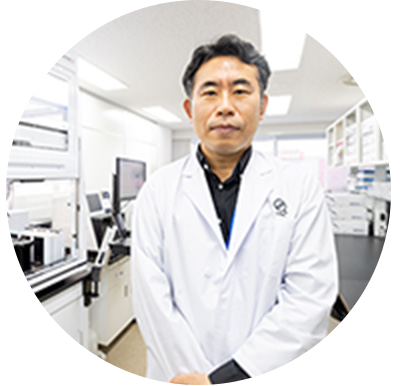 Author
Kinori Tomikane, M.D., Ph.D.
Graduate of the University of Tsukuba, Master's/Doctoral Program in Biosystem Studies / Molecular and Regenerative Medicine
In 2017, developed Japan's first prenatal DNA testing(Patent 7331325) using a trace-DNA analysis technology(Patent 7121440)
[References]
(2) J Biol Chem, March 1997
(3) Mynavi Kosodate | Raising Children Together, September 2022
(4) Blood, December 2013
(5) Med J Aust, July 2015
(6) CNN.co.jp, May 2016
(7) Ministry of Health, Labour and Welfare, "Advanced Medical Technology Evaluation Committee Report (NIPT, etc.)," February 1999
(8) Sci Rep, April 2016