
Rewritten on: June 21, 2024
A 40-year-old unsolved series of murders in the United States was solved through DNA testing. Alongside conventional direct-match testing, "Familial DNA Testing" — which narrows down suspects using the DNA of relatives — has emerged, and research has shown that DNA data from just 2% of the population could potentially cover the entire nation.
- ・Direct-Match Testing Leads to the Arrest of a Perpetrator in a 40-Year Unsolved Serial Murder Case
- └ Overview of the Golden State Killer Case
- └ How Conventional Direct-Match Testing Works and Its Limitations
- ・The Mechanism and Innovation Behind the New DNA Testing Method "Familial DNA Testing"
- └ The Process of Identifying a Perpetrator Through Familial DNA Testing
- └ The Role of Public DNA Databases Such as GEDmatch
- └ The Possibility of Covering an Entire Nation with DNA Data from Just 2% of the Population
- ・The Crime-Deterrent Effect Brought by the Advancement of DNA Testing and Future Prospects
- └ Comparing Conventional DNA Testing and Familial DNA Testing
- └ Privacy and Ethical Challenges
- └ Potential Applications Beyond Criminal Investigation
- └ Integration with Next-Generation Sequencing Technology
Direct-Match Testing Leads to the Arrest of a Perpetrator in a 40-Year Unsolved Serial Murder Case
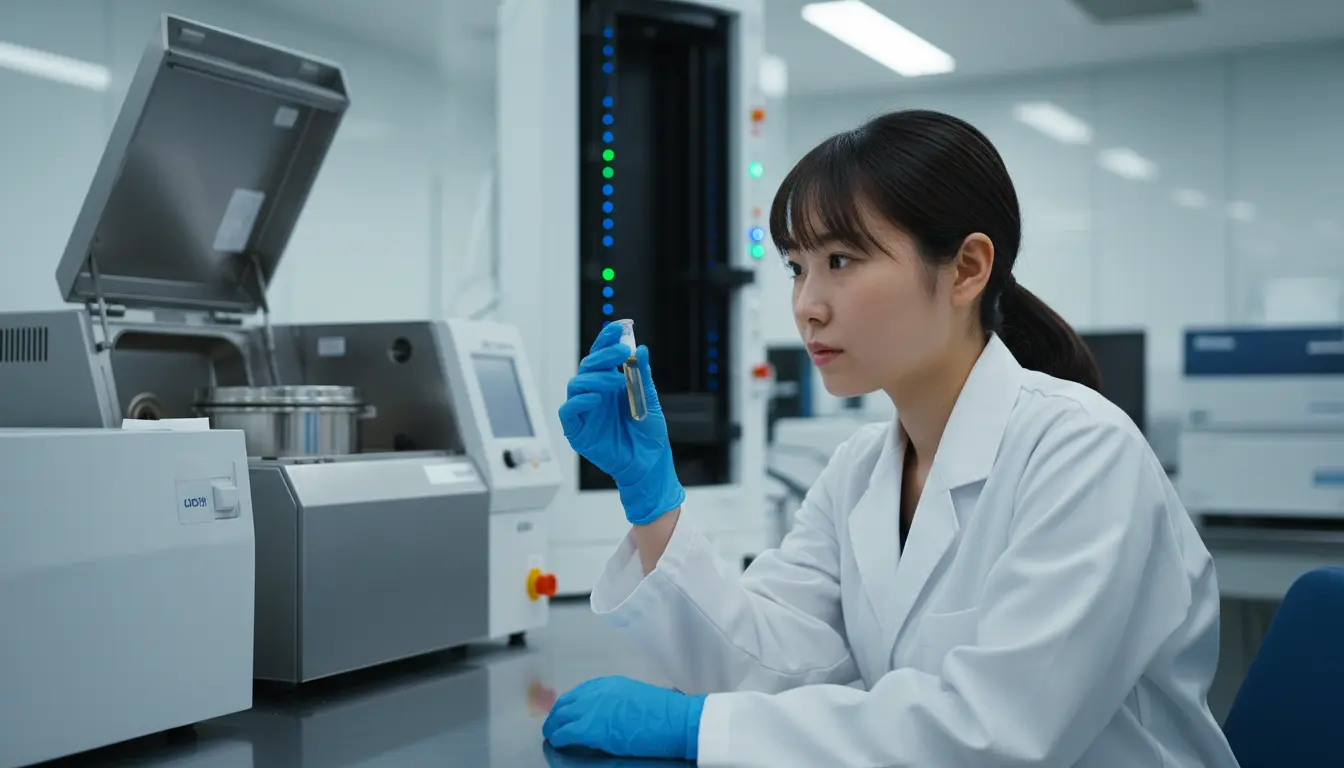 After nearly 40 years, the perpetrator of an unsolved series of murders in the United States has finally been arrested. The latest DNA testing technology played an extremely significant role in this historic arrest. DNA testing is widely recognized as a revolutionary tool in criminal investigation, and the technology continues to evolve every year, gaining the power to solve difficult cases that were once thought unsolvable by conventional methods.[ref:1]
This case involved a series of robberies, assaults, and murders that occurred in California from the 1970s through the 1980s. The perpetrator, known as the "Golden State Killer," is believed to have been involved in at least 13 murders, more than 50 assaults, and over 120 robberies. Despite years of ongoing investigation, witness statements and physical evidence alone were not enough to identify the culprit.[ref:2]
DNA profiling traces its origins to "DNA fingerprinting," developed in 1984 by Sir Alec Jeffreys of the University of Leicester in the United Kingdom.[ref:6] Dr. Jeffreys' groundbreaking discovery demonstrated that human DNA contains repeating sequences called minisatellites, and that the pattern of repeat counts differs from person to person. This discovery was first applied in 1986 to solve a double murder case in Leicestershire, England, proving that DNA testing could serve as powerful evidence in criminal investigations. Since then, DNA testing technology has been adopted by law enforcement agencies around the world and has established itself as a cornerstone of scientific criminal investigation.
Overview of the Golden State Killer Case
The man known as the Golden State Killer, Joseph James DeAngelo, had previously served as a police officer — a fact that made the investigation even more difficult. He was well versed in law enforcement investigative methods and is believed to have carefully avoided leaving evidence behind. At the time the crimes occurred, DNA testing technology had not yet been put into practical use, so biological samples (such as bodily fluids and hair) left at crime scenes were preserved as evidence for a very long time.
In the late 1970s, DeAngelo repeatedly broke into homes as the "Visalia Ransacker." He then committed more than 50 assaults around Sacramento, California, as the "East Area Rapist." From 1979 onward, he shifted his activity to Southern California, committing at least 13 murders as the "Original Night Stalker." For many years these cases were treated as the work of separate perpetrators, but in 2001, advances in DNA analysis confirmed that they were the work of a single offender.
DNA testing technology was introduced into criminal investigations from the late 1980s onward, and DNA profiles of the perpetrator were subsequently created from preserved evidence. However, because the perpetrator's DNA data was not registered in CODIS (the Combined DNA Index System), the United States' criminal DNA database, conventional direct-match testing alone was not enough to identify the culprit.[ref:3]
How Conventional Direct-Match Testing Works and Its Limitations
The DNA testing method that has traditionally been used identifies a perpetrator by directly comparing the genetic profile obtained from a DNA sample collected at a crime scene with the suspect's own DNA data or with criminal DNA databases managed by law enforcement agencies in various countries, confirming a complete match. This method is called "direct-match testing," and when a DNA match is found, its evidentiary value is extremely high — it has been adopted as decisive evidence in numerous criminal cases.
The principle behind direct-match testing relies on the fact that the number of repeats in repeating sequences called STRs (Short Tandem Repeats) contained in human DNA differs from person to person. An STR is a region where a short sequence of about 2 to 6 base pairs repeats consecutively — for example, the number of times a 4-base sequence such as "AGAT" repeats varies from person to person. Recording this combination of repeat counts as a "genotype" and comparing it against a reference sample is the basic mechanism of STR analysis. Current standard STR analysis examines 20 or more loci simultaneously, reducing the probability of a coincidental match to less than one in several trillion. As a result, when a DNA profile is a complete match, the identification accuracy is effectively close to 100%.[ref:4]
In the United States, CODIS currently uses 20 standard "core STR loci," expanded in 2017 from the previous 13. This expansion improved international compatibility between databases while further reducing the probability of coincidental matches. In Japan as well, the DNA database managed by the National Police Agency analyzes 15 or more STR loci, enabling highly accurate personal identification.
However, direct-match testing has a clear limitation: if the perpetrator's own DNA data is not registered in a database, the culprit cannot be identified even if DNA evidence was left at the scene. When a person with no prior arrest record — and therefore no data in any criminal database — commits a crime, conventional direct-match testing alone has difficulty producing any leads. Indeed, in this 40-year unsolved case, the fact that the perpetrator's DNA data was not registered in any database was one reason the case remained unsolved for so long.
As of 2024, CODIS contains more than 20 million DNA profiles, but even that is only a fraction of the total U.S. population (approximately 330 million). Because the DNA data of people who have never been arrested or convicted is, in principle, not included in the database, direct-match testing has had inherent limitations as a means of identifying first-time offenders or perpetrators who have remained undetected for long periods.[ref:3] It has also been pointed out that criminal databases show racial and socioeconomic bias, with people from certain racial or social groups disproportionately overrepresented — a fairness issue that continues to be debated.[ref:7]
The Mechanism and Innovation Behind the New DNA Testing Method "Familial DNA Testing"
 What broke through this limitation was the latest DNA testing technology, "Familial DNA Testing." This method takes a fundamentally different approach from conventional direct-match testing and has dramatically expanded the possibilities of criminal investigation.[ref:1]
At the core of Familial DNA Testing lies the basic genetic principle that "humans share a great deal of DNA with their blood relatives." Parents and children share approximately 50% of their DNA, and siblings likewise share an average of about 50%. Grandparents and grandchildren share about 25%, and cousins share about 12.5%. This shared proportion decreases as the blood relationship becomes more distant, but detectable shared regions can remain even out to roughly the 8th degree of kinship.
To explain this in more detail, DNA sharing is measured using a concept called IBD (Identity by Descent). IBD refers to a state in which two individuals carry identical DNA fragments inherited from a common ancestor; the closer the blood relationship, the longer the total length of IBD segments (shared fragments). For example, parent-child pairs show about 3,400 cM (centimorgans) of IBD, second-degree relatives such as grandparent-grandchild or aunt/uncle-niece/nephew pairs show about 1,700 cM, and third-degree relatives such as cousins show about 850 cM — decreasing in stages.[ref:5] Familial DNA Testing precisely analyzes the total amount and distribution pattern of this IBD, making it possible to estimate with high confidence how closely related unknown individuals are.
In Familial DNA Testing, the genetic profile obtained from a DNA sample collected at a crime scene is compared not only against criminal DNA databases but also against public DNA databases voluntarily populated by ordinary citizens — genealogy databases such as GEDmatch, for example. If a complete match is found in this comparison, the perpetrator is naturally identified right there. But the true innovation of Familial DNA Testing is that it can advance an investigation even without a complete match.
Specifically, if a person is found whose DNA data is not a complete match but a "partial match," it becomes possible to determine the likelihood that this person is a blood relative of the perpetrator. Because people in close blood relationships — such as parent and child, or siblings — share a great deal of DNA, the pattern of a partial match can be used to estimate how closely related the two people are.
In other words, even if the perpetrator's own DNA data is not registered in any database, if the DNA data of a blood relative is registered, the pool of suspects can be dramatically narrowed down. Thanks to this groundbreaking method, at least 20 or more perpetrators of violent crimes have reportedly been identified and arrested so far.[ref:2] Indeed, since the Golden State Killer case, Familial DNA Testing has spread rapidly, and some reports indicate that it contributed to solving about 70 cold cases in the United States in 2019 alone.[ref:8]
The Process of Identifying a Perpetrator Through Familial DNA Testing
- Collect a DNA sample (blood, saliva, hair, etc.) from the crime scene. For trace samples, the DNA is amplified using PCR (polymerase chain reaction) before analysis
- Analyze the DNA profile (genotype data) from the collected sample. In recent years, SNP (single nucleotide polymorphism) analysis has mainly been used, which can capture a broader range of genetic information than conventional STR analysis. SNP chips can analyze 700,000 to over 1 million SNPs at once
- Cross-reference the data against criminal databases (such as CODIS) and public DNA databases (such as GEDmatch). Because SNP data is used for comparison against public databases, a separate SNP analysis must be performed apart from the STR-based CODIS system
- If there is no complete match, list individuals with partially matching data as candidate blood relatives. The degree of partial match (the total length and distribution of IBD segments) is also used to estimate the likely closeness of the relationship (parent-child, cousin, second cousin, etc.)
- Investigate the family trees of the candidate relatives and narrow down suspects based on age at the time of the crime, place of residence, behavioral patterns, and so on. At this stage, genealogy experts conduct family research, tracing lineage using publicly available birth, marriage, and death records, census data, social media information, and more
- Collect a DNA sample from the narrowed-down suspect, either voluntarily or under a warrant, and confirm whether it completely matches the DNA from the scene. In many cases, the method of "abandoned DNA" is used, in which DNA is recovered from items discarded by the suspect (paper cups, napkins, trash, etc.)
- If a match is confirmed, the suspect is identified as the perpetrator and arrested. Ultimately, confirmation of a complete match through STR analysis is submitted as evidence in court
The Role of Public DNA Databases Such as GEDmatch
Supporting the practical application of Familial DNA Testing are public genealogy DNA databases, represented by GEDmatch. GEDmatch is an online platform where individuals can voluntarily upload their DNA data in order to research their ancestral roots, and it drew worldwide attention for its direct contribution to solving the Golden State Killer case in 2018.[ref:2]
The investigative team created an SNP profile from the DNA sample left at the crime scene and uploaded it to GEDmatch. As a result, several individuals distantly related to the perpetrator were identified, and by using genealogical methods, investigators were able to trace their way to DeAngelo. Specifically, on GEDmatch, several distant relatives (estimated at third or fourth degree or further) were detected sharing about 10 to 20 cM of IBD segments with the perpetrator's DNA, and by tracing a common ancestor back from these distant relatives, DeAngelo ultimately emerged as a candidate. Investigators then recovered a DNA sample from trash discarded near DeAngelo's home, confirmed a complete match with the crime-scene DNA, and made the arrest.
Besides GEDmatch, FamilyTreeDNA (FTDNA) was the first major consumer DNA testing company to formally acknowledge cooperation with law enforcement, and cases in which its database was used in investigations have also been reported. On the other hand, major companies such as 23andMe and AncestryDNA have publicly stated that they will not provide data to law enforcement without a court order.
That said, GEDmatch's terms of service were significantly changed after this case, adopting an "opt-in" system that lets users choose whether to allow their data to be searched by law enforcement. In December 2019, GEDmatch was acquired by Verogen, a major manufacturer of forensic DNA analysis equipment, which strengthened the database's management and security systems and further tightened access policies for law enforcement. This was a response to privacy concerns and represents one attempt to balance the use of the technology with the protection of individual rights.
The Possibility of Covering an Entire Nation with DNA Data from Just 2% of the Population
In addition, a highly interesting research finding related to Familial DNA Testing was published in recent years. The research addressed a question directly tied to the practicality of criminal investigation: "How much DNA data is actually needed to cover an entire target population?"[ref:5]
This research, published in the journal Science in 2018, involved a large-scale analysis using DNA data from approximately 1.28 million people, conducted by a research team led by Dr. Erlich. The research team analyzed data registered in major U.S. consumer DNA testing databases and calculated the probability that any given individual would have a third-degree relative or closer already present in the database. The results showed that approximately 60% of European Americans already had a third-degree relative or closer in the database.
The estimate derived from this research was striking. It showed that in order to narrow down a perpetrator to relatives within the 8th degree of kinship (roughly as distant as a first cousin's grandchild), DNA data from just 2% of the population being examined would be sufficient.[ref:5]
Applying this research finding to Japan, if Japan's total population is taken as approximately 125 million, then DNA data registered in a database for just 2.5 million people could theoretically be enough to cover, in principle, every single person in Japan through a blood relative within the 8th degree of kinship. A figure of 2.5 million is a very small fraction of Japan's total population, vividly illustrating the efficiency and potential impact of this technology.
It should be noted that this "2%" figure is purely a theoretical estimate, and in actual practice the amount of data required could vary depending on ethnic diversity, database bias (concentration in particular races or regions), and differences in marriage patterns. In the case of Japan, which is said to have a relatively genetically homogeneous population structure, coverage could theoretically be achieved with somewhat less than 2% of the data; on the other hand, localized genetic diversity in isolated island or mountain communities must also be taken into account. Even so, compared to an era when it was thought that "a DNA database of the entire population would be necessary," this finding — that coverage is achievable with just 2% — greatly increases the practical feasibility of criminal investigation.
The Crime-Deterrent Effect Brought by the Advancement of DNA Testing and Future Prospects
 The benefits gained from introducing new DNA testing methods such as Familial DNA Testing, and from expanding DNA databases, are not limited to simply raising crime clearance rates. The most important point is that the very existence of such technology can function as a powerful deterrent against crime.
- Even if a perpetrator's own DNA is not registered, identification becomes possible using data from blood relatives
- Resolution of long-unsolved cold cases can be expected
- High efficiency, with just 2% of the population's data able to cover the entire nation
- Advances in DNA testing technology serve as a deterrent to crime itself, contributing to greater social safety
- It also contributes to preventing wrongful convictions, further improving the accuracy of identifying the true perpetrator
- Use is expanding beyond criminal investigation, into areas such as identifying missing persons and confirming the identities of the deceased in disasters
- Combined with DNA phenotyping, it becomes possible to estimate a perpetrator's physical characteristics even in cases with no eyewitness testimony
If it becomes widely known that "even if my DNA is not registered in a database, I could still be identified through a blood relative," the psychological barrier to committing a crime is likely to rise significantly. DNA testing technology is no longer just a tool for solving crimes after they occur — it is increasingly taking on the role of a "shield" that helps prevent crime before it happens.
Furthermore, DNA testing also plays an extremely important role in preventing wrongful convictions. According to the Innocence Project in the United States, DNA re-testing had exonerated more than 375 wrongfully convicted people as of 2024.[ref:7] Of these, 21 were on death row, meaning that without DNA testing, wrongful executions could have taken place. The advancement of Familial DNA Testing further improves the accuracy of identifying the true perpetrator, indirectly contributing to the prevention of wrongful convictions as well.
Comparing Conventional DNA Testing and Familial DNA Testing
| Comparison Item | Conventional Direct-Match Testing | Familial DNA Testing |
|---|---|---|
| Matching method | Confirms a complete match with the perpetrator's own DNA | Also makes use of partial matches with relatives |
| Main analysis method | STR analysis (Short Tandem Repeat) | SNP analysis (single nucleotide polymorphism) |
| Databases used | Criminal databases only (CODIS, etc.) | Also uses public databases (GEDmatch, etc.) |
As the comparison table above shows, conventional direct-match testing and Familial DNA Testing are complementary to one another. Direct-match testing offers extremely strong evidentiary value when the perpetrator's own DNA is already known, but it has limited ability to search for an unknown perpetrator. Familial DNA Testing, on the other hand, can open a breakthrough in an investigation even without the perpetrator's own data, but a complete match confirmed through STR analysis is still essential to finally determine the perpetrator. In other words, appropriately combining both technologies makes it possible to maximize both the efficiency and accuracy of an investigation.
Privacy and Ethical Challenges
At the same time, Familial DNA Testing raises privacy and ethical concerns. Even if a person themselves has no connection to a crime, the information they registered in a DNA database could potentially be used in a criminal investigation involving one of their blood relatives — a point that has sparked debate over how genetic information should be handled. How to balance technological advancement with the protection of individual rights is an important theme that society as a whole should continue to discuss going forward.
Specific privacy concerns include the following. First is the issue of "the scope of informed consent." When registering with a consumer DNA testing service, users may have consented to their genetic information being used for genealogical purposes, without anticipating that it might also be used in criminal investigations. Second is the issue of "indirect disclosure of genetic information." When one individual registers with a DNA database, the genetic information of their blood relatives becomes indirectly inferable — effectively a disclosure of genetic information without the relatives' consent. Third is the "risk of genetic discrimination." In the course of Familial DNA Testing, unexpected blood relationships (such as illegitimate children or adoptions) may come to light, potentially causing psychological or social impact on those involved.
In the United States, the Genetic Information Nondiscrimination Act (GINA), enacted in 2008, prohibits discrimination based on genetic information in employment and health insurance. However, the use of DNA databases by law enforcement falls outside the scope of GINA, and regulations currently differ from state to state. Some states have enacted laws banning or restricting familial DNA searches, while others actively use them, and there are calls for unified rulemaking. Maryland and the District of Columbia explicitly prohibit familial DNA searches, while states such as California, Colorado, and Texas actively use them.
In Japan, there are as of now no reported cases of Familial DNA Testing being formally introduced into criminal investigations. However, as DNA analysis technology continues to advance and public DNA databases expand, similar debates will undoubtedly become necessary in Japan as well. In Japan, the Act on the Protection of Personal Information treats genetic information as "special care-required personal information" subject to particularly strict protection, but there is currently no comprehensive law governing the use of DNA by law enforcement. Because genetic information is the ultimate form of personal information, careful and highly transparent rulemaking regarding its handling is essential.
Potential Applications Beyond Criminal Investigation
Advances in DNA testing technology are contributing to society across a wide range of fields that extend far beyond criminal investigation. In identifying missing persons, unidentified remains are compared against relatives' DNA to confirm identity, and this method has also been used in Japan during major disasters. In the 2011 Great East Japan Earthquake, DNA testing played an important role in identifying unidentified remains. In addition, in the field of paternity and kinship testing, technology that accurately measures the degree of biological relationship plays an important role in confirming parent-child relationships in family court proceedings and in resolving inheritance disputes.[ref:4]
Furthermore, remarkable progress has also been made in the field of "ancient DNA analysis," which analyzes DNA extracted from the remains of historical figures and ancient archaeological sites, bringing revolutionary insight to archaeology and anthropology. The 2022 Nobel Prize in Physiology or Medicine was awarded to Dr. Svante Pääbo, a pioneer of ancient DNA analysis, in recognition of achievements such as sequencing the Neanderthal genome. In this way, DNA testing technology is being put to use in many different areas of our society, and its potential is likely to continue expanding in the future.
In the medical field as well, DNA analysis technology has become an indispensable tool for diagnosing hereditary diseases and for pharmacogenomics. The concept of "precision medicine," which selects the optimal drug and dosage based on an individual's genetic variants, would be impossible to realize without advances in DNA analysis technology, and its importance is expected to keep growing.
Integration with Next-Generation Sequencing Technology
An essential factor in the future development of Familial DNA Testing is its integration with next-generation sequencing (NGS) technology. Compared to conventional Sanger sequencing or SNP chips, NGS is an innovative technology capable of decoding vastly larger volumes of DNA sequence in far less time and at far lower cost. With the introduction of NGS, in addition to STR and SNP analysis, insertions/deletions (InDels), copy number variants (CNVs), and full-length mitochondrial DNA analysis can now all be performed in one stop, further improving the accuracy of personal identification.
DNA phenotyping using NGS is also attracting attention. This technology predicts a suspect's physical characteristics (hair color, eye color, skin color, facial shape, etc.) from genetic variants in their DNA, and it is being used to estimate a perpetrator's appearance in cases where there is no eyewitness testimony.[ref:6] However, current prediction accuracy has its limits — prediction of facial shape in particular remains at the research stage — so it is not recommended to narrow down suspects based solely on the results of this technology.
As DNA testing technology continues to advance and DNA databases are put to appropriate use, we can hope not only for higher crime clearance rates but also for this to serve as a deterrent that reduces crime itself. At the same time, it is essential that society as a whole seriously confronts the privacy and ethical challenges that come with this technological progress and works to establish appropriate rules. At the seeDNA Genetic Medicine Research Institute, we use cutting-edge DNA analysis technology to provide a range of DNA testing services, including paternity testing. If you have any questions or concerns about DNA testing, please feel free to contact us.
Frequently Asked Questions
Q1. What is Familial DNA Testing?
A. Familial DNA Testing is the latest DNA testing method that compares a DNA sample collected at a crime scene not only against criminal databases but also against public DNA databases, narrowing down suspects by identifying a perpetrator's blood relatives even without a complete match, using partial matches instead. Its defining feature is that a perpetrator can be identified using a relative's data even if the perpetrator's own data is not registered.
Q2. Why can DNA data from just 2% of the population cover the entire nation?
A. Because humans share a great deal of DNA with their blood relatives, having DNA data for one person provides a clue for identifying their relatives within the 8th degree of kinship. Research suggests that if DNA data for people equivalent to 2% of the population is registered in a database, statistically almost the entire population would be covered through a blood relative within the 8th degree of kinship. This estimate is based on a DNA-sharing mechanism called IBD (Identity by Descent).
Q3. What challenges does Familial DNA Testing face?
A. The biggest challenge is privacy and ethics. Because the DNA data of a person unrelated to a crime could be used in the investigation of one of their relatives, society as a whole needs to discuss how genetic information should be handled and how consent should work regarding database registration. There is also a risk that unexpected blood relationships may come to light during the course of an investigation. Balancing effective use of the technology with the protection of individual rights is important.
Q4. Is Familial DNA Testing used in Japan as well?
A. At this time, there are no officially reported cases of Familial DNA Testing being formally introduced into criminal investigations in Japan. However, with the rapid advancement of DNA analysis technology and the spread of public DNA databases, it is possible that similar methods will be discussed and introduced in Japan in the future. When that happens, legal frameworks for handling genetic information and mechanisms for protecting privacy will be essential.
Q5. What is the main difference between direct-match testing and Familial DNA Testing?
A. Direct-match testing is a method that confirms a "complete match" between DNA from a crime scene and a suspect's own DNA, and it assumes that the perpetrator's own data is already registered in a database. Familial DNA Testing, on the other hand, makes use of "partial matches," narrowing down the perpetrator using data from their blood relatives. The major difference is that an investigation can move forward even if the perpetrator's own data is not registered.
Q6. What is GEDmatch?
A. GEDmatch is an online genealogy platform where individuals can voluntarily upload their DNA data in order to research their ancestral roots. It drew worldwide attention for its role in solving the Golden State Killer case in 2018. It is now operated by Verogen and uses an "opt-in" system in which users consent to their data being searched by law enforcement.
Q7. Does DNA testing also help prevent wrongful convictions?
A. Yes, DNA testing plays an extremely important role in preventing wrongful convictions. According to the Innocence Project in the United States, DNA re-testing has exonerated more than 375 wrongfully convicted people. The advancement of Familial DNA Testing further improves the accuracy of identifying the true perpetrator, indirectly contributing to the prevention of wrongful convictions as well.
The Reassuring Support of the seeDNA Genetic Medicine Research Institute
The seeDNA Genetic Medicine Research Institute is a trusted and reliable DNA testing and genetic testing institution that holds the international ISO9001 quality certification and the Privacy Mark for privacy protection.
If you are concerned about family or parent-child blood relationships, or about a partner's infidelity, our DNA testing specialists are here to provide reassuring support, so please feel free to contact us.
[Free Consultation with Specialist Staff]

If you have any questions,
please feel free to contact our toll-free number.
/Open every day, including weekends/
Business hours: Monday–Sunday 9:00 AM–6:00 PM
(except public holidays)
 Author
Dr. Kihan Tomikane, M.D., Ph.D.
Graduate of the master's/doctoral program in Biosystem and Molecular Information Medicine at the University of Tsukuba
In 2017, developed Japan's first prenatal DNA testing method(Patent 7331325) using a trace DNA analysis technique(Patent 7121440)
[References]
(2) Chiba University Education and Research Center of Legal Medicine, November 2020
(3) J Biol Chem, March 1997
(4) Science, November 2018
(5) Science Council of Japan, "The Shifting View of Family and the Legal and Social Challenges Brought by the Practical Application of DNA Paternity Testing," February 2014
(6) Science, June 2018
(7) Gut, January 2020