
Rewritten on: November 3, 2024
This article explains, from a DNA testing perspective, the mechanism of mitochondrial DNA (mtDNA), which is inherited only from the mother, and the research showing that all of humanity's maternal lines trace back to a single African woman known as "Mitochondrial Eve" who lived roughly 160,000 years ago.
Last updated: 2026.02.04
- ・What is inherited only from the mother — the unique nature of mitochondrial DNA
- └ Why mitochondrial DNA is inherited only from the mother
- └ Kinship testing using mitochondrial DNA
- ・Mitochondrial Eve — the one woman all human maternal lines lead back to
- └ Mitochondrial Eve was not the "only" woman
- └ A simulation to understand how maternal lines die out
- ・Y-chromosomal Adam — tracing human roots through the paternal line
- ・Discovering your ancestral roots — modern genetic testing services
- ・The accuracy and reliability of mitochondrial DNA testing
- ・Medical aspects of mitochondrial DNA and recent research trends
What is inherited only from the mother — the unique nature of mitochondrial DNA
 It is well known that when a child is born to a father and mother, the child inherits genes equally, half from each parent. This refers to "nuclear DNA," the DNA stored in the nucleus of a cell. Nuclear DNA is made up of 23 chromosomes from the father and 23 from the mother, 46 in total, and the genetic information from both parents is passed on to the child in roughly equal measure.
However, did you know that there is actually something inherited only from the mother? That is what is called mitochondrial DNA (mtDNA). Mitochondria are organelles that produce energy within cells, often referred to as the "powerhouse of the cell." These mitochondria carry their own DNA, and that DNA has the extremely unique property of being inherited solely through the maternal line. [ref:1]
Mitochondrial DNA is a circular, double-stranded DNA molecule made up of about 16,569 base pairs. Compared to the roughly 3 billion base pairs of nuclear DNA, it is very small, yet it contains 37 genes that encode proteins essential to energy metabolism. It is also characterized by accumulating mutations 5 to 10 times faster than nuclear DNA [ref:6], and by analyzing these mutation patterns it becomes possible to trace maternal lineages along a timeline.
Why mitochondrial DNA is inherited only from the mother
During fertilization, the sperm delivers primarily nuclear DNA to the egg. Mitochondria are also present in sperm, but after fertilization they are selectively broken down and removed inside the egg through a mechanism called autophagy (self-digestion). [ref:2] This process also works together with the "ubiquitin-proteasome pathway": a protein called ubiquitin is attached as a tag to the sperm's mitochondria, allowing the egg's degradation system to accurately identify and eliminate the paternally derived mitochondria.
As a result, the mitochondria remaining in the fertilized egg are, in principle, only those derived from the mother, and they are passed down solely through the maternal line — from mother to child, and, if that child is a daughter, on to the next generation. This principle of "maternal inheritance" is a phenomenon seen not only in humans but across mammals in general.
Kinship testing using mitochondrial DNA
At our own seeDNA Genetic Medical Research Institute, we test multiple sites within a region of mtDNA called the HV region (hypervariable region) — a segment of bases that is especially prone to mutation — to determine whether test subjects share a common maternal lineage (i.e., are related by blood).
The HV region lies within the non-coding region of mtDNA (the D-loop region) and includes two major hypervariable segments called HV1 and HV2. HV1 spans roughly 342 base pairs from position 16024 to 16365, and HV2 spans roughly 268 base pairs from position 73 to 340; these regions accumulate an especially large number of variations between individuals. Individuals who are maternally related will show matching or extremely similar base sequences in the HV region, whereas individuals with different maternal lineages will show clear differences.
- Mitochondrial DNA is inherited only from the mother
- Maternal kinship can be determined from mutation patterns in the HV region
- Its mutation rate is higher than nuclear DNA, making it well suited to lineage analysis
- Testing is possible even between a grandmother and grandchild if they share the same maternal line
- Because hundreds to thousands of copies exist per cell, it is easy to detect even from trace samples
\Discover the genetic traits and talents you inherited from your parents/
Mitochondrial Eve — the one woman all human maternal lines lead back to
 Focusing on this mtDNA, an American research team conducted groundbreaking research in the 1980s to investigate where humanity's roots lie. Allan Wilson and colleagues at the University of California, Berkeley published the results of a comparative analysis of mitochondrial DNA collected from 147 people around the world in the journal Nature in 1987. [ref:3]
The study traced the maternal lineages of 147 randomly sampled people from around the world and found that they all converge on a single woman who belonged to a group in Africa roughly 160,000 years ago. This woman has come to be called "Mitochondrial Eve," in a nod to the woman of the Old Testament. [ref:4] This discovery sent shockwaves through the academic world at the time and transformed the debate over the origins of humanity.
Mitochondrial Eve was not the "only" woman
One commonly misunderstood point is that Mitochondrial Eve was not the only woman alive at that time. Many other women are believed to have existed in the same era. However, if a lineage descending from another woman ever produced, in some generation, only sons and no daughters, that maternal line's mitochondrial DNA would end there. [ref:4]
In other words, Mitochondrial Eve refers to the "most recent common ancestor (MRCA) reached when tracing the mitochondrial DNA lineage of every living human back as far as possible" — not a woman who was the sole woman alive at that time. Over the generations, the maternal lines of other women died out one after another, and, as a result, only Mitochondrial Eve's maternal line is believed to have survived unbroken to the present day.
A simulation to understand how maternal lines die out
The mechanism by which maternal lines die out can also be explained statistically. If a woman has two children, the probability that both are sons is about 25%. Even if descendants continue for generations, if at least one daughter is not born in every generation, that maternal line's mitochondrial DNA will disappear. Over a timescale of tens of thousands of years, it is a statistically natural phenomenon — known as genetic drift — for most maternal lines to die out, ultimately converging on a single woman. [ref:7]
- Samples were collected from 147 people around the world
- The mitochondrial DNA base sequence of each individual was decoded
- A phylogenetic tree was constructed based on the similarity of mutation patterns
- The roots of all the phylogenetic trees converge in Africa roughly 160,000 years ago
- This common ancestor was named "Mitochondrial Eve"
Y-chromosomal Adam — tracing human roots through the paternal line
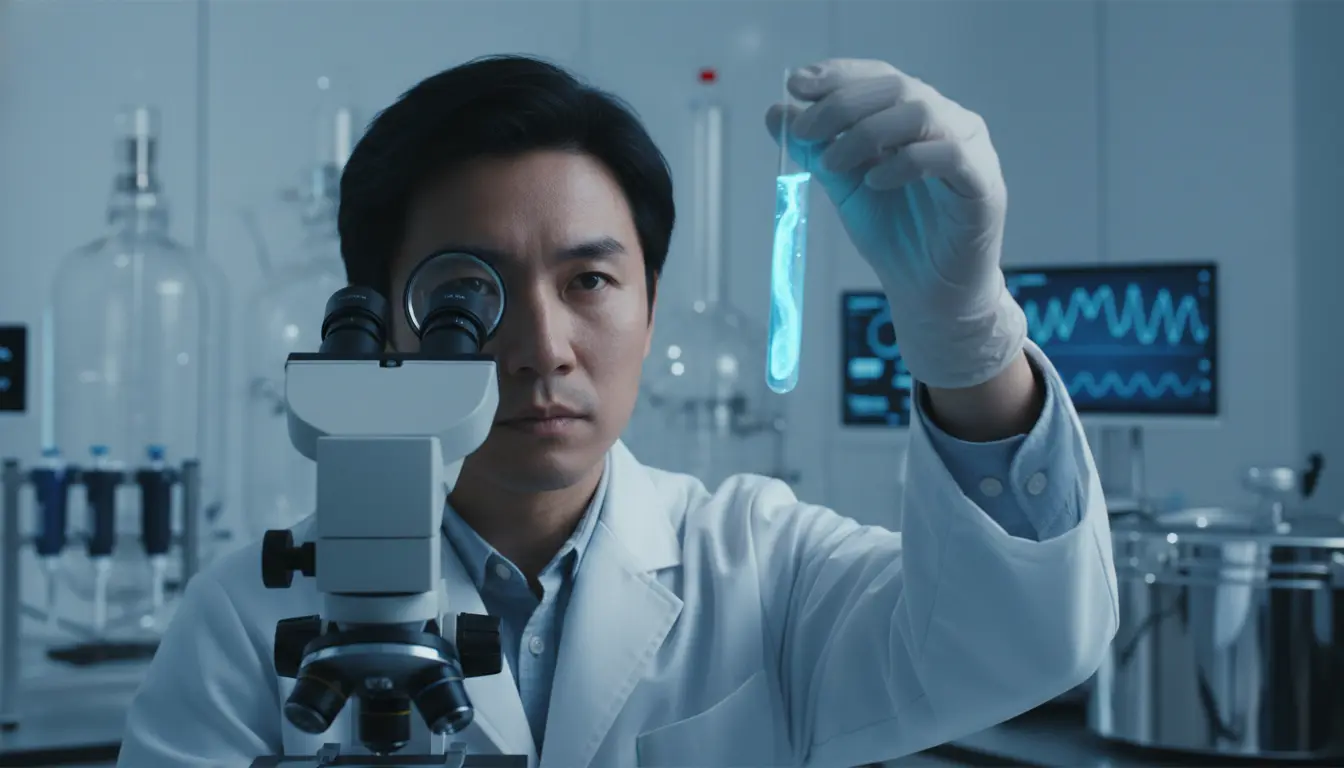 Just as maternal roots can be traced through mitochondrial DNA, research is also progressing on tracing the paternal line by focusing on the Y chromosome, the sex chromosome unique to males. Because the Y chromosome is passed down only from father to son, it serves as a powerful tool for tracing paternal roots.
Analysis of the Y chromosome has revealed that our paternal roots also lie in Africa. This man is referred to, in relation to Mitochondrial Eve, as "Y-chromosomal Adam." However, Mitochondrial Eve and Y-chromosomal Adam did not necessarily live in the same era — Y-chromosomal Adam is estimated to have lived roughly 200,000 to 300,000 years ago, meaning there is a gap of tens of thousands to well over a hundred thousand years between the two. [ref:5]
This body of research provides strong support for the "Out of Africa" theory, which holds that modern humans (Homo sapiens) originated in Africa before spreading around the world. Large-scale studies based on whole-genome analysis of nuclear DNA also back up this hypothesis, and it is now widely accepted as the mainstream theory in anthropology. [ref:8]
Discovering your ancestral roots — modern genetic testing services
As described above, DNA testing serves as a key to unraveling humanity's grand history. In the United States in particular, services that let people confirm their own ancestral roots based on this kind of research have become commonplace. Analysis of mitochondrial DNA can identify a maternal haplogroup (a genetic population group), while analysis of the Y chromosome can estimate the geographic origin of the paternal line.
More recently, comprehensive analysis of single nucleotide polymorphisms (SNPs) across the entire nuclear genome has made it possible to estimate a person's ethnic ancestry composition even more precisely. For example, it is now possible to quantify the diversity of one's ancestry as recorded in one's own genome — such as "70% East Asian, 20% Southeast Asian, 10% European."
If you're interested, why not try tracing your own roots? DNA testing technology continues to advance year by year, and genetic analysis, once the domain of researchers alone, is now something the general public can use with ease.
\A genetic test that also reveals your ancestral ethnic composition/
The accuracy and reliability of mitochondrial DNA testing
Testing based on mitochondrial DNA has different characteristics from testing based on nuclear DNA. While nuclear DNA testing is particularly well suited to confirming parent-child relationships, mitochondrial DNA testing excels at proving maternal kinship. For example, it is highly effective when you want to confirm a blood relationship between people connected through the maternal line, such as a grandmother and granddaughter, or a maternal aunt and niece.
Mitochondrial DNA also exists in hundreds to thousands of copies per cell, which makes it easier to detect even from trace or degraded samples. This property is widely used in forensic identification and in the analysis of archaeological remains. In fact, mitochondrial DNA analysis has been used to identify the remains of soldiers who died in World War II and to extract DNA from ancient human bones thousands of years old.
Medical aspects of mitochondrial DNA and recent research trends
Mitochondrial DNA is not only key to unraveling the origins of humanity — it is also an important subject of medical research. Mutations in mitochondrial DNA are known to cause a group of diseases known as mitochondrial diseases. Because energy production is impaired, these diseases can cause a range of symptoms including muscle weakness, neurological disorders, and heart disease. Because of maternal inheritance, if a mother carries a pathogenic mitochondrial DNA mutation, that mutation may be passed on to all of her children.
In recent years, research into mitochondrial DNA heteroplasmy (a state in which a single cell contains a mixture of normal and mutant mtDNA) has advanced our understanding of the "threshold effect," in which symptoms emerge once the proportion of mutant mtDNA exceeds a certain level. In 2016, the United Kingdom became the first country to legally approve "Mitochondrial Replacement Therapy (MRT)," opening a new path toward preventing serious mitochondrial diseases.
In these ways, research into mitochondrial DNA is yielding important insights across an extremely broad range of fields, from the exploration of human origins to clinical medicine. As DNA testing technology continues to advance, new facets of mitochondrial DNA are expected to be uncovered in the years ahead.
 Apply / Purchase a Kit
Frequently Asked Questions
Q1. What is Mitochondrial Eve?
A. Mitochondrial Eve refers to a common female ancestor, believed to have lived in Africa roughly 160,000 years ago, reached when tracing the maternal mitochondrial DNA (mtDNA) lineage of every living human back as far as possible. She was proposed by an American research team in 1987. She was not the only woman alive at that time — rather, the maternal lines of other women died out, leaving the mtDNA of all living humans converging on this one woman.
Q2. Why is mitochondrial DNA inherited only from the mother?
A. During fertilization, the sperm delivers mainly nuclear DNA to the egg, and the sperm's mitochondria are broken down and removed after fertilization through a mechanism called autophagy. As a result, only the mother's mitochondria remain in the fertilized egg, and mitochondrial DNA is inherited solely through the maternal line.
Q3. Did Y-chromosomal Adam and Mitochondrial Eve live in the same era?
A. No, they did not necessarily live in the same era. Mitochondrial Eve is estimated to have lived roughly 160,000 years ago, and Y-chromosomal Adam roughly 200,000 to 300,000 years ago. Both concepts refer respectively to the oldest common ancestor of the maternal and paternal lines, and do not imply that the two were partners.
Q4. In what situations is mitochondrial DNA testing used?
A. Mitochondrial DNA testing is widely used to confirm maternal kinship. For example, it is well suited to confirming blood relationships between people connected through the maternal line, such as a grandmother and granddaughter, or a maternal aunt and niece. Because it can also detect DNA from trace or degraded samples, it is used in forensic identification and in the analysis of archaeological remains.
Q5. Can I find out about my own ancestral roots?
A. Yes, you can. Analysis of mitochondrial DNA can identify a maternal haplogroup (a genetic population group), and analysis of the Y chromosome can estimate the geographic origin of the paternal line. At seeDNA Genetic Medical Research Institute, services such as DNA Score make it possible to investigate your ancestral ethnic composition. Please feel free to contact us.
Q6. What is the HV region of mitochondrial DNA?
A. The HV region (hypervariable region) is a segment of the non-coding region of mitochondrial DNA (the D-loop region) that is especially prone to accumulating mutations. It includes two major regions, HV1 and HV2, and because they show abundant variation between individuals, they are used as important markers for determining maternal kinship.
Q7. Can mitochondrial DNA mutations cause disease?
A. Yes. Pathogenic mutations in mitochondrial DNA can cause a group of diseases known as mitochondrial diseases. Because energy production is impaired, symptoms such as muscle weakness, neurological disorders, and heart disease can occur. Because of maternal inheritance, if a mother carries such a mutation, it may be passed on to all of her children.
The trusted support of seeDNA Genetic Medical Research Institute
seeDNA Genetic Medical Research Institute is a trusted DNA testing and genetic testing institution, certified under the international quality standard ISO 9001 and Japan's Privacy Mark for data protection.
If you are troubled by questions about family or parent-child relationships, or a partner's infidelity, our DNA testing specialists are here to support you with peace of mind, so please feel free to contact us.
【Free consultation with specialist staff】

If you have any questions,
please feel free to contact our toll-free number.
\Open every day, including weekends/
Business hours: Monday–Sunday 9:00-18:00
(excluding public holidays)
 Author
Kihan Tomikane, M.D., Ph.D.
Completed the master's and doctoral program in Biosystem Control and Molecular Medicine at the University of Tsukuba Graduate School
In 2017, developed Japan's first prenatal DNA testing method(Patent 7331325) using a trace-DNA analysis technology(Patent 7121440)