
Rewritten on: September 26, 2025
This article explains six serious consequences that can occur when a DNA test produces an incorrect result. Our expert covers psychological shock, family breakdown, legal trouble, wrongful lawsuits, negative effects on administrative and court decisions, and the impact on a child's sense of identity.
Introduction
Are you wondering, "What kind of impact could there be if a DNA test result contradicts an actual parent-child relationship?"
When a DNA test produces a result that differs from reality — denying a biological relationship that actually exists, or conversely affirming one that doesn't — it can bring about a range of serious consequences for parents, children, and partners. DNA testing is now an extremely accurate technology, but in rare cases, incorrect results can occur due to chimerism (a condition in which a single person's body contains two different sets of genetic information) or human error (such as sample mix-ups or analysis mistakes). [ref:11] [ref:12]
When an incorrect result is produced, the impact isn't limited to the emotional state of those involved. It can lead to family breakdown or divorce, legal disputes over child support or inheritance, and even the risk of flawed decisions in administrative procedures or court cases. Children in particular can suffer long-term damage to their self-esteem and sense of identity, so great care is needed.
This article provides a detailed explanation, with concrete examples and research data, of the six consequences that can arise when a DNA test result is wrong. We hope this serves as a useful guide for anyone considering DNA testing, or anyone who already has doubts about a result they've received, to correctly understand the risks and learn how to respond appropriately.
- ・1. It Can Cause Psychological Shock and Confusion
- ・2. It Carries the Risk of Triggering Family Breakdown or Divorce
- ・3. It Can Lead to Legal Trouble Over Child Support or Inheritance
- ・4. It Risks Leading to a Mistaken "Denial of Legitimacy" or "Confirmation of Non-Existence of Parent-Child Relationship" Lawsuit
- └ Real Cases of Misjudgment Due to Chimerism or Human Error
- ・5. It Can Cause Flawed Decisions in Administrative Procedures or Court Cases
- ・6. It Can Also Affect a Child's Development and Sense of Identity
- ・What You Can Do to Prevent Misjudgment in DNA Testing
- ・Summary
1. It Can Cause Psychological Shock and Confusion
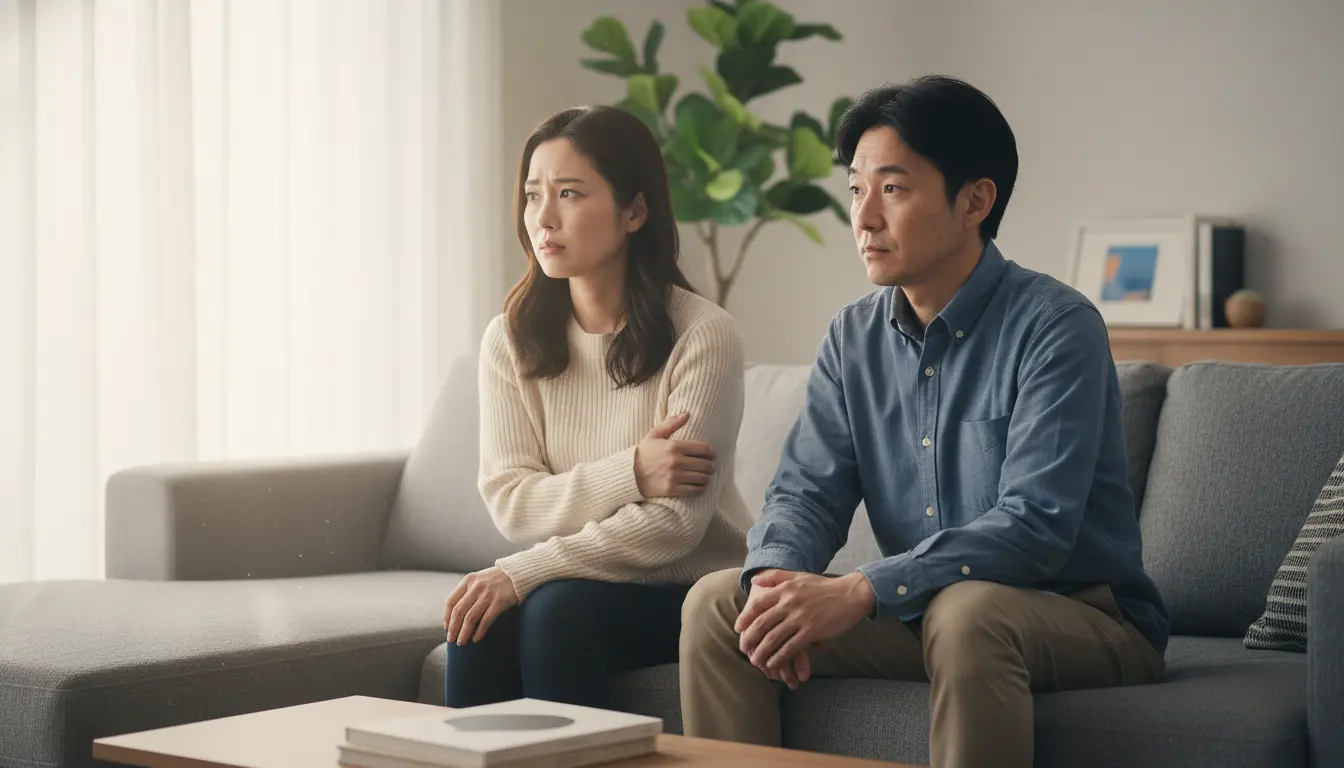
When a misjudged DNA test result denies a parent-child relationship that actually exists, the parent is often left with a sense of despair that "the family relationship I trusted has been destroyed," while the child feels that "my very existence has been denied," carrying a deep sense of loneliness and anxiety.
For a parent, having a biological relationship denied with a child they have loved and raised as their own for years is an event that shakes the very foundation of their life. Doubts arise one after another — "What was all that time as a family for?" "Was I being deceived?" — and distrust toward their partner grows rapidly. On the other hand, from the mother's perspective, simply being suspected of something she has no knowledge of is itself an enormous psychological burden, and in some cases it becomes extremely difficult for the couple to communicate at all.
This kind of psychological damage tends not to heal even with the passage of time. It not only makes it difficult to restore trust between parent and child, but can also negatively affect future relationships and self-esteem. Research shows that paternity uncertainty has a serious impact on the psychological well-being of those involved, raising the risk of depressive symptoms and anxiety disorders. [ref:8] In particular, when family relationships have already changed based on an incorrect result, the psychological wounds may not fully heal even after the error is later discovered.
2. It Carries the Risk of Triggering Family Breakdown or Divorce
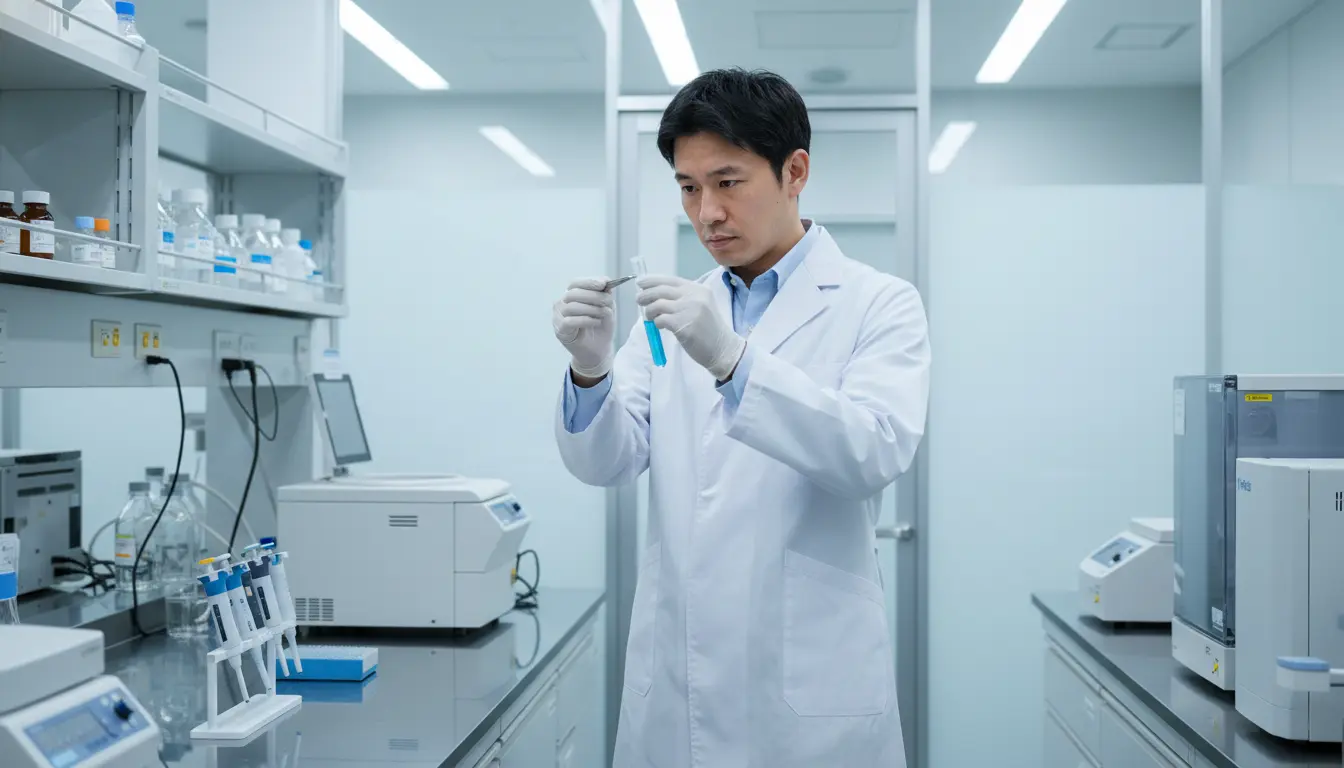
When a DNA test produces a result denying a parent-child relationship, trust within the marriage or family can be severely shaken, potentially leading to serious conflict. Because the parent-child relationship is the foundation of the family, its denial intensifies feelings of betrayal and distrust toward a spouse, making it difficult to repair the relationship.
There are cases where an incorrect result destroys trust within a marriage or family, developing into domestic discord, divorce, or even disputes over child custody. [ref:1] In fact, some couples proceed straight to divorce proceedings after receiving a DNA test result, tearing the family apart without even the chance for a cooling-off period.
Once trust is lost, it doesn't easily recover — even if the loss was based on a misjudged result — and the couple's relationship is likely to grow cold. Even if it is later explained that "the DNA test result was wrong," the fundamental question of "why did you decide to get tested in the first place?" tends to linger, making it difficult to rebuild the partnership.
Furthermore, if the couple does divorce, legal procedures such as custody, visitation, and child support become necessary, creating a heavy emotional and financial burden. Especially in households with children, the drastic change in environment caused by divorce can also affect the child's physical and emotional development — which shows just how important it is for DNA test results to be accurate.
3. It Can Lead to Legal Trouble Over Child Support or Inheritance

When a DNA test denies a parent-child relationship, the rights and obligations related to child support and inheritance can change significantly, potentially developing into serious legal trouble. This is because, once the legal parent-child relationship under civil law disappears, the obligation to pay child support or the right to inherit may also disappear, dramatically changing a person's living or financial situation.
Under Japan's Civil Code, a legal parent-child relationship is determined based on family registry records, but if a DNA test result is admitted as evidence in court, it can overturn an existing legal relationship. Because a DNA test result can become the basis for a legal decision, a misjudgment could result in someone being made to pay child support unjustly, or being stripped of a rightful inheritance.
Specifically, a former partner could be asked to repay child support they have already paid, or could be required to return an inheritance share they have already received. A demand to repay child support is a heavy financial and emotional burden for both the paying and receiving party.
In addition, an incorrect result could cause someone to lose child support or an inheritance share they were rightfully entitled to, undermining their financial foundation. Inheritance cases are especially difficult: once an estate division agreement has already been finalized, demanding a redivision is extremely difficult legally, meaning the effects of a misjudgment can linger for a long time.
\A parent-child DNA test you can use to confirm a parent-child relationship for mediation or court proceedings/
4. It Risks Leading to a Mistaken "Denial of Legitimacy" or "Confirmation of Non-Existence of Parent-Child Relationship" Lawsuit
If a DNA test comes back negative, there is a risk of mistakenly concluding "there really is no blood relationship" even when a genuine parent-child relationship exists. Believing such a result, a person might go so far as to file a "denial of legitimacy" lawsuit or a "confirmation of non-existence of a parent-child relationship" lawsuit — and that possibility is not zero.
A "denial of legitimacy" lawsuit is a legal procedure in which a husband claims that a child born during the marriage (a legitimate child) "is not my child," thereby denying the legal parent-child relationship. A "confirmation of non-existence of a parent-child relationship" lawsuit, on the other hand, seeks confirmation that a parent-child relationship recorded in the family registry does not actually exist. Both are extremely serious legal procedures, with a ruling handed down after a hearing in family court. [ref:13]
Once such a lawsuit is filed and the ruling becomes final, it has a major impact on the family and daily life — including correction of the family register, changes to custody, and the loss of child-support obligations. Furthermore, even if it is later discovered that the test was wrong, legal recovery is extremely difficult, and restoring the original state requires a complex, long-term procedure.
Real Cases of Misjudgment Due to Chimerism or Human Error
DNA testing is considered highly accurate, but caution is needed because misjudgments can occur due to the limits of testing accuracy (the effects of chimerism) or human error.
Chimerism refers to a condition in which two or more genetically distinct sets of cells exist within a single person's body. Naturally occurring chimerism can arise when, for example, twin embryos fuse together at an early stage, and in most cases the person themselves is completely unaware of it. In such cases, DNA collected from oral mucosa or blood may show a different profile than the DNA in the reproductive cells (sperm or eggs), which can lead to a misjudged parentage test.
For example, there is a case of a father whose paternity test at a fertility clinic came back negative, but who was later found to be a chimera, and was ultimately confirmed as the child's biological father. [ref:2] There is also a case in which a woman, due to chimerism, was determined not to be the biological mother of two of her three sons [ref:3], and a case involving a father who used surrogacy and IVF, whose paternity was denied due to chimerism. [ref:4]
Errors caused by human factors also occur. In one actual case, a man who had been designated the father based on an incorrect DNA test result had his legal and social parent-child relationship denied, resulting in the breakdown of his family. [ref:5] Cases like this have led courts to acknowledge that DNA testing, while highly accurate, is not infallible. [ref:6]
Below is a summary of the main causes of misjudgment in DNA testing.
| Type of Cause | Specific Example | Frequency |
|---|---|---|
| Chimerism | Genetic mosaicism from twin fusion | Extremely rare |
| Human error | Sample mix-up or analysis mistake | Varies by organization |
| Mutation | Locus mismatch due to spontaneous mutation | Rare |
5. It Can Cause Flawed Decisions in Administrative Procedures or Court Cases
DNA test results are sometimes used as important evidence in administrative procedures and court cases. For this reason, caution is needed, because adopting a misjudged result — or one obtained through insufficient procedures — as-is can lead to a serious wrongful judgment.
An incorrect test result can affect court or administrative decisions, such as corrections to the family register or custody disputes. In Japan, the family register is the single most important document certifying a person's civil status, and when it is corrected based on a DNA test result, the effects can extend broadly — to a person's name, nationality, inheritance rights, and more.
Because DNA test results carry strong evidentiary weight in court, there is a risk that a ruling could be handed down without adequately examining other evidence. Because DNA testing is treated as objective, scientifically grounded evidence, there is a risk that a judge places excessive trust in the result while giving too little weight to testimony or circumstantial evidence from the parties involved. [ref:13]
Once such a decision becomes final, it is not easy to achieve legal recovery even if an error is later discovered. Overturning a finalized ruling requires a special procedure called a "retrial," and the requirements for a retrial are strictly defined, making it extremely rare for one to actually be granted. This underscores just how important the accuracy of DNA testing truly is.
6. It Can Also Affect a Child's Development and Sense of Identity
When a DNA test result turns out to be wrong, the impact is not limited to adults — it also affects children. In particular, when a genuine parent-child relationship is denied due to a misjudgment, the child may come to question their own existence or origins, and experience deep confusion and anxiety.
For a child, the questions "where did I come from?" and "who are my parents?" are fundamental to the formation of their identity. From a developmental psychology standpoint, the stability of the parent-child relationship is considered essential to the healthy development of a child's sense of self, and its sudden denial can inflict severe psychological damage.
Caution is needed because a child who has been told "you are not my child" may lose their sense of self-worth, or experience shock, distress, and a feeling of betrayal — effects that can be long-lasting. [ref:7] Research shows that children who experience misattributed paternity are prone to problems such as diminished trust in interpersonal relationships, emotional instability, and declining academic performance.
In addition, if a correction to the family register or a change of surname becomes necessary, it can affect relationships at school or with friends, deepening a sense of having lost one's place. For a child, especially during adolescence, a change in name or family structure can become a source of self-consciousness about how others perceive them, and the risk of bullying or isolation cannot be ruled out.
What You Can Do to Prevent Misjudgment in DNA Testing
Given how significant the impact of a DNA test result can be, it is extremely important to take precautions in advance to minimize the risk of misjudgment. Below is a summary of the key points to keep in mind when undergoing DNA testing.
- Choose a trustworthy testing organization: Testing organizations that hold international quality certifications such as ISO 9001 maintain rigorous quality control over sample handling and analysis processes. [ref:9]
- Check the testing accuracy and methodology in advance: Confirm how many genetic loci (STR markers) are being analyzed and what quality assurance mechanisms are in place. [ref:12]
- Consider a second opinion if you have doubts about the result: Rather than relying on the result from a single testing organization, having a re-test done at a different organization can significantly reduce the risk of misjudgment. [ref:10]
- Don't rush into legal procedures: Rather than immediately initiating legal proceedings based on a DNA test result, it is important to consult a lawyer or specialist and carefully evaluate the validity of the result.
- Keep the possibility of chimerism in mind: Although extremely rare, there are reported cases in which a parent-child relationship was denied due to chimerism. If there is something unnatural about a result, consider re-testing with a different type of sample (blood, hair, semen, etc.).
Below is the recommended workflow for undergoing DNA testing.
- Select a trustworthy testing organization (e.g., one with ISO certification)
- Receive counseling in advance about the purpose, method, and accuracy of the test
- Collect and submit the sample using the appropriate method
- Receive the results, and consult a specialist if anything is unclear
- If you have doubts about the result, get a second opinion from a different testing organization
Summary
When an incorrect DNA test result occurs, its effects are not limited to psychological shock and confusion — it can also lead to family breakdown or divorce, legal trouble over child support or inheritance, and even flawed decisions in administrative procedures or court cases. [ref:8]
Because misjudgment-related trouble has also occurred domestically, it is important to request DNA testing from an organization with internationally certified quality assurance. [ref:9] If you are not satisfied with your test results, it is also worth considering a second opinion by having the DNA test performed again at a different company. [ref:10]
If it is later discovered that a DNA test was wrong, legal recovery is difficult, and the long-term psychological impact can affect both parent and child. Because a DNA test result is critical information that can significantly shape a person's life, ensuring its accuracy and reliability is essential.
To avoid this kind of trouble, it is extremely important to choose a trustworthy organization for DNA testing. Even after receiving a result, we recommend staying calm, seeking expert opinions, and carefully deciding on the next step.

Frequently Asked Questions
Q1. Does a DNA test result actually ever come back wrong?
A. Yes, although extremely rare, DNA testing can occasionally produce an incorrect result. The main causes are chimerism (a condition in which different genetic information exists within a single person's body) and human error, such as sample mix-ups or analysis mistakes. There are reported cases in which paternity was denied due to chimerism, as well as cases where human error led to the breakdown of a family. [ref:2] [ref:5]
Q2. What should I do if I'm not satisfied with my DNA test result?
A. If you have doubts about a result, we recommend getting a "second opinion" by having the DNA test performed again at a different testing organization. [ref:10] Rather than making a major decision based solely on the result from one organization, referring to the opinions of multiple specialized organizations can reduce the risk of misjudgment. seeDNA also offers a second-opinion discount campaign.
Q3. What is chimerism, and how does it affect DNA testing?
A. Chimerism is a condition in which two or more genetically distinct types of cells exist within a single person's body. It can arise when twin embryos fuse together in the early stages of development, and in most cases the person is unaware of it. In DNA testing, the DNA from cells collected from oral mucosa or blood may show a different profile than the DNA in reproductive cells (sperm or eggs), which can lead to a misjudgment that denies a parent-child relationship. [ref:3] [ref:4]
Q4. If legal proceedings have already moved forward based on an incorrect DNA test result, can they be reversed?
A. Overturning a ruling that has already become final is extremely difficult. Reversing a finalized ruling requires a special procedure called a "retrial," but the requirements for a retrial are strictly defined, and cases where one is actually granted are extremely limited. For that reason, it is important to carefully verify the reliability of a DNA test result — and consider obtaining a second opinion — before using it as the basis for legal proceedings.
Q5. What should I look for when choosing a trustworthy DNA testing organization?
A. Key points for identifying a trustworthy testing organization include whether it holds international quality certifications such as ISO 9001, the number of genetic loci analyzed, its privacy protection framework (such as holding a Privacy Mark), and its track record and the presence of specialized staff. [ref:9] Whether the organization provides thorough pre-test counseling and after-the-fact support for the results is also an important criterion.
Q6. How significant is the psychological impact of a DNA test result on a child?
A. The psychological impact of an incorrect DNA test result on a child can be serious. Research shows that children who experience the denial of a parent-child relationship may carry long-term effects such as reduced self-esteem, shock, and a sense of betrayal. [ref:7] For children going through adolescence in particular, this can significantly affect identity formation, and carries the risk of reduced trust in interpersonal relationships and declining academic performance.
Reassuring Support from the seeDNA Genetic Medical Research Institute
The seeDNA Genetic Medical Research Institute is a trusted and reliable specialist organization for DNA testing and genetic testing, holding the international quality certification ISO 9001 and the Privacy Mark for personal information protection.
If you are troubled by questions about family or parent-child blood relationships, or a partner's infidelity, our DNA testing specialists are here to support you with peace of mind — please feel free to contact us.
[Free Consultation with Our Specialist Staff]
If you have any questions,
please feel free to contact our toll-free line.
\Open every day, including weekends/
Business hours: Mon-Sun 9:00 AM-6:00 PM
(excluding holidays)
Author
Hikari Okamoto
Obtained her pharmacist license in 2014 and worked primarily in sales of over-the-counter medications and cosmetics at a major drugstore chain.
She later became an independent medical writer in 2018, and has since written articles on prenatal testing, children's health, medications, and health foods.