
Rewritten on: January 17, 2025
This article explains the sample result report for a DNA paternity test (private), covering both the simplified report on My Page and the printed booklet-style report, page by page. It also explains the meaning of a probability of paternity of 99.99% or higher and how to read a DNA profile.
- ・What Is the DNA Paternity Test (Private) Result Report
- ・Sample Result Report Uploaded to My Page
- ・Sample Printed Result Report
- └ 【Page 1】Test Overview and Summary of Results
- └ 【Page 2】Photographic Record of Samples
- └ 【Page 3】Theoretical Background, Test Details, and Analysis of Test Results
- └ 【Page 3, Analysis of Test Results Section】
- └ 【Page 4】List of DNA Profiles
- ・Summary of Main Items Included in the Report
- ・Process Until You Receive the Result Report
- ・How to Read the Probability of Paternity and Judgment Criteria
- ・Differences Between the My Page Report and the Printed Report
What Is the DNA Paternity Test (Private) Result Report
 For anyone who has requested a DNA test, one of the biggest concerns is probably "how will the results be reported?" At seeDNA Genetic Medical Research Institute, we provide results to customers in two ways: a simplified result report uploaded to My Page and a detailed result report sent by mail as a printed booklet.
Both types of reports clearly state the DNA profile obtained from testing conducted in our own laboratory and the resulting probability of paternity, so you can confirm accurate results based on scientific evidence. DNA paternity testing is performed using STR (Short Tandem Repeat) analysis, a method that is internationally established in the field of forensic science [ref:1]. This article introduces a detailed, page-by-page sample of each type of report and carefully explains the meaning and how to read each item.
Sample Result Report Uploaded to My Page

The result report uploaded to My Page is a simplified, easy-to-understand format summarizing the testing method and results. It records the DNA information (DNA profile) obtained from each sample tested at our own laboratory, along with the probability of paternity calculated from it.
A DNA profile is a compilation of the allele types found at multiple specific DNA regions on human chromosomes (called gene loci, or loci). In paternity testing, one of a child's two alleles at each locus is inherited from the father and the other from the mother, following Mendelian inheritance. The DNA profiles of the tested individuals are compared against each other to scientifically determine whether a parent-child relationship exists [ref:2].
For standard father-child testing, our company guarantees a probability of paternity of 99.99% or higher for a positive result. Depending on the details of the test, the value may include a long string of nines, such as "99.9999...," which statistically indicates that the parent-child relationship is virtually certain. On the other hand, a negative result yields 0%, meaning that mismatches were confirmed at multiple gene loci [ref:1]. The report on My Page has the advantage of being viewable anytime with an internet connection, making it ideal for those who want to know the results as soon as testing is complete.
Sample Printed Result Report
 If you choose the printed report, unlike the simplified version on My Page, we prepare a booklet-style report with more detailed information, including photographs of the samples you returned, the theoretical background of the testing, and details of the test itself. It consists of four pages in total, organized so you can understand everything step by step, from the overall picture of the test to specific numerical data. Each page is explained below.
【Page 1】Test Overview and Summary of Results
Page 1 summarizes the applicant for the test, the tested individuals, and the content of the test (including the results). It is concisely organized so that the type of test, the date the test was requested, and the result determination (positive or negative) can be understood at a glance.
*In private testing, the names of the tested individuals are not recorded. From a privacy protection standpoint, information that could identify individuals is not displayed on the document.
【Page 2】Photographic Record of Samples
Page 2 includes photographs of the samples you actually returned. This is important documentation that records the condition of the samples upon receipt and proves that the correct samples were used in testing. Photographs of samples such as oral cells (collected from the inside of the cheek using a swab) are included, ensuring transparency and reliability of the testing process.
【Page 3】Theoretical Background, Test Details, and Analysis of Test Results
Page 3 describes the theoretical background of the test, details of the testing, and the analysis of the test results. It explains the scientific principles underlying DNA paternity testing, an overview of the testing method used (such as STR analysis), and the statistical methods used in the analysis. STR analysis uses differences in the number of repeats of repetitive sequences scattered throughout the human genome as an indicator for individual identification [ref:4].
【Page 3, Analysis of Test Results Section】
This 【Analysis of Test Results】 section in particular presents the test results in an easy-to-understand way, and records the probability of paternity actually calculated from the test results from our own laboratory. The probability of paternity (a probability value based on the CPI, or Combined Paternity Index) is a comprehensive figure calculated by integrating data from all the gene loci tested, and it is the most important indicator of the likelihood of a parent-child relationship [ref:3].
【Page 4】List of DNA Profiles
Page 4 records the DNA information (DNA profile) obtained from each sample based on testing conducted at our own laboratory. Specifically, for each gene locus tested, the allele types of both the alleged father and the child are listed in table format. By reviewing this list, you can directly see at which loci the alleles match (or do not match).
Summary of Main Items Included in the Report
The important items recorded throughout the report are summarized below.
- Applicant and tested individual information: In private testing, the names of tested individuals are not shown
- Sample photographs: Record the condition of returned samples upon receipt
- DNA profile: List of allele types at each gene locus
- Probability of paternity: 99.99% or higher for a positive result, 0% for a negative result
- Theoretical background of the test: Explanation of the testing method and statistical analysis used
- Analysis of test results: Details of the overall determination based on the CPI
Process Until You Receive the Result Report
The general process from applying for a DNA test to receiving the result report is as follows.
- Application and receipt of the sample collection kit: After applying online or by phone, we send you a sample collection kit.
- Sample collection and return: Following the enclosed instructions, collect oral cells and other samples and return them to us.
- DNA testing at our own laboratory: The received samples are tested at our in-house laboratory using methods such as STR analysis.
- Preparation and upload of the result report: Once testing is complete, we first upload the simplified report to My Page.
- Mailing of the printed report (if selected): We prepare the detailed booklet-style report and mail it to your specified address.
How to Read the Probability of Paternity and Judgment Criteria
The most important element to understand when reading a DNA test result report is the probability of paternity. This figure indicates how statistically certain the parent-child relationship is between the tested individuals, and it is widely used as an international standard indicator in paternity testing [ref:2].
Generally, a probability of paternity of 99.99% or higher results in a determination of "paternity affirmed (parent-child relationship confirmed)." On the other hand, if clear mismatches are confirmed at multiple gene loci tested, the probability of paternity becomes 0%, resulting in a determination of "paternity denied (no parent-child relationship)."
Our company typically tests 20 or more gene loci, ensuring a sufficient amount of data to guarantee highly accurate results. The AABB (American Association of Blood Banks) guidelines also describe the relationship between the number of loci tested and accuracy in paternity testing, stating that the more loci tested, the higher the reliability of the determination [ref:5]. STR analysis is a method recognized worldwide in the fields of forensic science and forensic medicine, and its reliability for individual identification and paternity testing is considered extremely high [ref:4].
Differences Between the My Page Report and the Printed Report
The report on My Page and the printed report each have different characteristics. You can choose either one or both, depending on your needs and purpose.
| Item | My Page Report | Printed Report |
|---|---|---|
| Format | PDF data | Booklet (mailed) |
| Level of detail | Simplified summary | Detailed version including theoretical background |
| Speed of confirming results | Immediately after upload | A few days until arrival by mail |
The My Page report is best suited for those who want to check their results as quickly as possible, while the printed report is suited for those who want to keep a detailed record, including sample photographs and theoretical background, on hand. Both reports share the common feature of recording accurate DNA profiles and probability of paternity based on testing conducted at our own laboratory.
Frequently Asked Questions
Q1. How long does it take to receive the DNA test result report?
A. The simplified report on My Page is uploaded promptly after testing is complete, so you can check it immediately. If you choose the printed booklet-style report, it is prepared and mailed after testing is complete, so it will take a few days to arrive.
Q2. What does a probability of paternity of 99.99% or higher mean?
A. A probability of paternity of 99.99% or higher means that a genetic match consistent with a parent-child relationship was confirmed at all of the multiple gene loci tested, indicating that the parent-child relationship is statistically almost certain. Depending on the testing conditions, the value may exceed 99.9999%.
Q3. What does it mean if a negative result (0%) is obtained?
A. A probability of paternity of 0% means that clear mismatches were confirmed between the DNA profiles of the alleged father and the child at multiple gene loci tested. In this case, it is scientifically determined that no biological parent-child relationship exists.
Q4. Are the names of tested individuals recorded in a private test report?
A. No, the names of tested individuals are not recorded in a private test report. From a privacy protection standpoint, information that could identify individuals is not displayed on the document.
Q5. What is the "DNA profile" recorded in the report?
A. A DNA profile is a compilation of the allele types at multiple specific DNA regions (gene loci) on human chromosomes. In paternity testing, this profile is compared to determine whether a parent-child relationship exists.
Q6. Can I receive both the My Page report and the printed report?
A. Yes, that is possible. The simplified report on My Page is provided to all customers, and the printed booklet-style report is available as an option. If you want to keep a detailed record on hand, we recommend using both.
Q7. What is the STR analysis method used in DNA testing?
A. STR (Short Tandem Repeat) analysis is a method that detects differences in the number of repeats of short base sequences found in the human genome. Since the number of repeats differs from person to person, it is extremely effective for individual identification and paternity testing, and it is widely adopted as an internationally standardized technique in the field of forensic science.
seeDNA Genetic Medical Research Institute's Trusted Support
seeDNA Genetic Medical Research Institute is a trusted and reliable DNA testing and genetic testing organization that has obtained the international quality standard ISO9001 and the Privacy Mark for personal information protection.
If you are troubled by questions about family or parent-child blood relationships, or a partner's infidelity, our DNA testing experts will provide reassuring support, so please feel free to contact us.
【Free Consultation with Specialist Staff】

If you have any questions,
please feel free to contact our toll-free number.
/Open every day, including weekends/
Business hours: Monday–Sunday 9:00 AM–6:00 PM
(except public holidays)
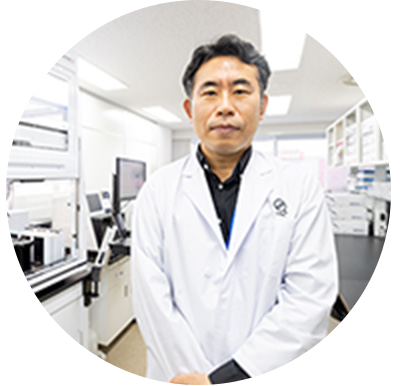 Author
Ph.D. Kihan Tomikane
Graduated from the University of Tsukuba Graduate School, Master's/Doctoral Program in Biosystem Control and Molecular Bioinformatics
In 2017, developed Japan's first prenatal DNA testing(Patent 7331325) using trace DNA analysis technology(Patent 7121440)