
Rewritten on: October 31, 2024
Human hair color is determined by the ratio of eumelanin to pheomelanin, and in recent years as many as 124 related genes have been identified. This discovery has made it possible to determine hair color from DNA with about 90% accuracy, raising expectations for applications in criminal investigations and prenatal DNA testing.
- ・Why human hair color differs — the relationship between melanin pigment and genetics
- ・A groundbreaking discovery: 124 hair-related genes identified
- └ Key factors in the inheritance of hair color
- ・Applications in criminal investigation — identifying a suspect's hair color from DNA
- ・Why hair color changes with age
- ・Application to prenatal DNA testing (fetal DNA testing during pregnancy)
- ・Future prospects — toward predicting a fetus's hair color
Why human hair color differs — the relationship between melanin pigment and genetics
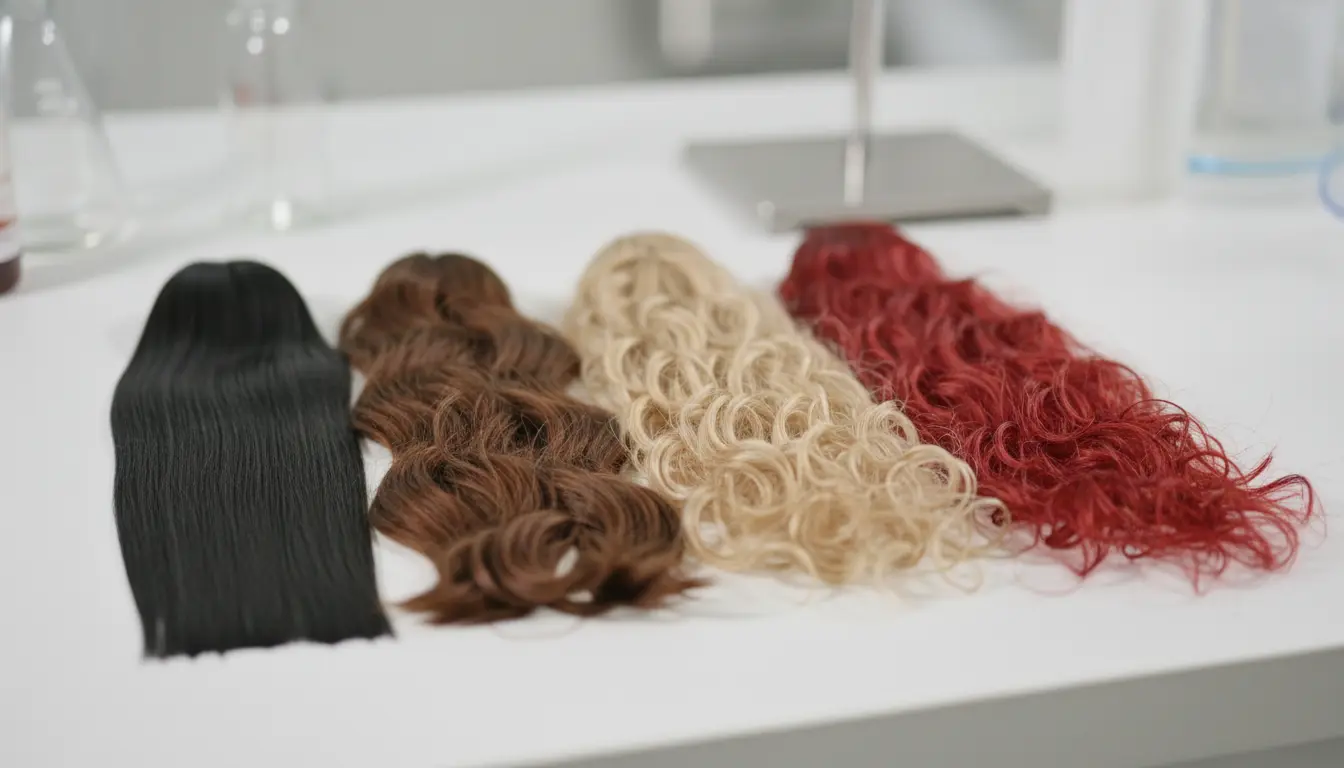 Looking around us, we see people with an incredible variety of hair colors — black, brown, blonde, red, and more. Just as some people are born with black hair and others with blonde hair, the reason human hair color differs is that the type and amount of melanin pigment contained in the hair varies genetically from person to person [ref:1].
The melanin pigments that determine hair color are broadly divided into two types: eumelanin and pheomelanin. Eumelanin is a black-to-brown pigment, and hair containing a large amount of it becomes deep black or dark brown. Pheomelanin, on the other hand, is a yellow-to-red pigment, and when present in large amounts it produces yellow, brown, or reddish hair [ref:2].
In actual hair, these two pigments are almost always present together. It is the combination of these two pigments, and the fact that their ratio and total amount differ from person to person, that produces the truly diverse range of hair colors we see. For example, when eumelanin is abundant and pheomelanin is scarce, the hair becomes black to dark brown; when the two are present in balance, an intermediate brown results; and when the proportion of pheomelanin is higher, the hair becomes bright blonde or red.
A groundbreaking discovery: 124 hair-related genes identified
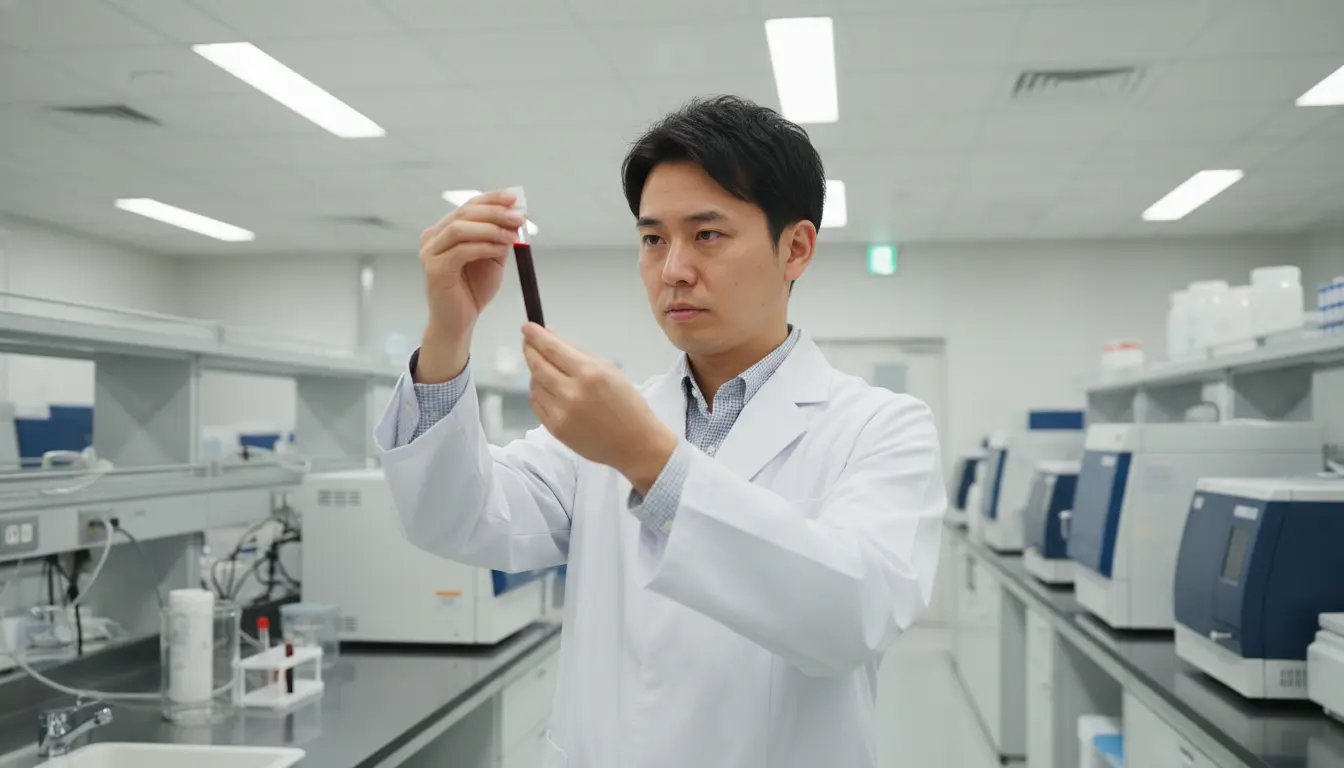 Previously, only about 13 genes were known to determine hair color, starting with MC1R (melanocortin 1 receptor). In recent years, however, large-scale genome-wide association studies (GWAS) have advanced, and a groundbreaking result was announced: 124 genes newly identified as related to hair color [ref:3].
This research, made possible by analyzing DNA data from hundreds of thousands of people, revealed the majority of the genetic mechanisms behind hair color that had previously remained unclear. The 124 genes include not only genes directly involved in melanin synthesis, but also a diverse range of genes involved in the development and differentiation of melanocytes (pigment cells) and the transport of melanin granules [ref:4].
Even more remarkably, comprehensive analysis of the information from these 124 genes revealed that hair color can be determined with about 90% accuracy. In other words, given a DNA sample, a person's hair color can be predicted with high precision.
Key factors in the inheritance of hair color
- Eumelanin amount: a black-to-dark-brown pigment — the more present, the darker the hair
- Pheomelanin amount: a yellow-to-red pigment — the more present, the lighter and redder the hair
- MC1R gene: the representative gene most strongly studied in connection with red hair
- Other related genes: involved in melanocyte development and differentiation, transport of melanin granules, and more
- Interactions between genes: the final hair color is determined by the combination of multiple genes
Applications in criminal investigation — identifying a suspect's hair color from DNA
 The identification of 124 hair-related genes has had a major impact on the field of forensic science as well. When a perpetrator leaves behind biological samples containing DNA at a crime scene — such as bloodstains, bodily fluids, or hair — it has become possible to determine that person's hair color with near certainty by analyzing their genes [ref:5].
In conventional forensic DNA analysis, personal identification through matching STR (short tandem repeat) profiles has been the mainstream approach, but narrowing down suspects was difficult if no matching individual existed in the database. However, advances in "Forensic DNA Phenotyping" — the technology for predicting physical characteristics (phenotype) from DNA — are increasingly making it possible to estimate appearance-related information such as hair color, eye color, and skin color, even for unknown individuals not registered in any database.
For example, the "HIrisPlex" system developed by Erasmus University Medical Center in the Netherlands is a tool that simultaneously predicts hair color and eye color from DNA, and it is already being used in actual investigations, primarily in Europe [ref:6]. Such technologies hold the potential to contribute to solving cases with no eyewitness testimony and to resolving cold cases.
Why hair color changes with age
Hair color is not constant throughout life and is known to change with age. It is a common phenomenon for hair that was blonde in early childhood to darken with growth, or for gray hair to increase with age.
The mechanism behind the appearance of gray hair is mainly a decline or loss of function in the melanocytes (pigment cells) within the hair follicle. When melanocyte stem cells become depleted due to factors such as aging or stress, melanin pigment is no longer supplied to newly growing hair, resulting in gray hair. Recent research has reported that specific genes such as IRF4 and BCL2 influence the timing of graying, showing that genetic factors also play a significant role in susceptibility to gray hair.
Application to prenatal DNA testing (fetal DNA testing during pregnancy)
Our company, the seeDNA Genetic Medicine Research Institute, uses a method similar to the genetic information analysis technology described above to analyze subjects' DNA and conduct prenatal DNA testing.
seeDNA's prenatal DNA testing employs a proprietary testing technology that is more than three times improved compared to existing testing methods. This makes it possible to obtain accurate results on biological relationships from very early in pregnancy.
- Application and consultation: feel free to contact us by phone or through our website
- Sample collection: fetal DNA is obtained through a maternal blood draw (non-invasive and safe)
- Analysis at our own domestic laboratory: since no overseas transport is required, the risk of blood degradation is prevented
- Reporting of results: we deliver accurate testing results at the lowest cost and fastest speed
Additionally, because seeDNA performs genetic testing at its own domestic laboratory, there is no need to transport samples overseas. This prevents the blood degradation that can occur during transport, while enabling testing at the lowest cost and fastest speed.
About prenatal fetal DNA testing during pregnancy
Future prospects — toward predicting a fetus's hair color
As research on the determination of hair color advances further in the future, it may become possible to include a fetus's estimated hair color among testing items. Given that technology already exists today to predict hair color from DNA with about 90% accuracy, the prospects for further development in this field are very promising.
For example, it may in the future become possible to offer a service that predicts, to some extent, the hair color of a baby yet to be born, based on the fetal genetic information obtained through prenatal DNA testing. Of course, since hair color can also change due to aging and environmental factors, such predictions would remain limited to genetic tendencies — but for parents, it could provide one answer to the simple question, "What color hair will our baby have?"
The seeDNA Genetic Medicine Research Institute will continue to closely monitor trends in this cutting-edge genomic research while actively working to develop new testing services in the future. We look forward to further advances in this field of research.
Frequently Asked Questions
Q1. What types of melanin pigment determine hair color?
A. The melanin pigments that determine hair color are mainly of two types: eumelanin and pheomelanin. Eumelanin is a black-to-brown pigment — the more present, the darker the hair. Pheomelanin is a yellow-to-red pigment — the more present, the lighter and redder the hair. Actual hair color is determined by the combination of the ratio and total amount of these two pigments [ref:1].
Q2. How accurate is it to predict hair color from DNA?
A. Comprehensive analysis of the 124 hair-related genes identified in recent years is said to allow hair color to be determined with about 90% accuracy. Black hair and red hair in particular tend to be predicted with high accuracy, while intermediate colors such as blonde and light brown tend to be predicted with somewhat lower accuracy — but overall, a very high predictive capability has been demonstrated [ref:3].
Q3. Can a suspect's hair color be identified from DNA in a criminal investigation?
A. Yes, it is possible. Technology that predicts a perpetrator's hair color with high accuracy by analyzing DNA from bloodstains, bodily fluids, and other evidence left at a crime scene is becoming practical. This technology, known as "Forensic DNA Phenotyping," is already being used by investigative agencies, primarily in Europe [ref:5] [ref:6].
Q4. What are the features of seeDNA's prenatal DNA testing?
A. The seeDNA Genetic Medicine Research Institute's prenatal DNA testing uses a proprietary testing technology that is more than three times improved compared to existing methods, allowing accurate determination of biological relationships from very early in pregnancy. In addition, because testing is conducted at our own domestic laboratory, there is no risk of blood degradation from overseas sample transport, enabling testing at the lowest cost and fastest speed.
Q5. Will it be possible in the future to predict a fetus's hair color before birth?
A. This is not yet offered as a service at this time, but since technology already exists to predict hair color from DNA with about 90% accuracy, it is believed that it will become technically possible in the future to estimate a baby's hair color from the fetal genetic information obtained through prenatal DNA testing. Please note, however, that since hair color can also change due to aging and environmental factors, such predictions would remain limited to genetic tendencies.
The seeDNA Genetic Medicine Research Institute's Peace-of-Mind Support
The seeDNA Genetic Medicine Research Institute is a trusted and reliable specialist institution for DNA testing and genetic testing, certified with the international quality standard ISO 9001 and the Privacy Mark for privacy protection.
If you have concerns about biological relationships within a family or between parent and child, or about a partner's infidelity, our DNA testing specialists are here to support you with peace of mind — please feel free to contact us.
[Free consultation with specialist staff]

If you have any questions,
please feel free to contact our toll-free number.
/Open every day, including weekends/
Business hours: Monday–Sunday 9:00 AM–6:00 PM
(excluding holidays)
 Author
Kihan Tomikane, M.D., Ph.D.
Completed his master's and doctoral studies in Biological and Molecular Information Medicine at the University of Tsukuba Graduate School
In 2017, developed Japan's first prenatal DNA test(Patent 7331325) using a trace-DNA analysis technology(Patent 7121440)