
Rewritten: October 25, 2024
This article, written from the perspective of a seeDNA examiner, explains in detail the proper method for collecting oral mucosal epithelium—the sample type most commonly used in DNA testing—along with the drying procedure required before returning it. It also covers why two swabs are collected and the double-check system used to ensure accuracy.
- ・How to Collect and Send Oral (Mucosal) Epithelium ― From a seeDNA Examiner's Perspective
- └ Where oral epithelium is collected from
- └ How much pressure to use ― you don't need to rub hard
- └ Simply moistening the swab with saliva is not enough
- └ Why two swabs are needed ― the double-check system
- ・How to Return Your Sample ― Drying Is the Most Important Point
- └ Correct drying methods
- └ Other precautions when returning your sample
- └ Precautions before collection
- └ Summary of the advantages of oral epithelium samples
How to Collect and Send Oral (Mucosal) Epithelium ― From a seeDNA Examiner's Perspective
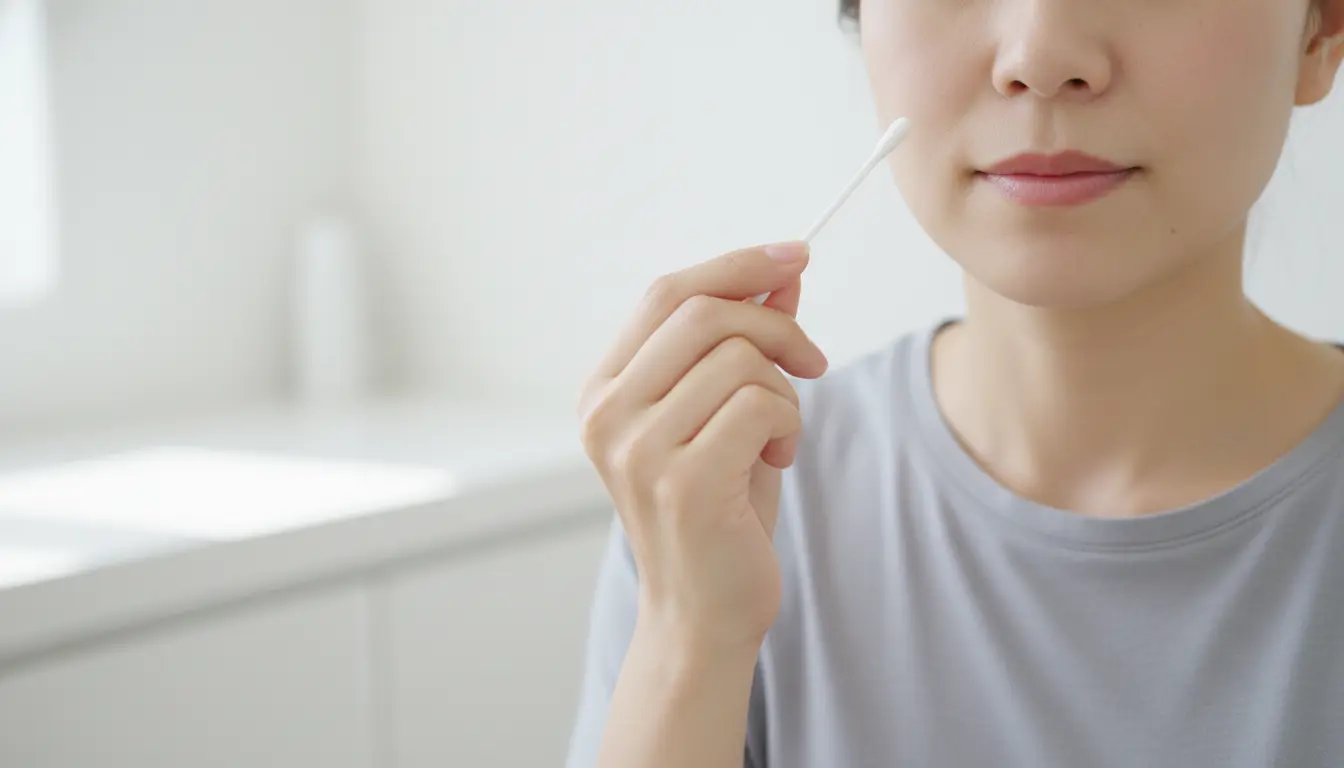
In our previous articles, we discussed the proper handling of blood and semen samples from an examiner's perspective. This time, we will explain in detail how to collect and send oral (mucosal) epithelium, the sample most commonly used in DNA testing.
In DNA testing (paternity testing, kinship testing, etc.), a variety of biological samples can be used, but among these, oral epithelium is the most widely adopted sample because collection causes almost no pain and requires no specialized equipment. Unlike blood collection, which requires a needle, it offers the major advantage of being relatively easy to collect even from young children and infants [ref:1].
Where oral epithelium is collected from
So where exactly is the oral epithelium sample taken from? It is collected from the inside of the cheek. The cheek mucosa constantly undergoes active cell turnover, and its surface contains numerous epithelial cells. Since each of these cells contains DNA, simply rubbing gently with a swab is enough to collect a sufficient amount of DNA [ref:2].
Specifically, all you need to do is firmly press the testing swab included in our sample collection kit against the inside of your cheek and rub it back and forth and up and down 10 times each. This causes mucosal epithelial cells to adhere to the tip of the swab, and by performing DNA extraction on that swab, we can obtain the high-purity DNA needed for testing.
How much pressure to use ― you don't need to rub hard
As an examiner, I have tried swabbing the inside of my own cheek. Worried about whether I would really collect enough DNA, I ended up rubbing too hard and made the inside of my cheek sore. However, you really don't need to rub that hard. Simply pressing the swab firmly against the inside of your cheek and rubbing it back and forth and up and down 10 times each, with moderate pressure, is enough to collect a sufficient amount of DNA for testing.
The epithelial cells of the oral mucosa normally turn over every few days, so they come off easily even with light friction. This means a sufficient number of cells can be collected without applying excessive force [ref:3]. Rubbing too hard can injure the mucosa and may even cause bleeding, so please be gentle and careful when swabbing.
Simply moistening the swab with saliva is not enough
Here is a very important point to note. Simply moistening the swab with the saliva that has pooled in your mouth will not extract a sufficient amount of DNA for testing. While saliva does contain a small amount of DNA, the amount is far less than what can be obtained by directly rubbing the oral mucosa to collect epithelial cells. When collecting your sample, always make sure to press the swab firmly against the inside of your cheek and rub it thoroughly.
Why two swabs are needed ― the double-check system
We send two testing swabs per person, and we ask that both swabs be collected and submitted, not just one. This is an important quality control measure we implement to prevent errors in test results.
Specifically, after testing is performed using the first swab, we conduct an independent double check using the second swab. By confirming that the DNA profiles obtained from both samples match, we eliminate the risk of sample mix-ups or experimental error, maximizing the reliability of the test results.
- The two swabs must each be collected separately (not by using the same swab twice)
- Both swabs should be collected using the same method (10 back-and-forth and up-and-down strokes on the inside of the cheek)
- In some cases, testing cannot be performed if only one swab is submitted
- The double check ensures the accuracy of the test results
How to Return Your Sample ― Drying Is the Most Important Point
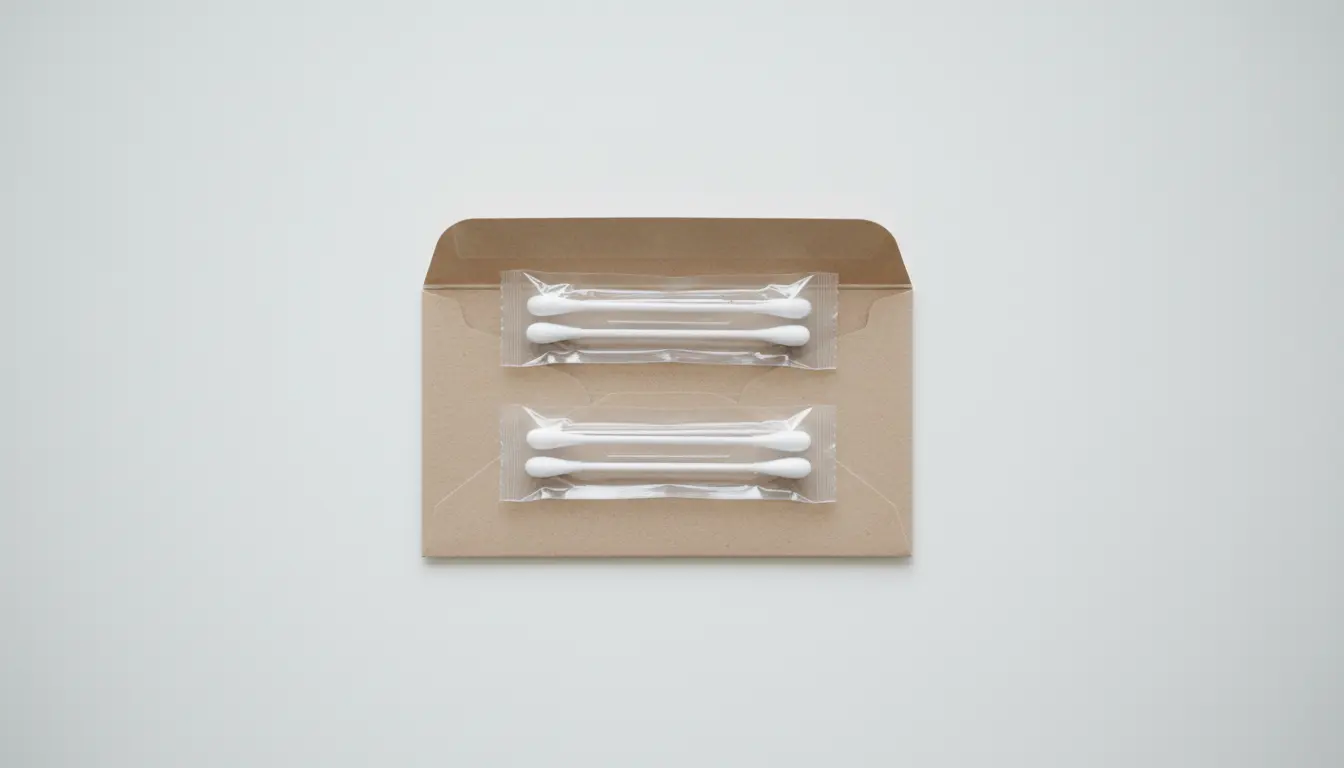
When returning your collected sample to us, the most important thing to pay attention to is "drying." If the swab used to collect cells from the inside of your cheek (10 strokes each direction) is returned while still wet, bacteria may grow on it. Even more seriously, the enzymes produced by these bacteria can break down the high-purity DNA you worked hard to collect [ref:4].
DNA is a very stable substance when stored properly, but in an environment where moisture remains, microorganisms multiply rapidly and produce enzymes (DNases) that degrade DNA. As a result, the DNA can deteriorate to the point where it can no longer be used for testing.
Correct drying methods
We recommend the following two drying methods.
- Air drying: Stand the collected swab upright in a cup or similar container and let it air dry overnight. Be sure to keep it in a clean place, away from dust.
- Hair dryer drying: Dry the swab using a hair dryer as you would your hair (warm air is fine). However, avoid holding it in one spot for too long. Prolonged exposure to high heat may cause thermal denaturation of the DNA, so be sure to direct the airflow evenly over the entire swab.
Other precautions when returning your sample
Once the swab is fully dry, please place it in the dedicated envelope or container included in the kit before returning it. Please also note the following points.
- Store and return the dried swab in a breathable state rather than sealing it airtight
- Avoid storing it in direct sunlight or in a hot, humid environment
- Check that the label or name is correctly written so it is not mixed up with someone else's swab
- Return the sample as soon as possible after collection (prolonged storage risks DNA degradation)
Precautions before collection
To obtain higher-quality DNA, it is also a good idea to keep the following points in mind before collection.
- Avoid eating, drinking, smoking, or brushing your teeth for 30 minutes before collection
- Rinsing your mouth lightly with water before starting can help prevent contamination from food residue
- For infants, wait at least 30 minutes after breastfeeding before collecting the sample
- Avoid touching the tip of the swab with your bare hands
By following these precautions, you can improve the quality of your sample, allowing us to provide more accurate and reliable test results.
Summary of the advantages of oral epithelium samples
Let's summarize once again why oral epithelium is the most widely used sample in DNA testing.
| Item | Oral epithelium | Blood |
|---|---|---|
| Ease of collection | Very easy | Requires specialized skill |
| Pain | Almost none | Pain from needle stick |
| DNA quality | High quality | High quality |
As shown above, oral epithelium is easy to collect while still yielding DNA of quality comparable to blood, which is why it is used across a wide range of situations—from at-home private testing to legal testing that requires strict procedures [ref:5].
That concludes our explanation of the correct way to collect and return oral epithelium samples. We hope this will be helpful when collecting your sample. If you have any questions, please feel free to contact us.
< Proper Sample Handling ① Blood ― From a seeDNA Examiner's Perspective >
< Proper Sample Handling ② Semen ― From a seeDNA Examiner's Perspective >
Frequently Asked Questions
Q1. Is collecting oral epithelium painful?
A. There is almost no pain. You simply press the swab gently against the inside of your cheek and rub it back and forth and up and down 10 times each, so as long as you don't rub too hard, you will barely feel anything. It can be safely collected even from infants and young children.
Q2. Is it okay to just moisten the swab with saliva?
A. Saliva alone does not provide enough DNA for testing. Be sure to press the swab firmly against the inside of your cheek to collect mucosal epithelial cells.
Q3. There are two swabs — can testing be done with just one submitted?
A. We ask that both swabs be submitted. We use a double-check system in which the second swab is used for independent verification to ensure the reliability of the test results.
Q4. How should the collected swab be dried?
A. Either stand the swab upright in a cup and let it air dry overnight, or dry it evenly with warm air from a hair dryer. If returned while still wet, bacteria may grow and break down the DNA.
Q5. Is it okay to eat or brush my teeth before collection?
A. We recommend avoiding eating, drinking, smoking, and brushing your teeth for 30 minutes before collection. Rinsing your mouth lightly with water beforehand can help prevent contamination from food residue.
Q6. Can oral epithelium be collected from infants?
A. Yes, it can. For infants, please collect the sample at least 30 minutes after breastfeeding. Since collecting oral epithelium is non-invasive and safe, it can be used without issue even for newborns.
Trusted Support from seeDNA Genetic Medical Institute
seeDNA Genetic Medical Institute is a trusted, professional DNA testing and genetic testing institution that has obtained ISO9001 international quality certification and the Privacy Mark for privacy protection.
If you are struggling with questions about family or parent-child relationships, or a partner's infidelity, our DNA testing experts are here to provide the support you need for peace of mind—please feel free to contact us.
【Free Consultation with Specialist Staff】
If you have any questions,
please feel free to contact our toll-free number.
/Open every day, including weekends/
Business hours: Monday–Sunday 9:00 AM–6:00 PM
(excluding holidays)
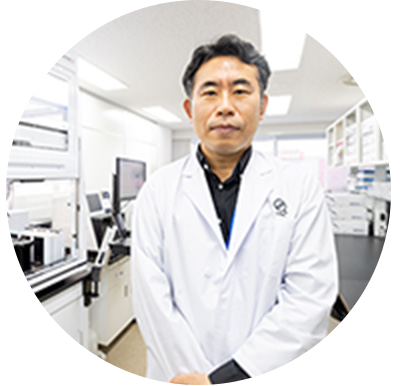 Author
Ph.D. Yoshinori Tomikane
Graduated from the University of Tsukuba Graduate School, Master's/Doctoral Program in Biosystem Studies and Molecular Information Medicine
In 2017, developed Japan's first prenatal DNA testing method(Patent 7331325) using trace DNA analysis technology(Patent 7121440)