
Rewritten on: December 18, 2024
"Heritage Travel," a way of tracing your ancestral roots through DNA testing, is attracting attention around the world. This article explains in detail how the partnership service between Airbnb and 23andMe works, along with the features and cautions of genetic testing services available from Japan.
- ・A Journey to Trace Your Roots Through Genetic Testing ─ What Is Heritage Travel?
- └ Why "Roots Travel" Is Attracting Attention Now
- └ Types of Ancestry Information Revealed by Genetic Testing
- ・How Airbnb's Heritage Travel Service Works, and Points to Watch Out For
- └ How the Service Works
- └ Drawbacks of Airbnb's Heritage Travel
- └ Privacy Risks Related to Sharing Genetic Information with Third Parties
- ・Genetic Testing Services Available from Japan and the Possibilities for Exploring Your Roots
- └ Comparing the Major Genetic Testing Services
- └ Japanese Ancestry ─ You Might Be in for a Surprise
- └ The Jomon-Yayoi Dual Structure Model and the Latest Research
- ・Practical Points to Consider When Planning a Heritage Trip
A Journey to Trace Your Roots Through Genetic Testing ─ What Is Heritage Travel?
 Do you enjoy traveling? I love to travel and often go abroad, but I've gradually noticed my destinations becoming similar to one another, leaving me feeling that something is missing. I imagine quite a few people have grown tired of trips that are nothing more than a tour of tourist spots and resorts.
Around that time, news broke that Airbnb, the world's largest home-sharing platform, had partnered with the US genetic testing company 23andMe to launch a "Heritage Travel" service, in which guests visit their ancestral homelands based on their own DNA test results. Heritage Travel is a new style of travel in which you actually visit the regions where your ancestors once lived—as revealed through genetic testing—and experience the culture and history of that place firsthand.
As you probably know, DNA testing reveals far more than just family relationships. It's now relatively easy to learn a wide range of information, from genetic disease risks to which ethnic and ancestral DNA has been passed down to you. The idea of using this kind of genetic information to choose a travel destination has only become feasible thanks to the rapid advances and falling costs of DNA analysis technology in recent years [ref:1].
The word "heritage" originally refers to a legacy or cultural inheritance, and is also used in UNESCO's "World Heritage" designation. Heritage Travel is not merely a tour of sightseeing spots; it is distinct from conventional heritage tourism (cultural heritage sightseeing) in that it uses one's own DNA—the ultimate "personal heritage"—as a guide for the journey. Visiting the land where your own bloodline is inscribed offers an extremely personal travel experience that no textbook or guidebook could ever provide.
Why "Roots Travel" Is Attracting Attention Now
The price of genetic testing has been falling year after year. Ancestry analysis that once cost several hundred thousand yen can now be done affordably for just a few tens of thousands of yen. In the United States in particular, a growing number of travelers are identifying their ancestral regions from their own DNA and then visiting those places. According to Airbnb's research, searches for Heritage Travel have increased sharply year over year, with millennials and Gen Z showing especially strong interest in roots travel as a form of "self-discovery."
Behind this trend lies the advancement of next-generation sequencing (NGS) technology. When the Human Genome Project was completed in 2003, sequencing a single person's entire genome cost around $3 billion. Today, the cost has fallen below $1,000. Genotyping the SNPs (single nucleotide polymorphisms) needed for ancestry analysis is even cheaper, putting it within reach of ordinary consumers [ref:1].
Interest in "roots tourism" is also rising across Asia, including Japan. According to international surveys, "ancestral tourism"—in which people of Japanese descent visit their ancestors' hometowns—is drawing attention, with companies and local governments beginning to support such initiatives [ref:3].
Types of Ancestry Information Revealed by Genetic Testing
The ancestry information revealed by genetic testing broadly falls into the following categories.
- Estimates of the region or ethnicity your ancestors belonged to (e.g., East Asia, Northern Europe, West Africa, etc.)
- Maternal haplogroup (the tens-of-thousands-of-years-long migration route of the maternal line, determined through mitochondrial DNA analysis)
- Paternal haplogroup (the tens-of-thousands-of-years-long migration route of the paternal line, determined through Y-chromosome DNA analysis—available for men only)
- The proportion of Neanderthal-derived DNA and other genetic links to ancient human populations
- Matching with genetically close relatives or distant kin (a "DNA relatives" feature)
- Information on certain genetic traits or disease risks (for plans that include a health report)
By combining all this information, you can visually trace on a map the route your bloodline took to arrive at who you are today. Mitochondrial DNA is passed from mother to child, so it can track the maternal genetic lineage; Y-chromosome DNA is passed from father to son, so it can track the paternal genetic lineage—each independently. This makes it possible to grasp a composite picture of your roots, such as "my maternal line originates in Southeast Asia while my paternal line originates in Siberia."
How Airbnb's Heritage Travel Service Works, and Points to Watch Out For
 Airbnb's Heritage Travel service is designed so that, based on the results of a DNA test taken through 23andMe, it proposes travel plans and activities in your ancestors' homeland. For example, if your DNA results reveal that "32% of your roots trace back to Ireland," you would automatically be recommended cultural experience programs guided by locals in Ireland, along with accommodations where you can enjoy traditional Irish meals.
What makes this service groundbreaking is that the criterion for choosing a destination is not a guidebook rating or a social media trend, but rather "the footprints of your ancestors etched into your own DNA." Travelers visit not merely as tourists, but as "descendants" with roots in that land, giving their interactions with local people a deeper sense of meaning.
How the Service Works
- Purchase a genetic testing kit from the official 23andMe website, collect a saliva sample, and mail it back
- Receive a detailed genetic report, including your Ancestry Composition, after about 6 to 8 weeks
- Link the regional ancestry information from your report to the Airbnb Heritage Travel platform
- The AI automatically proposes travel plans and local experience activities based on your ancestral roots
- Choose the travel plan you like from among those proposed, then book and depart
A 23andMe genetic report shows your ancestry composition as regional percentages, along with information on ancestral migration routes going back hundreds or thousands of years, and matches with distant relatives who share similar DNA traits. Airbnb uses this information to curate cultural experiences in your ancestral regions—such as traditional cooking classes, tours of historic buildings, and participation in local festivals.
Drawbacks of Airbnb's Heritage Travel
That said, this service does have several drawbacks. First, Japan is excluded from the regions to which 23andMe ships its sample collection kits, so residents of Japan cannot simply take the test as-is. While options such as asking an acquaintance in the US or using a package-forwarding service exist, these are not officially supported methods, so we cannot recommend them.
Second, because 23andMe's database is overwhelmingly composed of data from people of European descent, the accuracy of results tends to drop significantly for anyone whose roots lie outside Europe. East Asian ancestry is often reported only in broad terms such as "East Asian," making it difficult in many cases to break results down to the country level—Japan, China, or Korea. This stems from the fact that the database contains far fewer Asian samples than European and American ones.
Privacy Risks Related to Sharing Genetic Information with Third Parties
Another issue that shouldn't be overlooked is the privacy concern that extremely sensitive personal information—your region of origin and genetic data—is disclosed to third parties such as Airbnb [ref:2]. Genetic information is the ultimate form of personal data, unchanging for your entire life, and once leaked, it cannot be taken back. Before using a genetic testing service, it's essential to thoroughly check the data retention period, the policy on sharing with third parties, and the procedure for deleting your data.
Indeed, as consumer-facing genetic testing (DTC genetic testing: Direct-to-Consumer Genetic Testing) has become more widespread, the ethical, legal, and social implications (ELSI) of genetic information are being actively discussed internationally [ref:2]. In Europe, genetic data is strictly protected as a "special category of personal data" under the GDPR (General Data Protection Regulation), but legal frameworks in Japan and other Asian countries have not yet caught up. Rather than being swayed solely by convenience, it's important to carefully consider how your own genetic information will be handled.
Genetic Testing Services Available from Japan and the Possibilities for Exploring Your Roots
 While the Airbnb and 23andMe service isn't easy to access directly from Japan, several other genetic testing companies also offer ancestry analysis. AncestryDNA, ahead of Airbnb, has already begun offering Heritage Travel in partnership with Go Ahead Tours. AncestryDNA holds one of the world's largest DNA databases, and its strength lies in its integration with genealogy services, allowing genetic information to be cross-referenced with historical records such as birth certificates, marriage records, and census data.
Services that can be used from Japan include LivingDNA and Family Tree DNA. Whereas 23andMe and AncestryDNA tend to report East Asian ancestry only in broad terms, LivingDNA and Family Tree DNA are said to provide more detailed, region-level results. Family Tree DNA in particular is strong in Y-chromosome and mitochondrial DNA analysis, with the distinctive advantage of tracing paternal and maternal migration routes back tens of thousands of years.
Comparing the Major Genetic Testing Services
Each service has its own characteristics, so it's important to choose based on your purpose. Below is a summary of the features of the major services.
- 23andMe (USA): An all-in-one service offering both health risk information and ancestry analysis. Its database of European-descent data is the most extensive, but it does not ship sample kits to Japan.
- AncestryDNA (USA): A genealogy-focused service with one of the world's largest DNA databases. Excels at integration with genealogy services, enabling cross-referencing with historical records.
- LivingDNA (UK): A precision-focused service excellent at regional breakdowns. Said to provide relatively detailed results for Asian ancestry as well. Available for use from Japan.
- Family Tree DNA (USA): An academically oriented service capable of in-depth Y-chromosome and mitochondrial DNA analysis. Can trace ancient paternal and maternal migration routes. Available for use from Japan.
As the number of test-takers from Japan and Asia increases, databases such as 23andMe's will accumulate more Asian samples, leading to more detailed and accurate results. The scale and diversity of a database are the single most important factors determining the accuracy of ancestry analysis. In recent years, universities and research institutions in Japan have been conducting large-scale genomic analysis projects on the genetic diversity of the Japanese population, and as this data is published and shared, the accuracy of ancestry analysis for Japanese people is expected to improve further.
Japanese Ancestry ─ You Might Be in for a Surprise
Many Japanese people are believed to have roots in mainland China or the Korean Peninsula, but genetic testing sometimes reveals surprising roots in places like Southeast Asia, Siberia, or even Polynesia. Ever since the Jomon period, people have flowed into the Japanese archipelago via a variety of routes, and this diverse history is inscribed in the DNA of modern Japanese people.
For example, the people of Okinawa and the Ainu are known to have genetic characteristics distinct from mainland Japanese, and are said to have inherited a greater share of Jomon genetic ancestry. Mainland Japanese, on the other hand, are believed to have become genetically closer to mainland East Asian populations as a result of extensive intermixing with groups that arrived from the continent starting in the Yayoi period [ref:4].
The Jomon-Yayoi Dual Structure Model and the Latest Research
Recent studies suggest that Jomon people's DNA may be genetically close to ancient populations of Southeast Asia, and that the genetic characteristics of modern Japanese people were formed through intermixing with groups that arrived from the continent starting in the Yayoi period. This "dual structure model" was proposed in 1991 by physical anthropologist Kazuro Hanihara, and has since been supported at the molecular level by DNA analysis.
Furthermore, the latest ancient DNA research has revealed that the genetic makeup of the Jomon people is unique and markedly different from that of any other modern East Asian population. Haplogroups such as M7a and N9b—types characteristic of the Japanese archipelago—appear at high frequency in Jomon mitochondrial DNA, and a certain proportion of these have been passed down to modern Japanese people as well [ref:5]. Given this historical background, it is not at all unusual for genetic testing to reveal unexpected roots.
Learning about your own roots satisfies more than mere curiosity—it can also be an opportunity to gain a deeper understanding of your own identity. Heritage Travel, in which you visit the land where your ancestors once lived and experience its culture and climate firsthand, prompted by your genetic test results, offers a profound sense of discovery and emotion entirely unlike conventional sightseeing travel.
Practical Points to Consider When Planning a Heritage Trip
Finally, let's go over some points worth knowing when actually planning a Heritage Travel trip.
- Use multiple services together: Since each company's database and analysis algorithm differs, don't rely on the results of just one company. Comparing results from multiple companies will give you a more accurate overall picture of your roots.
- Get expert advice when interpreting your results: Ancestry composition percentages are ultimately just "estimates," and they vary depending on the reference panel (reference population) and algorithm used. Consulting a specialized DNA testing organization can help you obtain a more accurate interpretation.
- Check the privacy policy in advance: Be sure to confirm the retention period for genetic information, the scope of sharing with third parties, and the data deletion procedure. Caution is especially warranted with overseas services, as Japan's Personal Information Protection Act may not directly apply in some cases [ref:2].
- Learn about the culture and history of your destination beforehand: Once your genetic test results determine your destination, researching the local history and culture in advance will significantly enrich your trip.
- Understand the difference between genetic roots and cultural roots: The genetic roots inscribed in your DNA and the cultural roots traceable through family lore or household registers do not necessarily match. Combining both approaches allows for a fuller, more three-dimensional understanding of "your own roots."
If this has piqued your interest, why not start by exploring your own roots with an easily accessible genetic testing service? If you have any questions or concerns about DNA testing, please feel free to contact the seeDNA Genetic Medicine Research Institute.
Frequently Asked Questions
Q1. What is Heritage Travel?
A. Heritage Travel is a new style of travel in which, based on the results of DNA testing (genetic testing), you actually visit the region where your ancestors' roots lie. It has drawn attention through the partnership between Airbnb and 23andMe, offering travel plans that let you experience the culture and history of your ancestral homeland. Unlike conventional sightseeing trips, it is characterized by an extremely personal travel experience based on your own DNA.
Q2. Are there ancestry-analysis genetic testing services I can use from Japan?
A. Yes, services such as LivingDNA and Family Tree DNA can be used even from Japan. 23andMe does not ship sample kits to Japan, but LivingDNA and Family Tree DNA are said to provide more detailed, region-level results for East Asian ancestry as well. We recommend comparing multiple services based on your purpose.
Q3. How much can genetic testing reveal about Japanese ancestry?
A. Genetic testing can estimate the region or ethnicity your ancestors belonged to, and identify maternal and paternal haplogroups. While many Japanese people are believed to have roots in mainland China or the Korean Peninsula, testing sometimes reveals surprising roots in regions such as Southeast Asia or Siberia. Note that accuracy varies depending on the scale of the testing company's database.
Q4. What kinds of privacy risks are associated with genetic testing?
A. Genetic information is the ultimate form of personal data, unchanging for your entire life, and once leaked, it cannot be taken back. Major risks include sharing of genetic information with third parties, leaks through database hacking, and misuse for genetic discrimination by insurers or employers. Before using a service, be sure to check the data retention period, the third-party sharing policy, and the deletion procedure.
Q5. Can genetic testing results differ between companies?
A. Yes. Because each company uses a different reference panel (reference population database) and analysis algorithm, the same person may see differences in ancestry composition percentages when tested by different companies. For a more accurate picture of your roots, we recommend comparing results across multiple services or consulting a specialized DNA testing organization.
Q6. What is the difference between Jomon and Yayoi DNA?
A. The Jomon people were an indigenous population who had lived in the Japanese archipelago since about 16,000 years ago, and are said to share genetic characteristics with ancient Southeast Asian populations. The Yayoi people, on the other hand, were a population that arrived from the continent starting around 3,000 years ago, and share genetic characteristics with present-day mainland East Asian populations. Modern Japanese people are believed to have formed through the intermixing of these two populations—known as the "dual structure model."
Reliable Support from seeDNA Genetic Medicine Research Institute
seeDNA Genetic Medicine Research Institute is a trusted, reliable specialist in DNA testing and genetic testing, certified under the international quality standard ISO 9001 and holding Japan's Privacy Mark.
If you're troubled by questions of family or parent-child blood relationships, or a partner's infidelity, our DNA testing experts are here to support you with the reassurance you need—please feel free to contact us.
[Free Consultation with Our Specialist Staff]

If you have any questions,
please feel free to contact us on our toll-free line.
/ Open every day, including weekends /
Business hours: Mon-Sun 9:00 AM-6:00 PM
(Except holidays)
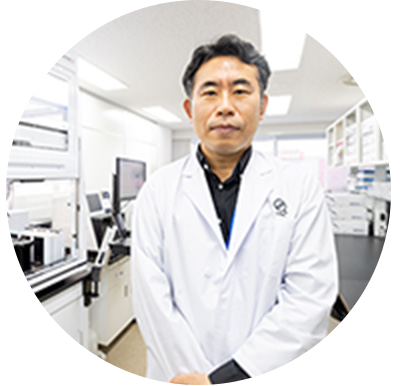 Author
Dr. Yoshinori Tomigane, M.D., Ph.D.
Completed his master's and doctoral degrees in Biosystem Studies/Molecular and Regenerative Medicine at the University of Tsukuba
In 2017, developed Japan's first prenatal DNA testing(Patent 7331325) using a trace-DNA analysis technology(Patent 7121440)