
Rewritten on: November 21, 2024
Prenatal blood-based DNA paternity testing is a non-invasive test that can determine paternity with a fetus using only a maternal blood draw. Experts explain its significance in resolving family relationship anxieties and supporting survivors of sexual violence, the scientific background, and the testing process.
- ・What Family Should Be — A Relationship Built on Love and Trust
- ・When There Are Concerns — The Importance of Not Leaving Problems Unaddressed
- ・A Way to Move Things Forward Positively — The Option of DNA Testing
- ・What Is Prenatal Blood-Based DNA Paternity Testing?
- └ The Scientific Background of Prenatal Blood-Based DNA Paternity Testing
- └ The Testing Process
- └ Benefits of Prenatal Blood-Based DNA Paternity Testing
- ・Free Testing for Survivors of Sexual Violence — Our Company's Commitment
- ・Protecting the Future of Families — The Role DNA Testing Plays
What Family Should Be — A Relationship Built on Love and Trust
 Many children spend a long time with their parents as a family. Within that time, there is plenty of room for feelings that go beyond simple calculations of gain and loss, because we are human. Of course, what family looks like varies enormously, and what counts as a "good" family relationship differs from person to person. Still, when many people picture a happy family, they likely imagine something like this: parents pour love into their children, and children look to their parents for a sense of security.
From the perspective of family psychology, the "attachment" between parent and child is known to have an enormous influence on a child's emotional development. According to attachment theory, proposed by the British psychiatrist John Bowlby, the stable emotional bond formed with a particular caregiver during infancy becomes the foundation for later interpersonal relationships and self-esteem. Ideally, for a child to grow up feeling secure, the parents should be able to approach child-rearing in a mentally stable state, and the family should be free of seeds of anxiety. [ref:1]
In modern society, family structures have diversified. Single-parent households, remarried families, stepfamilies — as family forms that don't fit the traditional mold continue to increase, one thing remains common across all of them: "a sense of security" and "a relationship of trust" form the foundation. Building an environment in which family members trust one another and feel secure is the single most important factor supporting a child's healthy growth.
When There Are Concerns — The Importance of Not Leaving Problems Unaddressed
 If there is some source of anxiety standing in the way of an ideal family relationship, it should be eliminated. For example, there are people who, despite having a legitimate partner, are subjected to sexual violence, become pregnant, and are left not knowing which man is the actual father. Those close to the victim likely carry anxiety, anger, and indignation that are difficult to put into words.
According to a survey by Japan's Cabinet Office, many survivors of sexual violence are unable to consult anyone and end up carrying physical and mental distress for a long period [ref:3]. It is not only the survivor who suffers — their partner and family members are also exposed to serious psychological distress. Pregnancy, which should be a joyous event, should never become a source of anxiety and fear.
In such situations, putting off the problem can increase psychological burden and potentially harm the health of the mother during pregnancy. Many medical studies point to the serious effects that stress during pregnancy can have on the mother and fetus. Chronic anxiety and stress increase the secretion of stress hormones such as cortisol, which is said to raise the risk of premature birth and low birth weight [ref:5]. This is precisely why it is important to use scientific means to remove anxiety as early as possible.
A Way to Move Things Forward Positively — The Option of DNA Testing
 As mentioned at the outset, what family looks like varies enormously, and there is no simple, single correct answer. However, if you want to move forward positively toward the ideal family image you envision, some kind of action should be taken.
One option we can offer is prenatal blood-based DNA paternity testing.
In recent years, DNA testing technology has advanced dramatically, and paternity testing — once possible only after birth — can now be performed non-invasively using the mother's blood during pregnancy [ref:2]. This technological breakthrough has been a great relief for those carrying anxiety. Because paternity can be confirmed before birth, it also functions as psychological support that helps people spend their pregnancy with peace of mind. Previously, the only options were invasive procedures such as amniocentesis or chorionic villus sampling, and many people gave up on testing out of concern about the risk of miscarriage. However, with the advent of non-invasive prenatal DNA paternity testing that requires only a blood draw, it has become possible to confirm paternity while ensuring the safety of both mother and fetus.
What Is Prenatal Blood-Based DNA Paternity Testing?
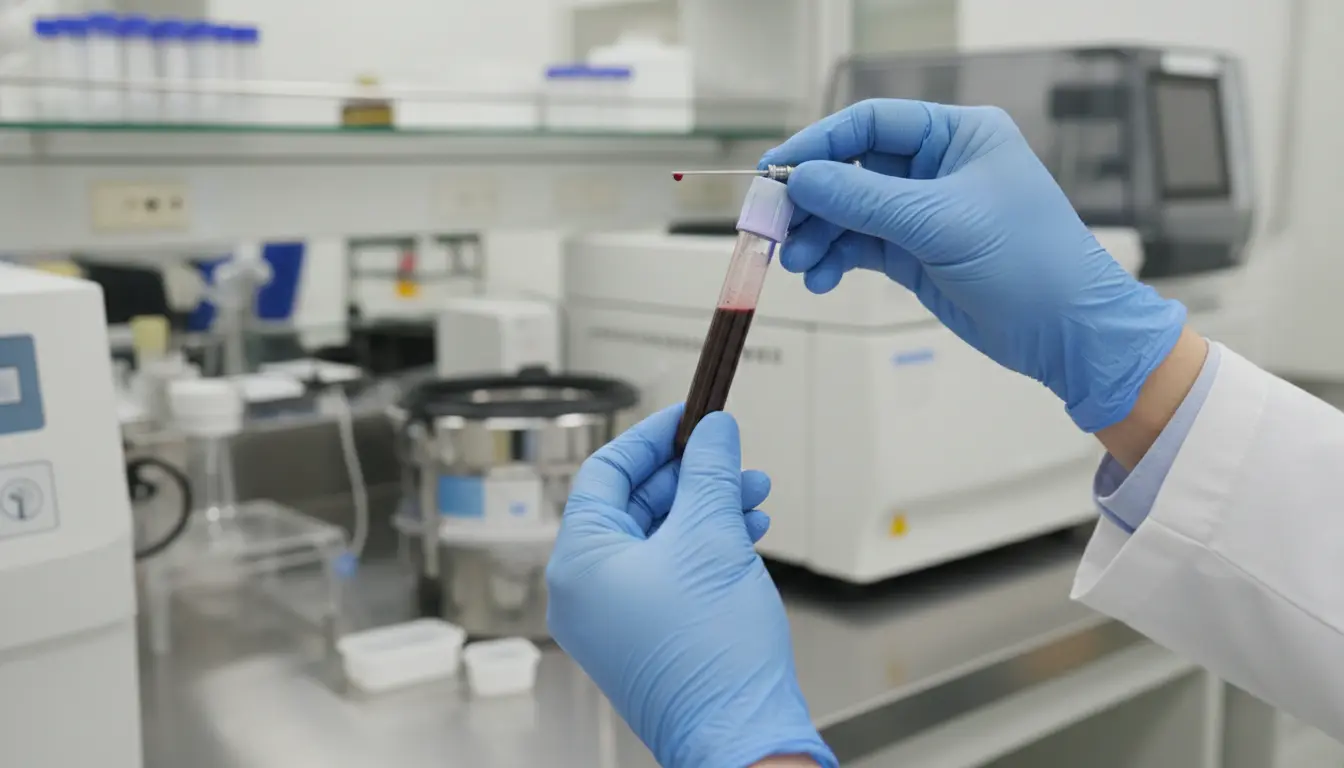
Prenatal blood-based DNA paternity testing is a method in which blood is drawn from the mother, the fetal DNA circulating in that blood (cell-free fetal DNA: cffDNA) is detected, and biological paternity is determined. Just as in a routine health checkup, only a small amount of blood is drawn from the mother's arm, posing no risk whatsoever to either mother or fetus.
The Scientific Background of Prenatal Blood-Based DNA Paternity Testing
During pregnancy, fragments of fetal-derived DNA circulate in the mother's blood via the placenta. This cell-free fetal DNA (cffDNA) becomes detectable from around the 7th week of pregnancy, and its concentration gradually rises as the pregnancy progresses. cffDNA is released into the maternal bloodstream primarily through apoptosis (programmed cell death) of chorionic villous cells in the placenta, and its existence was first reported by Dennis Lo and colleagues in 1997 [ref:6].
Advances in next-generation sequencing (NGS) technology have made it possible to analyze this minute quantity of fetal DNA with high precision and compare it against the DNA profile of the presumed father, determining paternity with over 99% accuracy [ref:4]. NGS technology can simultaneously read millions to billions of DNA fragments in parallel, making it possible to accurately extract and analyze fetal-derived DNA information even from complex samples in which maternal and fetal DNA are mixed together.
Conventional prenatal paternity testing required invasive procedures such as amniocentesis or chorionic villus sampling, both of which carry a risk of miscarriage. The non-invasive blood-based method, by contrast, requires only a blood draw and is safe for both mother and fetus, making it now the mainstream approach to prenatal DNA testing.
The Testing Process
- Inquiry and consultation: First, contact us and tell us about your situation and concerns. Your privacy is strictly protected. We will ask about the purpose of testing and the week of pregnancy, and propose the most suitable plan.
- Sample collection: A small amount of blood is drawn from the mother's arm. An oral (cheek swab) sample is collected from the presumed father. The blood draw is performed the same way as a routine blood test, with almost no physical burden.
- DNA analysis: At a specialized laboratory, the fetal DNA in the mother's blood is compared and analyzed against the presumed father's DNA profile. Using next-generation sequencing technology, several thousand or more genetic markers are analyzed to produce a highly accurate result.
- Reporting of results: Once analysis is complete, we report the results to you. Results are formally provided in writing. If you have any questions about the results, our specialist staff will explain them carefully.
Benefits of Prenatal Blood-Based DNA Paternity Testing
- Requires only a maternal blood draw, so there is no physical risk to either mother or child
- Paternity can be confirmed during pregnancy, relieving anxiety before birth
- Highly precise next-generation sequencing technology delivers reliable results
- Can potentially be used as evidence in legal proceedings (such as paternity acknowledgment or compensation claims)
- Gaining psychological stability allows for a healthier pregnancy
- Zero risk of miscarriage compared with conventional invasive tests (such as amniocentesis)
Free Testing for Survivors of Sexual Violence — Our Company's Commitment
So that survivors of sexual violence can spend their pregnancy with peace of mind, we offer free blood-based prenatal DNA testing.Sexual violence has a serious impact not only on the survivor but also on the lives of their family and partner. We aim to eliminate situations in which financial burden prevents someone from receiving testing, so that as many people as possible can be freed from anxiety.
The importance of survivors of sexual violence receiving appropriate support is repeatedly emphasized by international bodies including the World Health Organization (WHO) [ref:7]. Beyond psychological care, providing scientifically grounded information is also a key element in supporting a survivor's recovery. Our free testing program is positioned as part of that kind of comprehensive support.
We simply hope that considering DNA testing as one way to chart a path toward happiness becomes more widely accepted.DNA testing is by no means something out of the ordinary — it is a rational, scientific option for protecting a family's future. Please don't struggle with this alone; feel free to reach out to us for a consultation.
Protecting the Future of Families — The Role DNA Testing Plays
DNA testing is not simply about confirming a "blood relationship." The result becomes an important piece of information to help you think about what kind of future you want to build as a family. Whatever the result, it allows those involved to take ownership of the shape their family will take going forward.
Especially during pregnancy, a time that is delicate both physically and emotionally, continuing to carry the anxiety of "not knowing" can be a major source of stress. By obtaining reliable, scientifically grounded information, you can regain emotional stability and prepare to welcome your baby with a full and open heart.
seeDNA Co., Ltd. (seeDNA Genetic Medical Research Institute) is a specialized institution that has been involved in DNA testing for many years. Having obtained the international quality standard ISO 9001 and Japan's Privacy Mark, we are committed to standing beside each and every client and providing the best possible support for their situation. Supporting the important decisions that affect a family's future, with sound science and sincere care, is our mission.
Frequently Asked Questions
Q1. From what week of pregnancy can prenatal blood-based DNA paternity testing be performed?
A. In general, fetal-derived DNA (cffDNA) becomes detectable in maternal blood from around the 7th week of pregnancy. However, to ensure sufficient accuracy, we recommend testing after a certain point in the pregnancy. Please contact us for details.
Q2. Is prenatal DNA testing dangerous for the mother or fetus?
A. Because the test requires only a small blood draw from the mother's arm, there is no physical risk whatsoever to either mother or fetus. Invasive procedures such as amniocentesis or chorionic villus sampling are not required.
Q3. How can I apply for free testing as a survivor of sexual violence?
A. First, please contact us by phone or email. Your privacy will be strictly protected. After hearing about your situation, we will let you know whether you qualify for free testing.
Q4. How long does it take to receive the test results?
A. Results are generally reported within a few weeks of the samples arriving at our laboratory. This may vary somewhat depending on the details of the test and your circumstances, so please confirm specifics when you contact us.
Q5. Are the test results legally valid?
A. DNA test results can potentially be used as important evidence in legal proceedings such as paternity acknowledgment claims or compensation claims. If you intend to use the results for legal purposes, please let us know in advance so we can guide you through the appropriate procedures.
Q6. Can testing be done even if the presumed father's cooperation is unavailable?
A. In principle, a DNA sample from the presumed father (such as a cheek swab) is required. However, depending on the circumstances, we may be able to propose alternative approaches, so please consult with us first.
Q7. What is cell-free fetal DNA (cffDNA)?
A. cffDNA refers to fragments of fetal-derived DNA released from the placenta into the mother's bloodstream during pregnancy. First discovered in 1997, it is now widely used as the foundational technology behind non-invasive prenatal testing. Because it allows fetal genetic information to be analyzed from a simple maternal blood sample, it enables a highly safe form of testing.
Reliable Support from seeDNA Genetic Medical Research Institute
seeDNA Genetic Medical Research Institute is a trusted specialist institution for DNA testing and genetic testing, certified under the international quality standard ISO 9001 and Japan's Privacy Mark for data protection.
If you have concerns about family or parent-child biological relationships, or a partner's infidelity, our DNA testing experts are here to provide the reassurance and support you need — please feel free to contact us.
[Free Consultation with Specialist Staff]

If you have any questions,
please feel free to call our toll-free number.
/Open every day, including weekends/
Business hours: Monday–Sunday 9:00 AM–6:00 PM
(excluding public holidays)
 Author
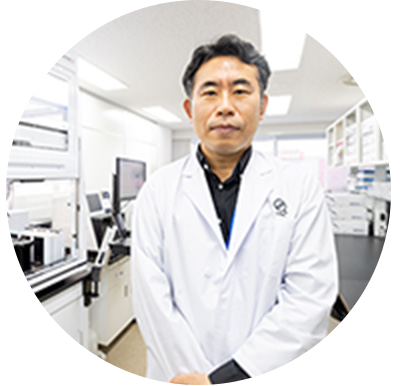
Dr. Tomikane Kihan (M.D., Ph.D.)
Completed the master's/doctoral program in Biological Regulation and Molecular Biomedical Science at the University of Tsukuba Graduate School
In 2017, developed Japan's first prenatal DNA testing method(Patent No. 7331325) using a trace-DNA analysis technology(Patent No. 7121440)
[References]
(2) Gender Equality Bureau, Cabinet Office of Japan
(3) Nature, October 2007
(4) Tetrahedron Lett, December 2010
(5) J Biol Chem, March 1997
(6) PTC Laboratories - Advanced Human DNA Testing
(7) Global and regional estimates of violence against women, 2013