
Rewritten on: October 16, 2024
This article explains in detail how DNA analysis has confirmed that the descendants of dinosaurs are birds, along with the technological innovations of next-generation DNA sequencers. The discovery of bird-specific genome sequences and enhancers has provided evidence for this evolutionary link.
- ・Confirming the theory that birds are the descendants of dinosaurs
- └ Morphological and molecular biological evidence linking dinosaurs and birds
- └ The discovery of bird-specific genome sequences and enhancers
- └ Differences in gene expression underlying the ability to fly
- ・Next-generation DNA sequencers opening a new era of genetic research
- └ The revolutionary performance of next-generation DNA sequencers
- └ Applications and challenges in ancient DNA research
- └ How seeDNA uses next-generation sequencers in prenatal DNA testing
- └ Key similarities between dinosaurs and birds
Confirming the theory that birds are the descendants of dinosaurs
 Today, the theory that birds are the descendants of dinosaurs is widely accepted. For a long time, many similarities in skeletal structure and reproductive behavior had been pointed out between dinosaurs and birds, but direct molecular-level evidence to confirm this was hard to come by. However, recent excavations have repeatedly uncovered fossils of feathered dinosaurs from strata dating to the Cretaceous period (roughly 66 million years ago), when dinosaurs are believed to have gone extinct, making this theory nearly certain [ref:1]. DNA analysis technology has contributed greatly to backing up this theory.
Morphological and molecular biological evidence linking dinosaurs and birds
The similarity between dinosaurs and birds has been debated since the 19th century, when British biologist Thomas Huxley studied fossils of Archaeopteryx. Archaeopteryx had reptilian features such as teeth and a long bony tail, yet also showed clear traces of feathers, drawing attention as an intermediate form between dinosaurs and birds. Later, from the 1990s onward, a succession of feathered dinosaur fossils were discovered in the strata of Liaoning Province, China, which led to widespread support for the phylogenetic hypothesis that birds evolved from theropod dinosaurs (the group that includes relatives of Tyrannosaurus) [ref:2].
In addition to morphological evidence, advances in molecular biology have opened the way to a deeper understanding of the evolution from dinosaurs to birds. In particular, recent comparative genomics research has made it possible to trace with high precision what genetic changes accumulated during the course of evolution by comparing the genomes of birds and reptiles.
The discovery of bird-specific genome sequences and enhancers
A research group led by Professor Koji Tamura of the Graduate School of Life Sciences at Tohoku University focused on the DNA sequences that give birds their "bird-like" characteristics and reported groundbreaking findings. The research group comprehensively analyzed the genomes of 48 existing bird species and identified genome sequences unique to birds (avian-specific highly conserved elements, or ASHCEs) [ref:3].
The analysis revealed that a remarkable 99% of the genome sequences unique to birds are "non-coding sequences" that do not directly code for proteins as genes. Even more notably, it was found that many of these non-coding sequences function as enhancers (DNA sequences that regulate gene expression). An enhancer is a regulatory sequence that precisely controls when, where, and to what degree a specific gene is expressed, and it plays an extremely important role in the morphological development of organisms.
This discovery suggests that in the evolution of birds, the evolution of enhancers that changed how existing genes were "used" was the main driving force, rather than the acquisition of new genes. In other words, the evolution from dinosaurs to birds was likely driven not by major changes in the genes themselves, but by changes in the mechanisms that regulate gene expression.
Differences in gene expression underlying the ability to fly
As Professor Tamura's research group carried out further detailed analysis, they confirmed that genes related to flight exist not only in birds but are shared across many different organisms. What was decisively different, however, was "where" those genes were expressed. In birds, it was found that these genes are specifically expressed in body parts essential for flight, such as the primary flight feathers (remiges) of the wings and the tail feathers.
This finding shows that birds did not create entirely new genes to acquire the ability to fly; rather, they developed flight-adapted structures such as wings and feathers by changing the expression patterns of existing genes. This genomic analysis provided, for the first time, empirical evidence for part of the molecular mechanism by which certain lineages of dinosaurs, over a long evolutionary process, transformed their forelimbs into wings and their body scales into feathers.
Based on these research findings, the evolution from dinosaurs to birds is thought to have proceeded through the following stages.
- Primitive feathers for thermoregulation developed in some lineages of theropod dinosaurs
- Mutations in enhancer sequences diversified the structure and distribution patterns of feathers
- Feathers on the forelimbs gradually grew longer, enabling gliding and primitive flight
- Gene expression patterns related to flight were further refined, becoming specialized as flight feathers and tail feathers
- Small feathered dinosaurs that survived the mass extinction at the end of the Cretaceous diversified into the ancestors of modern birds
Next-generation DNA sequencers opening a new era of genetic research
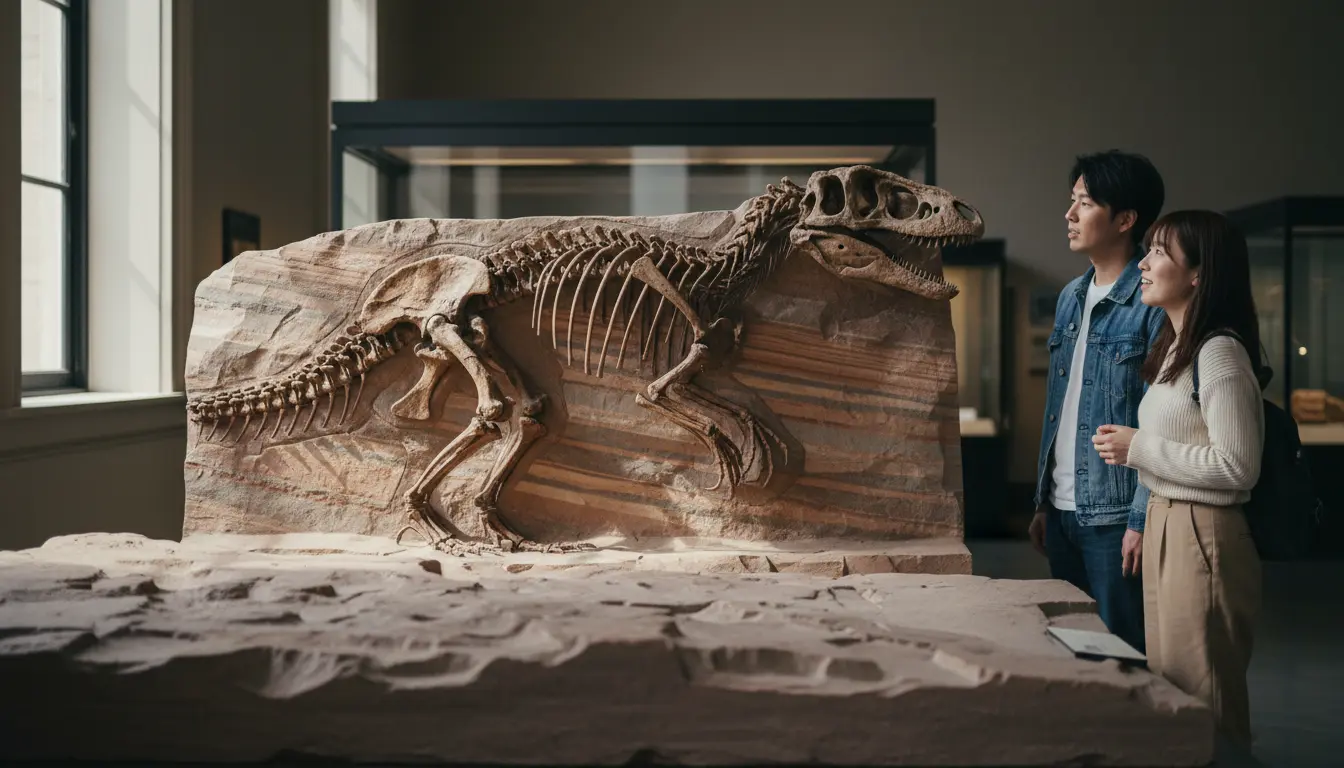 This research was published in the online scientific journal "Nature Communications," issued by Springer Nature (UK), and has drawn wide attention as an important achievement confirming, at the molecular level, the DNA changes that accompanied the evolution of dinosaurs [ref:3]. And what made this large-scale genome comparison study possible was, needless to say, the next-generation DNA sequencer (NGS).
The revolutionary performance of next-generation DNA sequencers
Conventional capillary sequencers (Sanger sequencing) had a limit to how much DNA sequence could be read at one time. Large-scale projects such as the Human Genome Project required running a huge number of capillary sequencers in parallel, which took enormous amounts of cost and time. However, the advent of next-generation DNA sequencers changed the situation dramatically. NGS is a groundbreaking device that can read as much as one billion (giga) bases in a single run at roughly 1/100th the cost of conventional methods [ref:4].
The main technical features of NGS are as follows.
- Massively parallel processing: capable of simultaneously reading millions to billions of DNA fragments
- Dramatically improved cost efficiency: the cost of reading per base is roughly 1/100th or less of conventional methods
- High speed: an entire human genome (about 3 billion base pairs) can be read in a matter of days
- Compatibility with trace samples: capable of highly precise analysis even with tiny amounts of DNA, such as fetal DNA in maternal blood
- Simultaneous analysis of multiple samples: barcoding technology allows multiple samples to be processed at once
This leap in performance made it possible to carry out a large-scale study comparing the genomes of 48 bird species at once, contributing to the elucidation of the molecular mechanism of evolution from dinosaurs to birds.
Applications and challenges in ancient DNA research
Advances in NGS technology have also revolutionized research into ancient DNA (aDNA). The technology for amplifying and reading the trace amounts of DNA fragments preserved in fossils continues to advance year by year, and there are reported cases of successfully analyzing the genomes of mammoths and Neanderthals from tens of thousands of years ago [ref:5]. On the other hand, DNA from organisms that went extinct more than 66 million years ago, like dinosaurs, is considered unlikely to survive intact due to chemical decomposition over such a long span of time. Still, there have been reports of substances thought to be traces of DNA being found in fossils [ref:6], so the possibility of directly accessing dinosaur genomic information in the future, depending on technological advances, has not been completely ruled out.
How seeDNA uses next-generation sequencers in prenatal DNA testing
seeDNA Inc. (seeDNA Forensic Science Laboratory) has introduced three next-generation DNA sequencers, which it uses daily in its testing operations and research. By making full use of the massively parallel processing capability of NGS, the company has developed its own analysis method using SNPs (single nucleotide polymorphisms). An SNP is a site in the genome where a single base differs between individuals, and there are more than several million such sites across the entire human genome. By comprehensively analyzing these, it is possible to perform individual identification and paternity determination with extremely high precision.
Applying this technology, seeDNA offers prenatal blood DNA testing, which detects and analyzes fetal-derived DNA fragments from the blood of a pregnant mother. A small amount of fetal-derived cell-free DNA (cffDNA) is present in maternal blood, and using NGS makes it possible to detect this trace amount of DNA information with high sensitivity. Because this method is non-invasive, one of its major benefits is that it places far less physical burden on the mother and fetus compared to conventional methods such as amniocentesis.
DNA testing rests on the same technological foundation as the genomic research that is unraveling the mysteries of dinosaur evolution. You can trust seeDNA, which researches and applies cutting-edge DNA analysis technology every day.
Key similarities between dinosaurs and birds
| Feature | Theropod dinosaurs | Modern birds |
|---|---|---|
| Presence of feathers | Confirmed in many species | Present in all species |
| Hollow bones | Confirmed lightweight structure | Adapted for flight |
| Furcula (wishbone) | Presence confirmed | Present in all species |
Frequently Asked Questions
Q1. Is it possible to directly analyze dinosaur DNA?
A. Currently, this is difficult. Because DNA breaks down chemically over time, it is considered extremely difficult to obtain intact DNA from dinosaurs that went extinct more than 66 million years ago. However, there have been reports of substances thought to be traces of DNA found in fossils, and depending on future technological progress, the possibility of obtaining partial genomic information is being discussed.
Q2. Why is the evolution of enhancers important for the morphological development of birds?
A. Enhancers are DNA sequences that control "when, where, and to what degree" a gene is expressed. In the evolution of birds, it is thought that "bird-like" forms such as feathers and wings were created not so much by the emergence of new genes but by changes in the enhancers of existing genes. In other words, changing how the same gene is used can produce an entirely different body structure.
Q3. What is the biggest difference between next-generation DNA sequencers (NGS) and conventional sequencers?
A. The biggest difference is processing capacity and cost efficiency. Conventional capillary sequencers could only read a small amount of DNA sequence at a time, but NGS can simultaneously read millions to billions of DNA fragments in parallel, at roughly 1/100th the cost. This has made large-scale genome comparison studies and highly sensitive analysis of trace amounts of DNA possible.
Q4. What technology does seeDNA's prenatal DNA testing use?
A. seeDNA has introduced three next-generation DNA sequencers and performs prenatal blood DNA testing using its own method based on SNPs (single nucleotide polymorphisms). By using NGS to detect and analyze fetal-derived cell-free DNA (cffDNA) contained in the blood of a pregnant mother with high sensitivity, non-invasive and highly accurate testing is possible.
Q5. What is the strongest evidence showing the evolution from dinosaurs to birds?
A. As morphological evidence, the fossils of feathered dinosaurs discovered in Cretaceous strata are the most direct evidence. As molecular biological evidence, there are the bird-specific enhancer sequences identified through genome comparison of 48 bird species, and the changes in the expression patterns of flight-related genes. Together, these multiple pieces of evidence strongly support the phylogenetic continuity from dinosaurs (theropods) to birds.
Q6. Are all dinosaurs ancestors of birds?
A. No, not all dinosaurs are ancestors of birds. The direct ancestors of birds are considered to be part of a group of dinosaurs called "theropods." It is believed that modern birds evolved from some of the smaller species within this group, which also includes Tyrannosaurus and Velociraptor. Large herbivorous dinosaurs such as Triceratops and Brachiosaurus are not direct ancestors of birds.
The Trusted Support of seeDNA Genetic Medicine Research Institute
seeDNA Genetic Medicine Research Institute is a trusted and reliable specialist institution for DNA testing and genetic testing, certified with the international quality standard ISO9001 and the Privacy Mark for personal information protection.
If you are concerned about family or parent-child blood relationships, or a partner's infidelity, our DNA testing experts are here to support you and put your mind at ease, so please feel free to contact us.
[Free Consultation with Specialized Staff]

If you have any questions,
please feel free to contact our toll-free number.
/Open every day, including weekends/
Business hours: Monday–Sunday 9:00-18:00
(excluding holidays)
 Author
Dr. Kihan Tomikane, M.D.
Completed master's and doctoral programs in Biosystem Studies / Molecular and Cellular Biology at the University of Tsukuba Graduate School
In 2017, developed Japan's first prenatal DNA testing(Patent 7331325) using a trace-DNA analysis technology(Patent 7121440)