
Last revised: January 5, 2025
This article explains how PooPrints, a service that uses DNA testing to identify the owners of dog waste left on the street, works and how widely it has spread. We take a detailed look at the deterrent effect of DNA registration, adoption cases in various countries, and the possibility of introducing it in Japan.
- ・The problem of dog waste left on the street—why it never goes away
- ・What is "PooPrints," a service that identifies dog owners through DNA testing of their pet's waste?
- └ How PooPrints works—from enrollment to identification
- └ The deterrent effect of DNA registration is enormous
- ・Global adoption—about 4,000 communities under contract
- ・The reliability and accuracy of DNA testing technology
- ・Potential for introduction in Japan and the challenges involved
- ・Future prospects for DNA testing services
The problem of dog waste left on the street—why it never goes away
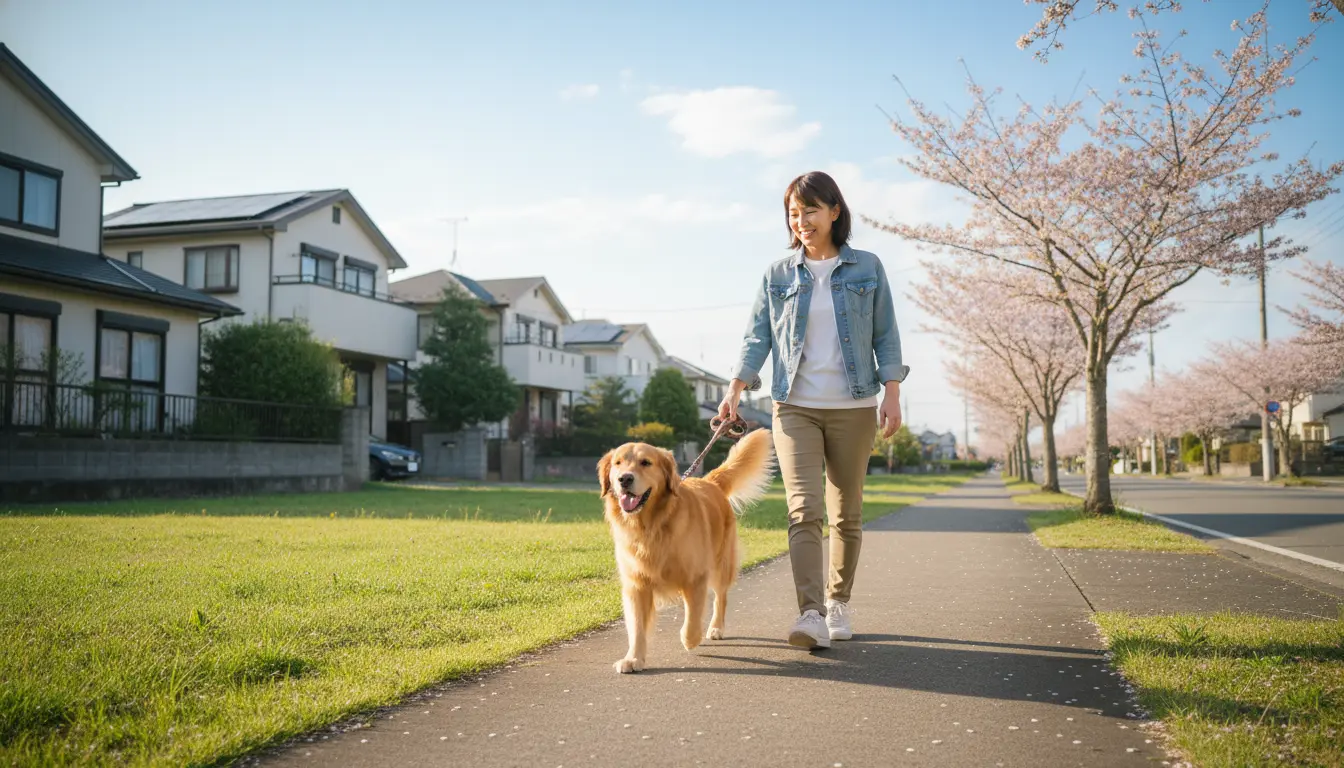 Many people have had the experience of walking down the street and spotting dog waste that someone left behind. It's dangerous, too—you can nearly step in it if you're not paying attention. Leaving dog waste on the street isn't just a matter of bad manners; it's a serious social issue that also carries public health risks. Dog waste can contain pathogens such as E. coli, salmonella, and roundworms, and if it's washed by rainwater into rivers or groundwater, it can lead to water contamination [ref:1]. What's more, waste left in parks or on sidewalks poses a risk of being stepped in by children or the elderly, degrading the local scenery and living environment.
Owners who fail to clean up after their dogs during walks exist not only in Japan but in countries around the world, making it a global problem. Local governments and homeowners' associations in various regions have tried a range of measures—posting warning signs, installing surveillance cameras, introducing fine systems—but eradicating irresponsible owners has remained difficult [ref:2]. Against this backdrop, a service that uses DNA testing to identify dog owners has been attracting attention in recent years.
What is "PooPrints," a service that identifies dog owners through DNA testing of their pet's waste?
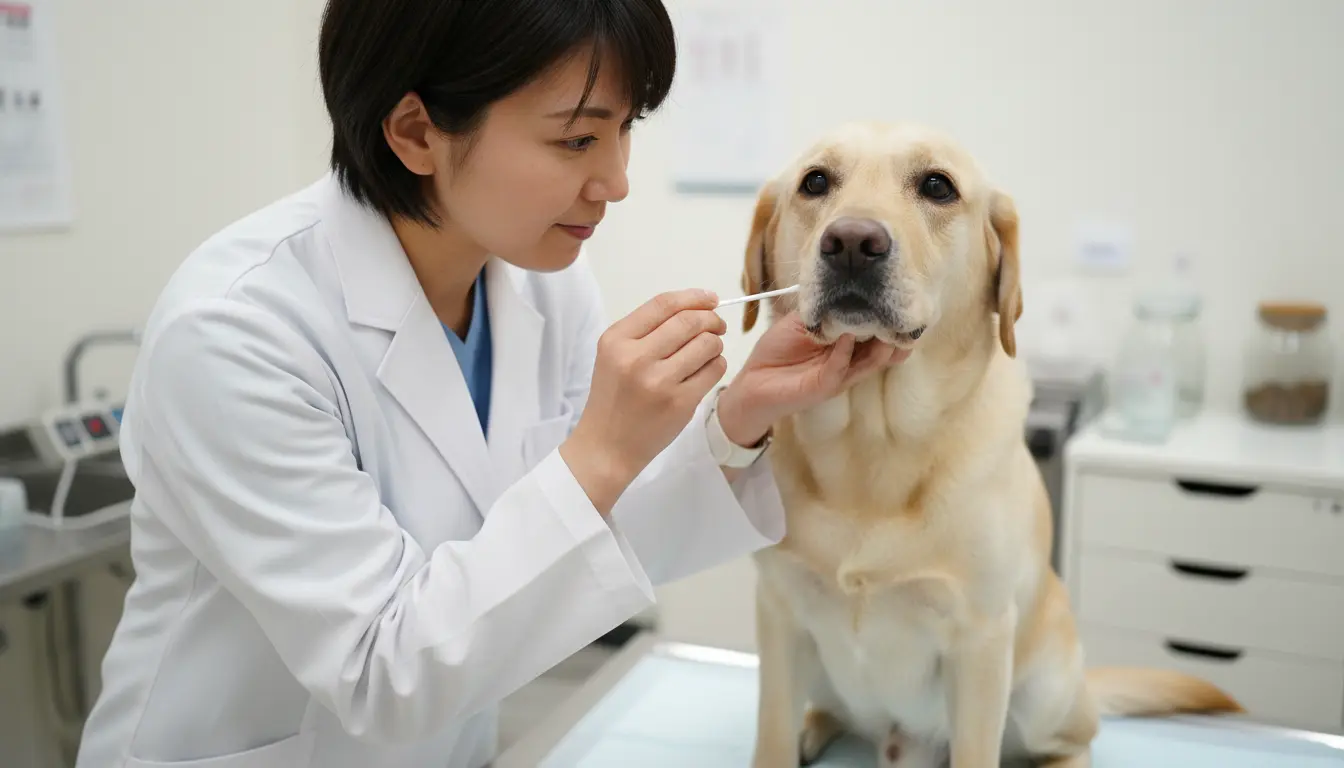 "PooPrints," offered by the American company BioPet Laboratories, is a service that analyzes the DNA contained in dog waste to scientifically identify the owner who left it behind. This service applies the same principles used in human forensic DNA testing to animal feces, enabling highly accurate individual identification.
How PooPrints works—from enrollment to identification
The process of identifying the owner who left dog waste behind proceeds through the following steps.
- Contract: A local apartment complex or community signs a contract with the PooPrints service.
- DNA registration: Residents in the area who own dogs submit DNA samples, typically taken via an oral swab (the inside of the cheek).
- Database entry: The submitted DNA samples are registered and stored in BioPet Laboratories' database, called the "DNA World Pet Registry."
- Waste collection: When abandoned waste is found, a sample is collected using a dedicated collection kit provided by the company.
- DNA analysis and matching: The collected waste sample is sent to the company, where DNA analysis is carried out. It is matched against the registered DNA database, and if a match is found, the dog—and therefore its owner—who left the waste is identified.
- Fines applied: If the identified owner is a resident of the community, a fine is imposed in accordance with the community's rules.
The deterrent effect of DNA registration is enormous
According to BioPet Laboratories, simply having a dog's DNA registered dramatically reduces the likelihood that its owner will leave waste unattended. This is because knowing that their dog's DNA is on file creates a psychological pressure: "If I leave the waste, I will definitely be identified." This mirrors the criminological principle that "the certainty of being caught acts as a deterrent."
Owners who have been identified once rarely repeat the offense. There are exceptions, however—one owner in South Carolina was identified 18 separate times, the highest number on record for the service. While such extreme cases are rare, they show that fines alone don't change the behavior of a certain number of owners, highlighting the need for further institutional measures.
Global adoption—about 4,000 communities under contract
 Currently, about 4,000 communities across the United States, Canada, and the United Kingdom have contracts with PooPrints, and that number continues to grow each year. In the U.S. in particular, homeowners' associations for pet-friendly apartments and condominiums have actively adopted the service, and it's becoming increasingly common for DNA registration of dogs to be a condition of moving in.
Similar DNA-based measures against dog waste are also spreading in Europe. In northern Italy, a system is being introduced that uses DNA testing to identify the owners of abandoned dog waste and impose fines, showing growing international interest in this approach [ref:3]. Cities in Israel are also reportedly considering DNA registration systems, suggesting that the scientific approach to the dog waste problem is becoming a global trend [ref:4].
The reliability and accuracy of DNA testing technology
The DNA testing technology used by PooPrints is based on a method called STR (Short Tandem Repeat) analysis. This is a technique widely used in human forensic DNA testing as well, and by comparing repeat patterns in genetic sequences that differ from individual to individual, it enables extremely accurate identification [ref:5].
- Canine DNA testing can be carried out using a variety of samples, including hair roots, blood, saliva, and feces
- STR analysis can accurately identify individual dogs even within the same breed
- DNA found in feces originates from intestinal epithelial cells and carries enough genetic information for individual identification
- If collected and stored properly, DNA can still be extracted from waste even several days after it was left
- Testing accuracy is extremely high, with a very low risk of misidentification
In this way, applying DNA testing technology to the dog waste problem is a scientifically grounded and rational approach.
Potential for introduction in Japan and the challenges involved
In Japan too, the problem of abandoned dog waste continues to be reported in various regions, and research has been conducted on the resulting damage to farmland and residential areas [ref:6]. At present, there is no confirmed case of a PooPrints-style DNA registration system having been formally introduced in Japan, but as awareness of pet-owner etiquette grows, there is a real possibility that such a system could be considered in the future.
Introducing this kind of system in Japan would likely involve the following challenges.
- Personal information and privacy concerns: Reluctance around linking a dog's DNA registration to its owner's personal information
- Cost issues: Who should bear the cost of DNA registration and waste analysis
- Legal groundwork: How to establish the legal basis and enforceability of fines
- Ensuring registration rates: The feasibility of requiring every owner to register their dog's DNA
That said, social acceptance of pet identification is steadily advancing in Japan—for example, microchipping for dogs became mandatory in June 2022. Combining microchip-based identification with DNA registration could pave the way for more effective measures against abandoned dog waste.
Future prospects for DNA testing services
Pet management services that leverage DNA testing, like PooPrints, are expected to find applications well beyond solving the dog waste problem. For example, the scope of DNA-based pet management continues to expand—into identifying lost pets, confirming pedigree, and screening for hereditary diseases.
Opinions on introducing such a system will likely be divided, but if it helps eliminate abandoned dog waste and allows everyone to live more comfortably together, it may well be worth considering. Solving a community etiquette problem through the power of science—DNA testing technology shows us that this kind of possibility is within reach.
Frequently Asked Questions
Q1. How accurate is PooPrints' DNA testing?
A. PooPrints uses STR (Short Tandem Repeat) analysis, a highly accurate method also used in human forensic DNA testing. It can accurately identify individual dogs even within the same breed, so the risk of misidentification is said to be extremely low.
Q2. Can DNA be extracted from abandoned waste?
A. Yes, it can. Dog feces contain DNA derived from intestinal epithelial cells, and if properly collected using a dedicated sampling kit, DNA can be extracted and analyzed even from waste that is several days old.
Q3. What information is needed to register a dog's DNA?
A. Registering a dog's DNA requires an oral swab (a sample taken by rubbing a special swab against the inside of the cheek) and the owner's basic information. Collection is simple and painless, and can even be done at home.
Q4. Can a service like PooPrints be used in Japan?
A. At present, a large-scale DNA registration system like PooPrints has not been formally introduced in Japan. However, awareness of individual pet identification is rising—for example, microchipping for dogs became mandatory in June 2022—so a DNA registration system could potentially be considered in the future.
Q5. Does DNA registration alone really reduce the amount of waste left behind?
A. According to BioPet Laboratories, simply registering a dog's DNA dramatically reduces the likelihood that its owner will leave waste unattended. This is thought to be largely due to the strong psychological deterrent effect of knowing "if I leave the waste, I will definitely be identified."
Q6. What hygiene risks are associated with abandoned dog waste?
A. Dog waste can contain a variety of pathogens, including E. coli, salmonella, and roundworm eggs. If waste left on the ground washes into rivers or groundwater with rainwater, it can cause water contamination, and there is also a risk of infection if children come into contact with it.
Reliable support from seeDNA Genetic Medicine Research Institute
seeDNA Genetic Medicine Research Institute is a trusted DNA testing and genetic testing institution that holds the international quality standard ISO 9001 and Japan's Privacy Mark for privacy protection.
If you're concerned about family or parent-child blood relationships, or a partner's infidelity, our DNA testing experts are here to provide you with reassuring support, so please feel free to contact us.
[Free consultation with specialist staff]

If you have any questions,
please feel free to contact our toll-free number.
/Open every day, including weekends/
Business hours: Monday–Sunday 9:00 AM–6:00 PM
(excluding holidays)
 Author
Dr. Kihan Tomikane, M.D., Ph.D.
Completed his master's and doctoral studies in Biosystems Control and Molecular Information Medicine at the University of Tsukuba Graduate School
In 2017, developed Japan's first prenatal DNA testing(Patent 7331325) using a trace-DNA analysis technology(Patent 7121440)