
Rewritten on: November 18, 2024
DNA profiling is a technology that analyzes an individual's unique DNA regions. Beyond criminal investigations and disaster victim identification, it is also widely used to resolve everyday issues such as infidelity testing.
- ・What Is DNA Profiling
- └ How DNA Profiling Works ― The Basics of STR Analysis
- └ DNA Profiling Is Useful in a Variety of Situations
- ・DNA Profiling Isn't Just for Crimes, Disasters, and Court Cases
- ・A DNA Profile Can Reveal the Possibility of Infidelity
- └ Types of Samples That Can Be Analyzed by DNA Profiling
- └ Benefits for the General Public in Using DNA Profiling
- └ Infidelity Test
- └ Ultra-High-Accuracy Infidelity Test
- ・The History and Technological Progress of DNA Profiling
- ・Points to Note When Requesting DNA Profiling
What Is DNA Profiling
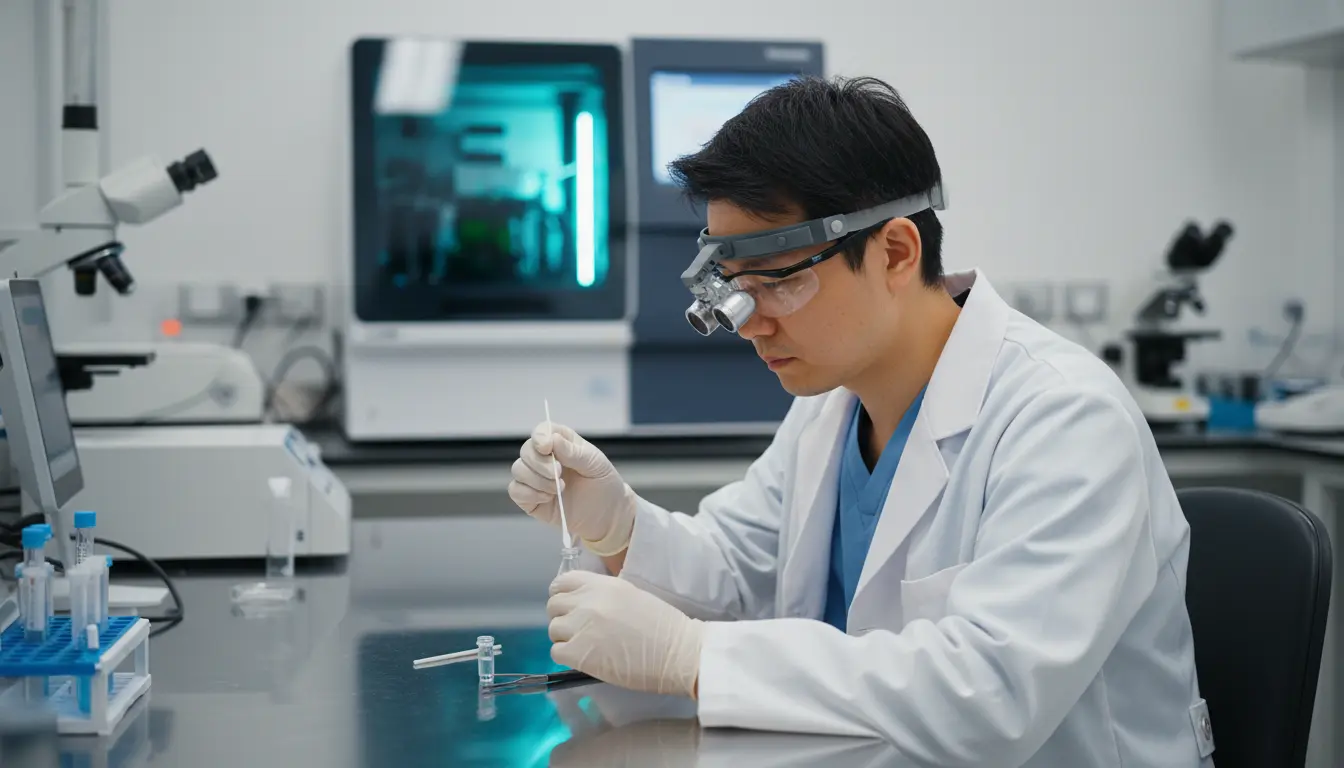 DNA profiling is the process of analyzing a distinctive DNA pattern, called a "profile," from an individual's sample. Also known as "DNA fingerprinting" or "DNA typing," it is used across a wide range of fields, including forensic science, criminal investigation, and confirmation of family relationships.[ref:1]
When DNA profiling was first developed in the 1980s by British geneticist Dr. Alec Jeffreys, it suffered from low accuracy and low sensitivity, which led to various problems. The method used at the time, called RFLP (restriction fragment length polymorphism), required a large amount of DNA sample and took several weeks to analyze. However, with the subsequent development of PCR (polymerase chain reaction) technology and the introduction of STR (short tandem repeat) analysis, modern testing has become more than 100 million times more accurate, making it one of the testing methods capable of producing accurate results even from an extremely small sample.[ref:2]
All of humanity shares more than 99.9% of its genes regardless of race, but within the remaining roughly 0.1% lie DNA regions that are unique to each individual. These unique DNA regions are called "polymorphisms," and analysis focuses mainly on STR regions, where the number of repeats varies from person to person. In current standard DNA profiling, more than 20 STR loci are analyzed simultaneously, reducing the probability that another person in the world (excluding identical twins) shares the same profile to less than one in several trillion. By analyzing these unique DNA regions in this way, it is possible to create an individual's DNA profile.[ref:3]
How DNA Profiling Works ― The Basics of STR Analysis
The most widely used method in DNA profiling is STR (Short Tandem Repeat) analysis. STRs are regions of DNA where short sequences of 2 to 6 base pairs repeat consecutively, and because the number of repeats varies from person to person, they are used as markers for individual identification.[ref:5]
- Sample collection: DNA is collected from a variety of biological samples, including oral mucosa (swabbed from the inside of the cheek), blood, hair (with the root attached), saliva, semen, and nails.
- DNA extraction: Cells from the collected sample are lysed, and the DNA is purified and extracted in pure form.
- PCR amplification: Using polymerase chain reaction (PCR), the DNA fragments of specific STR regions are amplified millions of times over. This makes it possible to obtain a sufficient quantity of sample for analysis even from an extremely small amount of DNA.
- Capillary electrophoresis: The amplified DNA fragments are run through a capillary electrophoresis device and separated according to their length (number of repeats). Using fluorescent labeling, multiple loci can be detected simultaneously.
- Profile creation and comparison: Based on the data obtained, a DNA profile (a combination of alleles at each locus) is created, and the samples in question are compared to determine whether they match or not.
DNA Profiling Is Useful in a Variety of Situations
- Identifying criminals: DNA can be collected from hair, saliva, cigarette butts, and other items left at a crime scene, and comparing it against a suspect's DNA profile makes it possible to determine whether they are the same person. Japan's National Police Agency also operates a DNA database, which has become an important pillar of forensic investigation.[ref:4]
- Identifying victims: DNA profiles can be used to identify the bodies of victims of tsunamis, earthquakes, plane crashes, and other disasters. In the 2011 Great East Japan Earthquake, identity confirmation through DNA typing played a major role.
- Confirming blood relationships: Comparing DNA profiles to confirm the presence or absence of a blood relationship can affect custody disputes and a guardian's child support obligations. Paternity testing and sibling testing fall into this category.
- Investigating infidelity: By obtaining a DNA profile from a residual substance and checking whether it matches a specific individual, it is possible to scientifically substantiate a partner's infidelity.
DNA Profiling Isn't Just for Crimes, Disasters, and Court Cases
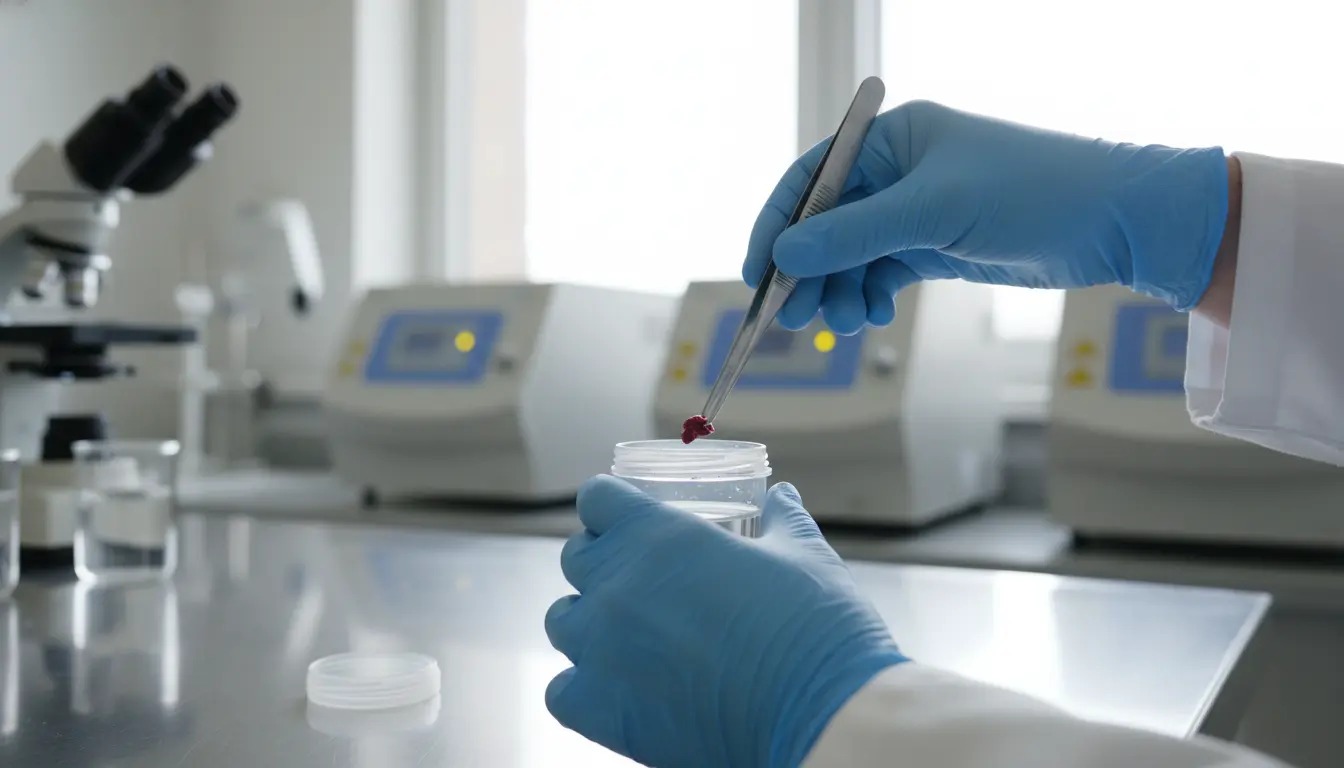 Many people seem to believe that DNA profiling is used only in official settings such as criminal cases, disasters, and court proceedings. Indeed, law enforcement agencies around the world, including the FBI's CODIS (Combined DNA Index System), make use of DNA profiling in criminal investigations, and it has also contributed to proving wrongful convictions.[ref:6]
However, this technology can also be used by anyone in everyday life. Today, it is commonly used not only in official settings but also to resolve domestic issues. For example, requests from individuals are increasing year by year in cases involving suspected infidelity by a partner or a desire to identify the owner of an unidentified item.
For example, suppose a man finds a suspicious tissue in his girlfriend's car and suspects she is having an affair with another man. He can first have that tissue undergo semen testing to determine whether it contains male semen. Semen testing uses a method that detects an enzyme specific to semen (prostate-specific antigen, or PSA), making it possible to scientifically prove the presence of semen even from an extremely small amount of residue.[ref:4]
A DNA Profile Can Reveal the Possibility of Infidelity
 If semen testing indicates the presence of semen, the next step is DNA profiling to determine whose semen it is. By using a sample of the man's own oral epithelial cells, it is possible to compare his own DNA profile against the DNA profile obtained from the tissue (identity testing). If it does not match his own, the likelihood of infidelity increases.
Alternatively, if a sample from the man suspected of being her affair partner is available (such as a cigarette butt or hair), it is possible to check whether the DNA profiles match, and if they do, to identify the affair partner. This technique of comparing sample profiles is a type of forensic DNA typing, the same technology used by the FBI in criminal investigations.
Until not long ago, it was difficult to confirm whether a partner was being unfaithful, and many people likely spent their days anxious and unable to prove infidelity, eventually giving up in distress. Today, however, thanks to advances in and the spread of DNA testing technology, even ordinary individuals can confirm the facts through scientific means.
Types of Samples That Can Be Analyzed by DNA Profiling
In infidelity testing and DNA profiling more broadly, DNA can be extracted from a wide variety of samples. Below is a summary of representative sample types and their characteristics.
| Sample Type | Ease of Collection | DNA Detection Accuracy |
|---|---|---|
| Oral epithelium (swab) | Very easy | Very high |
| Hair (with root) | Relatively easy | High |
| Cigarette butt | Relatively easy | High |
| Semen residue | Depends on circumstances | Very high |
| Nails/bloodstains | Depends on circumstances | Medium to high |
Note that for hair samples, it is important that the root (the white bulb at the base) is attached. Cut hair tips alone may not provide enough DNA for STR analysis. The storage condition of the sample also greatly affects results, so it is recommended to place it in a clean container as soon as possible and submit it promptly.
Benefits for the General Public in Using DNA Profiling
By making our company's latest DNA technology available to the general public through various tests, we hope to help resolve various interpersonal issues and help more people learn the truth. The main benefits of using DNA profiling are as follows.
- Judgment based on scientific evidence: Facts can be confirmed based on objective, scientific grounds rather than emotion or speculation.
- High accuracy and reliability: Modern STR analysis is extremely precise, and the reliability of the results is exceptionally high.
- Use in legal proceedings: DNA test results may be admitted as compelling evidence in court trials or mediation.
- Privacy protection: By requesting testing from a specialized testing institution, the risk of test details or results leaking to third parties can be minimized.
- Reduced psychological burden: Rather than living with lingering doubt, resolving the matter scientifically can be expected to restore emotional stability.
Infidelity Test | Ultra-High-Accuracy Infidelity Test |
|---|---|
The History and Technological Progress of DNA Profiling
The history of DNA profiling began in 1984, when Dr. Alec Jeffreys discovered DNA fingerprinting technology at the University of Leicester in the United Kingdom. The following year, in 1985, this technology was first used to prove a family relationship in an immigration case, and in 1986, DNA typing was used for the first time in a criminal investigation, in the Enderby murders case in England.[ref:7]
The early RFLP method required roughly 100 nanograms or more of DNA and had the limitation that it could only analyze DNA that had not degraded. When PCR technology was introduced into DNA typing in the 1990s, testing became possible from as little as a few nanograms of DNA, bringing about a major revolution in the field of forensic science. Furthermore, standardization of STR analysis led law enforcement agencies worldwide to adopt a common set of STR loci, enabling international DNA database cooperation as well.[ref:5]
Today, the introduction of next-generation sequencing (NGS) technology has made it possible to more precisely separate profiles from highly degraded DNA or mixed samples from multiple individuals - tasks that were difficult with conventional STR analysis alone. Thanks to these technological innovations, the range of applications for DNA profiling is expected to expand even further in the future.
Points to Note When Requesting DNA Profiling
There are several important points to keep in mind when requesting DNA profiling for personal purposes. First and foremost, proper sample handling is critical. If a sample becomes contaminated or is left for a long time in a hot, humid environment, the DNA may degrade and reduce analysis accuracy. Once a sample is found, it is recommended to avoid touching it with bare hands, use tweezers or gloves instead, place it in a dry, clean paper envelope or container, and send it to a testing institution promptly.
Additionally, if you wish to use the DNA test results as legal evidence, maintaining a proper chain of custody is required. This means that every step of the process, from sample collection through analysis and reporting, must be recorded and managed, which is essential to ensure the reliability of the evidence.
Our organization, the seeDNA Genetic Medical Research Institute, holds the international quality standard ISO 9001 and the Privacy Mark for privacy protection, and conducts DNA testing under a rigorous quality control system. If you have any questions about sample handling procedures or the testing process, our specialized staff will be happy to guide you, so please feel free to contact us.
Frequently Asked Questions
Q1. Is DNA profiling the same thing as DNA typing?
A. Yes, they essentially refer to the same technology. "DNA profiling" is the term used in English-speaking countries, while in Japan it is commonly called "DNA typing." Both are methods that analyze an individual's unique DNA regions (mainly STRs) to perform personal identification.[ref:1]
Q2. What kinds of samples can be used to create a DNA profile?
A. A wide range of samples can be used for DNA extraction, as long as cells are attached, including oral epithelium (a swab from the inside of the cheek), blood, hair (with root), saliva, semen, nails, cigarette butts, and used cups or straws. However, depending on the sample's storage condition and the remaining amount of DNA, analysis may sometimes be difficult.
Q3. How accurate is DNA profiling?
A. Since modern STR analysis examines more than 20 loci simultaneously, the probability that another person (excluding identical twins) shares the same profile is estimated to be less than one in several trillion. Compared to when it was first developed in the 1980s, accuracy has improved more than a hundred million times over, giving it extremely high reliability.[ref:3]
Q4. What is the process when using DNA profiling for an infidelity test?
A. First, semen testing is performed on the suspicious sample (such as a tissue or clothing residue) to check for the presence of semen. If semen is detected, DNA is then extracted to create a profile, which is compared against the requester's own DNA profile (identity testing). If it does not match, this scientifically indicates the possibility that the semen belongs to a third party.
Q5. Can DNA profiling results be used as evidence in court?
A. DNA test results may in some cases be submitted as evidence in court trials or mediation. However, whether they are accepted as evidence is up to the judge's discretion. If you want to use the results as legally valid evidence, it is important that the sample collection method and chain of custody are properly managed.
Q6. Can ordinary individuals request DNA profiling?
A. Yes, members of the general public can request testing as well. It used to be limited to criminal investigations and forensic science, but today more and more people use DNA profiling for personal purposes such as infidelity testing, paternity testing, and confirming blood relationships. Our company, seeDNA, offers various DNA testing services for the general public.
Q7. Are there any precautions for storing a sample?
A. It is important to keep the sample dry and avoid high heat and humidity. Touching the sample with bare hands risks contaminating it with your own DNA, so please use tweezers or disposable gloves. Also, placing it in a paper envelope rather than a plastic bag helps prevent DNA degradation from moisture. It is recommended to send the sample to a testing institution as promptly as possible.
Reliable Support from the seeDNA Genetic Medical Research Institute
The seeDNA Genetic Medical Research Institute is a trusted DNA testing and genetic testing institution that holds the international quality standard ISO 9001 and the Privacy Mark for privacy protection.
If you are troubled by questions about family or parent-child blood relationships, or a partner's infidelity, our DNA testing experts are here to provide the reassurance and support you need, so please feel free to contact us.
[Free Consultation with Specialized Staff]

If you have any questions,
please feel free to contact our toll-free number.
/Open every day, including weekends/
Business hours: Mon-Sun 9:00-18:00
(except holidays)
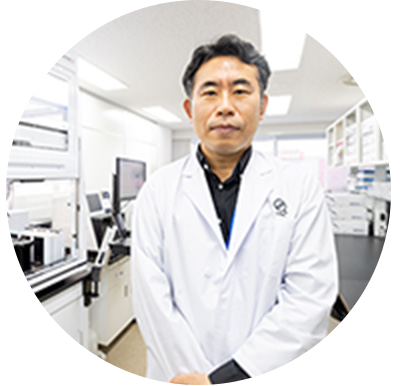 Author
Dr. Kihan Tomikane, M.D., Ph.D.
Completed his master's/doctoral program in Biosystem Regulation and Molecular Informatics Medicine at the University of Tsukuba Graduate School.
In 2017, developed Japan's first prenatal DNA testing(Patent No. 7331325) using trace DNA analysis technology(Patent No. 7121440)