
Rewritten on: July 24, 2024
From the birth of DNA profiling via the RFLP method in 1985, through the STR method, to next-generation sequencers, this article traces the evolution of DNA testing technology alongside the history of Windows. It also explains why seeDNA provides accurate testing using cutting-edge technology.
- ・1985: The Birth of DNA Profiling via the RFLP Method and the Dawn of the Windows Era
- ・The Emergence of the STR Method and the Rapid Evolution of DNA Testing Technology
- └ The 2000s: The Evolution of Multiplex Technology and Advanced DNA Testing
- ・Next-Generation Sequencers and Quantum Computers: The Future of DNA Testing as Envisioned by seeDNA
- ・The Essential Role of Computer Technology Underpinning DNA Testing
- ・New Possibilities in DNA Testing Brought by AI and Machine Learning
- ・Why seeDNA Genetic Medical Institute Is Chosen
1985: The Birth of DNA Profiling via the RFLP Method and the Dawn of the Windows Era
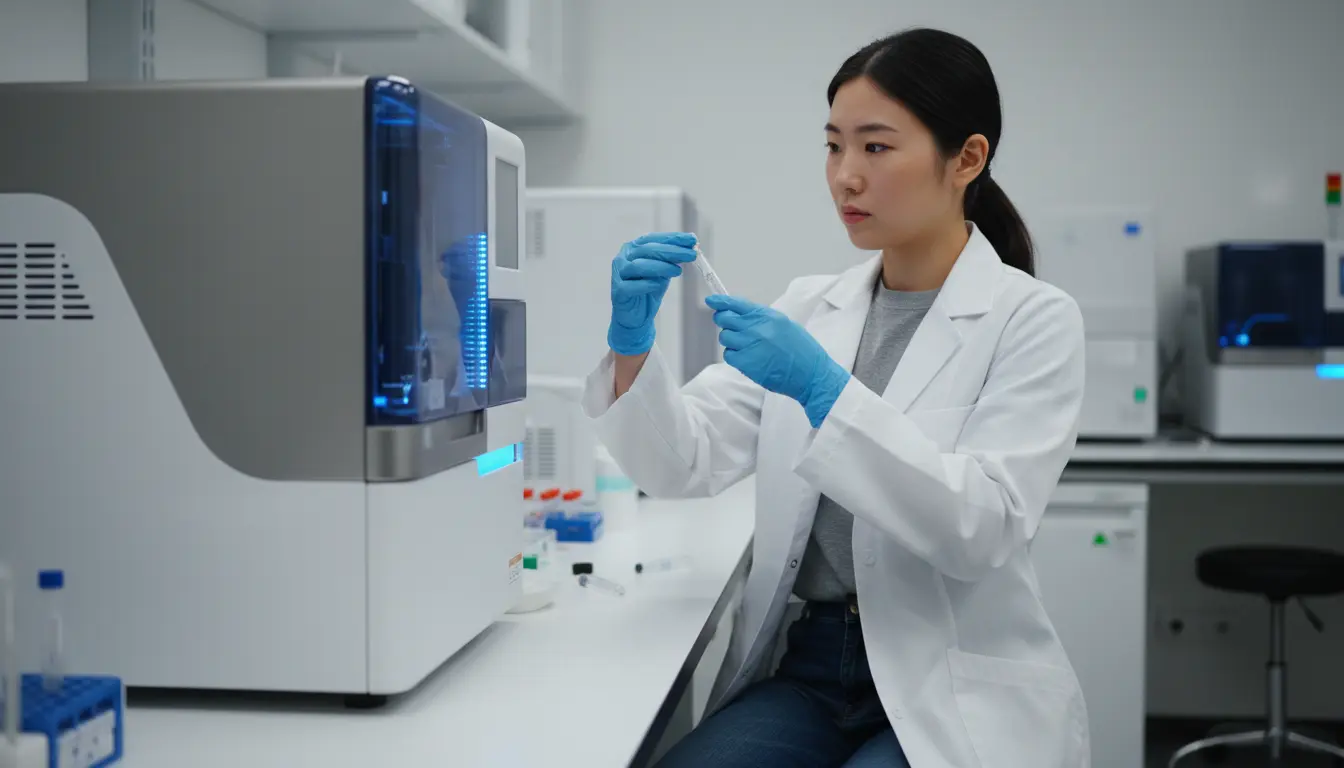 1985 was a historic turning point in both science and information technology. That year, DNA profiling using RFLP (Restriction Fragment Length Polymorphism) was officially announced for the first time. The RFLP method identifies individuals by cutting DNA with specific restriction enzymes and comparing the differing lengths (polymorphisms) of the resulting fragments. Dr. Alec Jeffreys of the University of Leicester in the UK developed this technology, revolutionizing the worlds of forensic science and paternity testing.[ref:1]
Dr. Jeffreys's groundbreaking discovery was based on the fact that repetitive sequence regions in the human genome, called minisatellites, vary greatly from person to person. By visualizing the pattern of these repeated sequences, it became possible to uniquely identify each individual much like a "fingerprint," giving rise to the term "DNA fingerprinting." The paper Dr. Jeffreys published in Nature in 1985 was a truly historic achievement that scientifically proved every human being except identical twins has a unique DNA pattern.[ref:5] This technology not only revolutionized the world of forensic science but also had a major social impact, including in proving blood relationships in immigration cases. In fact, Dr. Jeffreys's DNA fingerprinting was first used legally in a 1985 UK immigration case, in which it proved the blood relationship between a boy from Ghana and his mother, allowing the boy to remain in the UK.
Coincidentally, in that same year of 1985, Microsoft released the first version of Windows along with several pieces of basic software. At the time, Windows was merely a graphical shell running on top of MS-DOS, but this single step became the foundation for the computer revolution that followed. DNA testing technology and computer technology were, in fact, born in the very same era, and they have developed ever since while influencing one another.
The following year, in 1986, Cellmark Diagnostics and Lifecodes Corporation officially launched commercial DNA profiling services using multilocus RFLP. Multilocus RFLP is a technique that improves the precision of individual identification by analyzing multiple regions of the genome simultaneously, and it rapidly spread as a practical tool in criminal investigations and paternity testing. Microsoft's stock market listing around the same period likewise symbolizes just how great an impact technological innovation can have on society.
To explain the principle of the RFLP method in a bit more detail: a DNA sample is first cut with a specific restriction enzyme (restriction endonuclease). Because this enzyme recognizes and cuts a specific base sequence in the DNA, any variation (polymorphism) in that sequence between individuals results in fragments of different lengths. The resulting fragments are then separated by size using agarose gel electrophoresis, transferred to a nylon membrane via Southern blotting, and hybridized (bound) using probes labeled with radioactive isotopes or chemiluminescent markers. Finally, the band pattern is detected using autoradiography or a CCD camera, allowing comparison between individuals.[ref:1]
However, in the early 1990s, the RFLP method came under intense scrutiny within the judicial world. Questions were raised about the validity of the population genetics statistical methods used and about quality control of the results produced by testing laboratories. Particular concerns included the fact that the RFLP method required a large amount of high-quality DNA sample (typically 100 nanograms or more), that analysis took several weeks, and that testing was difficult with degraded samples. In 1992, the National Research Council (NRC) of the U.S. National Academy of Sciences (NAS) issued a report strongly recommending the standardization of statistical methods and the establishment of quality control standards for DNA testing.[ref:6] This recommendation raised strong awareness of the need for validation and proficiency testing to ensure the reliability of test results, and it became a starting point for the worldwide development of a quality assurance framework for DNA testing.
The Emergence of the STR Method and the Rapid Evolution of DNA Testing Technology
 Around the same time, Microsoft was also grappling with quality issues in its Windows 3.0 basic software. Yet both fields overcame this crisis successfully. Microsoft shipped Windows 3.1 in 1991, greatly improving stability. Meanwhile, in the field of DNA profiling, fluorescent STR (Short Tandem Repeat) markers and the Chelex extraction method were introduced as improved techniques to replace the conventional RFLP method.
The STR method identifies individuals by using differences in the number of repeats of short base sequences found in DNA. STRs, also known as "microsatellites," refer to regions where a short sequence of typically 2 to 6 base pairs repeats anywhere from a few to several dozen times. Because the number of repeats varies greatly between individuals, analyzing multiple STR regions makes it possible to identify individuals with extremely high probability. Compared to the RFLP method, the STR method offers the following advantages.[ref:2]
- Testing is possible even from trace or degraded samples, since only an extremely small amount of DNA is required
- Sensitivity is dramatically improved because DNA can be amplified via PCR (polymerase chain reaction)
- Multiple STR regions can be analyzed simultaneously (multiplexing) using fluorescent labeling, greatly improving processing speed
- Results are obtained as digital data, making it easy to build databases and compare data between institutions
- Analysis time is reduced from several weeks (as with RFLP) to just a few hours
- The Chelex extraction method simplifies sample pre-processing and also reduces the risk of contamination
The Chelex extraction method is a simple technique that uses chelating resin to remove PCR-inhibiting substances from DNA samples. Compared to the conventional phenol-chloroform extraction method, it is simpler to perform and can efficiently recover DNA even from trace samples, greatly improving its practicality in forensic science. This method's spread was also driven by the social backdrop of Dr. Kary Mullis winning the Nobel Prize in Chemistry in 1993 for developing PCR, which brought a surge of public trust and attention to PCR-based analytical techniques in general.
1995 was also a notable year in the history of DNA testing. While Microsoft achieved explosive popularity with the release of Windows 95, DNA profiling drew worldwide attention through the O.J. Simpson trial. This case brought widespread public awareness of DNA testing technology and sparked rapid growth in social interest in forensic science. In the O.J. Simpson case, the handling of DNA evidence and the accuracy of the testing were fiercely contested in court, and this ultimately accelerated the establishment of quality control standards for DNA testing. In particular, measures to prevent contamination during sample collection, the standardization of testing processes, and the development of technician certification systems—the foundations of today's quality control framework—were built as lessons learned from this case.
Subsequently, the UK launched the world's first National DNA Database (NDNAD) as a criminal investigation tool in 1995, and in the US, the FBI-led Combined DNA Index System (CODIS) began full operation in 1998. CODIS initially designated 13 STR loci as the standard set for analysis, expanding to 20 STR loci from 2017 onward. The construction of these databases coincided almost exactly with the release of Windows 98, a fine example of how advances in computer technology enabled large-scale management of DNA information.[ref:2] In Japan too, the National Research Institute of Police Science has led efforts to build an STR-type database, along with standardizing STR loci to enable international data sharing.
To further improve sample processing capacity and speed, many testing laboratories, including the FBI Laboratory, completely discontinued the use of the RFLP method in criminal investigations as of the year 2000. The full transition to the STR method was complete, and DNA testing entered a new stage.
The 2000s: The Evolution of Multiplex Technology and Advanced DNA Testing
On January 13, 2000, Bill Gates stepped down as CEO (Chief Executive Officer) of Microsoft so the company could move in a new direction. As Windows 2000 and Windows XP were developed in the early 21st century and computer performance continued to steadily improve, new DNA testing kits were also developed in the DNA profiling world that used a single amplification reaction to examine 16 regions of the human genome. This dramatically increased the ability to conduct multiplex DNA testing, making it possible to obtain more information from a smaller sample in a single reaction.
The evolution of multiplex PCR technology was supported by an increasing variety of fluorescent dyes and increasingly sensitive detection equipment. Early multiplex kits used four fluorescent dyes, but this later expanded to five, then six, enabling more STR loci to be co-amplified in a single PCR reaction. Representative kits include the AmpFlSTR series from Applied Biosystems and the PowerPlex series from Promega, both of which became standard tools used in forensic science laboratories around the world. Recent kits such as GlobalFiler can analyze 24 STR loci at once, achieving a theoretical match probability of better than one in several hundred trillion—making individual identification accuracy essentially perfect.[ref:7]
Furthermore, in the mid-2000s, automation of capillary electrophoresis instruments advanced significantly. Compared to conventional slab gel electrophoresis, capillary electrophoresis offers higher resolution and allows automatic sample injection and continuous analysis, enabling large numbers of samples to be processed efficiently. Instruments such as the Applied Biosystems 3130xl and the SeqStudio Genetic Analyzer use multi-capillary systems capable of unattended, continuous processing of 96 or more samples, greatly improving the efficiency of large-scale testing cases and database registration work. This progress in automation technology, too, relies heavily on advances in computer control technology.
Looking back at the timeline of DNA testing technology and computer technology side by side, it becomes clear that the two have consistently developed in step with one another.
- 1985: Official announcement of DNA profiling via the RFLP method & release of Windows 1.0
- 1986: Launch of commercial DNA testing services & Microsoft's stock market listing
- 1991: Introduction of the fluorescent STR method and the Chelex extraction method & release of Windows 3.1
- 1995: DNA testing draws worldwide attention through the O.J. Simpson case & release of Windows 95
- 1998: Full operation of national DNA databases in the UK and US & release of Windows 98
- 2000s: Evolution of multiplex DNA testing kits & development of Windows 2000/XP
- Today: Entering the era of next-generation sequencers and quantum computers
Next-Generation Sequencers and Quantum Computers: The Future of DNA Testing as Envisioned by seeDNA
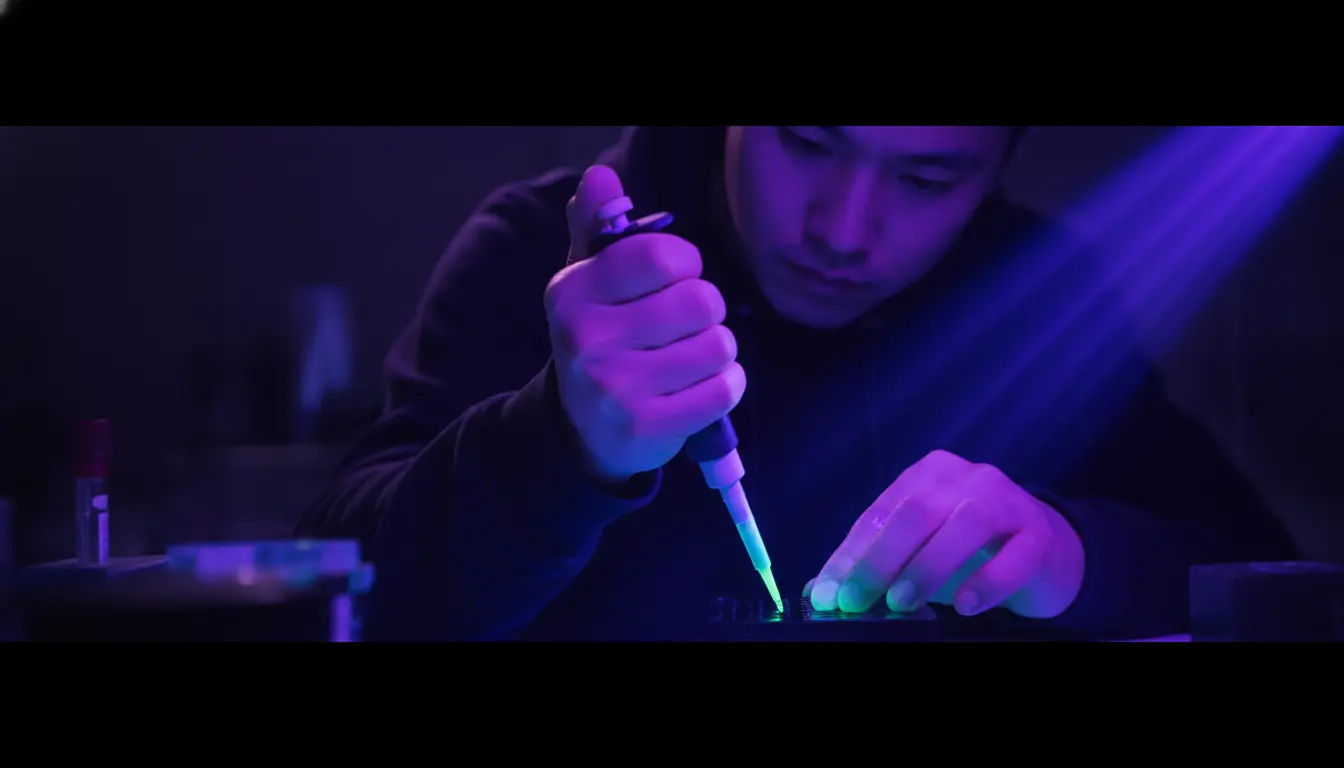 Today, seeDNA Genetic Medical Institute performs DNA analysis using the latest analytical instruments and analysis software. Of particular note is our use of next-generation sequencers (NGS). A next-generation sequencer is a remarkable system that can complete, in just a single day, whole-genome sequencing work that took more than a decade to accomplish through the internationally collaborative Human Genome Project only 30 years ago. The Human Genome Project began in 1990 and cost approximately 3 billion dollars by the time it was completed in 2003, yet today the cost of sequencing a single person's genome has dropped dramatically to just a few hundred dollars. Such high-speed, large-scale analysis would have been unimaginable in an era without today's computer technology.[ref:3]
With the advent of next-generation sequencers, DNA testing now covers a much broader range beyond conventional STR analysis, including SNP (single nucleotide polymorphism) analysis, mitochondrial DNA analysis, and even epigenetic analysis. SNP analysis, which detects variations at the single-base level of the genome, is especially effective for distinguishing between close relatives—something STR analysis struggles with—and for identifying individuals from highly degraded or fragmented DNA samples. Mitochondrial DNA analysis is essential for tracing maternal lineage and can also be applied to archaeological samples and extremely trace amounts of specimen. As a result, the accuracy of paternity testing has improved even further, and even complex blood relationships that were once difficult to determine can now be assessed with high confidence.[ref:4]
The application of NGS technology to forensic science is not limited to STR and SNP analysis. In recent years, systems such as the ForenSeq system have been developed that can simultaneously analyze STR, SNP, ancestry-informative markers, and appearance-predictive markers (such as hair and eye color) in a single sequencing run. This is bringing "DNA phenotyping"—estimating an unknown individual's physical characteristics from genetic information—closer to reality, providing valuable leads in criminal investigations. Notable research in DNA phenotyping includes the IrisPlex and HIrisPlex-S systems, which have developed algorithms capable of predicting iris, hair, and skin color from DNA with high accuracy.[ref:7]
Computer technology, meanwhile, is entering a new stage of evolution. The practical use of quantum computers—whose computing power far exceeds that of today's supercomputers—is drawing near, and the impact this will have on the world of DNA analysis is immeasurable. Once quantum computers become fully operational, pattern matching and statistical analysis of genomic data will be processed at orders of magnitude greater speed, and the accuracy and speed of DNA testing are expected to reach an entirely new dimension. For example, large-scale genome-wide association studies (GWAS) that currently take days on today's computers could potentially be completed in minutes with a quantum computer. Among quantum algorithms, high-speed database searches using Grover's algorithm and the analysis of complex genetic patterns using quantum machine learning are drawing particular attention in the field of forensic genetics.
The Essential Role of Computer Technology Underpinning DNA Testing
The relationship between DNA testing technology and computer technology goes far beyond a mere coincidence of timing. Nearly every step of modern DNA testing depends on computer technology.[ref:2]
First, PCR instruments (thermal cyclers) use microprocessors to precisely control temperature, managing the temperature and duration of each step of the amplification reaction (denaturation, annealing, and extension) down to the second. For example, the denaturation step separates double-stranded DNA into single strands at 94–95°C, the annealing step binds the primers at 50–65°C, and the extension step synthesizes new strands via DNA polymerase at 72°C. Because even the slightest deviation in temperature control significantly affects amplification efficiency, precise microprocessor control of the Peltier element is a critical factor in determining the quality of the test.
In capillary electrophoresis instruments, laser-detected fluorescence data is converted into digital form in real time, and dedicated software automatically analyzes the electropherogram (waveform data) to determine allele types. Analysis software such as GeneMapper ID and GeneMarker automatically performs complex computations, including detecting fluorescent signal peaks, calculating allele sizes by comparison with a size standard, evaluating stutter ratios, and distinguishing true alleles from artifacts based on threshold values.
Furthermore, matching test results against a DNA database requires a large-scale database management system and high-speed search algorithms. National DNA databases such as CODIS contain millions to tens of millions of registered DNA profiles, and enormous computing power is required to instantly match new profiles against them. CODIS currently holds more than 18 million registered DNA profiles, with tens of thousands of new profiles added every month. The spread of cloud computing is further improving the efficiency of this kind of large-scale data processing.
Statistical analysis, too, cannot function without computers. Calculating the paternity index in paternity testing, or the random match probability in criminal investigations, requires complex statistical models based on population genetics. In particular, calculating the likelihood ratio using Bayesian statistics would be impossible to complete within a practical timeframe without the computing power of computers. In paternity testing, the likelihood ratio is calculated for each STR locus by referencing an allele frequency database, and the likelihood ratios across all loci are multiplied together to arrive at the final combined paternity index. When 20 or more STR loci are used, this probability typically exceeds 99.99%, allowing the presence or absence of a paternal relationship to be determined with an extremely high degree of scientific confidence.
New Possibilities in DNA Testing Brought by AI and Machine Learning
The development of artificial intelligence (AI) and machine learning technology is also one of the factors set to significantly transform the future of DNA testing. AI algorithms are being developed that can automatically extract meaningful patterns from vast amounts of genomic data and support the interpretation of test results. Even in the analysis of mixed samples (specimens containing DNA from multiple individuals), AI-based deconvolution techniques have shown accuracy that far surpasses conventional methods, and it is expected that they will be able to handle even more complex cases in the future.
Analyzing mixed samples is one of the most challenging tasks in forensic genetics. For example, when a DNA sample collected from a crime scene contains DNA from three or more contributors, accurately separating each contributor's profile is extremely difficult, and conventional statistical methods have had their limits. In recent years, however, probabilistic genotyping software using deep learning has been developed, and systems such as STRmix and TrueAllele have been adopted by forensic science laboratories around the world. These systems run millions of simulations using Markov chain Monte Carlo (MCMC) methods to estimate the probability distribution of each contributor's genotype.[ref:7]
AI is also beginning to contribute to quality control (QC) in DNA testing. Research is underway into machine learning algorithms that can automatically detect artifacts (false peaks) in electrophoresis data and predict sample degradation to suggest optimal analysis conditions. This is expected to further reduce the risk of human error and further enhance the reliability of test results.
Why seeDNA Genetic Medical Institute Is Chosen
Built on a long history dating back to 1985, when DNA testing technology was first born, we at seeDNA Genetic Medical Institute have always kept our focus on the latest computer technology and analytical techniques. We have obtained the international quality standard ISO9001 and the Privacy Mark (P-Mark) for privacy protection, and we conduct our testing under a rigorous quality control framework.
At seeDNA, we not only introduce cutting-edge analytical instruments, including next-generation sequencers, but also maintain a double-check testing system to ensure the accuracy of our results. Two independent examiners analyze each sample separately, and their results are cross-checked to eliminate human error. This double-check system is a rigorous quality assurance process that also complies with the requirements of ISO/IEC 17025, the international accreditation standard for forensic science.
In addition, in 2017 we developed Japan's first prenatal DNA testing (Patent No. 7331325) using a trace DNA analysis technology (Patent No. 7121440), giving us the technical capability to handle testing from samples that were previously considered difficult to analyze. This patented technology enables highly accurate analysis of the trace amounts of fetus-derived cell-free DNA (cfDNA) present in maternal blood, making it possible to confirm paternity safely and non-invasively during pregnancy.
We continue to refine our skills every day so that we can deliver accurate testing backed by cutting-edge technology. For a matter as important as DNA testing—something that can resolve a lifetime of worry—please trust seeDNA, backed by proven technology and a solid track record.
Frequently Asked Questions
Q1. What is the difference between the RFLP method and the STR method?
A. The RFLP method identifies individuals by cutting DNA with restriction enzymes and comparing the resulting differences in fragment length; it required a large amount of DNA sample (100 nanograms or more) and took several weeks to analyze. The STR method, on the other hand, amplifies DNA via PCR and compares the number of repeats in short repeated sequences; it allows testing even from trace samples (1 nanogram or less), and analysis time has been shortened to just a few hours. Today, the STR method is the global standard for DNA testing, and national DNA databases also use STR types as their standard.
Q2. What are the benefits of DNA testing using next-generation sequencers (NGS)?
A. Next-generation sequencers can read a vast amount of DNA information in a single analysis, making it possible to perform SNP analysis, mitochondrial DNA analysis, and other analyses simultaneously alongside conventional STR analysis. This dramatically improves the accuracy of paternity testing and allows even complex blood relationships to be determined with high confidence. It is also increasingly making possible analyses that were previously impossible, such as estimating physical features through DNA phenotyping.
Q3. Why is DNA testing technology so closely connected to advances in computer technology?
A. DNA testing requires processing vast amounts of genetic information accurately and quickly, and computing power is essential to that analysis. Computer technology is used at every step—from temperature control in PCR instruments, to data analysis in capillary electrophoresis, to statistical probability calculations, to matching against large-scale databases. Since the announcement of the RFLP method in 1985, DNA testing technology has evolved in step with advances in computer performance. The fact that a next-generation sequencer can decode an entire genome in a single day is only possible because of high-performance computer technology.
Q4. How will DNA testing change once quantum computers become practical?
A. Once quantum computers become fully operational, pattern matching and statistical analysis of genomic data will be processed at orders of magnitude greater speed. Large-scale genome-wide association studies (GWAS) that currently take several days could potentially be completed in minutes, and analyses that are difficult with current technology—such as separating mixed samples or determining complex blood relationships—are expected to become possible with greater precision and speed.
Q5. What kind of quality control system does seeDNA Genetic Medical Institute use for its DNA testing?
A. seeDNA Genetic Medical Institute has obtained the international quality standard ISO9001 and the Privacy Mark (P-Mark) for privacy protection, and conducts testing under a rigorous quality control framework. We maintain a double-check testing system in which two independent examiners analyze each sample separately and cross-check the results, and we deliver highly accurate testing results using cutting-edge analytical instruments, including next-generation sequencers.
Q6. How many STR loci are used in DNA testing?
A. Today's standard DNA testing analyzes 20 to 24 STR loci. The CODIS database operated by the FBI in the United States has designated 20 STR loci as the standard since 2017, and the latest multiplex kits (such as GlobalFiler) can simultaneously analyze 24 or more loci. The more loci analyzed, the higher the accuracy of individual identification, and the theoretical match probability reaches better than one in several hundred trillion, making the possibility of mistaken identity with another person effectively zero.
Q7. How is AI used in DNA testing?
A. AI is increasingly being applied at multiple stages of DNA testing. In particular, when analyzing mixed samples (specimens containing DNA from multiple individuals), probabilistic genotyping software uses AI-based algorithms to estimate each contributor's genotype with high precision. AI's contribution is also expanding on both the quality control and analytical accuracy fronts, including automatic detection of artifacts (false peaks) in electrophoresis data, automatic evaluation of sample quality, and prediction of physical features through DNA phenotyping.
seeDNA Genetic Medical Institute's Trusted Support
seeDNA Genetic Medical Institute is a trusted and reliable specialist institution for DNA testing and genetic testing, certified with the international quality standard ISO9001 and the Privacy Mark (P-Mark) for privacy protection.
If you have concerns about family or parent-child blood relationships, or a partner's infidelity, our DNA testing experts are here to provide the support you need with peace of mind—please feel free to contact us.
[Free Consultation with Specialized Staff]

If you have any questions,
please feel free to contact our toll-free line.
/Open every day, including weekends/
Business hours: Monday–Sunday 9:00-18:00
(excluding public holidays)
 Author
Dr. Tomikane Kihan, M.D., Ph.D.
Completed a master's and doctoral course in Biosystems and Molecular Information Medicine at the University of Tsukuba
In 2017, developed Japan's first prenatal DNA testing(Patent No. 7121440) using a trace DNA analysis technology(Patent No. 7331325)