
Rewritten on: September 19, 2024
DNA testing is a highly precise technology capable of distinguishing among roughly 21 quadrillion people, yet it has limits when it comes to determining nationality or telling identical twins apart. This article explains the accuracy, applications, and limitations of DNA testing in detail.
- ・The accuracy of DNA testing ― how precisely can it identify an individual
- ・What DNA testing can reveal ― from personal identification to kinship testing
- ・The limits of DNA testing ― nationality cannot be determined
- └ Why DNA testing cannot determine nationality
- └ What is the DNA testing conducted at immigration bureaus
- └ Why it is difficult to distinguish identical twins
- ・The DNA testing process
- ・Using DNA testing correctly
The accuracy of DNA testing ― how precisely can it identify an individual
 Modern DNA testing boasts precision high enough to distinguish among roughly 21 quadrillion people. Since the world's population is only about 8 billion, DNA testing can accurately identify a specific individual [ref:1]. Compared with the DNA testing performed 20 years ago in the Ashikaga case, precision has improved more than a hundred-million-fold. Even so, the cost has dropped to less than one-tenth of what it was back then—a striking illustration of how far the technology has advanced in recent years. (DNA testing with 99.9999999% accuracy, higher than the international standard)
Behind this dramatic improvement in accuracy lies progress in STR (Short Tandem Repeat) analysis technology. STR analysis is a method that measures the number of repeats in sequences scattered throughout the human genome and compares the pattern differences between individuals. Current standard DNA testing analyzes 20 or more STR marker loci simultaneously, suppressing the probability of a coincidental match to an astronomically low level [ref:2]. At the time of the Ashikaga case, the number of markers that could be analyzed was limited, which constrained discriminating power; but with the spread of capillary electrophoresis instruments and next-generation sequencers (NGS), it has become possible to analyze many more genetic loci quickly and at low cost [ref:3].
What DNA testing can reveal ― from personal identification to kinship testing
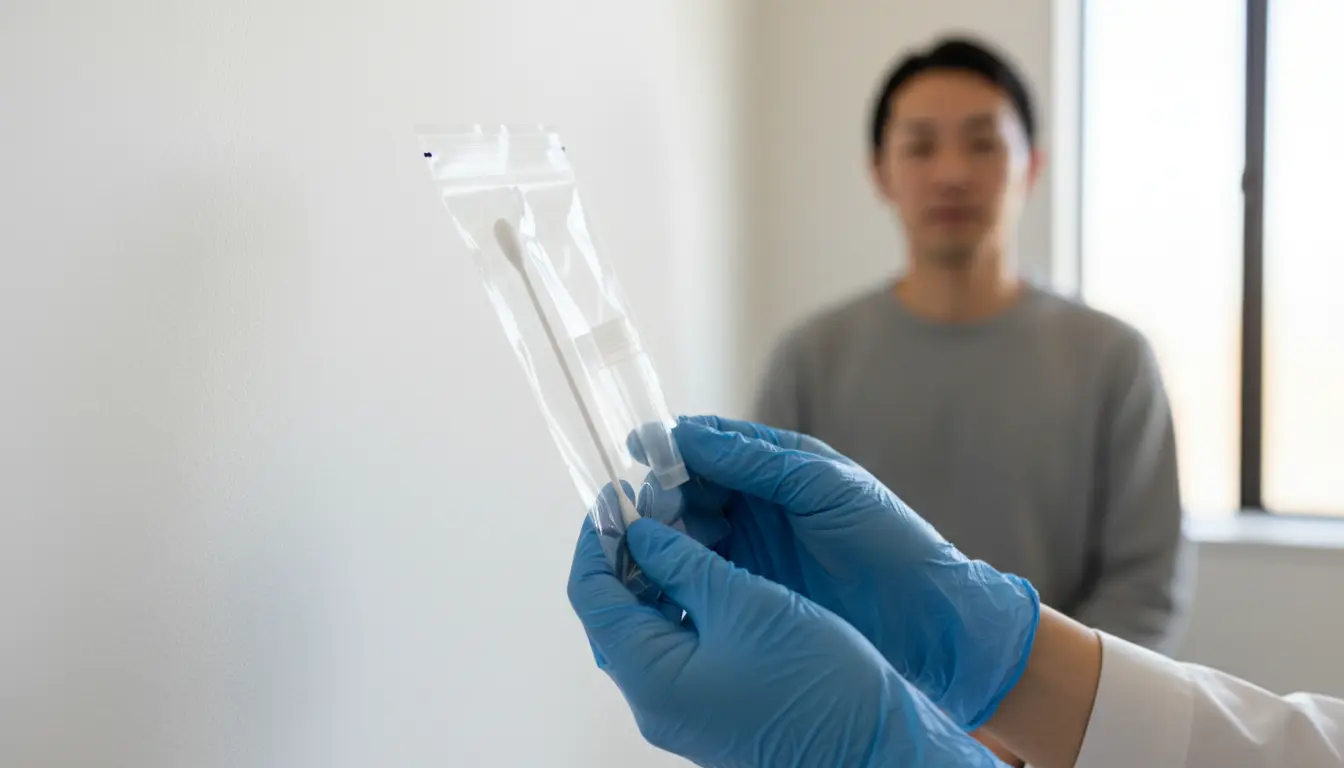 Since new DNA testing technologies were developed, DNA testing has come to be used for far more than simply identifying individuals—a wide range of applications is now possible. Representative use cases are summarized below.
- Personal identification: Specific individuals can be identified with high precision, such as in criminal investigations or identifying victims after a disaster.
- Determining kinship: Paternity, maternity, and sibling testing can scientifically prove whether a blood relationship exists.
- Prenatal paternity testing: Using cell-free fetal DNA (cfDNA) present in the pregnant mother's blood, it is possible to examine the parent-child relationship before birth.
- Ancestry analysis (roots tracing): Using analysis of mitochondrial DNA and the Y chromosome, it is possible to estimate which region a person's maternal or paternal ancestors came from.
Since around 2010, large-scale projects to trace one's own ancestry have begun in countries such as the United States. Services like "23andMe" and "AncestryDNA" have spread worldwide, building databases on the scale of tens of millions of people. These services use SNP (single nucleotide polymorphism) chips to analyze hundreds of thousands of genetic variants at once, enabling estimation of ethnic and geographic roots and the discovery of distant relatives [ref:4].
In the field of forensic science, a technology called "DNA phenotyping," which estimates a perpetrator's physical characteristics (hair color, eye color, skin color, etc.) from a trace DNA sample, is also being put into practical use. However, this technology is merely a statistical estimate and does not identify a person's nationality.
The limits of DNA testing ― nationality cannot be determined
 No matter how much the accuracy of DNA testing improves, it cannot determine nationality or distinguish identical twins. (Can DNA testing confirm paternity even for twin brothers?)
Our company's DNA testing accuracy exceeds 99.999999%, but even so it cannot be said to be 100%, and nationality cannot be determined at all. This is because nationality is a legal concept, fundamentally different from DNA, which is biological information.
Why DNA testing cannot determine nationality
Nationality is granted according to each country's laws and systems; it is not determined by genetic information. For example, people holding Japanese nationality have a wide variety of genetic backgrounds, and conversely there are countless cases worldwide of genetically very similar populations holding different nationalities [ref:5].
What DNA analysis can estimate is, at most, the "geographic distribution of genetic ancestry" or "population-genetic lineage (haplogroup)"—this does not indicate which country's citizen a person is. National borders shift historically and politically, and there is fundamentally no correspondence with genetic information.
What is the DNA testing conducted at immigration bureaus
The legal DNA testing used by the Immigration Services Agency in matters such as acquiring nationality or applying for a residence status is DNA parentage testing that examines the paternal (or maternal) blood relationship with the person claimed to be the father (or mother). In other words, DNA testing is not being used to determine "this person's nationality is X"; it merely proves the blood relationship that "this person is the biological child of Mr./Ms. X, who holds Japanese nationality" [ref:5].
It is important to correctly understand that DNA testing information can only estimate racial roots and ancestral lineage—it does not reveal nationality.
Why it is difficult to distinguish identical twins
Identical twins are born from the division of a single fertilized egg, so in principle they have identical genome sequences. Standard STR analysis cannot distinguish between them. In recent years, it has been reported that ultra-deep whole-genome sequencing may be able to distinguish identical twins by detecting extremely minute somatic mutations that arise in early development, but this method is very costly and is not yet commonly used in routine testing work [ref:6].
The DNA testing process
For those considering DNA testing, here is an overview of the general testing process.
- Application and consultation: Feel free to consult us by phone or via our web form. We will propose the optimal plan according to the purpose of the test and your situation.
- Sample collection: The common method is to collect a sample of oral mucosa using a cotton swab. There is almost no pain, and it is completed in a short time. For legal testing, identity verification is performed and the sample is collected in the presence of a third-party witness.
- DNA extraction and analysis: DNA is extracted from the collected sample, and the genotype is determined using methods such as STR analysis.
- Reporting the results: The analysis results are compiled into a testing report and delivered to the client. In the case of paternity testing, a clear result is provided, such as "paternity is confirmed (probability of 99.99% or higher)" or "paternity is not confirmed (probability of 0%)."
Using DNA testing correctly
DNA testing is an extremely powerful tool, but to interpret its results correctly, it is essential to understand both the capabilities and the limitations of the testing technology. In particular, the misconception that "DNA testing can prove nationality" remains deeply rooted, but as explained above, nationality is a legal concept and cannot be determined directly from DNA.
When proof of a blood relationship is needed, or when DNA testing is to be used in legal proceedings, it is important to request the service from a highly reliable testing institution that meets international standards such as ISO 17025 accreditation. The seeDNA Institute of Genetic Medicine performs DNA testing with an accuracy of 99.9999999%, exceeding international standards.
See details on DNA kinship testing here
Frequently Asked Questions
Q1. Can DNA testing prove nationality?
A. No, DNA testing cannot prove nationality. Nationality is a legal concept granted by each country's laws, and it cannot be determined directly from genetic information. What DNA testing can reveal is an estimate of genetic ancestral lineage or geographic roots; it does not indicate a specific nationality.
Q2. What is the DNA testing conducted at immigration bureaus?
A. The DNA testing used by the Immigration Services Agency is parentage testing to prove a blood relationship (paternal or maternal) with a person who holds Japanese nationality. It is not used to determine "this person's nationality is X"; it is carried out to legally establish a blood relationship.
Q3. Can identical twins be distinguished by DNA testing?
A. With standard STR analysis, identical twins show the same DNA type and cannot be distinguished. In recent years, research using whole-genome sequencing to detect somatic mutations has been progressing, but at present it has not reached practical use in routine testing work.
Q4. How accurate is DNA testing?
A. Current DNA testing has precision high enough to distinguish among roughly 21 quadrillion people individually. The seeDNA Institute of Genetic Medicine performs testing with an accuracy of 99.9999999% or higher, exceeding international standards. However, it cannot theoretically be declared 100%.
Q5. Can DNA testing reveal my own roots (ancestry)?
A. Yes, analysis of mitochondrial DNA and the Y chromosome makes it possible to estimate which region or lineage your maternal and paternal ancestors belonged to. However, this shows genetic ancestral lineage; it does not identify your current nationality or ethnicity.
Q6. What is the difference between legal DNA testing and private DNA testing?
A. Legal DNA testing is performed when legal effect is required, such as submission to a court or an administrative procedure, and strict identity verification and sample collection are carried out in the presence of a third party. Private DNA testing, on the other hand, is carried out simply to satisfy an individual's own desire to know, allows sample collection at home, but does not carry legal validity as a document.
Reliable Support from the seeDNA Institute of Genetic Medicine
The seeDNA Institute of Genetic Medicine is a trusted specialist institution for DNA testing and genetic testing, holding the international quality standard ISO 9001 certification and the Privacy Mark for personal information protection.
If you are troubled by questions about family or parent-child blood relationships, or a partner's infidelity, our DNA testing specialists will support you so you can feel fully at ease—please feel free to contact us.
[Free consultation with specialist staff]

If you have any questions,
please feel free to contact our toll-free number.
/Open every day, including weekends/
Business hours: Monday–Sunday 9:00-18:00
(except public holidays)
 Author
Dr. Kihan Tomikane, M.D., Ph.D.
Graduated from the master's/doctoral program in Biosystems and Molecular Medicine at the University of Tsukuba Graduate School
In 2017, developed Japan's first prenatal DNA testing(Patent 7331325) using trace DNA analysis technology(Patent 7121440)
[References]
(2) Elife, August 2016 ― Implementation of the Combined DNA Index System (CODIS) core loci expansion
(3) Forensic Sci Int Genet, July 2014 ― Massively parallel sequencing of forensic STRs using the Ion Torrent platform
(4) Nat Biotechnol, January 2018 ― Direct-to-consumer genetic testing
(5) Current Status and Issues Surrounding the "Unregistered Family Register Problem" ― House of Councillors, 2016
(6) Nat Genet, January 2021 ― Differences between germline genomes of monozygotic twins