
2026.04.18
Rewritten on: April 24, 2026
A parent-child DNA test can be collected at home using a mail-in kit. Our experts explain the difference between private and legal testing, the mechanism behind highly accurate STR analysis, key points for choosing a testing organization, and what to confirm before applying.
Parent-child DNA testing is broadly divided into two types: "private testing" and "legal testing." For private testing, a mail-in test kit allows you to collect a sample and proceed with the test at home, without needing to visit a medical institution.
On the other hand, if the DNA test results will be used in court or for family registry procedures, "legal testing" is required, which involves a different process than a standard mail-in test. To be used as legal evidence, strict collection methods and identity verification procedures are required to ensure the reliability of the sample.
In recent years, dramatic advances in genetic analysis technology and the spread of mail-in kits have made DNA testing far more accessible than before. However, many people still have questions such as "Can it really be done at home?", "Is the reliability of the results guaranteed?", and "How can I get a legally valid test?"
DNA testing originally developed in the fields of forensic science and criminal investigation, but it is now widely used in situations closely connected to everyday life, such as confirming parent-child relationships in civil matters, acknowledgment of paternity procedures, and resolving inheritance issues. Internationally, DNA testing is also established as a standard form of evidence in family law, and its scientific reliability is recognized by courts around the world.(1)
This article explains in detail the process of DNA testing at home, the differences between "private testing" and "legal testing," the scientific mechanisms underlying testing accuracy, and important points to check before applying.
- ・Can DNA testing be done at home?
- ・Background behind the spread of at-home DNA testing
- ・Features of private testing (at-home collection)
- ・Features of legal testing (witnessed collection)
- ・Comparison of private testing and legal testing
- ・Services vary by testing organization
- ・Important points to check before applying
- ・Accuracy and reliability of DNA testing
- ・The scientific mechanism behind STR analysis
- ・Precautions during sample collection and tips to avoid failure
- ・Summary
Can DNA testing be done at home?

DNA testing generally uses the method of collecting oral epithelial cells (cells from the inside of the cheek). Since a sample can be collected simply by gently rubbing the inside of the mouth with a cotton swab, you can easily collect a sample at home without any specialized knowledge. This collection method is also called the "buccal swab method" and, being painless and non-invasive, can be safely performed on people of all ages, from infants to the elderly.(2)
Oral epithelial cells contain a sufficient amount of DNA, and since there is no need to draw blood, they are very well suited to at-home sample collection. Because the cells of the oral mucosa are constantly renewed through metabolism, thousands of cells can easily be collected simply by gently rubbing the inside of the cheek with a cotton swab. Since each of these cells contains a complete genomic DNA, it is possible to secure a sufficient amount of DNA template for PCR amplification. The sample only needs to be sealed in a dedicated container and returned by mail to maintain the quality required for analysis at the laboratory.
The general flow of a mail-in DNA test is as follows.
- Apply to the testing organization (by phone, web, email, etc.)
- The test kit is mailed to you (in plain packaging for privacy)
- Collect the sample at home (rub the inside of the mouth with a cotton swab)
- Return it by mail using the dedicated return envelope
- DNA analysis at the laboratory (STR analysis, etc.)
- Results reported (in writing or online)
Thanks to advances in genetic analysis technology, DNA-based personal identification and parentage determination are also widely used in the field of forensic science. In parent-child DNA testing, it has been reported that parentage can be determined with extremely high accuracy by comparing genetic markers called STR (Short Tandem Repeat). STR markers are short repeating base sequences scattered throughout human DNA, and since the number of repeats differs between individuals, they are extremely effective for confirming parent-child relationships.(3)(4)
Specifically, for each STR marker type (allele) contained in a child's DNA, one is always inherited from the father and the other from the mother. By confirming this inheritance pattern based on "Mendelian law" at multiple locations, a father-child or mother-child relationship can be scientifically proven. Since modern standard tests analyze 15 or more STR loci simultaneously, the probability of a coincidental match is reduced to a value effectively close to zero.(5)
Background behind the spread of at-home DNA testing
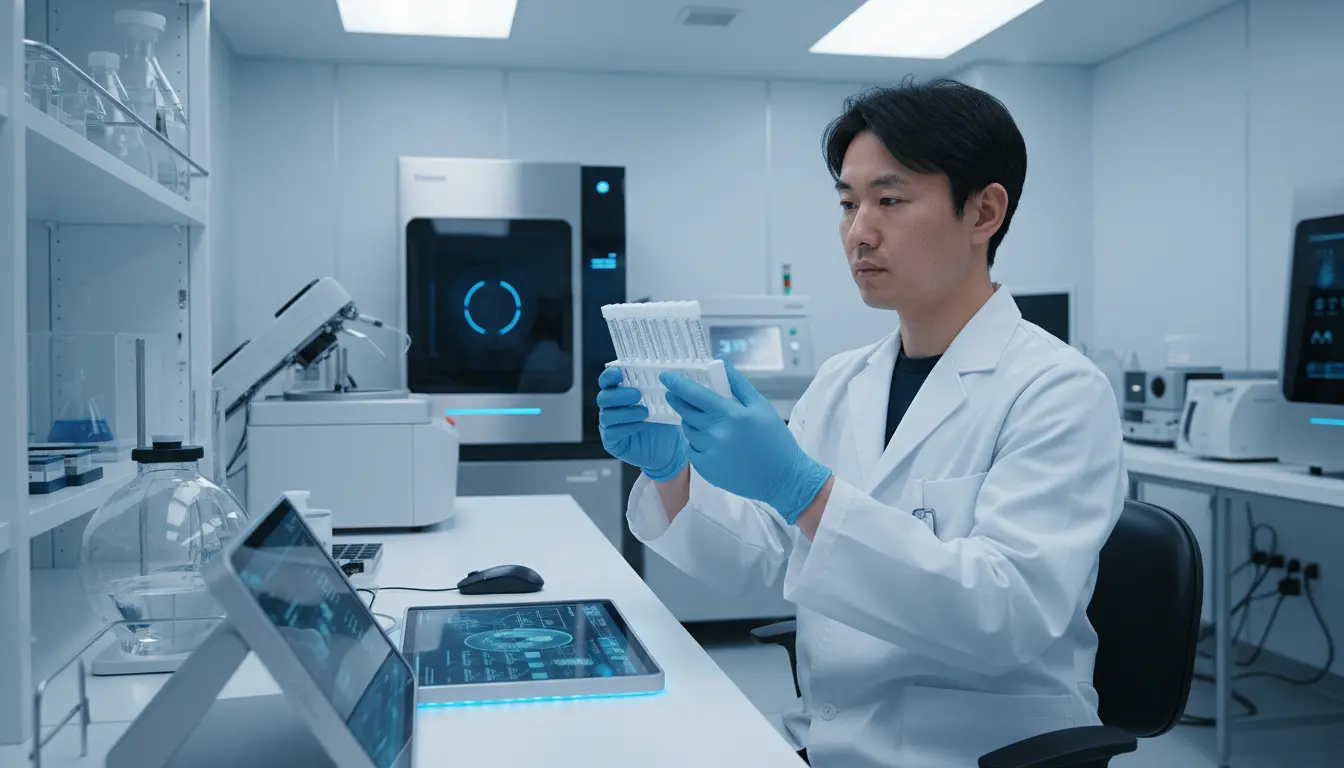 There are several technical and social factors behind why at-home DNA testing has come to be widely used by the general public.
First, there is the development of PCR (polymerase chain reaction) technology. PCR technology has made it possible to amplify and analyze a sufficient amount of DNA even from trace samples. This has made highly accurate testing possible even from the small number of cells collected via an oral swab. The PCR method was developed in the 1980s by Dr. Kary Mullis, and subsequent technical improvements led to automation and increased speed. Today, combined with real-time PCR and capillary electrophoresis, an accurate STR profile can be obtained from just a few nanograms of DNA.(3)
Next, there is the reduction in analysis costs. In the past, DNA testing was expensive and could only be performed by a limited number of specialized institutions, but as technology has become standardized and automated, testing has become available at relatively affordable prices. In particular, the widespread adoption of multiplex PCR technology, which allows multiple STR loci to be amplified simultaneously in a single reaction, has greatly contributed to cost reduction.
Furthermore, the improved quality of mail-in test kits is another major factor. Sample preservation technology has improved, making it possible to minimize DNA degradation even when mailed at room temperature. The development of DNA storage media such as FTA (Flinders Technology Associates) cards has made it possible to stably store collected oral cells at room temperature for extended periods. This means highly accurate test results can be obtained simply by sending a sample from home, without having to visit a testing organization in person.(6)
Increased social awareness is also a factor that should not be overlooked. As DNA testing has become widely known through television and news coverage, the psychological barrier to using DNA testing to confirm parent-child relationships or prove family relationships has lowered. Along with this, testing organizations' websites and customer support systems have also been improved, creating an environment where even first-time users can feel confident using the service.
Features of private testing (at-home collection)

Private testing is DNA testing conducted for personal confirmation purposes. It is mainly used in the following cases.
- Wanting to personally confirm a parent-child relationship
- Wanting to check family relationships as reference information
- Wanting to test without anyone knowing
- Wanting to check the results first before deciding on the next step
- Living far away, making it difficult to visit a testing organization
Since private testing does not require a witness, samples can be collected at home. Testing can proceed simply by returning the collected sample, making it a feature well-suited to those who value their privacy. Test kits are typically delivered in plain packaging so that the contents cannot be identified from the outside.
A major advantage of private testing is that there are few time or location constraints. Even those who are too busy with work to visit a testing organization, or those who live far from the nearest testing facility, can begin testing from home. In addition, results are usually delivered within a few days to a few weeks of applying, so results can be confirmed in a relatively short period.
Another advantage of private testing is that it can reduce psychological burden. Some people feel psychological pressure when having to visit a testing organization in person to collect a sample. Being able to collect a sample at your own pace in a relaxed home environment can be a great source of reassurance, especially for those dealing with sensitive circumstances.
However, the results of private testing are intended for personal confirmation, and generally cannot be used as legal evidence in court proceedings, family registry procedures, or inheritance procedures. This is because, in the case of at-home collection, there is no third-party confirmation of the sample collection (identity verification), making it difficult to objectively prove "whose DNA it is."(6)
Features of legal testing (witnessed collection)
Legal testing is required when the results will be used as evidence in court, family registry, or inheritance matters. For legal testing, identity verification and witnessed collection are required to ensure the reliability of the sample. At the time of collection, procedures are taken to guarantee the authenticity of the sample, such as verifying identification documents (driver's license, passport, My Number card, etc.), creating collection records, and taking photographs.
Specific situations where legal testing is required include paternity suits (court cases seeking confirmation of a father-child relationship), proof of blood relationship in inheritance matters, immigration procedures for international family reunification, and family registry correction procedures. In these cases, since the test results must have legal effect, strict procedures are required from sample collection through analysis and the preparation of the report.
Particularly in international situations, DNA test results may be submitted to embassies or immigration authorities, making testing based on internationally recognized quality standards essential. In such cases, whether the testing organization has obtained ISO/IEC 17025 certification or AABB (American Association of Blood Banks) accreditation may affect whether the report is accepted.
Examples of common collection formats are as follows.
| Collection format | Details |
|---|---|
| Collection at the testing facility | Sample collection at the DNA testing organization's facility, witnessed by staff |
| Collection at an agency or affiliated office | Collection at an agency or affiliated law office of the testing organization |
| On-site collection | A witness travels to a designated location to collect the sample |
In legal testing, collected samples are strictly managed under a system called "chain of custody." This is a system in which the entire handling history of the sample is recorded and tracked from the time it is collected until the analysis results are reported. This management system makes it possible to objectively prove that no sample substitution or contamination has occurred, and it is recognized as highly reliable evidence even by public institutions such as courts.
Specific chain-of-custody procedures include assigning a unique number to the sample, recording the collection date, time, location, and collector, managing seal and unsealing records, restricting access to storage locations and logging access, and recording the analyst in charge. Through this series of records, a third party can verify that the sample was properly managed consistently from collection through analysis.
Comparison of private testing and legal testing
The main differences between private testing and legal testing can be summarized as follows. It is important to choose the appropriate testing method depending on your purpose.(6)
| Comparison item | Private testing | Legal testing |
|---|---|---|
| Purpose | Personal confirmation | Legal procedures / court cases |
| Collection location | At home (mail-in) | Designated facility / on-site |
| Identity verification | Not required | Required (ID verification) |
Note that the accuracy of the DNA analysis itself does not change between private and legal testing. The difference lies in "the procedure for proving that the sample belongs to the person in question." Therefore, a staged approach is also possible, in which you first check the results with private testing, and then undergo legal testing separately if legal procedures later become necessary.
This staged approach is reasonable both in terms of cost and peace of mind. By first confirming the presence or absence of a parent-child relationship through private testing, then consulting a lawyer based on the results, and applying for legal testing again if legal procedures are needed, you can avoid unnecessary cost and effort. Many people choose this approach.
Services vary by testing organization
Services vary by testing organization. We recommend comparing and checking the following items before applying.(7)
- Number of agencies: An organization with many agencies nationwide is more likely to offer nearby witnessed collection for legal testing.
- Presence of affiliated law offices: For legal testing, some organizations allow sample collection at affiliated law offices, which also offers the benefit of smooth consultation with a lawyer.
- Availability of on-site collection: On-site collection service is a major advantage for those living far away or who have difficulty going out. Check in advance whether this is available.
- On-site collection fee structure: The total cost can vary significantly depending on whether fees are fixed or based on actual expenses. It's also necessary to check who bears the cost of transportation (airplane, bullet train, taxi, etc.).
- Testing accuracy and quality control system: Whether an organization has obtained ISO certification or the Privacy Mark (P-mark) is an important criterion for judging the reliability of the testing organization.
- Number of STR loci analyzed: The number of STR markers analyzed varies by testing organization. Generally, the more locations analyzed, the higher the certainty of the result, so be sure to check how many marker locations are used.
When choosing a testing organization, it is important to compare not just cost, but also testing accuracy, personal information protection systems, and the quality of after-sales support, from a comprehensive perspective. For legal testing in particular, it is also important whether the format and content of the report submitted to the court are appropriate. The report must clearly state details such as the STR loci used in the analysis, the allele types of each subject at each locus, the Paternity Index, and the Combined Paternity Index.
Important points to check before applying
Checking the following points before applying for a DNA test will help you proceed smoothly.
| Item to check | Reason |
|---|---|
| Type of testing (private / legal) | Required procedures differ depending on purpose |
| Sample collection method | At-home collection or witnessed collection |
| Availability and cost of on-site collection | Varies by region and fee structure |
In addition to the above, it is also a good idea to check the following points in advance.
- Time required for testing: Clarify by when you need the results, and check the testing organization's standard turnaround time. If a court date is approaching, it's also important to check whether expedited service is available.
- Additional fees: There may be separate charges for expedited service, retesting, or additional copies of the report. Check the total cost at the estimate stage.
- How results are received: Check in advance how results will be delivered — by mail, email, or an online portal. From a privacy perspective, it's also important to check whether there are multiple options for how to receive the results.
- Counseling and support system: A well-established consultation service before and after testing is also important for peace of mind. Check whether you can receive advice on how to handle things after the results come in.
- Sample storage period and disposal method: It is reassuring to check how long samples are stored after testing is complete and how they are disposed of.
Reliable testing organizations thoroughly manage testing accuracy and personal information protection. The seeDNA Institute of Genetic Medicine offers testing services that support both private and legal testing, conducting tests under a strict quality control system certified to the international quality standard ISO 9001.
Accuracy and reliability of DNA testing
Some people may feel uneasy about the accuracy of parent-child DNA testing. However, parentage testing using modern STR analysis technology generally provides a determination probability of 99.99% or higher when a parent-child relationship exists, and 100% when no such relationship exists.(4)
This high level of accuracy is achieved by simultaneously analyzing multiple STR markers. Typically, comparing 15 to 20 or more STR markers reduces the probability of a coincidental match to an astronomically small value. Furthermore, reliable testing organizations minimize the risk of analysis errors by conducting multiple tests on the same sample and cross-checking with different operators.
Statistical indicators called the "Paternity Index (PI)" and "Combined Paternity Index (CPI)" are used to determine parentage. For each STR locus, the probability of the observation given a parent-child relationship is compared with the probability of a coincidental match, and their ratio (likelihood ratio) is calculated. When the CPI, obtained by multiplying the PI values of all loci, becomes an extremely large value, the parent-child relationship is determined to be "practically certain."(5)
From a quality control perspective, obtaining international certification standards is also an important indicator. Testing organizations that have obtained certifications such as ISO 9001 (Quality Management System) or ISO/IEC 17025 (General requirements for the competence of testing and calibration laboratories) can be said to have confirmed standardization of testing processes and continuous quality improvement.
The scientific mechanism behind STR analysis
Let's explain in a bit more detail the mechanism of STR (Short Tandem Repeat) analysis, which forms the foundation of parent-child DNA testing. STR refers to regions on human genomic DNA where a short sequence of about 2 to 6 bases is repeated. The number of repeats differs between individuals, functioning much like a "genetic fingerprint."(3)
For example, suppose a 4-base sequence called "AGAT" is repeated at a certain STR locus. In one person's DNA, this sequence may be repeated 10 times (allele 10), while in another person it may be repeated 12 times (allele 12) — the number of repeats differs between individuals. Since we inherit one chromosome each from our father and mother, each STR locus has two alleles.
In parentage testing, the determination is based on the principle that one of a child's alleles is always derived from the father and the other always from the mother. If a pattern of consistent matching between parent and child alleles is confirmed at multiple loci, a parent-child relationship is determined to exist; if there is even one unexplained mismatch, a parent-child relationship is denied.(5)
Currently, STR kits widely used internationally in the field of forensic science include GlobalFiler (Applied Biosystems) and PowerPlex Fusion (Promega), which can simultaneously analyze 20 or more STR loci in a single analysis. This "multiplex STR analysis" has dramatically improved the accuracy and efficiency of testing.(1)
Precautions during sample collection and tips to avoid failure
When collecting a DNA sample at home, there are several precautions to follow in order to obtain accurate results. Below is a summary of specific points for successful sample collection.
- Avoid eating, drinking, or smoking for 30 minutes before collection: If residue from food, drink, or tobacco remains in the mouth, it may contaminate the sample and affect DNA analysis. Avoid eating or drinking anything other than water for 30 minutes before collection.
- Wash your hands before collection: Wash your hands thoroughly with soap and water before touching the collection swab. This is important to prevent contamination with other people's DNA.
- Press the swab firmly against the inside of the cheek: Press the swab against the inside of the cheek and rub it while rotating about 15 to 20 times. Collecting from the inside of both cheeks may be recommended to ensure a sufficient amount of cells.
- Let the swab dry after collection: Do not seal the swab immediately after collection; let it air-dry for a few minutes. Sealing it while still damp risks mold or bacterial growth, which can degrade the DNA.
- Keep samples from multiple people separate: When collecting samples from multiple people, such as a father and child, be sure to seal each one individually and check names or labels to avoid mix-ups.
Even if there is a problem with sample quality, some reliable testing organizations will send a free recollection kit. If you have concerns about sample collection, we recommend consulting the testing organization's customer support in advance.(2)
Summary
Thanks to the spread of mail-in test kits, parent-child DNA testing can now be easily collected at home. In particular, for personal purposes such as confirming a parent-child relationship, private testing with at-home collection can be used. Collection using an oral swab is painless, safe, and requires no specialized knowledge.
On the other hand, if the results are to be used as evidence in court or family registry procedures, legal testing involving identity verification and witnessed collection is required. Since legal testing involves strict sample management through chain of custody, it can be used as highly reliable evidence even in public settings.
Because collection methods, fee structures, and support content vary by testing organization, it is important to thoroughly check the service details before applying. Compare organizations comprehensively, considering not only low cost but also quality control systems, personal information protection efforts, and consultation support from specialized staff.
Modern STR analysis technology achieves an accuracy of 99.99% or higher by simultaneously analyzing 15 or more genetic markers, providing scientifically highly reliable results. DNA testing is by no means difficult, and with the right knowledge and a reliable testing organization, you can use it with confidence.
By choosing the testing method that fits your purpose, you can use DNA testing with peace of mind. Please consult a reliable testing organization first and choose the testing method best suited to your situation.
Frequently Asked Questions
Q1. Can accurate results be obtained from a DNA sample collected at home?
A. Yes, they can. A sample collected via an oral swab contains a sufficient amount of DNA, and the analysis accuracy at the testing organization does not differ between at-home and witnessed collection. However, to obtain accurate results, it is important to follow the collection instructions included with the test kit and observe precautions such as avoiding food and smoking for 30 minutes before collection.(2)
Q2. Can the results of private testing later be switched to legal testing?
A. The results of private testing cannot be used as-is for legal testing. Legal testing requires identity verification and witnessed collection, so the sample collection process must be redone from the beginning. However, a staged approach is possible, in which you first confirm the results through private testing and then apply for legal testing if necessary.(6)
Q3. How long does it take for DNA test results to come back?
A. It varies depending on the testing organization and the type of test, but generally results are reported within a few days to two weeks after the sample arrives at the testing organization. Some testing organizations offer expedited service, so if you need results urgently, we recommend consulting in advance.
Q4. Can DNA samples be collected at home from babies and infants?
A. Yes, it is possible. Collection via an oral swab is non-invasive and painless, and can be safely performed even on babies and infants. It only requires gently rubbing the inside of the cheek with a clean cotton swab, so no special skill is needed. However, since breast milk residue may contaminate the sample right after nursing, it is recommended to wait about 30 minutes after nursing before collecting the sample.
Q5. Is privacy protected during DNA testing?
A. Reliable testing organizations maintain strict management systems based on personal information protection laws. The seeDNA Institute of Genetic Medicine has obtained the Privacy Mark (P-mark), and all personal information related to testing is properly managed and protected. Test kits are also shipped in plain packaging so that the contents cannot be identified from the outside.
Q6. Where can witnessed collection for legal testing be performed?
A. Witnessed collection for legal testing can be performed at the testing organization's headquarters facility, at agencies nationwide, or at affiliated law offices. In addition, if the testing organization offers on-site collection, a witness can travel to your home or a designated location to collect the sample. Since the coverage area and travel fees vary by testing organization, please check in advance.(7)
Q7. How many gene loci are analyzed in a DNA test?
A. Modern standard parent-child DNA tests simultaneously analyze 15 to 20 or more STR loci. The more loci analyzed, the higher the accuracy and reliability of the test. Internationally widely used STR kits can analyze 20 or more loci at once, reducing the probability of a coincidental match to an astronomically small value.(5)
Trusted Support from the seeDNA Institute of Genetic Medicine
The seeDNA Institute of Genetic Medicine is a trusted specialist institution for DNA testing and genetic testing, certified to the international quality standard ISO 9001 and holder of the Privacy Mark (P-mark).
If you are struggling with concerns about family or parent-child blood relationships, or a partner's infidelity, our DNA testing experts are here to provide reliable support, so please feel free to contact us.
[Free consultation with specialized staff]

If you have any questions
please feel free to contact our toll-free number.
/Open every day, including weekends/
Business hours: Monday–Sunday 9:00-18:00
(except public holidays)
 Author
Test technician: C.H.
Works as a test technician at seeDNA Co., Ltd.
In charge of testing and data analysis for prenatal parent-child DNA testing.
[References]
(1) NPO Gene Information Analysis Center, January 2020(2) Lab Chip, October 2012
(3) PMC, June 2015
(4) Nature, February 2011
(5) J Biol Chem, March 1997
(6) seeDNA Genetic Testing & DNA Testing, April 2023
(7) Phytomedicine, January 2006