
Revised: October 10, 2024
Using the film "Like Father, Like Son" as a starting point, this article explains the history of actual newborn switching incidents in Japan and the importance of DNA testing. It details how early DNA testing can be a means of preventing tragedy.
- ・The newborn switching problem depicted in the film "Like Father, Like Son"
- ・The reality of newborn switching incidents in Japan
- └ Details of a switching incident revealed in 2013
- ・What is DNA testing? Its mechanism and accuracy
- └ Difference from blood type testing
- ・Early DNA testing prevents tragedy
- └ Cases where DNA testing is needed
- ・seeDNA's DNA testing is highly accurate and reasonably priced
- ・Modern obstetric care and measures to prevent baby switching
The newborn switching problem depicted in the film "Like Father, Like Son"
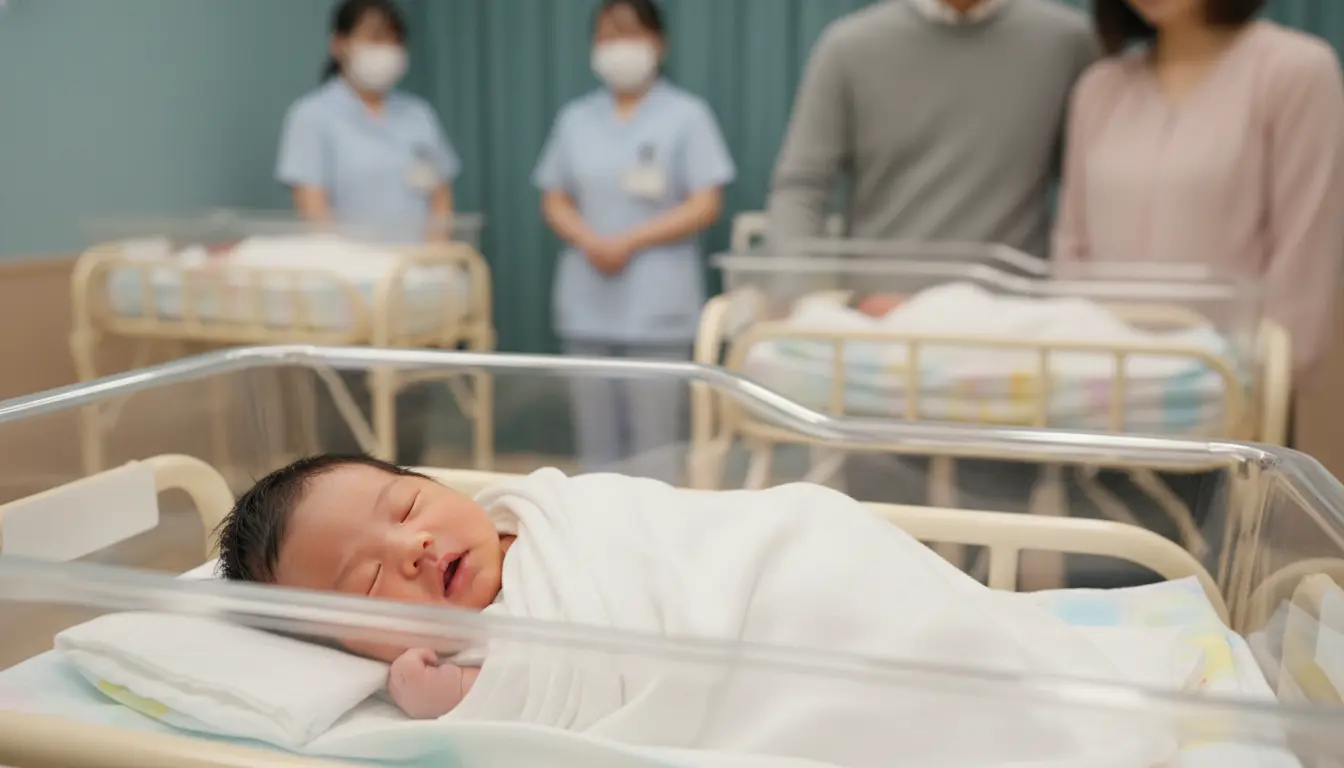 Are you familiar with the film "Like Father, Like Son"? Released in 2013, this human drama directed by Hirokazu Kore-eda received high acclaim both in Japan and abroad, winning the Jury Prize at the Cannes Film Festival. At the center of the story is the discovery, at a hospital, that two families' children had been switched — a mix-up confirmed through DNA testing and blood type testing — and the deep emotional conflict that follows.
This film is not mere fiction; it is said to be based on several real newborn switching incidents that actually occurred in Japan. In the film, a discrepancy in blood type raises suspicion of a switch, and DNA testing ultimately confirms the fact of the mix-up. This same process has played out in real-life switching incidents as well, vividly illustrating just how accurate and reliable DNA testing is as a method of proving parent-child relationships.
The reality of newborn switching incidents in Japan
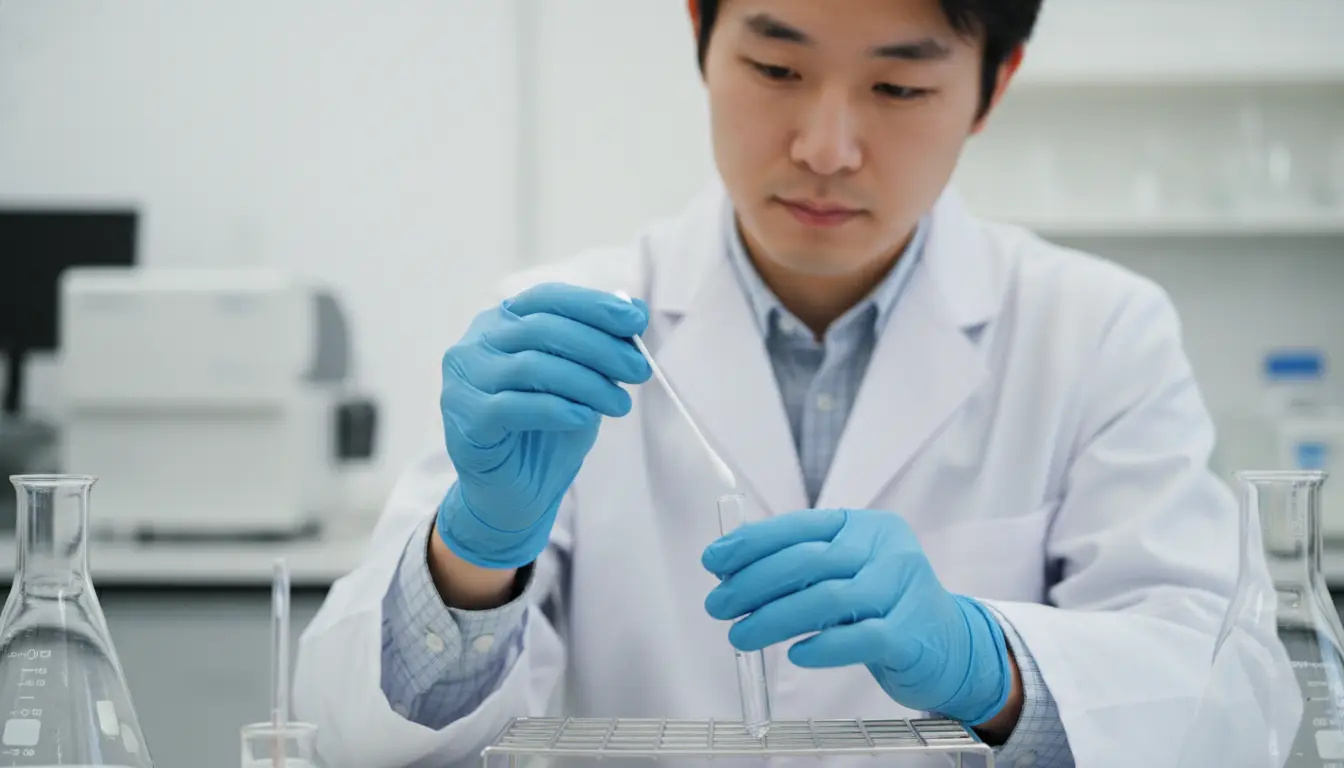 In Japan, switching accidents like the one depicted in this film appear to have occurred around the postwar baby boom. According to the Japanese Society of Legal Medicine in 1973, 32 switching incidents were reported nationwide between 1957 and 1971 [ref:1]. Six similar cases were reported in other countries combined, meaning Japan experienced five times as many such tragedies. Moreover, this figure of 32 represents only reported cases; the actual number is estimated to be as much as ten times higher.
Why did so many switching incidents occur in Japan? The background lies in the overcrowded state of obstetric facilities during the baby boom era. Many births took place simultaneously at a single hospital, and newborn management systems were not yet well established. At the time, the practice of attaching identification bands to newborns was not thoroughly enforced, and there was always a risk of mixing up babies during bathing or feeding.
Details of a switching incident revealed in 2013
Even in recent years, cases like the following have been reported. In 2013, a man who discovered he had been switched with another baby in 1953 sued the hospital for 250 million yen in damages and ultimately was awarded 38 million yen in compensation [ref:2].
This man was forced to live in extreme poverty in the family that mistakenly took him in; after graduating junior high school, he had no choice but to work at a small factory, barely managed to graduate from a part-time high school, and got by working as a truck driver, among other jobs. His biological parents, however, were financially well-off, and all four siblings — including the child who had been mistakenly raised elsewhere — reportedly went on from private high schools to university and graduate school [ref:2]. This case starkly illustrates how a newborn switching incident can drastically change the course of a person's entire life.
More recently, it has also been reported that a man switched at a maternity hospital 67 years ago has spent more than 20 years searching for his birth parents [ref:3]. In 2025, a court ruling ordered the Tokyo Metropolitan Government to investigate his birth parents, showing that the issue of baby switching is not a thing of the past but continues to affect people's lives today [ref:4]. The investigation ultimately failed to identify his birth parents because 68 years had passed [ref:5], illustrating how the passage of time can make uncovering the truth extremely difficult.
What is DNA testing? Its mechanism and accuracy
 DNA testing is a scientific method that analyzes patterns at specific gene loci within an individual's DNA (deoxyribonucleic acid) to identify individuals or determine parent-child relationships. Human DNA consists of approximately 3 billion base pairs, and within it are regions called "STRs" (Short Tandem Repeats), where the number of repeats varies from person to person [ref:6].
A child inherits half of their DNA from each parent. Therefore, a child's DNA type is always composed of a combination of an allele derived from the father and an allele derived from the mother. DNA testing analyzes multiple gene loci simultaneously to check whether the child's DNA type is consistent with the DNA type of the presumed father. With current technology, it is possible to test 20 or more loci simultaneously, achieving an extremely high accuracy rate of 99.99% or greater for confirming parent-child relationships.
Difference from blood type testing
In the film "Like Father, Like Son," a blood type mismatch was the trigger for discovering the switch, but blood type testing alone cannot accurately determine a parent-child relationship. There are only four ABO blood types, and even including the Rh factor, only eight combinations exist. As a result, the probability of matching blood types is quite high, and relying on blood type alone to confirm a parent-child relationship has significant limitations.
- Blood type testing: only 4 to 8 patterns exist, so it can only serve as material for "ruling out" a relationship
- DNA testing: can distinguish among billions of patterns, allowing a parent-child relationship to be "confirmed" with 99.99% or greater accuracy
- DNA testing can be performed with just an oral mucosa swab — no blood draw is required
- Testing is possible from the newborn stage, making it ideal for early parent-child confirmation
Early DNA testing prevents tragedy
In the film "Like Father, Like Son" mentioned earlier, the switch wasn't discovered until the child was six years old — but if DNA testing had been performed while the mother was pregnant, or immediately after birth, the tragedy likely would not have grown to such proportions. The fact that the child raised for six years turned out not to be one's biological child brought immeasurable emotional suffering to both families. Had DNA testing been performed immediately after birth, the switch could have been caught right away, and both families could have begun life with their true biological children from the start.
Our company's founder was in fact inspired to start our DNA testing service by a situation where a newborn mix-up was suspected. This kind of problem is not simply something that happens in movies or the news — it is something that could happen to anyone, close to home.
Cases where DNA testing is needed
Beyond confirming newborn switches, DNA testing is used in a variety of situations.
- Confirming a parent-child relationship: post-birth parent-child confirmation, legal procedures related to acknowledgment of paternity
- Proving family relationships: inheritance matters, proving blood relation for visa applications
- Resolving legal disputes: establishing a parent-child relationship in divorce mediation or court proceedings
- Second opinions: re-confirming results from testing done at another institution
- Prenatal testing: testing during pregnancy to confirm paternity
seeDNA's DNA testing is highly accurate and reasonably priced
seeDNA's DNA testing is highly accurate, reasonably priced, and we even provide free retesting in the unlikely event it's needed. We have established a testing framework that complies with international standards, and every test undergoes a double-check by multiple examiners. This thoroughly eliminates human error and ensures we deliver highly reliable results to our customers.
Sample collection is also simple. A sufficient DNA sample can be obtained just by lightly swabbing the inside of the cheek with a dedicated cotton swab. There's no need for a painful blood draw, so it can be used safely even for newborns and young children. Another major convenience is that the collection kit is delivered to your home, and once samples are collected, you simply mail them back using the included return envelope.
Trust seeDNA for a DNA test as a second opinion. Even if you've already had testing done at another institution, if you have any doubts about the results, you can have us conduct the test again. We at seeDNA are committed to fully supporting you in scientifically confirming the bonds of your precious family.
Modern obstetric care and measures to prevent baby switching
Today's obstetric facilities have implemented various measures to prevent newborn switching. These include attaching matching identification bands to mother and baby pairs immediately after birth, and introducing electronic tag systems. However, as long as humans are involved in the process, it is difficult to completely eliminate risk.
That is precisely why scientific parent-child confirmation through DNA testing is gaining attention as the most reliable method. DNA testing becomes especially important in situations where the risk of a mix-up is elevated — such as facilities with many multiple births, or at discharge following an extended NICU stay. To start parenting with peace of mind, we recommend considering DNA testing at an early stage after birth.
Frequently Asked Questions
Q1. How accurate is DNA testing?
A. Because current technology analyzes 20 or more gene loci simultaneously, it achieves an extremely high accuracy rate of 99.99% or greater for confirming a parent-child relationship. This is far more reliable than blood type testing and is accepted as legally valid evidence.
Q2. Can newborns undergo DNA testing?
A. Yes, they can. Because DNA testing only requires collecting a sample of oral mucosa with a cotton swab, it can be safely performed even on newborns. No blood draw is required at all. Testing can be done immediately after birth.
Q3. If I suspect a switch may have occurred, what should I do first?
A. First, please consult a trustworthy DNA testing institution. seeDNA welcomes inquiries by phone or email at any time. We will send a sample collection kit to your home, and you can proceed with testing through a simple process.
Q4. Is a switch still possible even if the parent and child's blood types match?
A. Yes. Since there are only four ABO blood types, a matching blood type does not guarantee a parent-child relationship. DNA testing is necessary to reliably confirm a parent-child relationship. Blood type testing can only serve as reference material for "ruling out" a relationship.
Q5. If I request a retest through seeDNA, is there a fee?
A. seeDNA provides free retesting in the unlikely event it's needed. This service can also be used as a second opinion by those who have concerns about results obtained from another institution, so please feel free to contact us.
Q6. How long does it take to get DNA testing results?
A. Typically, we provide results within a few days to about a week after the sample arrives at our facility. Expedited service is also available if you're in a hurry, so please feel free to contact us.
Reliable support from seeDNA Genetic Medical Institute
seeDNA Genetic Medical Institute is a trusted and reliable DNA testing and genetic testing institution that holds the international quality standard ISO9001 certification and the Privacy Mark for personal information protection.
If you have concerns about family or parent-child blood relationships, or a partner's infidelity, our DNA testing experts are here to provide the support you need for peace of mind — please feel free to contact us.
[Free consultation with specialized staff]
If you have any questions,
please feel free to contact our toll-free number.
/Open every day, including weekends/
Business hours: Monday - Sunday 9:00-18:00
(except public holidays)
 Author
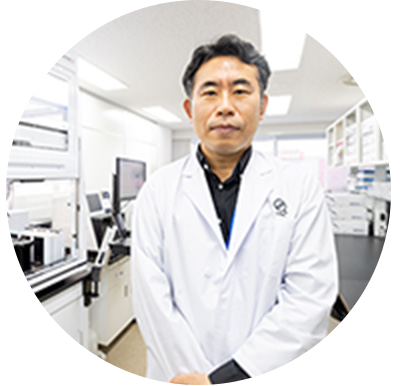
Dr. Yoshinori Tomikane, Ph.D.
Completed his master's and doctoral studies in Biological and Molecular Information Medicine at the University of Tsukuba Graduate School
In 2017, developed Japan's first prenatal DNA test(Patent 7331325) using a trace DNA analysis technology(Patent 7121440)