
Rewritten on: December 15, 2024
We explain the case in which the director of a Dutch fertility clinic used his own sperm without patients' consent, becoming the biological father of 49 children. This article details the risk of embryo mix-ups in IVF and how DNA testing can confirm the truth.
- ・What Are the Risks of IVF? How DNA Testing Can Put Your Mind at Ease
- ・Who Fathered 49 Children? — The Shocking Scandal at a Dutch Fertility Clinic
- ・"Please Don't Perform DNA Testing After My Death" — The Truth Uncovered by DNA Testing
- └ The Accuracy and Reliability of DNA Testing
- ・The Seriousness of Embryo Mix-Ups in IVF
- └ Major Mix-Up Cases Reported Around the World
- ・Prenatal Testing or Maternity Testing Can Reveal Whether an Embryo Mix-Up Occurred
- └ What DNA Testing Can Confirm
- └ Why Choose seeDNA Genetic Medicine Research Institute
What Are the Risks of IVF? How DNA Testing Can Put Your Mind at Ease
 In vitro fertilization (IVF) is a reproductive technology that offers a ray of hope to many couples struggling with infertility. At the same time, however, it is a treatment that depends heavily on the ethics of medical institutions and doctors. This article looks at a shocking case of fraud that actually occurred in the Netherlands, and explains in detail the risks lurking within IVF and how DNA testing can help resolve those concerns.
Who Fathered 49 Children? — The Shocking Scandal at a Dutch Fertility Clinic
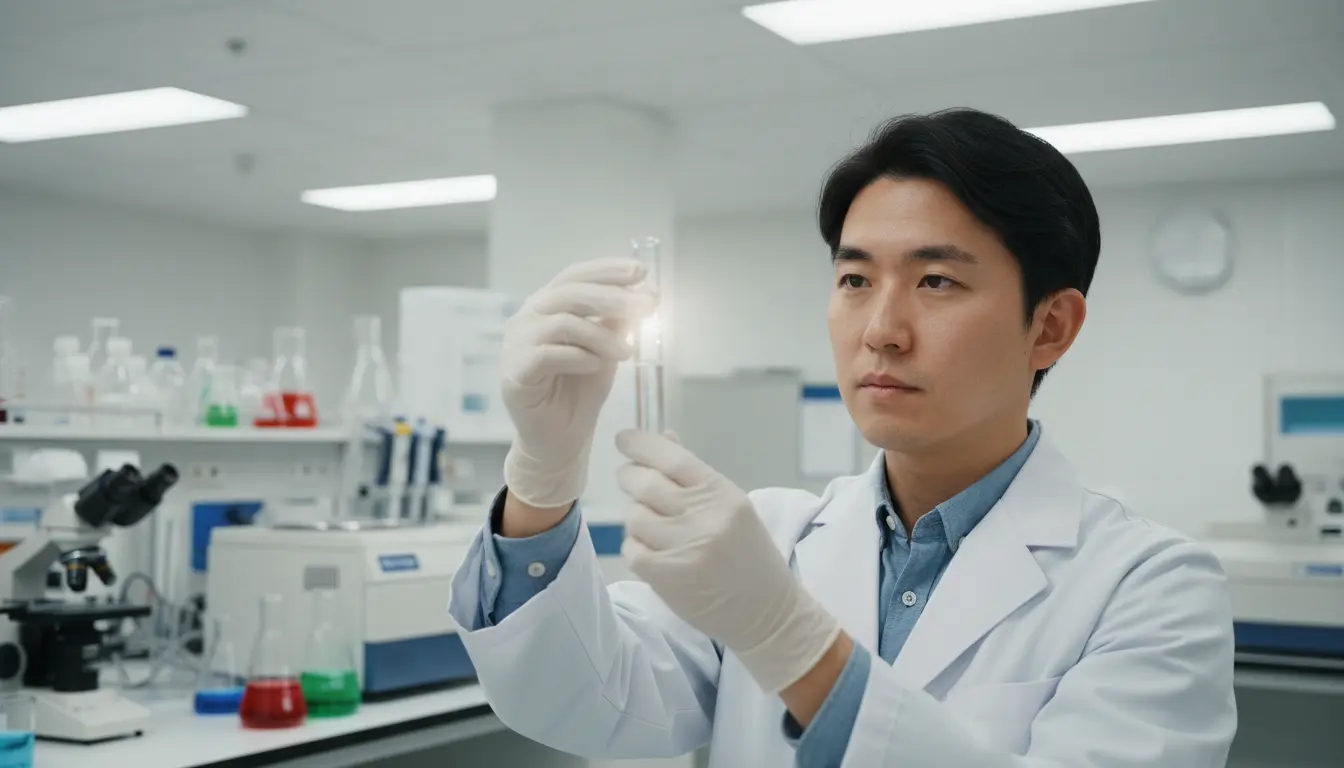 In 2019, it was revealed that a Dutch doctor had used his own sperm during IVF procedures without his patients' consent, fathering at least 49 children — a revelation that shocked the world [ref:1]. The central figure in this case was Jan Karbaat, who had served as director of a fertility clinic in the Netherlands.
The affair first came to light through reports that, before his death, Karbaat had admitted to fathering around 60 children. Serious allegations of fraud emerged one after another at the clinic he ran, including falsified test results and donor information, and the clinic was ultimately forced to close in 2009. However, it would take many more years before the full scope of the problem came to light.
In 2016, after Karbaat's death, suspicions resurfaced that he had used his own sperm in treatments rather than that of the chosen sperm donors. In response, a group of 23 people — children born through IVF at the clinic and their parents — filed a collective lawsuit demanding DNA testing. For the patients and the children who were born, DNA testing was an essential means of confirming their identity and biological roots.
"Please Don't Perform DNA Testing After My Death" — The Truth Uncovered by DNA Testing
 On May 23, 2016, DNA testing was carried out comparing samples from Karbaat's legitimate child (born to his wife within their marriage) with samples provided by 19 people conceived through IVF at the clinic. The results were shocking: the legitimate child's DNA matched that of the 19 half-siblings.
Later, on April 12, 2019, "Defence for Children," an organization representing the children born at the clinic and their parents, officially announced that DNA testing had confirmed at least 49 people were biologically Karbaat's children. This scientific evidence provided undeniable confirmation that he had used his own sperm rather than that of the chosen donors during IVF procedures at the clinic.
During his lifetime, Karbaat, who called himself a "pioneer of fertility treatment," had left instructions that no DNA testing be performed after his death — likely because he feared his wrongdoing would be scientifically proven. He also admitted to mixing his own sperm with that of various donors and to falsifying documents related to the donors [ref:2].
The Accuracy and Reliability of DNA Testing
The DNA testing used in this case was centered on a method called STR (Short Tandem Repeat) analysis. This method compares individual variation in repetitive sequences found in the human genome to determine parent-child or sibling relationships with high accuracy. Modern DNA testing technology has advanced tremendously, and paternity testing can now prove (or disprove) a father-child relationship with a probability of 99.99% or higher [ref:3].
In Karbaat's case, although a direct DNA sample from him could not be obtained, indirect comparative analysis using his legitimate child's DNA was still able to produce sufficiently accurate results. This is a good example of the scientific robustness of DNA testing.
The Seriousness of Embryo Mix-Ups in IVF
Karbaat's case is an extreme example of fraud, but it is far from the only trouble associated with IVF. Cases of mixed-up embryos, sperm, and eggs have been reported at medical institutions around the world. Such mix-ups can occur for a variety of reasons, ranging from simple human error to labeling mistakes and inadequate incubator management.
In Japan as well, more than approximately 500,000 IVF cycles are performed annually [ref:4], and given this scale, even a minor mistake can lead to serious consequences. When a mix-up occurs, it can cause not only confusion over parentage but also difficulty in understanding genetic health risks — a serious problem that can affect a child for the rest of their life.
Major Mix-Up Cases Reported Around the World
- Sperm donor mix-ups: cases where a different donor's sperm is used
- Embryo mix-ups: cases where another patient's embryo is transferred
- Fraudulent use by a doctor: cases like Karbaat's, where a doctor uses his own sperm without consent
- Labeling errors: cases where sample identification information is confused
- Contamination during culturing: cases where samples become mixed with others inside the incubator
Prenatal Testing or Maternity Testing Can Reveal Whether an Embryo Mix-Up Occurred
What Karbaat's intentions were in doing what he did has never ultimately been made clear, but it is an act that can never be forgiven. It was a fundamental betrayal of the trust between doctor and patient, and it caused immeasurable emotional suffering to the affected families.
DNA testing is the most reliable way to address the embryo mix-up problem associated with IVF. At seeDNA Genetic Medicine Research Institute, we offer the following tests to scientifically determine whether an embryo mix-up has occurred [ref:5].
What DNA Testing Can Confirm
- Prenatal Paternity Testing: By analyzing fetal DNA (cell-free fetal DNA) contained in blood drawn from the mother during pregnancy, this test can confirm the parent-child relationship with a candidate father before birth. Testing is available from the 9th week of pregnancy onward.
- Maternity Testing: After birth, this test compares the DNA of the mother and child to confirm the biological mother-child relationship. It is especially useful in cases involving egg donation during IVF or where an embryo mix-up is suspected.
- Paternity Testing: This test compares the DNA of a candidate father and child to confirm whether a father-child relationship exists. It is useful in cases where a sperm donor mix-up is suspected.
Why Choose seeDNA Genetic Medicine Research Institute
seeDNA Genetic Medicine Research Institute uses the latest genetic analysis technology to provide highly accurate DNA testing services. We have extensive experience in parent-child genetic testing following IVF, and we help resolve concerns about embryo mix-ups on a solid scientific basis [ref:6].
- A highly accurate analysis system that complies with international standards
- Thorough counseling provided by doctors and certified examiners
- Complete confidentiality with careful attention to privacy
- Testing available from during pregnancy (prenatal)
- Clear, easy-to-understand result reports
If you have become pregnant or given birth after IVF and have concerns about a possible embryo mix-up, please feel free to contact us. We provide objective, scientific support through DNA testing to fully resolve your concerns.
Frequently Asked Questions
Q1. Is there a way to check whether an embryo mix-up occurred after IVF?
A. Yes, this can be scientifically confirmed through DNA testing (paternity testing or maternity testing). Before birth, a non-invasive method using the mother's blood can be used from the 9th week of pregnancy onward; after birth, a DNA comparison between mother and child, or father and child, can determine the biological parent-child relationship with an accuracy of 99.99% or higher.
Q2. Is prenatal DNA paternity testing dangerous for the mother or fetus?
A. Current prenatal DNA paternity testing is performed using a non-invasive method (NIPPT) that requires only a blood draw from the mother. Invasive procedures such as amniocentesis are not needed, and there is virtually no risk to either the mother or the fetus. It can be safely performed even during pregnancy.
Q3. Are there other cases of doctors fraudulently using their own sperm, like Karbaat's case?
A. Unfortunately, similar cases have been reported in countries around the world. In the United States, the United Kingdom, and elsewhere, fertility doctors have been found to have used their own sperm without consent, and the spread of DNA testing technology continues to bring past wrongdoing to light. Against this backdrop, the importance of DNA confirmation testing after IVF is becoming increasingly recognized.
Q4. How long does it take to get DNA testing results?
A. This varies depending on the type of test and the testing institution, but at seeDNA Genetic Medicine Research Institute, we generally provide results within a few days to two weeks after the samples arrive. Expedited service is also available for urgent cases — please contact us for details.
Q5. How much does DNA testing cost?
A. Costs vary depending on the type of test (paternity testing, maternity testing, prenatal testing, etc.) and the scope of testing. seeDNA Genetic Medicine Research Institute publishes the pricing for each testing menu on our official website, so please feel free to contact us or check our website first.
Q6. Can DNA paternity testing be done for natural pregnancies as well, not just IVF?
A. Yes, DNA paternity testing is available not only for IVF pregnancies but also for natural pregnancies. It can be used to confirm paternity, maternity, and various other relationships.
Peace of Mind with seeDNA Genetic Medicine Research Institute
seeDNA Genetic Medicine Research Institute is a trusted specialist institution for DNA and genetic testing, certified under the international quality standard ISO 9001 and Japan's Privacy Mark for personal information protection.
If you have concerns about family or parent-child blood relationships, or a partner's infidelity, our DNA testing experts are here to provide reassuring support — please feel free to contact us.
[Free Consultation with Specialist Staff]

If you have any questions,
please feel free to contact our toll-free number.
/Open every day, including weekends/
Business hours: Monday–Sunday 9:00 AM–6:00 PM
(except public holidays)
 Author
Dr. Okinori Tomikane, M.D., Ph.D.
Graduated from the master's/doctoral program in Biosystems Control and Molecular Informative Medicine at the University of Tsukuba Graduate School.
In 2017, developed Japan's first trace-DNA analysis technology (Patent No. 7121440) and used it to develop prenatal DNA testing (Patent No. 7331325)