
Revised: September 4, 2024
Even if a sample (such as saliva) from someone other than the test subject gets mixed into a DNA test, because the volume of buccal (oral) epithelial cells is overwhelmingly greater, there is no major impact on the results. Even in the rare case of large-scale contamination, the result would simply be "unable to determine" - a misdiagnosis will not occur.
- - What happens to DNA test results if a sample other than the test subject's gets mixed in?
- - Results remain unchanged even if a sample from someone other than the test subject is mixed in
- - What happens if a large amount of saliva gets on the swab
- - Concrete countermeasures if you're worried about contamination
- - The quality control system that supports the reliability of DNA testing
- - Points to keep in mind when collecting buccal epithelial cells
What happens to DNA test results if a sample other than the test subject's gets mixed in?
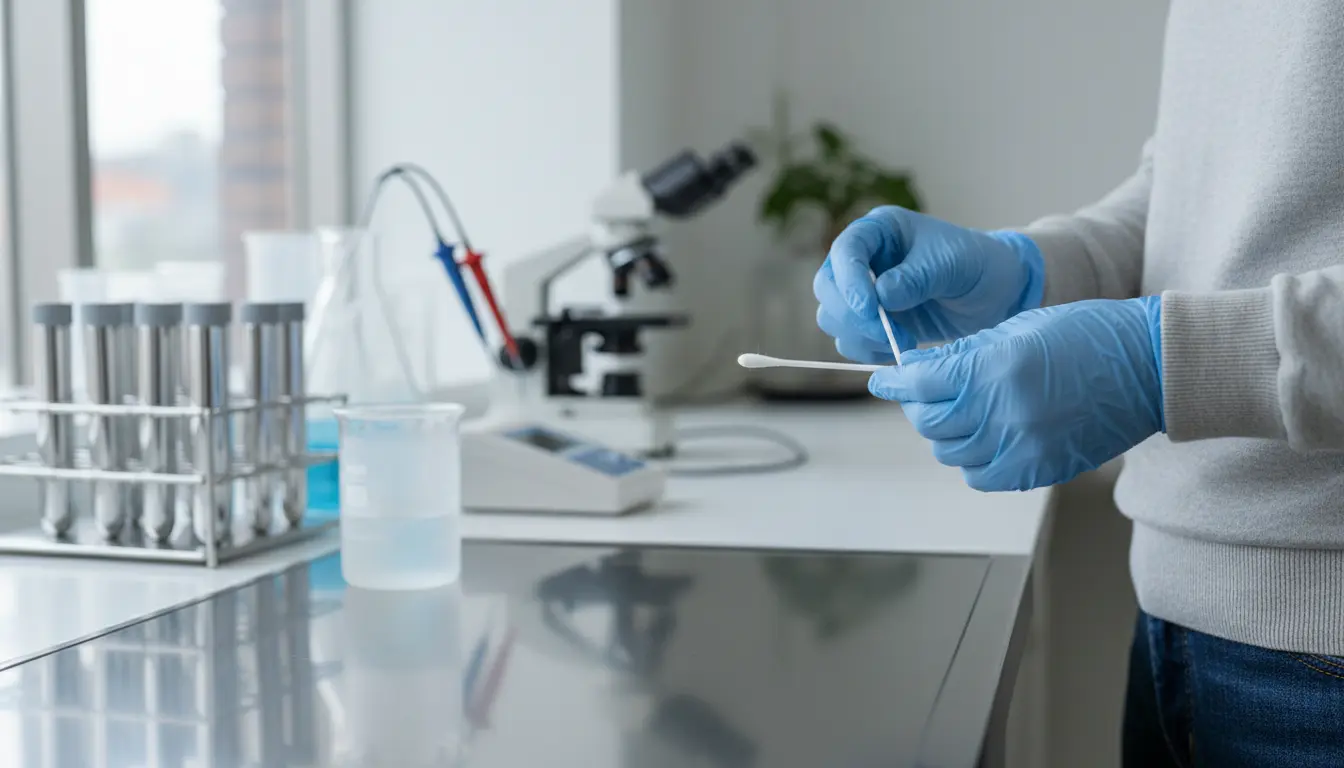 DNA relationship testing and other forms of DNA testing are something many people worry about, thinking "what if someone else's saliva gets on the swab I collected?" To answer this upfront: even if a small amount of someone else's saliva gets on a swab that has correctly collected buccal epithelial cells, the test result will not change. In this article, we explain in detail - drawing on the expertise of the seeDNA Forensic Science Laboratory, a specialized DNA testing institution - why contamination does not affect the results, what happens if large-scale contamination does occur, and what countermeasures are available.
Results remain unchanged even if a sample from someone other than the test subject is mixed in
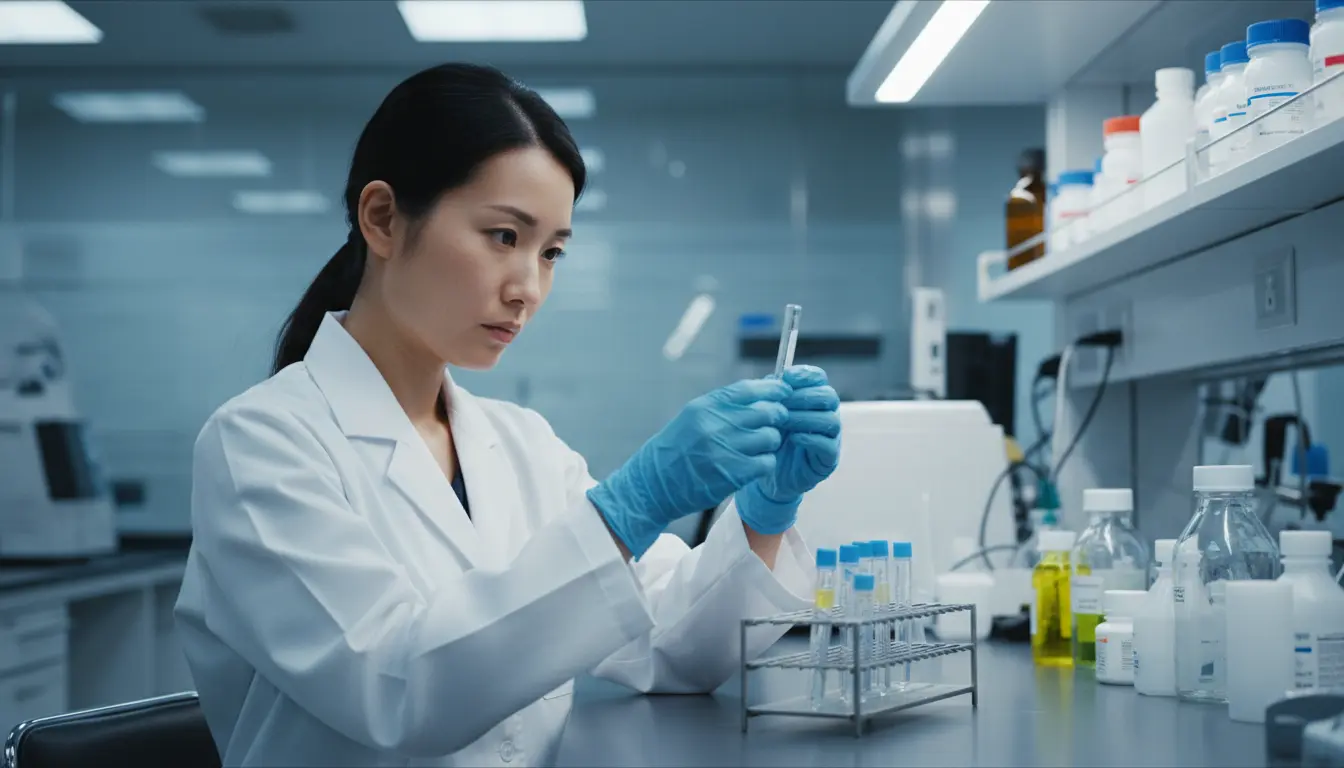 When collecting the buccal epithelial cells (mucosal cells from the inside of the cheek) submitted for DNA testing, you are asked to press a dedicated swab firmly against the inside of the test subject's cheek and rub it back and forth and up and down about 10 times. This process deposits an extremely large number of buccal epithelial cells onto the swab [ref:1]. Since far more cells are collected than most people would imagine, even if a small amount of someone else's saliva happens to get on the swab, the amount of DNA obtained from the test subject's buccal epithelial cells will overwhelmingly exceed it.
Specifically, the amount of DNA in properly collected buccal epithelial cells is said to be more than 10 times greater than the amount of DNA in a trace amount of contaminating saliva. DNA testing uses PCR (polymerase chain reaction) to amplify specific genetic loci (STR: Short Tandem Repeat) and analyze the resulting pattern [ref:2]. In this process, when the primary DNA (from the test subject) is overwhelmingly predominant, the trace amount of contaminating DNA is treated as background noise and has no substantial effect on the analysis results.
In the field of forensic science, analyzing "mixture" samples containing DNA from multiple people is a well-established technique [ref:3]. However, because the test subject's DNA occupies an overwhelmingly dominant proportion when collecting buccal epithelial cells, the need to treat a sample as a mixture rarely arises in the first place. Therefore, we can state with confidence that trace amounts of contaminating saliva have no effect on the test result.
What happens if a large amount of saliva gets on the swab
 Although this is an extremely unlikely scenario, we will also explain what happens if a large amount of saliva from someone other than the test subject ends up on the swab. In such a case, DNA patterns from multiple people may be detected during analysis. However, the important point is that even in this case, the result would simply be "unable to determine" - an incorrect analysis result would never be reported.
In DNA testing quality control, if abnormal patterns are found in the analysis data (such as the appearance of unexpected alleles), a system is in place for the analyst to detect the abnormality and withhold confirmation of the result [ref:4]. Unless a testing institution is extraordinarily careless, data suspected of contamination would never be reported as the final result as-is.
In addition, the seeDNA Forensic Science Laboratory offers a free retest if a result cannot be obtained. By collecting a new sample, it is possible to obtain an accurate test result.
Concrete countermeasures if you're worried about contamination
As mentioned above, since trace amounts of contaminating saliva have no effect on the test, there is normally no need to take any special countermeasures. However, if you are still concerned, you can address it in the following ways.
- Re-collect using a new DNA test kit: If you contact us, we will send a new DNA test kit free of charge. Please collect the buccal epithelial cells again.
- Send hair from the person who contaminated the sample: By sending a few strands of hair from the person whose saliva got on the swab (the contaminator), it is technically possible to identify that person's DNA profile from the test subject's DNA data and subtract it out.
- Submit as-is: If the contamination is only a trace amount, there is no problem proceeding with the test as-is. If the test happens to be inconclusive, it will be eligible for a free retest.
In any case, it will never be reported that a biological parent-child relationship exists when it does not. Because DNA testing rigorously checks the match or mismatch of alleles at each genetic locus, it is fundamentally impossible for contamination to mistakenly tip a parentage determination toward a false positive [ref:5].
The quality control system that supports the reliability of DNA testing
The accuracy of DNA testing is guaranteed by strict quality control throughout the entire process, from sample collection to analysis and result reporting. The seeDNA Forensic Science Laboratory has the following quality control systems in place.
- Traceability management that assigns a unique ID to each sample to prevent mix-ups
- A double-check system involving multiple analysts (double-blind testing)
- Standardized protocols based on internationally recognized STR analysis methods
- Contamination detection using negative controls
- Regular participation in proficiency testing and external evaluation
It is precisely because of this quality control system that the accuracy of the final test result is ensured even if trace contamination were to occur. In particular, the use of negative controls is a fundamental and highly important means of detecting contamination during the experimental process, and it is recommended by international guidelines in the field of forensic science [ref:3].
Points to keep in mind when collecting buccal epithelial cells
Although contamination has almost no effect on the result, we recommend keeping the following points in mind when collecting a sample in order to obtain a more reliable test result.
| Point | Specific details |
|---|---|
| Preparation before collection | Avoid eating, drinking, smoking, and brushing your teeth for 30 minutes before collection |
| Clean hands | Wash your hands before collection so as not to touch the tip of the swab |
| Collection method | Press firmly against the inside of the cheek and rub back and forth and up and down about 10 times |
By following these basic precautions, you can collect a sufficient amount of buccal epithelial cells, ensuring that even if trace contamination occurs, you will still obtain a completely reliable test result.
If you have any concerns about sample contamination in DNA testing, please feel free to contact the seeDNA Forensic Science Laboratory. Our specialized staff will be happy to guide you.
Click here for details on what can be tested >>
Frequently Asked Questions
Q1. A little bit of a family member's saliva got on the swab I collected - will this affect the test result?
A. There will be no effect. A swab on which buccal epithelial cells have been properly collected carries an extremely large number of cells - more than 10 times the amount of DNA found in a trace amount of saliva. Therefore, please rest assured that the test result will not change even if a small amount of saliva gets mixed in.
Q2. If a large amount of someone else's saliva gets on the swab, could an incorrect test result be produced?
A. An incorrect test result will not be produced. If large-scale contamination occurs, the analysis stage will simply detect the abnormality and the result will be "unable to determine." Please rest assured that it is fundamentally impossible for a "yes" result to be reported when no parent-child relationship exists.
Q3. If the test is inconclusive, is a retest chargeable?
A. At the seeDNA Forensic Science Laboratory, if a test result cannot be obtained due to sample contamination or similar issues, you can receive a free retest. We will send a new DNA test kit, and you will collect a sample again.
Q4. Is it true that sending hair from the person who contaminated the sample can resolve the issue?
A. Yes, it is true. By sending a few strands of hair from the person whose saliva got on the swab, it is technically possible to identify that person's DNA profile and subtract it from the test subject's DNA data. This makes it possible to obtain an accurate test result.
Q5. Is there anything I should be careful about when collecting buccal epithelial cells?
A. The main precautions are to avoid eating, drinking, smoking, and brushing your teeth for 30 minutes before collection, to avoid touching the tip of the swab with your fingers, and to press firmly against the inside of the cheek while rubbing back and forth and up and down about 10 times. Following these steps will allow you to collect a sufficient amount of cells and obtain a more reliable test result.
Q6. Is there no need to worry about contamination for samples other than buccal epithelial cells (such as hair or nails)?
A. For samples such as hair and nails as well, trace contamination is not a problem as long as there is a sufficient amount of the test subject's DNA. However, the amount of DNA that can be collected varies depending on the type of sample, so if you have any concerns, please feel free to contact the seeDNA Forensic Science Laboratory. For details on what samples can be tested, please see here.
Reliable support from the seeDNA Institute of Genetic Medicine
The seeDNA Institute of Genetic Medicine is a trusted, reliable specialist institution for DNA testing and genetic testing that has obtained the international quality standard ISO9001 and the Privacy Mark for privacy protection.
If you are worried about family or parent-child blood relationships, a partner's infidelity, or similar issues, our DNA testing experts will provide reassuring support, so please feel free to contact us.
[Free Consultation with Specialized Staff]

If you have any questions,
please feel free to contact our toll-free number.
/ Open every day, including weekends /
Business hours: Monday-Sunday 9:00 AM - 6:00 PM
(excluding holidays)
 Author
Dr. Kihan Tomgane, M.D., Ph.D.
Graduated from the Master's/Doctoral program in Biosystem Studies / Molecular Medicine, University of Tsukuba Graduate School
In 2017, developed the first prenatal DNA testing method in Japan(Patent 7331325) using a trace DNA analysis technology(Patent 7121440)