
Rewritten: December 3, 2024
Once DNA testing identifies the father, you can claim child support—and enforce collection—even from a man who refuses to acknowledge paternity. Here we explain in detail the mediation, court, and compulsory acknowledgment procedures along with their legal basis.
- ・DNA testing can compel child support payments
- ・What is the obligation to pay child support?
- ・Standards for calculating child support
- ・How to make a claim
- ・The typical process for establishing paternity
- ・The enforcement procedure
- ・Types of DNA testing and their legal effect
- ・Support systems available to single mothers
- ・The process is possible even if the father is missing
DNA testing can compel child support payments
 "The man refuses to acknowledge paternity," "He cut off all contact and disappeared"—even single mothers in situations like these can compel child support payments by following the proper legal procedures. DNA testing is the most powerful means of scientifically proving a father-child relationship, and it is recognized as having extremely high evidentiary value even in family courts [ref:1]. This article explains in detail the concrete process, from acknowledgment of paternity to claiming child support and ultimately enforcing collection.
What is the obligation to pay child support?
 Under Japan's Civil Code, a father has a duty to support his child (Civil Code Article 877). This obligation arises equally whether the father voluntarily acknowledges paternity or is compelled to do so through a court ruling. In other words, even a man who refuses to acknowledge the baby, won't even discuss it, and tries to run from responsibility can be legally compelled to pay child support [ref:2].
As a general rule, the duty to pay child support continues until the child reaches the age of majority (18 under current law), though in cases where the child is expected to attend university, this can be extended to age 22. Furthermore, the law can compel not only child support but also the division of assets the man should eventually leave behind as a father (inheritance rights). Because a child who has been legally acknowledged has the same inheritance share as a child born within marriage, their rightful share in the estate is guaranteed [ref:3].
Assuming an ordinary salaried worker who owns a home in Tokyo, the combined total of child support and future inheritance can easily exceed 15 million yen. This represents an extremely heavy responsibility for the man, but it is a right guaranteed to the child by law, and also a father's duty. For the sake of the young baby, this is something the mother should firmly claim.
Standards for calculating child support
 The amount of child support is generally calculated based on the "Child Support Calculation Table" published by the family courts [ref:4]. This table factors in the annual income of both the father and mother, along with the number and ages of the children, to determine the monthly amount of child support.
- The higher the father's annual income, the larger the child support amount
- Once a child turns 15, the amount increases to account for rising education costs
- The more children there are, the higher the total amount, though the per-child amount tends to be somewhat lower
- If the mother's income is low, the father's share of the burden becomes greater
- Special expenses such as medical or education costs may be claimed separately
For example, if the father earns 5 million yen a year and the mother earns 1 million yen a year, with one child aged 0–14, the typical monthly amount is around 40,000–60,000 yen. Calculated over 18 years, child support alone comes to between 8.64 million and 12.96 million yen. Since inheritance rights arise on top of this, it becomes clear just how important it is to secure acknowledgment of paternity.
How to make a claim
To claim child support, you must first legally establish the father-child relationship. For a child born to unmarried parents, no legal father-child relationship exists unless the father "acknowledges" the child.
As long as you know who the man is and where he is—his name and address—you can pursue the legal procedure for acknowledgment of paternity. Even in the worst case, where all you know about the man is his mobile phone number, you can use the attorney inquiry system (an inquiry based on Article 23-2 of the Attorney Act) to identify his address and proceed with the legal process [ref:5].
There are indeed cases where a man refuses both mediation and acknowledgment, and even refuses DNA testing. Even so, the court can comprehensively weigh other evidence (the fact of the relationship, email and social media exchanges, circumstantial evidence about the timing of the pregnancy, etc.) and issue a ruling of compulsory acknowledgment. Once compulsory acknowledgment is finalized, the fact of acknowledgment is recorded in the man's family register, and the legal father-child relationship is established.
The typical process for establishing paternity
The acknowledgment process generally proceeds as follows.
- Requesting voluntary acknowledgment: First, you ask the man to voluntarily file an acknowledgment of paternity. If he agrees, the process is complete simply by filing the acknowledgment with the local municipal office.
- Filing for acknowledgment mediation: If he does not agree to voluntary acknowledgment, you file a petition for acknowledgment mediation with the family court that has jurisdiction over the residence of the man who is the baby's biological father. In mediation, discussions take place through a mediator.
- Conducting DNA testing: During mediation, the court will typically propose that DNA testing be carried out. DNA testing has an accuracy of over 99.99% and can scientifically prove whether or not a father-child relationship exists [ref:1].
- Filing an acknowledgment lawsuit (compulsory acknowledgment suit): If mediation fails, or if the man refuses or ignores mediation, you file an acknowledgment lawsuit. In this case, proof of the blood relationship through legal DNA testing is required.
- Ruling for compulsory acknowledgment: Even if the man refuses both DNA testing and the lawsuit, the court can issue a ruling of compulsory acknowledgment based on other evidence, without conducting DNA testing.
- Claiming child support and inheritance: Once acknowledgment is established, both child support payments and division of the estate can be enforced by law.
The enforcement procedure
If paternity has been established and a mediation record or court judgment regarding child support payments exists, but the man fails to pay, you can pursue enforcement procedures. Specifically, it is possible to seize the man's wages or bank account.
Under the revised Civil Execution Act, which took effect in April 2020, enforcement of child support has been further strengthened [ref:6]. Following the revision, courts can now order financial institutions and municipalities to disclose information about the other party's assets, making it easier than before to identify their assets. In addition, because child support can be seized including future installments, it is possible to reliably collect payments through automatic withholding from monthly wages.
Types of DNA testing and their legal effect
DNA testing broadly falls into two categories: "private testing" and "legal testing." To use the results as evidence in court, legal testing must be performed.
| Item | Private Testing | Legal Testing ||------|----------|----------|| Identity verification | Not required | Strict identity verification with photo ID required || Purpose | Personal confirmation | Submission as evidence to court |In legal testing, samples are collected in the presence of a third-party witness, and sample identity is strictly managed. This produces highly reliable test results that courts can accept as evidence [ref:1].
Support systems available to single mothers
It is extremely difficult, both emotionally and financially, for a single mother to go through these legal procedures alone. However, the burden can be reduced by making use of support systems such as the following.
- Houterasu (Japan Legal Support Center): Those with income below a certain threshold can use the system for advancing attorney fees
- Single-Parent Family Employment and Self-Reliance Support Centers: Established in each municipality, offering legal consultation and employment support
- Child Support Consultation Support Center: Free specialized consultation on child support matters
- Free legal consultations by bar associations: Local bar associations regularly hold free consultation sessions [ref:7]
- Child Rearing Allowance: A benefit paid to single-parent households, with the amount adjusted based on the amount of child support received
By consulting a legal professional, you can receive comprehensive support—from determining the best way to proceed and preparing the necessary documents, to negotiating with the other party. For the sake of your child's future, we recommend first considering a consultation with a professional.
The process is possible even if the father is missing
Even if your partner has gone missing, there is no need to give up on claiming child support. If you retain an attorney, it may be possible to investigate the other party's current address by obtaining their residence certificate or family register attachment. In addition, using a system called "service by publication," it is legally possible to proceed with a lawsuit even if the other party's whereabouts are unknown [ref:5].
By combining DNA testing with legal procedures, you can protect your child's rights to the fullest extent. Securing the financial foundation your child needs to grow up healthy is a responsibility that falls on the mother—and on society as a whole.
Frequently Asked Questions
Q1. Can I claim child support even if the other party refuses to acknowledge paternity?
A. Yes, you can. You can file for acknowledgment mediation with the family court, and if he still refuses, you can file an acknowledgment lawsuit (compulsory acknowledgment suit). If the court establishes the father-child relationship based on DNA testing or other evidence, compulsory acknowledgment will be granted, allowing you to claim child support.
Q2. What happens if the other party refuses to undergo DNA testing?
A. Even if DNA testing is refused, the court can comprehensively weigh evidence such as proof of the relationship, email and social media records, and circumstantial evidence about the timing of the pregnancy, and issue a ruling of compulsory acknowledgment. In fact, refusing DNA testing without justifiable reason is itself considered by the court as a factor suggesting a father-child relationship.
Q3. Can I still proceed if all I know is the other party's mobile phone number?
A. Yes, you can. If you retain an attorney, they may be able to identify the person's name and address from the mobile phone contract information using the attorney inquiry system (Article 23-2 of the Attorney Act). From there, you can proceed with the legal process.
Q4. How much child support can I claim?
A. The amount of child support varies depending on the annual income of both parents and the age and number of children. It is generally calculated based on the family court's child support calculation table. For example, if the father earns 5 million yen a year and the mother earns 1 million yen a year, with one child aged 0–14, the typical guideline is around 40,000–60,000 yen per month.
Q5. Does a child who has been acknowledged have inheritance rights?
A. Yes. Following the 2013 revision of the Civil Code, a child who has been acknowledged (a child born out of wedlock) is entitled to the same inheritance share as a child born within marriage. This means that if the father passes away, the child has the right to inherit the estate at the same ratio as children of the man's legally married wife.
Q6. What should I do if child support payments stop partway through?
A. If there is a legal arrangement such as a mediation record or court judgment, you can use enforcement procedures to seize the other party's wages or bank account. Under the 2020 revision of the Civil Execution Act, it is now possible to investigate the other party's asset information through the court, making collection easier than before.
Reassuring Support from seeDNA Genetic Medicine Research Institute
seeDNA Genetic Medicine Research Institute is a trusted and reliable DNA testing and genetic testing institution that has obtained the international quality standard ISO9001 and the Privacy Mark for personal information protection.
If you have concerns about blood relationships within your family, parent-child relationships, or a partner's infidelity, our DNA testing experts are here to provide reassuring support, so please feel free to contact us.
【Free Consultation with Specialized Staff】

If you have any questions,
please feel free to contact our toll-free number.
/Open every day, including weekends/
Business hours: Monday–Sunday 9:00 AM–6:00 PM
(except holidays)
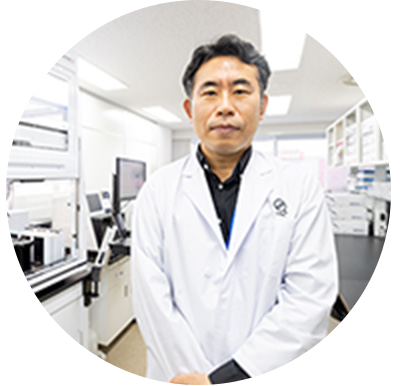 Author
Dr. Kihan Tomikane, M.D., Ph.D.
Completed his master's and doctoral studies in Biosystems Control and Molecular Information Medicine at the University of Tsukuba Graduate School
In 2017, developed Japan's first prenatal DNA testing method(Patent 7331325) using a trace-DNA analysis technology(Patent 7121440)