
Rewritten on: February 7, 2025
In prenatal DNA testing, sex determination is possible with high accuracy, but predicting appearance factors such as facial features, body type, pigmentation, and body hair remains limited, as research into the related genes is still in progress. Environmental factors and a lack of Asian population data remain challenges.
- ・What is prenatal DNA testing?
- ・Can DNA testing predict a baby's appearance before birth?
- ・Specific examples of genes related to appearance
- └ Sex determination
- └ Genes related to facial features
- └ Genes related to body type
- └ Pigmentation intensity (skin, hair, and eye color)
- └ Genes related to body hair
- ・Accuracy and limitations of appearance prediction with prenatal DNA testing
- ・Future outlook and factors needed to improve prediction accuracy
What is prenatal DNA testing?
 Prenatal DNA testing is an analysis that examines fetal DNA information using a blood sample taken from the mother during pregnancy. Traditionally, most DNA testing has been used to confirm parent-child relationships. Specifically, biological parentage is determined by analyzing and comparing the mother's blood during pregnancy with DNA collected from a possible father's oral cells (buccal swab), hair, toothbrush, or similar samples [ref:1].
Remarkable advances in molecular biology in recent years have revealed that the amount of fetal-derived cell-free DNA (cffDNA) in the mother's blood increases as the pregnancy progresses [ref:2]. This cffDNA is released from the placenta into the maternal bloodstream and can be detected from early in pregnancy. Applying this technology has made it possible to analyze fetal DNA information while minimizing the burden on the mother, without invasive procedures such as amniocentesis or chorionic villus sampling. Our seeDNA Genetic Medical Research Institute offers prenatal paternity testing using blood drawn from the 7th week of pregnancy onward.
Furthermore, by examining specific regions of DNA and genetic polymorphisms (SNPs: single nucleotide polymorphisms) in detail, it has become possible to obtain a wide range of information beyond individual identification and parentage testing, including risk assessment for genetic diseases and prediction of constitutional tendencies.
Can DNA testing predict a baby's appearance before birth?
 For many expectant parents, imagining what their child will look like is one of the greatest joys of pregnancy. Will it be a boy or a girl? Will the child resemble the father or the mother? What color will the eyes and hair be? What will the child look like as they grow up? These are questions that fill parents with anticipation.
So, to what extent can prenatal DNA testing using the mother's blood predict a child's appearance? Factors related to appearance mainly include sex, facial features, body type, pigmentation intensity (skin, hair, and eye color), and body hair. Below is a summary of what is currently known about the genes related to these characteristics.
Specific examples of genes related to appearance

Sex determination
Sex can be determined with high accuracy by detecting signals derived from the Y chromosome (such as the SRY gene). Human sex chromosomes are XX in females and XY in males. If a Y chromosome signal is detected in the cffDNA in maternal blood, it is highly likely that the fetus is male (XY); if not detected, it is highly likely to be female (XX) [ref:3].
Because sex is purely genetically determined and does not change due to environmental factors after birth, the prediction accuracy of DNA testing is extremely high in this regard. Our "Fetal Sex DNA Test" allows for early and accurate sex confirmation even in the early stages of pregnancy, when ultrasound cannot yet reliably determine sex.
Genes related to facial features
Regarding genes that determine facial morphology, a great deal of knowledge has accumulated in recent years through genome-wide association studies (GWAS) [ref:4]. The main findings are summarized below.
- Nasal bridge height: An association with the PAX3 gene has been reported
- Nose width: The PRDM16 gene is suggested to be involved
- Distance between the eyes: An association with the TP63 gene has been found
- Lip thickness: Research results suggest an association with the IRF6 gene [ref:5]
- Double eyelids: An association with the EMX2 gene has been reported [ref:6]
However, facial appearance is not determined by a single gene alone; it is a classic example of "polygenic inheritance," in which multiple genes act in combination. For this reason, detecting a specific gene variant alone remains insufficient to accurately predict the overall impression of a face [ref:7].
Genes related to body type
Many genes related to height and weight (degree of obesity), the main components of body type, have also been discovered.
- Height: Large-scale studies have revealed that hundreds of genes, including HMGA1, are involved in determining height [ref:8]. Height is known to have a heritability of about 80%, but nutritional status and living environment during growth periods also have a major influence.
- BMI (degree of obesity): Genes such as FTO and GIPR have been reported to be associated with obesity risk [ref:9]. The FTO gene, sometimes called the "obesity gene," is particularly involved in regulating energy metabolism and appetite.
- Sitting height: An association with the TBX2 gene has been found [ref:10]. The ratio of sitting height to leg length is controlled by multiple genes involved in skeletal growth patterns.
Body type is significantly influenced not only by genetic predisposition but also by acquired lifestyle factors (environmental factors) such as diet, exercise, and sleep. Even if someone has a genetic predisposition toward a slim build, overeating and lack of exercise can still lead to obesity. For this reason, DNA-based prediction of body type carries greater uncertainty than other appearance factors.
Pigmentation intensity (skin, hair, and eye color)
Traits related to pigmentation are known to be relatively strongly influenced by genetics. Skin color, hair color, and eye color are mainly determined by the amount and type of melanin pigment, and the OCA2 gene is deeply involved in this process [ref:11]. The OCA2 gene encodes a protein necessary for melanin biosynthesis, and variants of this gene influence the depth of pigmentation.
In populations of European descent, it is widely known that specific variants of the OCA2 and HERC2 genes are strongly associated with blue eyes. In Asian populations, on the other hand, variation in eye color is relatively limited, so relatively little research data has accumulated.
Although pigmentation intensity can be affected by environmental factors such as UV exposure, its basic tone is largely determined by genetics, making it one of the appearance factors that is relatively easier to predict through DNA testing.
Genes related to body hair
Genetic influences have also been reported for body hair [ref:6].
- Hairiness: Associations with the TBX15 and BCL2 genes have been shown
- Hair texture (curliness of hair): The EDAR gene has been reported to be involved
The EDAR gene has a variant (370A) that is common among East Asians and is known to influence not only thick, straight hair but also sweat gland density and tooth shape. This gene is thought to have been maintained at high frequency in Asian populations through natural selection, making it a fascinating subject of study in evolutionary genetics as well.
Accuracy and limitations of appearance prediction with prenatal DNA testing
As described above, various genes related to appearance have been scientifically identified, but the following challenges remain in predicting appearance at this time.
- The complexity of polygenic inheritance: Traits such as facial features and height are polygenic, with dozens to hundreds of genes each contributing a small effect, making accurate prediction difficult through the analysis of a single gene alone
- The influence of environmental factors: Body type in particular is greatly affected by environmental factors such as nutrition, exercise, and lifestyle, so prediction based solely on genetic information has its limits
- Bias in research data: Most large-scale genome studies to date have focused on Western populations, and data on Asian populations, including Japan, remain lacking [ref:7]
- Lack of childhood data: Most studies have focused on adults, and genetic data on changes in appearance during childhood and adolescence remain limited
On the other hand, sex determination can be performed with extremely high accuracy. This is because sex is genetically determined by the presence or absence of the Y chromosome and is not influenced by environmental factors. In addition, pigmentation intensity (skin, hair, and eye color) is also considered relatively easy to predict, given its strong genetic contribution.
Future outlook and factors needed to improve prediction accuracy
At present, it is considered possible to some extent to predict a child's appearance through prenatal DNA testing. In particular, reliable, scientifically grounded information can be obtained regarding sex determination and pigmentation-related traits.
Going forward, the following factors will be important for further improving the accuracy of appearance prediction.
- Deepening understanding of environmental factors: As research on gene-environment interactions (G×E) advances, more refined prediction models are expected to be developed
- Discovery of new appearance-related genes: As technology advances, further genes that have not yet been identified are expected to be discovered
- Expansion of genomic data for Asian populations: As large-scale genome research on Asian populations, including Japanese people, progresses, prediction models better suited to Japanese people may be developed [ref:12]
- Use of AI and machine learning technology: Integrated analysis using artificial intelligence is expected to play a major role in analyzing the complex patterns of polygenic inheritance
It is only natural to be curious about what your child will look like. While a perfect prediction is not yet possible, the scope of information obtainable through prenatal DNA testing continues to expand steadily alongside advances in science and technology. Our seeDNA Genetic Medical Research Institute offers a variety of testing services utilizing the latest genetic analysis technology, including fetal sex determination, so please feel free to contact us if you are interested.
Frequently Asked Questions
Q1. From what point in pregnancy can sex be determined by prenatal DNA testing?
A. At our seeDNA Genetic Medical Research Institute, fetal sex can be determined from a maternal blood sample taken from the 7th week of pregnancy onward. By detecting the presence or absence of the Y chromosome in fetal-derived cell-free DNA (cffDNA) in the maternal blood, sex can be determined with high accuracy at an earlier stage than with ultrasound.
Q2. Can DNA testing accurately predict a child's facial features?
A. At present, accurately predicting facial features is difficult. Associations have been reported between individual genes and traits such as nasal bridge height (PAX3), nose width (PRDM16), distance between the eyes (TP63), lip thickness (IRF6), and double eyelids (EMX2), but the overall impression of a face results from polygenic inheritance involving hundreds of genes acting in combination, so analysis of a single gene alone has its limits for prediction.
Q3. Are skin color and eye color easier to predict with DNA?
A. Yes. Traits related to pigmentation intensity (skin, hair, and eye color) are largely determined by a relatively small number of genes, including OCA2, making them relatively easy to predict through DNA testing. High prediction accuracy has been reported particularly in European populations, but because color variation is more limited in Asian populations, further accumulation of research data is needed.
Q4. How much can DNA testing reveal about body type and height?
A. Height has a high heritability of about 80%, with hundreds of genes, including HMGA1, involved. However, body type (particularly weight and BMI) is greatly affected by environmental factors such as diet, exercise, and lifestyle, making it difficult to predict accurately from genetic information alone. Even if a genetic predisposition is known, the final body type also depends on acquired factors.
Q5. Will appearance prediction research for Asian populations advance in the future?
A. Yes. While large-scale genome research to date has mainly focused on Western populations, biobank projects and genome analysis initiatives have been increasingly active in recent years across Asia, including Japan, China, and South Korea, and data specific to Asian populations is accumulating rapidly. This is expected to enable more accurate prediction of Asian people's appearance in the future.
Q6. Is prenatal DNA testing safe for the mother and fetus?
A. Unlike invasive tests such as amniocentesis or chorionic villus sampling, prenatal DNA testing using maternal blood is performed simply by drawing blood from the mother's arm, so it poses almost no risk to either the mother or the fetus. Since it is carried out using the same procedure as a regular blood test, its safety is very high.
seeDNA Genetic Medical Research Institute's Trusted Support
seeDNA Genetic Medical Research Institute is a trusted, reliable DNA testing and genetic testing institution that holds the international quality standard ISO9001 certification and the Privacy Mark for privacy protection.
If you are troubled by questions about family or parent-child blood relationships, or a partner's infidelity, our DNA testing experts are here to provide reassuring support, so please feel free to contact us.
【Free consultation with specialized staff】

If you have any questions,
please feel free to contact our toll-free number.
/Open every day, including weekends/
Business hours: Mon–Sun 9:00-18:00
(excluding holidays)
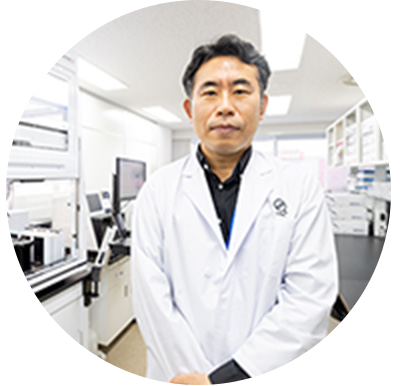 Author
Dr. Tomikane Yoshinori, M.D., Ph.D.
Graduated from the University of Tsukuba Graduate School, Master's/Doctoral Program in Biosystem Studies and Molecular Medical Science
In 2017, developed Japan's first prenatal DNA testing method (Patent 7331325) using a trace DNA analysis technology (Patent 7121440)