
Last updated: August 11, 2024
A newborn's blood type is difficult to determine accurately because antibodies are not yet fully developed, so blood type alone cannot prove a parent-child relationship. DNA testing is the most reliable method for confirming a biological relationship with certainty.
- ・A newborn's blood type is unstable — why accurate determination is difficult
- ・Can blood type alone determine a parent-child relationship?
- └ The limits of using blood type to determine a parent-child relationship
- └ The basic mechanism of blood type inheritance
- ・If any doubt remains, consider DNA testing
- └ How samples are collected for DNA testing
- └ The accuracy and reliability of DNA testing
- └ The range of biological relationships that can be examined
A newborn's blood type is unstable — why accurate determination is difficult

We very often receive inquiries from customers saying, "My child's blood type doesn't match what would be expected from the parents' blood types," and this is a common reason people request a paternity test. However, the first and most important point to understand is that a blood type mismatch does not necessarily mean the parent-child relationship is disproved.
ABO blood type is determined by testing the type of antigens (A antigen, B antigen) present on the surface of red blood cells and the presence of antibodies (anti-A antibody, anti-B antibody) in the serum [ref:1]. In adults, these antigens and antibodies are fully expressed, so accurate determination is possible. However, in infants under one year old, antibody production is only about one-third that of adults, and antigen expression is also insufficient. For this reason, blood type test results obtained during the newborn period are not very reliable, and misclassification can occur.
In fact, it is not uncommon for someone who was determined to be "type A" at birth to be found to be "type O" upon retesting during an adult health checkup, or for someone who believed they were "type B" to actually be "type AB." The antigens and antibodies on red blood cells generally do not reach sufficient levels until around age 4 or later, meaning that blood type tests performed before that age may not yield accurate results [ref:2].
Against this backdrop, an increasing number of maternity facilities no longer test newborns' blood types immediately after birth. In the past, it was common to test blood type at birth and record it in the maternal and child health handbook. Today, however, as the drawbacks of recording medically inaccurate information have become more widely recognized, the prevailing policy is to skip the test unless the parents specifically request it.
Can blood type alone determine a parent-child relationship?

Once a baby has grown a bit more, a blood test can reveal the correct blood type. But what many people really want to know isn't the blood type itself — it's whether a parent-child relationship exists.
The limits of using blood type to determine a parent-child relationship
There are only four ABO blood types: A, B, O, and AB. Looking at the blood type distribution among Japanese people, the breakdown is roughly 40% type A, 30% type O, 20% type B, and 10% type AB [ref:3]. In other words, even if a father is type A and his child is also type A, about 40% of Japanese men are type A, so that alone is far from proof of a biological relationship.
Even more important is the fact that cases have been reported in which genetic mutations produce a child with a blood type that would not normally be expected under standard inheritance rules [ref:4]. For example, a father with type A and a mother with type O would normally be expected to have only type A or type O children, but there are rare, academically documented cases of an AB-type child being born to such parents. This is known to involve a special genotype called "cis-AB," among other rare cases.
- There are only four blood types, so many people share the same one
- Special cases such as mutations or cis-AB type do exist
- The rules of blood type inheritance are probabilistic — they cannot provide 100% certainty
- Even factoring in the Rh blood group, this is not enough to identify an individual
- A blood type "mismatch" is not, by itself, grounds to deny a parent-child relationship
The basic mechanism of blood type inheritance
ABO blood type is determined by the ABO gene located on chromosome 9. This gene has three alleles — A, B, and O — one of which is inherited from each parent [ref:1]. Because A and B are dominant over O, a genotype of AO results in the phenotype of type A, and BO results in type B. Only the OO genotype is expressed as type O.
Because of this mechanism, parents who are both type O (genotype OO × OO) can only have type O children. However, parents who are both type A (genotype AO × AO) can have not only type A children but also type O children. In this way, phenotype (the visible blood type) does not always match genotype, which is a fundamental limitation of discussing parent-child relationships based on blood type alone.
Before DNA testing existed, inferring a biological relationship from blood type was the only option available. As a result, numerous cases of family disputes or legal conflicts arising from blood type mismatches have been reported both in Japan and abroad. In today's world, where a single phone call is all it takes to consult about DNA testing, it would be a shame to spend a lifetime worrying based on blood type alone.
If any doubt remains, consider DNA testing

Compared to DNA testing 20 years ago, today's DNA testing has achieved more than a 100-million-fold improvement in accuracy. Thanks to dramatic technological progress, in addition to the standard sample of oral epithelial cells (cheek mucosa), DNA can now be accurately extracted from everyday items such as toothbrushes, hair, and cigarette butts, allowing biological relationships to be determined with high precision [ref:5].
How samples are collected for DNA testing
"Oral epithelium" refers to the mucosal lining inside the cheek, and it can be easily collected simply by lightly rubbing the inside of the mouth with a medical swab designed for DNA testing. This method is non-invasive, so even a newborn baby feels no pain. With the latest DNA testing technology, the DNA collected from a single swab — after about 10 back-and-forth strokes along the inside of the cheek — is sensitive enough to allow roughly 100 tests to be performed.
- Call seeDNA's toll-free number (0120-919-097) to consult
- Receive a DNA test kit
- Lightly rub the inside of your cheek with the medical swab to collect a sample
- Return the sample by mail
- Receive your results in as little as 3 days
The accuracy and reliability of DNA testing
Modern DNA testing uses a method called STR (Short Tandem Repeat) analysis. This technique compares the length of short repeating sequences scattered throughout the human genome, and by analyzing multiple loci simultaneously, it achieves an extremely high level of discriminatory power [ref:5]. When a parent-child relationship exists, the probability of confirmation reaches 99.99% or higher, and when it does not exist, the relationship can be excluded with 100% accuracy. This level of precision means it is essentially impossible for a DNA test result to be overturned.
Whereas a blood type test can only distinguish between four phenotypes, DNA testing analyzes numerous genetic markers that differ from person to person, meaning that virtually no two people — apart from identical twins — share exactly the same DNA profile. This overwhelming power of individual identification is exactly why DNA testing is considered the gold standard for paternity testing.
The range of biological relationships that can be examined
DNA testing can confirm far more than just parent-child relationships (father-child or mother-child). It can also scientifically examine a wide range of other biological relationships, including uncle/aunt, grandparent-grandchild, and cousin relationships. Testing is available starting at around 20,000 to 30,000 yen, with results delivered in as little as 3 days, helping resolve years of worry and uncertainty.
If you are troubled by a blood type mismatch or feel uncertain about a child's biological relationship, please feel free to contact seeDNA (toll-free: 0120-919-097). Our experienced specialist staff will propose the testing plan best suited to your situation.
Frequently Asked Questions
Q1. Why isn't a newborn's blood type test accurate?
A. In newborns, the antigens on red blood cells and the antibodies in the serum are not yet fully developed, making accurate blood type determination difficult. Compared to adults, antibody levels are only about one-third as high, and antigens and antibodies are not thought to be fully expressed until around age 4. As a result, it is not uncommon for a blood type tested at birth to differ from the result of a retest later in life.
Q2. Can a child be born with a blood type that seems impossible given the parents' blood types?
A. Yes, this can happen in very rare cases. A well-known example is "cis-AB type," a special case in which the A and B genes are carried on the same chromosome. Because of such mutations and rare genotypes, blood type combinations that cannot be explained by standard Mendelian inheritance can sometimes occur [ref:4].
Q3. Can a parent-child relationship be determined from blood type alone?
A. No, blood type alone cannot accurately determine a parent-child relationship. There are only four ABO blood types, and a great many people share the same type, so a matching blood type does not prove a parent-child relationship. Likewise, because exceptions due to mutation exist, a mismatched blood type does not immediately disprove a parent-child relationship either. A definitive determination requires DNA testing.
Q4. How is a sample collected for DNA testing? Is it painful?
A. The standard sample is collected simply by lightly rubbing the inside of the cheek (oral epithelium) with a medical swab. No blood draw is required, and the sample can be collected safely and painlessly even from a newborn baby. Samples can also be collected from everyday items such as toothbrushes or hair.
Q5. How accurate is DNA testing?
A. Modern DNA testing uses STR analysis, which can confirm a parent-child relationship with 99.99% or higher probability when one exists, and exclude it with 100% accuracy when one does not. This is far more precise than the discriminatory power of a blood type test, and it is considered practically impossible for the result to be overturned [ref:5].
Q6. How much does DNA testing cost, and how long does it take?
A. seeDNA's DNA testing is available starting at around 20,000 to 30,000 yen, with results delivered in as little as 3 days. In addition to parent-child (father-child or mother-child) relationships, we can test a variety of other biological relationships, including uncle/aunt, grandparent-grandchild, and cousin relationships. For details, please feel free to contact our toll-free number (0120-919-097).
seeDNA Genetic Medical Institute's Trusted Support
The seeDNA Genetic Medical Institute is a trusted and reliable DNA testing and genetic testing specialist that has obtained the international quality standard ISO 9001 and the Privacy Mark for privacy protection.
If you have concerns about family or parent-child biological relationships, or a partner's infidelity, our DNA testing specialists are here to provide the support you need for peace of mind, so please feel free to contact us.
[Free consultation with our specialist staff]

If you have any questions,
please feel free to contact our toll-free number.
/Open every day, including weekends/
Business hours: Monday-Sunday 9:00 AM-6:00 PM
(excluding public holidays)
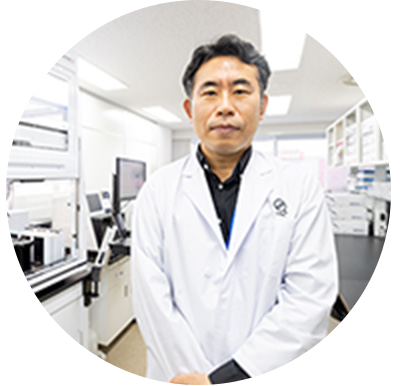 Author
Yoshinori Tomikane, M.D., Ph.D.
Graduated from the master's/doctoral program in Biosystem Regulation and Molecular Informative Medicine at the University of Tsukuba Graduate School
In 2017, developed Japan's first prenatal DNA testing(Patent 7331325) using trace DNA analysis technology(Patent 7121440)