
Last revised: August 23, 2024
This article explains how to fill in the father's field on a birth registration and the procedure for prenatal acknowledgment of paternity. It covers the presumption of legitimacy when the parents are not married, the acknowledgment filing process, and how prenatal DNA testing can be used.
- ・What Is a Birth Registration?
- └ Filing Deadline and Who Must File a Birth Registration
- └ The Difference Between Legitimate and Illegitimate Children
- ・How Can You Record the Father's Name on a Birth Registration?
- └ Prenatal Acknowledgment and the Acknowledgment Filing
- └ Comparing Prenatal Acknowledgment and Post-Birth Acknowledgment
- └ Types of Acknowledgment Filings and Procedures
- └ Using Prenatal DNA Testing Alongside Prenatal Acknowledgment
- └ The 2022 Civil Code Revision and Changes to the Presumption of Legitimacy
- └ Key Points to Remember When Filing a Birth Registration
What Is a Birth Registration?
 A birth registration is the legal procedure for creating a family register (koseki) for a newborn baby. Japan's family register system is unique in the world and plays an extremely important role in officially certifying the civil status of citizens [ref:1]. By filing a birth registration, a child acquires legal status as a Japanese national, laying the groundwork for various procedures necessary for social life, such as creating a resident record and enrolling in health insurance.
A birth registration includes fields for both parents, but the mother's field is rarely a problem since it is obvious from the fact of childbirth. The issue, however, is the father's field. If it is unclear who the baby's father is, or if the parents are not married and the presumption of legitimacy does not apply, the family register will be created with the father's field left blank.
Filing Deadline and Who Must File a Birth Registration
Under Article 49 of the Family Register Act, a birth registration must be filed within 14 days of the birth [ref:1]. In principle, the father or mother is responsible for filing, but if they are unable to do so, a person living with the child or the doctor or midwife who attended the birth may file instead. The registration should be filed at the municipal office where the child was born, where the person filing resides, or where the person filing has their permanent domicile (honseki).
A birth certificate prepared by a doctor or midwife must be attached to the birth registration. This birth certificate records the child's name, the date and time of birth, the place of birth, and the mother's name, among other details. The birth registration and birth certificate are typically printed on the left and right sides of the same form, with the birth registration on the left and the birth certificate on the right.
The Difference Between Legitimate and Illegitimate Children
Under the Civil Code, a child born to a married couple is called a "legitimate child." A child born to a man and woman who are not married is called an "illegitimate child" (a child born out of wedlock) [ref:2]. For a legitimate child, the "presumption of legitimacy" under Article 772 of the Civil Code means that a child conceived during the marriage is presumed to be the husband's child, so the husband's name is automatically entered in the father's field of the birth registration.
For an illegitimate child, however, this presumption of legitimacy does not apply. As a result, even if the biological father is clearly known, the child is legally treated as having no father, and the father's field on the birth registration is left blank. This is a very important point that many people tend to misunderstand.
- A child conceived during marriage is presumed to be the husband's child (presumption of legitimacy, Civil Code Article 772)
- A child born 200 days or more after the marriage is presumed to have been conceived during the marriage
- A child born within 300 days after the dissolution of the marriage is also presumed to have been conceived during the marriage
- For an illegitimate child, no legal father-child relationship exists unless the father acknowledges paternity
- Following the 2013 revision of the Civil Code, legitimate and illegitimate children now have equal inheritance shares [ref:3]
It is possible to have paternity acknowledged after the birth registration has been filed, but if acknowledgment happens later, the family register will record when and where the acknowledgment filing was made and by whom. When the child grows up, seeing this record in the family register might make them wonder whether there was some kind of dispute in the past, which could cause them worry.
Even if acknowledgment is planned after the birth, and even if there is no doubt about who the father is, that person is not legally the "father" at the time of birth unless the child is legitimate. For this reason, the "father" field on the birth registration must be left blank when filing.
How Can You Record the Father's Name on a Birth Registration?

Prenatal Acknowledgment and the Acknowledgment Filing
To record the father's name on the birth registration, one option is to complete a "prenatal acknowledgment of paternity" before the child is born. Acknowledgment made while the child is still a fetus is called "prenatal acknowledgment," and it is treated as a provisional acknowledgment premised on the child actually being born.
As with a standard post-birth acknowledgment filing, a prenatal acknowledgment filing is submitted to the municipal office where the mother has her permanent domicile (honseki). A standard acknowledgment filing can be made based on the father's intent alone, but a major difference with prenatal acknowledgment is that it requires the mother's consent in addition to the father's (Civil Code Article 783, Paragraph 1). This is because, at the fetal stage, the child is closely bound up with the mother's body, making it necessary to protect the mother's rights.
- The father prepares the prenatal acknowledgment filing
- The father obtains the mother's consent to the prenatal acknowledgment
- The filing is submitted to the municipal office where the mother has her permanent domicile
- After the birth, the birth registration is filed
- The name of the man who made the acknowledgment is entered in the father's field of the child's family register
Once prenatal acknowledgment is complete, giving birth and filing the birth registration causes the name of the man who made the acknowledgment to be entered in the father's field of the child's family register. The child is entered into the mother's family register, and the fact of the acknowledgment is also recorded in the father's family register. A distinctive feature of prenatal acknowledgment is that until the birth registration is filed, the fact of the prenatal acknowledgment is recorded only in the mother's family register attachment (fuhyo).
Comparing Prenatal Acknowledgment and Post-Birth Acknowledgment
There are differences in how prenatal acknowledgment and post-birth acknowledgment appear in the family register. When prenatal acknowledgment is used, the father's name is entered in the family register from the moment the birth registration is filed, so the parent-child relationship appears in the register in a more natural way. When an acknowledgment filing is submitted after the birth, on the other hand, the date and location of the acknowledgment filing are recorded separately, making it apparent from the family register that the acknowledgment was made afterward.
There are also points to watch out for with prenatal acknowledgment. Because prenatal acknowledgment is conditional on the child being born, the acknowledgment has no legal effect if the pregnancy unfortunately ends in stillbirth. In addition, even after a child is born following prenatal acknowledgment, the father is still legally permitted to bring a claim to have the acknowledgment declared invalid (Civil Code Article 786).
Types of Acknowledgment Filings and Procedures
Acknowledgment of paternity can broadly be divided into the following types.
- Voluntary acknowledgment: The father files an acknowledgment on his own initiative. This is the most common form
- Prenatal acknowledgment: Acknowledgment made before birth, which requires the mother's consent
- Acknowledgment by will: The father makes the acknowledgment within a will
- Compulsory acknowledgment (judicial acknowledgment): If the father does not acknowledge the child voluntarily, the child or mother files a paternity suit with the family court
Using Prenatal DNA Testing Alongside Prenatal Acknowledgment
If you are worried about whether the father will properly acknowledge the child in the future, or if various circumstances make discussion difficult, using prenatal acknowledgment can be an effective option. In particular, if prenatal DNA testing scientifically confirms a father-child relationship with the fetus, this can be a major help in persuading the man to complete a prenatal acknowledgment.
Prenatal DNA testing technology has advanced dramatically in recent years, and it is now possible to confirm a father-child relationship non-invasively by using cell-free fetal DNA (cffDNA) present in the mother's blood [ref:4]. This method places extremely little burden on the mother's body and, unlike amniocentesis, requires no invasive procedure, making it excellent in terms of safety as well.
The results of prenatal DNA testing can serve as powerful evidence in legal acknowledgment procedures. Even if a prospective father is reluctant to acknowledge the child, presenting scientific testing results can encourage him to agree to a voluntary acknowledgment. And should the matter ultimately go to court (a compulsory acknowledgment suit), DNA testing results are adopted by the courts as extremely important evidence.
The 2022 Civil Code Revision and Changes to the Presumption of Legitimacy
Under the revised Civil Code enacted in December 2022 and put into effect on April 1, 2024, the provisions concerning the presumption of legitimacy were substantially revised [ref:5]. Previously, because a child born within 300 days after a divorce was presumed to be the former husband's child, cases in which the actual father differed from the legally presumed father had become a social problem known as the "unregistered family register (mukoseki) issue." Under the revised law, new provisions were introduced presuming that a child born after the mother's remarriage is the child of the new husband, among other changes designed to bring the system more in line with reality.
This legal revision is expected to resolve some of the difficulties that previously arose when filing a birth registration, but couples who are not married still need to go through the acknowledgment procedure. To have the father's name entered in the father's field of the birth registration, it is necessary to properly complete the appropriate legal procedure, whether that is prenatal acknowledgment or a post-birth acknowledgment filing.
Key Points to Remember When Filing a Birth Registration
To ensure a smooth process for procedures related to birth registration, please keep the following points in mind.
- The deadline for filing a birth registration is 14 days from and including the date of birth (3 months for births abroad)
- If the filing is delayed without a valid reason, a fine of up to 50,000 yen may be imposed
- When completing a prenatal acknowledgment, the filing must be made at the municipal office where the mother has her permanent domicile
- Prenatal acknowledgment requires the mother's written consent
- If you are considering prenatal DNA testing, consult a trustworthy testing organization as early as possible
For your child's future, it is important to correctly understand the procedures for birth registration and acknowledgment and to carry them out at the appropriate time. If you have any questions, we recommend consulting a legal professional or a trustworthy DNA testing organization.
Frequently Asked Questions
Q1. If I file the birth registration with the father's field left blank, can the father's name be added later?
A. Yes, it can. Even after filing a birth registration with the field left blank, the father can have his name entered in the child's family register by submitting an "acknowledgment filing" to the municipal office. However, with a post-birth acknowledgment, the date the acknowledgment filing was submitted and the filing location are recorded in the family register, so the entry differs from that of a prenatal acknowledgment.
Q2. From what point can prenatal acknowledgment procedures be started?
A. There is no clear legal restriction on when prenatal acknowledgment can begin, and the filing can be made as soon as the pregnancy has been confirmed. However, prenatal acknowledgment requires the mother's consent, and the filing must be made at the municipal office where the mother has her permanent domicile. In practice, many people complete the procedure once the pregnancy has reached a stable stage.
Q3. Can a father cancel a prenatal acknowledgment after making it?
A. In principle, once acknowledgment is made it cannot be withdrawn (canceled). However, if the acknowledgment does not reflect the truth (that is, there is no biological father-child relationship), an interested party can file a suit to have the acknowledgment declared invalid (Civil Code Article 786). To prevent this kind of dispute, it is recommended to confirm the father-child relationship with prenatal DNA testing before making the acknowledgment.
Q4. Is prenatal DNA testing dangerous for the mother or fetus?
A. The non-invasive prenatal DNA test (NIPPT) that is now mainstream uses blood drawn from the mother's arm. Because it analyzes cell-free fetal DNA (cffDNA) present in the mother's blood, no invasive procedure such as amniocentesis is required at all. The risk to the mother or fetus is extremely low, allowing the father-child relationship to be confirmed safely.
Q5. What happens if the birth registration is not filed within the deadline?
A. The Family Register Act requires that a birth registration be filed within 14 days, including the date of birth. Even if the filing is delayed, the registration itself will still be accepted, but the person filing must prepare a "notice of elapsed filing period" and state the reason for the delay. If no valid reason is recognized, a summary court may impose a fine of up to 50,000 yen. To ensure your child's family register is created promptly, it is best to file within the deadline.
Q6. Is prenatal acknowledgment possible if the father is a foreign national?
A. Yes, prenatal acknowledgment is possible even if the father is a foreign national. However, because the law governing acknowledgment may be the father's home country law in certain cases (Article 29 of the Act on General Rules for Application of Laws), the procedure can become more complex. For acknowledgment procedures involving a foreign national, we recommend consulting in advance with the family register desk at the municipal office or with a legal professional.
Peace of Mind Support from the seeDNA Institute of Genetic Medicine
The seeDNA Institute of Genetic Medicine is an ISO 9001 internationally certified and Privacy Mark-certified institution you can trust for DNA testing and genetic testing.
If you are troubled by questions about family or parent-child blood relationships, or a partner's infidelity, our DNA testing specialists are here to provide the reassurance and support you need, so please feel free to contact us.
[Free Consultation with Our Specialist Staff]

If you have any questions,
please feel free to contact our toll-free number.
/Open every day, including weekends/
Business hours: Monday–Sunday 9:00 AM–6:00 PM
(except public holidays)
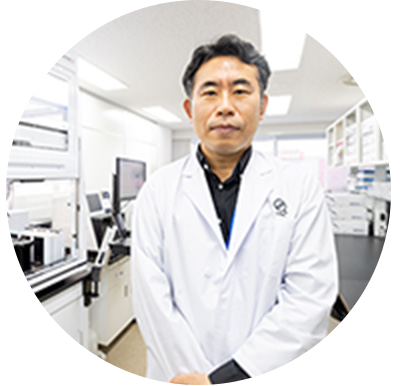 Author
Kihan Tomikane, M.D., Ph.D.
Completed a master's and doctoral program in Biomedical Regulation and Molecular Information Medicine at the University of Tsukuba Graduate School
In 2017, developed Japan's first prenatal DNA testing method (Patent No. 7331325) using a trace-DNA analysis technology (Patent No. 7121440)