
Rewritten on: November 12, 2024
The Ashikaga Case is a landmark Japanese case of wrongful conviction caused by insufficient accuracy in DNA typing. The advance from the MCT118 method to the STR method led to an acquittal on retesting, and today SNP-based testing allows for even greater precision.
- ・What Was the Ashikaga Case? — A Landmark Japanese Wrongful Conviction Involving DNA Typing
- ・After the Ashikaga Case — Retesting with the STR Method and the Acquittal
- ・From the MCT118 Method to the STR Method — The Evolution of DNA Typing Technology
- ・The Impact of the Ashikaga Case on the Justice System
- ・More Precise Kinship Testing Than the STR Method — seeDNA's Testing Technology
What Was the Ashikaga Case? — A Landmark Japanese Wrongful Conviction Involving DNA Typing
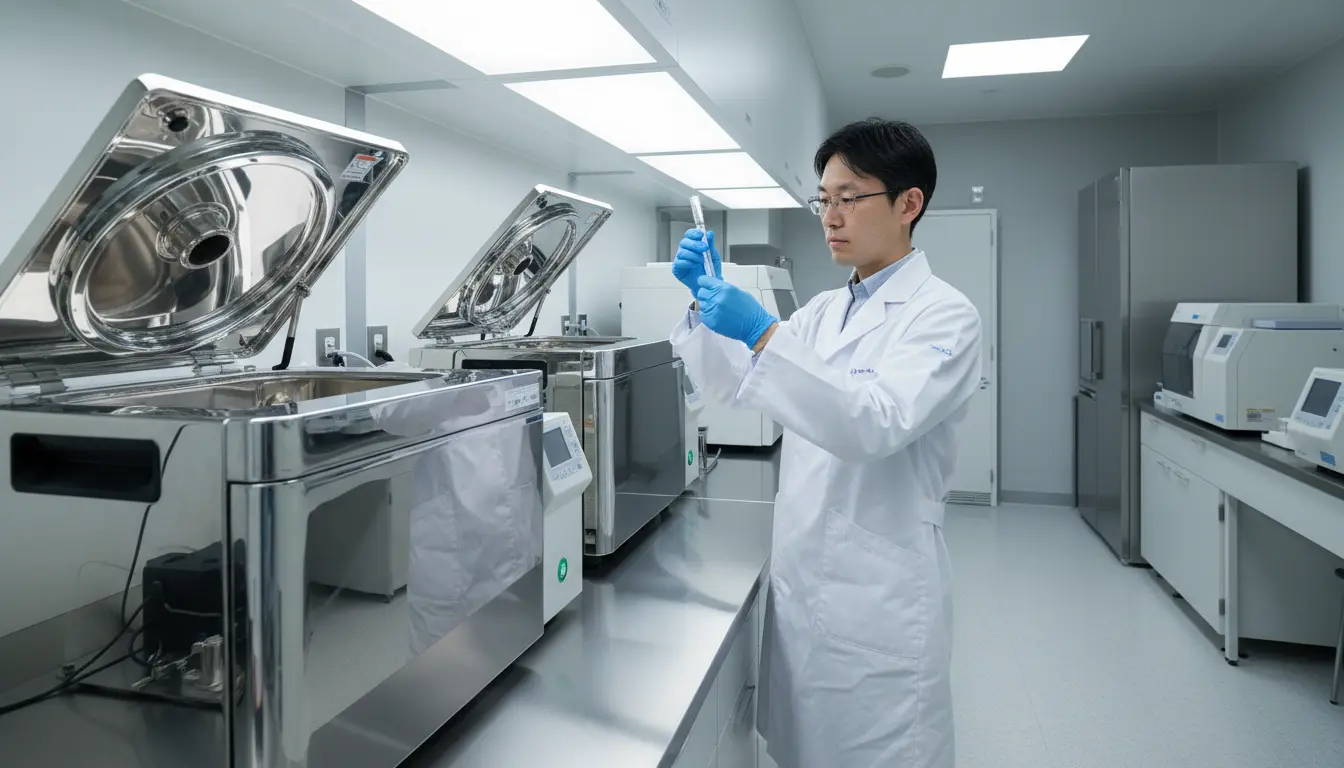 Have you heard of the "Ashikaga Case," the most widely known case in Japan involving DNA typing? This case demonstrated to society as a whole just how critical the accuracy of DNA typing is, and how serious a wrongful conviction can result when that accuracy is insufficient [ref:1].
In May 1990, a tragic incident occurred in Ashikaga City, Tochigi Prefecture, in which a four-year-old girl was abducted and murdered. Investigators collected semen found on the victim's underwear at the scene and conducted DNA typing using the MCT118 method, the cutting-edge technology of the time. However, the discriminatory power of the MCT118 method was only about "1 in 1,000" [ref:2].
A figure of "1 in 1,000" might seem highly precise at first glance. But a closer calculation shows that, given Japan's population of roughly 120 million at the time, approximately 120,000 people would be expected to share the same DNA type. In other words, a DNA type match alone was far too weak a basis for identifying a specific perpetrator, and it fell drastically short as scientific evidence.
Nevertheless, in December 1991, Toshikazu Sugaya was arrested with the MCT118-based DNA typing result serving as one of the main pieces of evidence. Sugaya confessed during interrogation, but he later claimed that the confession had been coerced [ref:3]. DNA typing at the time was overrated as a scientific "new weapon," and both investigators and the courts failed to adequately recognize its limitations.
After the Ashikaga Case — Retesting with the STR Method and the Acquittal
 In July 2000, the Supreme Court of Japan finalized a sentence of life imprisonment in the Ashikaga Case. Sugaya consistently maintained his innocence, but the wall of the justice system was formidable, and he was forced to serve many years in prison.
During that time, however, DNA typing technology advanced dramatically. The turning point came in June 2009, when a DNA retest was performed using the STR (Short Tandem Repeat) method. This retest drew significant attention as the first DNA retest conducted in Japan after a conviction had already been finalized [ref:1].
The discriminatory power of the STR method reached an overwhelming level of "1 in 4.7 trillion," representing an improvement of literally billions of times over the MCT118 method. The results of this retest scientifically proved that the DNA type of the semen found at the scene did not match Sugaya's DNA type.
Following the retest results, Sugaya was released from prison in June 2009, and in March 2010 the Utsunomiya District Court handed down a retrial verdict of not guilty. From his arrest to his acquittal, Sugaya lost approximately 18 years of his life. This case stands as a powerful symbol of how profoundly the accuracy of DNA typing can affect a person's life.
From the MCT118 Method to the STR Method — The Evolution of DNA Typing Technology
 To properly understand the Ashikaga Case, it's important to know how DNA typing technology has developed over time. Below is a timeline summarizing the major testing methods.
- RFLP (Restriction Fragment Length Polymorphism) method: The earliest DNA testing method, developed in the 1980s by British scientist Dr. Alec Jeffreys. It required large amounts of DNA sample and took considerable time to analyze.
- MCT118 method (a type of PCR method): Introduced in Japan in the early 1990s. It enabled amplification and analysis of even small amounts of DNA, but its discriminatory power remained around "1 in 1,000," which became a critical issue in the Ashikaga Case.
- STR (Short Tandem Repeat) method: The method that became mainstream from the 2000s onward. By simultaneously analyzing multiple regions (loci) of DNA, it achieves a discriminatory power of better than 1 in 4.7 trillion, and it remains the current international standard in forensic testing [ref:4].
- SNP (Single Nucleotide Polymorphism) method: The latest testing method, which uses single-base variations. It allows for highly accurate testing even of degraded or fragmented DNA that the STR method struggles to analyze, and it delivers greater accuracy than the STR method in kinship determination as well.
The Impact of the Ashikaga Case on the Justice System
The Ashikaga Case had a profound impact on Japan's criminal justice system. In its wake, the following institutional reforms were pursued [ref:5].
- Accelerated consideration of introducing audio/video recording (visualization) of interrogations
- Cultivation of a more cautious judicial stance toward the evaluation of scientific evidence
- Tightening of accuracy standards for DNA typing and standardization of testing methods
- Increased debate regarding relief systems for victims of wrongful conviction
- Establishment of a precedent opening the door for the defense to request DNA retesting
What is especially important is that the understanding that DNA typing is not "absolute evidence" — that it can contain errors depending on its accuracy and methodology — has become widely shared among legal professionals. Today, when DNA typing is conducted, factors such as the discriminatory power of the method used, the preservation condition of the sample, and the presence of contamination are rigorously scrutinized.
More Precise Kinship Testing Than the STR Method — seeDNA's Testing Technology
The DNA typing conducted by our company, seeDNA (seeDNA Co., Ltd.), achieves an overwhelming level of accuracy such that no two people would share the same DNA type even if you combined every human being born across the tens of thousands of years since Homo sapiens first appeared. This level of discriminatory power far exceeds not only the MCT118 method involved in the Ashikaga Case, but also the STR method that remains the current forensic standard.
Depending on the type of test and the condition of the sample, seeDNA actively utilizes the SNP (Single Nucleotide Polymorphism) method. The SNP method offers the following major advantages.
- Capability with degraded DNA: Because SNP fragments are short, analysis is possible even with poorly preserved DNA that the STR method struggles with
- High discriminatory precision: By simultaneously analyzing hundreds of thousands to millions of SNP loci, it achieves individual identification capability that surpasses the STR method
- Accurate kinship determination: Capable of highly accurate determination of various kinship relationships, including parent-child, sibling, and grandparent-grandchild relationships
- International versatility: Produces stable results regardless of race or ethnicity, making it suitable for international testing cases
To ensure that a wrongful conviction like the Ashikaga Case never happens again, DNA typing must meet the highest standards of accuracy. seeDNA leverages the latest scientific technology to provide highly accurate DNA testing services that our customers can rely on with peace of mind. Please feel free to contact seeDNA with any questions regarding DNA testing.
Frequently Asked Questions
Q1. Why did a wrongful conviction occur in the Ashikaga Case?
A. The accuracy of the DNA typing performed at the time using the MCT118 method was extremely low, at "1 in 1,000," meaning approximately 120,000 people in Japan alone would be expected to share the same DNA type. This insufficiently accurate testing result was treated as a key basis for identifying the perpetrator, and combined with a coerced confession obtained during interrogation, this led to the wrongful conviction.
Q2. How different is the accuracy between the MCT118 method and the STR method?
A. The discriminatory power of the MCT118 method was about "1 in 1,000," whereas the STR method achieves "1 in 4.7 trillion." This represents an improvement of literally billions of times, giving it discriminatory power that effectively exceeds the entire population of the Earth.
Q3. What is the difference between the SNP method and the STR method?
A. The STR method analyzes differences in the length of repeating DNA sequences, while the SNP method analyzes variations at the single-base level (single nucleotide polymorphisms). Because the SNP method can analyze even short DNA fragments, it can handle poorly preserved DNA, and by analyzing numerous loci simultaneously it can achieve accuracy exceeding that of the STR method.
Q4. What impact did the Ashikaga Case have on Japan's justice system?
A. The Ashikaga Case sparked widespread discussion of the need to visualize interrogations (through audio/video recording), and it also led to tighter accuracy standards for DNA typing. Additionally, the establishment of a precedent for DNA retesting after a conviction had been finalized opened a path to relief for victims of wrongful conviction.
Q5. How accurate is seeDNA's DNA testing?
A. seeDNA's testing achieves a level of accuracy such that no two people would share the same DNA type even if you combined every human being born across the tens of thousands of years since Homo sapiens first appeared. Depending on the testing item, we also utilize the SNP method, enabling highly accurate kinship determination that surpasses the STR method.
Reliable Support from the seeDNA Institute of Genetic Medicine
The seeDNA Institute of Genetic Medicine is a trusted DNA testing and genetic testing institution that holds the international quality standard ISO 9001 certification and the Privacy Mark for data protection.
If you have concerns about family or parent-child kinship, or a partner's infidelity, our DNA testing specialists are here to provide the support you need for peace of mind — please feel free to contact us.
[Free Consultation with Specialist Staff]

If you have any questions,
please feel free to contact our toll-free number.
/Open every day, including weekends/
Business hours: Monday–Sunday 9:00 AM–6:00 PM
(excluding public holidays)
 Author
Dr. Kihan Tomikane, M.D., Ph.D.
Completed his master's and doctoral studies in Biosystem Studies / Molecular and Cellular Biology at the University of Tsukuba Graduate School.
In 2017, he developed Japan's first prenatal DNA testing (Patent 7331325) using proprietary trace-DNA analysis technology (Patent 7121440).
[References]
(2) Genetic Information, DNA Testing, and Criminal Law (Keio University Academic Repository, January 2011)
(3) The Confession of an Innocent Person (Japan Federation of Bar Associations)
(4) The National Police Agency and Supreme Public Prosecutors Office Verification Reports on the Ashikaga Case, from a Defense Counsel's Perspective (University of Tokyo Law School)