
Rewritten on: November 27, 2024
This article explains the possibility of errors in DNA typing. It covers the misjudgment risks caused by mutations and chimerism, how STR profiling works, why the probability of paternity never reaches 100%, and seeDNA's quality control system in detail.
- ・Can DNA typing have errors?
- ・DNA as the blueprint of a human being
- ・What the degree of match in DNA information inherited from parent to child reveals
- └ The specific flow of STR analysis
- ・When an STR profile does not show half a match between parent and child
- └ Biological factors that can cause errors
- ・Why the probability of paternity never reaches 100%
- ・Consistent quality control from sample receipt through result reporting
- ・Key points to know when requesting a DNA test
Can DNA typing have errors?
 DNA typing is considered one of the most reliable methods used in modern forensic science and paternity testing today. However, many people wonder, "Are DNA test results ever wrong?" The short answer is that while DNA typing offers extremely high accuracy, it is theoretically impossible to reduce the possibility of error to absolute zero [ref:1]. This article provides a detailed explanation, from the basics of DNA typing to the mechanisms behind errors and the quality control system that seeDNA maintains.
DNA as the blueprint of a human being
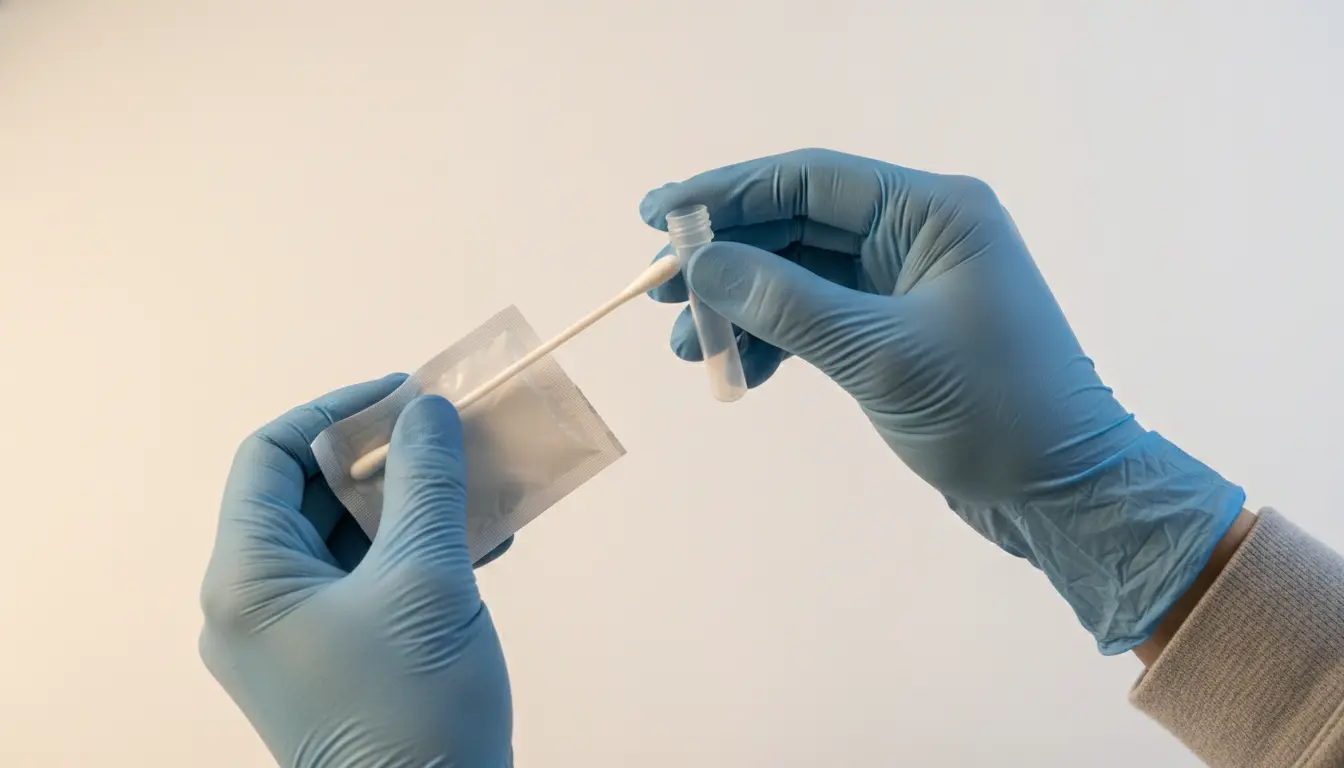 To analyze an individual's genes and investigate blood relationships or disease risk, we need the DNA (deoxyribonucleic acid) found inside the nucleus of cells. DNA is, in a sense, "the blueprint of a human being," made up of the four bases adenine (A), guanine (G), cytosine (C), and thymine (T) arranged in a specific sequence pattern [ref:2].
The human genome consists of roughly 3 billion base pairs and encodes about 20,000 to 25,000 genes. The regions that actually code for proteins (exons) make up only about 1.5% of the total, while the rest is known as "non-coding" DNA. This was once referred to as "junk DNA," but recent research has revealed that it plays an important role in regulating gene expression and maintaining genomic structure [ref:3].
DNA takes the form of a double helix, held stable by the complementary pairing of A with T and G with C. This principle of complementarity is also essential to the technologies underlying DNA testing, such as PCR (polymerase chain reaction) amplification.
What the degree of match in DNA information inherited from parent to child reveals
 Genes are passed down from father and mother to child, exerting a significant influence on an individual's build, appearance, and even disease risk. At seeDNA, we investigate various blood relationships based on the degree of match in the DNA information inherited from parent to child [ref:1].
For postnatal paternity testing, we examine a special type of DNA sequence called STR (Short Tandem Repeat). An STR is a region where a short sequence of about 2 to 6 bases repeats consecutively, and the number of repeats varies from person to person. Since each person carries two alleles at each STR locus—one from the father and one from the mother—paternity testing checks whether half of the child's alleles match the father's.
The specific flow of STR analysis
- Extract DNA from a sample (such as oral mucosal cells)
- Amplify specific STR loci using the PCR method
- Separate and detect the amplified products using a capillary electrophoresis instrument
- Determine the allele size at each locus to build an STR profile
- Compare the STR profiles between subjects to determine the blood relationship
In current standard DNA typing, simultaneously analyzing 20 or more STR markers reduces the theoretical probability of an unrelated person coincidentally showing an identical profile to less than one in several trillion [ref:4].
When an STR profile does not show half a match between parent and child
When an STR profile does not show half a match between parent and child, the blood relationship is generally judged to be "excluded." Recent DNA typing can sometimes achieve a probability of paternity of 99.9999999999% or higher, but the possibility of error can never be completely ruled out [ref:1].
Particular caution is needed when the probability of paternity is judged to be 0% (blood relationship "excluded"), since the following biological factors could lead to a mistaken judgment.
Biological factors that can cause errors
- Mutation: The number of repeats at an STR locus can change during the formation of sperm or egg cells. Slippage during DNA replication relatively frequently causes an increase or decrease of one or two repeats [ref:5].
- Chimerism: A condition in which two or more genetically distinct cell populations coexist within a single individual. Known examples include the fusion of dizygotic twins (tetragametic chimerism) and chimerism following bone marrow transplantation [ref:6].
- Mosaicism: A condition in which a mutation occurs during cell division after fertilization, resulting in two or more genotypes of cells coexisting in the body. The mechanism differs from chimerism, but it can similarly affect test results.
- Silent allele (null allele): A mutation at the primer binding site can prevent a particular allele from being amplified by PCR and detected, causing a heterozygous individual to appear homozygous.
There have been multiple reports, both in Japan and abroad, of cases where a biological parent-child relationship existed but was mistakenly excluded due to mutation or chimerism [ref:2].
Why the probability of paternity never reaches 100%
Even when a DNA test reports "a 99.99% probability of a father-child relationship," it never reaches 100% because DNA typing is a probabilistic estimation method based on Bayes' theorem. The test calculates the ratio (likelihood ratio) between "the probability of observing this STR profile if the tested man is the biological father" and "the probability of an unrelated man happening to show the same profile," and uses this to calculate the probability of paternity [ref:4].
To theoretically achieve a 100% probability, every man in the world would need to be tested and excluded, which is not realistically possible. However, when matches are confirmed at multiple loci, an extremely high probability that can effectively be regarded as "virtually certain" is obtained.
Consistent quality control from sample receipt through result reporting
Biological factors are not the only source of error. There is also a risk of human error throughout the entire analysis process, including sample mix-ups, contamination, and data entry mistakes [ref:2]. seeDNA has built a multi-layered quality control system that includes the following.
- Double-check system: Independent verification by multiple staff members at each stage—sample receipt, DNA extraction, reading of analysis results, and report preparation
- Barcode management system: A barcode is assigned upon receipt to ensure traceability at every step
- Positive and negative controls: Known DNA samples and blanks are analyzed alongside every run to verify the validity of the results
- Retesting: Automatic retesting is performed whenever a mismatch is detected or a result is in doubt
The probability of error is extremely low, but it cannot be completely ruled out. On the other hand, when a probability of paternity of 99.99% or higher is obtained, the probability of an actual biological parent-child relationship can be regarded as "virtually 100%" [ref:1]. seeDNA maximizes the reliability of its results through strict quality control.
Key points to know when requesting a DNA test
To properly understand the accuracy and reliability of DNA typing, it is important to keep the following points in mind.
| Item | Details |
|---|---|
| Number of STR loci analyzed | 20 or more loci is recommended. More loci means higher discrimination accuracy |
| Probability of paternity | A probability of 99.99% or higher is considered to effectively confirm the parent-child relationship |
| Quality control system | Choose an institution that holds ISO certification and has a double-check system in place |
When choosing a testing institution, it is important to comprehensively evaluate the number of STR loci analyzed, the quality control system, and the institution's track record and expertise. seeDNA provides highly accurate test results using the latest analytical equipment and strict quality control.
Frequently Asked Questions
Q1. How likely is it that a DNA test result contains an error?
A. The error rate in DNA typing is extremely low, and current technology can sometimes achieve an accuracy of 99.9999999999% or higher. However, due to biological factors such as mutation and chimerism, as well as human error such as sample mix-ups, it is theoretically impossible to reduce it to absolute zero. seeDNA has built a multi-layered quality control system to minimize the risk of error.
Q2. Why doesn't a DNA test result ever reach 100%?
A. DNA testing is a statistical method based on probability theory (Bayes' theorem). To achieve a theoretical 100% probability, every man in the world would need to be tested and excluded, which is not realistically possible. As a result, results are always expressed as 99.99% or higher, but this figure effectively means "virtually certain to be a parent-child relationship."
Q3. What happens to a DNA test result if there is a mutation?
A. If a mutation occurs at an STR locus, an allele that should match may instead show a mismatch. If there is a mismatch at one or two loci, the possibility of mutation is factored into an overall judgment; however, if there are mismatches at three or more loci, the result is generally judged as "no parent-child relationship."
Q4. What is chimerism, and how does it affect DNA testing?
A. Chimerism refers to a condition in which two or more genetically distinct cell populations coexist within a single individual. It can occur, for example, when dizygotic twins fuse together in the womb. In cases of chimerism, different DNA profiles may be obtained depending on which part of the body the sample is taken from, and there have been rare reports of a parent-child relationship being mistakenly excluded as a result.
Q5. What quality control measures does seeDNA implement?
A. seeDNA has built a multi-layered quality control system that includes barcode management at the time of sample receipt, a double-check system at each stage of the process, simultaneous analysis of positive and negative controls, and automatic retesting whenever a mismatch is detected. This minimizes human error and analytical mistakes, delivering results our customers can trust.
Q6. What are the STR markers used in DNA testing?
A. STR (Short Tandem Repeat) markers are regions where a short sequence of about 2 to 6 bases repeats. Because the number of repeats differs from person to person, analyzing multiple STR loci makes it possible to identify individuals and determine blood relationships. Today, it is standard to analyze 20 or more loci simultaneously, achieving extremely high discrimination accuracy.
Reassuring Support from seeDNA Genetic Medical Research Institute
seeDNA Genetic Medical Research Institute is a trusted specialist institution in DNA testing and genetic testing, holding the international quality standard ISO9001 certification and the Privacy Mark for personal information protection.
If you are concerned about family or parent-child blood relationships, or a partner's infidelity, our DNA testing specialists are here to provide reassuring support, so please feel free to contact us.
[Free consultation with specialist staff]

If you have any questions,
please feel free to contact our toll-free number.
/Open every day, including weekends/
Business hours: Monday to Sunday 9:00-18:00
(excluding public holidays)
 Author
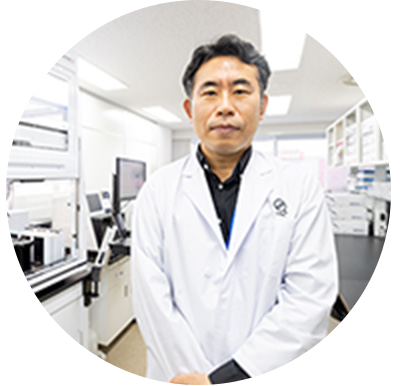
Dr. Yoshinori Tomikane, M.D.
Completed the Master's/Doctoral program in Biosystem Control and Molecular Information Medicine at the University of Tsukuba Graduate School
In 2017, developed Japan's first prenatal DNA testing (Patent 7331325) using trace-DNA analysis technology (Patent 7121440)