
Revised on: February 11, 2026
Aging is the accumulation of physical errors such as DNA damage and telomere shortening, and a global trend to reframe it as a treatable disease is accelerating. Learning your own aging speed through genetic testing is the first step toward a scientific countermeasure.
"Everyone grows old" — this has long been considered an unchanging truth for humanity. But now, thanks to remarkable scientific advances in recent years, this "common sense" is being overturned at its foundation. Rapid developments in molecular biology and genomic science are elucidating the mechanisms of aging at the molecular level, and researchers around the world are increasingly sharing the view that "aging is not merely the passage of time, but a biological process."
Starting today, over three installments, we will bring you the latest information on "the secrets of aging and DNA" as revealed by cutting-edge science.
The theme of the first installment is the definition and causes of aging. Should we accept aging as a fate to be resigned to, or should we regard it as something to be treated? The scientific answer to this question has changed dramatically over the past few decades.
Aging is not "fate" but an "accumulation of errors"
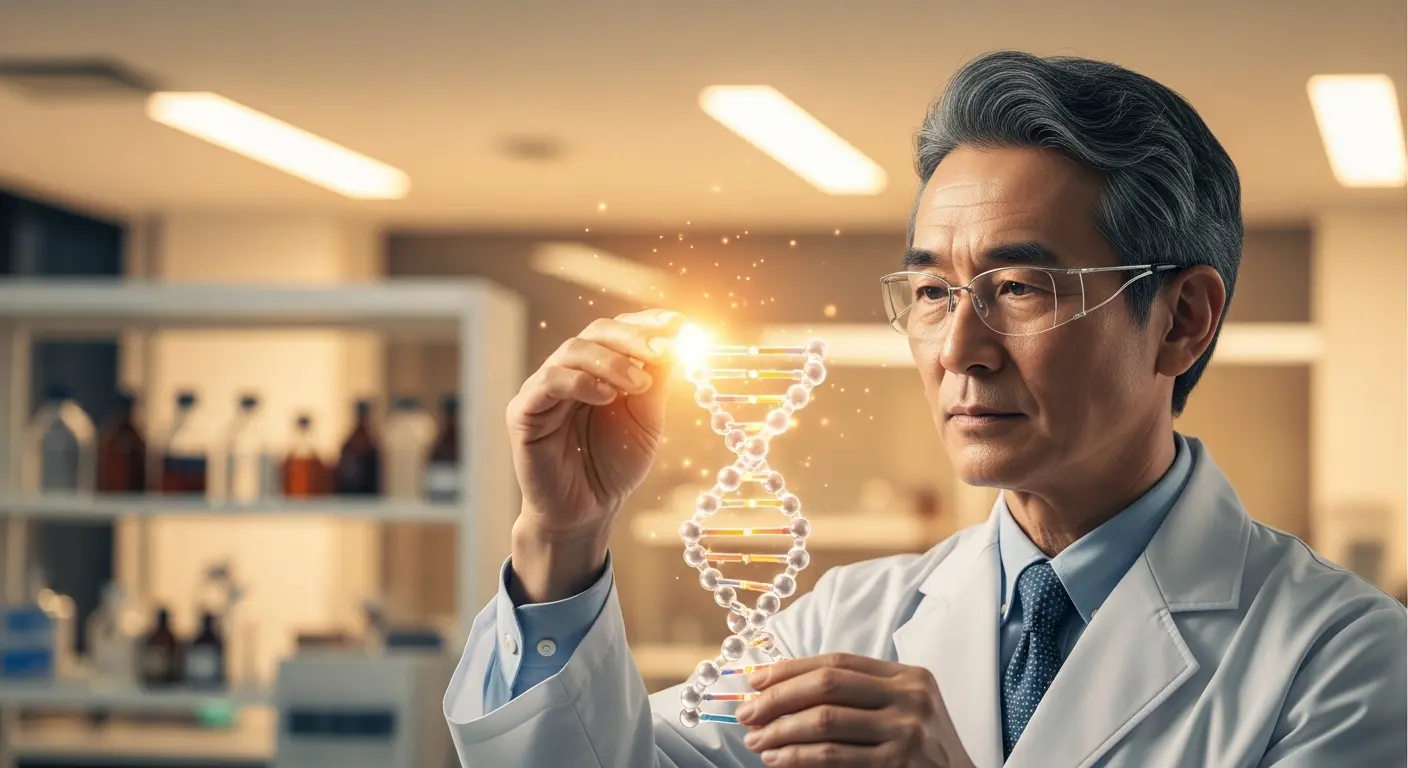
To begin with, why do we age at all? The wrinkles and gray hair that increase when we look in the mirror, the declining physical stamina — we tend to dismiss these simply as "getting older." But the aging defined by modern molecular biology is a much more physical phenomenon: the sum of concrete changes occurring at the cellular and molecular level.
The prestigious scientific journal Cell lists nine "Hallmarks of Aging": "genomic instability," "telomere attrition (shortening of the protective cap on chromosomes)," "epigenetic alterations," "loss of proteostasis," "deregulated nutrient sensing," "mitochondrial dysfunction," "cellular senescence (accumulation of old cells)," "stem cell exhaustion," and "altered intercellular communication" [ref:1]. In 2023, this classification was further expanded and redefined into twelve hallmarks [ref:2].
When we are young, our body's repair mechanisms function flawlessly, healing damage to DNA. It is estimated that our cells sustain tens of thousands of instances of DNA damage per day, but young, healthy cells can accurately repair the vast majority of it. However, as we age, errors in the repair system increase, and damaged cells fail to die off and instead linger as "old cells" (senescent cells), spreading inflammatory substances to the surrounding area. This phenomenon is called the "senescence-associated secretory phenotype (SASP)," and it is considered one of the causes of chronic inflammation that reduces whole-body function [ref:2].
In other words, aging is not some magical passage of time, but an accumulation of concrete physical malfunctions. As this way of thinking spreads, the approach to aging is shifting significantly from "something we can't help" to "something we can address."
The main mechanisms that cause aging
 The cause of aging is not a single factor; multiple mechanisms interact in complex ways. Here we explain in detail three mechanisms considered particularly important.
- Telomere shortening: Telomeres are protective structures at the ends of chromosomes. Each time a cell divides, its telomeres shorten slightly, and once they fall below a certain threshold, the cell loses its ability to divide. Telomere length is sometimes called the "cellular lifespan clock," and individuals with extremely short telomeres have been reported to face a higher risk of cardiovascular disease and reduced immunity [ref:5].
- Epigenetic changes: Even though the DNA sequence itself does not change, the chemical modifications that control how genes are "read" (such as DNA methylation and histone modification) change with age. These changes can silence genes that should be active or activate genes that should be suppressed, resulting in abnormal cell function. In recent years, an index called the "epigenetic clock" has been developed, making it possible to estimate biological age with high precision [ref:6].
- Mitochondrial dysfunction: Mitochondria are the cell's energy factories, but their efficiency declines with age, increasing the production of reactive oxygen species (ROS). Excess reactive oxygen species oxidatively damage DNA, proteins, and lipids, leading to a vicious cycle of further decline in cell function [ref:2].
These mechanisms do not operate independently; they interact with one another to accelerate the aging process. For example, telomere shortening increases genomic instability and promotes the accumulation of DNA damage. And the accumulation of DNA damage induces cellular senescence, with SASP factors released from senescent cells adversely affecting surrounding healthy cells as well.
\Learn your genetic tendencies for health risks, physical traits, and talents/
The global movement to reframe aging as a "disease"
Currently, in the world's most advanced medicine (geroscience), a paradigm shift is occurring in which "aging itself could become a treatable target." In conventional medicine, the mainstream approach has been to treat age-related diseases such as cancer, diabetes, heart disease, and dementia individually, in a "whack-a-mole" fashion. From the geroscience perspective, however, "aging itself" is regarded as the underlying cause common to all of these diseases, and it is thought that by addressing this root cause, multiple age-related diseases could be prevented or improved simultaneously [ref:7].
Indeed, during discussions over the revision of the World Health Organization's (WHO) International Classification of Diseases (ICD-11), the initial proposal of a code for "Old age" sent shockwaves through the medical community. Ultimately, the wording was settled on something like "decline in intrinsic capacity related to aging," but this reflects a global trend toward recognizing aging as a process open to medical intervention [ref:3]. This discussion is not merely a matter of classification — it has extremely practical implications, directly affecting the development of treatments for aging and the approval process for clinical trials.
The new era opened up by geroscience
What specific changes is progress in geroscience (the science of aging) bringing about? Research institutions and pharmaceutical companies around the world are investing enormous sums in developing treatments that target aging, and the results are being reported one after another.
For example, at the level of animal experiments, drugs called "senolytics," which selectively eliminate senescent cells, have been confirmed to extend the healthy lifespan of mice and delay the onset of age-related diseases. In addition, research on parabiosis — experiments that share blood circulation between young and old individuals to adjust specific proteins in the blood — has also yielded results suggesting the possibility of reversing aging [ref:7].
Thanks to the accumulation of such research, the recognition that "aging is not an inevitable fate, but a biologically addressable process" is no longer confined to a handful of forward-thinking researchers. In society at large as well, the shift in mindset from "anti-aging" to "healthy aging based on geroscience" is a result of this accumulation of scientific knowledge.
Can we control aging?
If aging is "accumulated damage," then, just as one repairs the parts of a car, it should be possible to halt its progression by fixing or preventing that damage. Indeed, multiple studies have shown that improving lifestyle habits — appropriate exercise, balanced nutrition, quality sleep, and stress management — can slow the rate of telomere shortening and delay the progression of the epigenetic clock.
However, there is an important fact we must not overlook here. That is, the speed and pattern of aging progression vary from person to person, and a significant portion of this individual variation is determined by genetic factors.
What should our approach be? Part of the answer lies in "genes." Research from institutions including the University of Cambridge has revealed that the speed and pattern of aging progression are deeply inscribed in our inborn DNA [ref:4]. This research showed that specific genetic variants are involved in accelerating or decelerating the rate of aging, shedding light on part of the reason why biological age can vary greatly between people of the same chronological age.
An era has arrived in which, by learning the genetic blueprint inherited from our parents, we can predict "which of my organs is prone to aging" and "which lifestyle habits pose a risk for me." This serves as the foundation for realizing, so to speak, "made-to-order aging care" tailored to each individual.
The significance of learning your "aging risk" through genetic testing
This movement has also begun domestically: since January 2026, the seeDNA Institute of Genetic Medicine has newly added an "aging speed" analysis item to its genetic testing kit. This test analyzes multiple genetic polymorphisms associated with aging and presents an individual's genetic aging risk as a score.
For example, people who carry certain variants in genes related to telomere maintenance may experience faster telomere shortening compared to those without such variants. It is also known that variants in genes involved in inflammatory response can raise the risk of chronic inflammation, which in turn becomes a factor that accelerates aging. By understanding these genetic tendencies in advance, it becomes possible to take more effective, scientifically grounded preventive measures.
Rather than blindly trying trendy health methods, the first step is to learn your own "aging type" based on scientific evidence. That, surely, is the most reliable first step toward "treatment" for wisely living through the age of the 100-year life.
\You can also learn your genetic tendencies for "aging speed"/
Next time, in the second installment, we will get to the heart of what everyone is most curious about: "Do drugs that slow aging really work?" We will explain the truth about anti-aging based on scientific evidence. We plan to organize and present the current evidence and challenges surrounding attention-grabbing anti-aging candidate substances such as senolytic drugs, rapamycin, and NAD+ precursors. Don't miss the next installment.
 Apply / Purchase Kit
Frequently Asked Questions
Q1. Why does aging happen?
A. Aging occurs as a result of multiple biological mechanisms acting in combination, including the accumulation of DNA damage, telomere shortening, cellular senescence (the accumulation of senescent cells), epigenetic changes, and mitochondrial dysfunction. When we are young, our cellular repair mechanisms function adequately, but as we age, repair errors increase and damage accumulates, leading to a progressive decline in whole-body function [ref:1] [ref:2].
Q2. Is aging a "disease"?
A. At present, aging itself is not formally classified as a "disease." However, as symbolized by the discussion of an "Old age" code considered during the WHO's ICD-11 revision, a global movement is spreading to reframe aging as a process open to medical intervention [ref:3]. In the field of geroscience (the science of aging), it is becoming the mainstream view that aging itself is the root cause of many age-related diseases.
Q3. To what extent do genes influence the speed of aging?
A. Research has shown that genetic factors have a certain influence on the rate at which aging progresses. Studies from institutions including the University of Cambridge have shown that specific genetic variants are involved in the rate of progression of biological age [ref:4]. That said, lifestyle and environmental factors also have a major impact, so it is important to understand your genetic risk and then put appropriate lifestyle habits into practice.
Q4. What can seeDNA's genetic testing reveal?
A. The DNA Score test from the seeDNA Institute of Genetic Medicine reveals genetic tendencies related to health risks, physical traits, and talents, and since January 2026 has also added an analysis item for "aging speed." It analyzes genetic polymorphisms related to telomere maintenance and inflammatory response, and reports an individual's genetic aging risk as a score. Because the test uses a kit that can be self-collected at home, it is easy to get started.
Q5. Can telomere shortening be prevented?
A. Completely stopping telomere shortening is considered difficult at present, but it is possible to slow its pace. Multiple studies have reported that lifestyle habits such as moderate aerobic exercise, a balanced diet, sufficient sleep, and stress management contribute to maintaining telomere length [ref:5]. In addition, by learning your own tendencies in telomere-related genes through genetic testing, you can take more targeted countermeasures.
Q6. What is geroscience?
A. Geroscience is an academic field that studies the relationship between the biological mechanisms of aging and age-related diseases. Whereas the conventional approach was to treat individual diseases separately, geroscience explores the possibility of simultaneously preventing or improving multiple age-related diseases — such as cancer, heart disease, dementia, and diabetes — by intervening in the aging process itself [ref:7].
The Reliable Support of the seeDNA Institute of Genetic Medicine
The seeDNA Institute of Genetic Medicine is a trusted and reliable specialist institution for DNA testing and genetic testing that holds the international quality standard ISO9001 and the Privacy Mark for personal information protection.
If you are troubled about family or parent-child blood relationships, or a partner's infidelity, our DNA testing specialists are here to support you with the reassurance you need, so please feel free to contact us.
[Free Consultation with Specialist Staff]

If you have any questions,
please feel free to contact our toll-free number.
\Open every day, including weekends/
Business hours: Monday to Sunday 9:00 AM - 6:00 PM
(excluding holidays)
 Author
Kihan Tomikin, M.D., Ph.D.
Graduated from the master's/doctoral program in Biosystem Studies at the University of Tsukuba
In 2017, developed Japan's first trace-DNA analysis technology (Patent 7121440)-based prenatal DNA testing (Patent 7331325)