
Rewrite date: February 20, 2026
There are clear individual differences in aging speed, and the foundation of these differences is etched into DNA (genes). This article explains, based on the latest research, the difference between chronological age and biological age, the differences in aging speed between organs, and how genetic testing can predict aging tendencies.
- ・Is aging speed different from birth?
- ・What is aging speed? The difference between chronological age and biological age
- ・Aging speed is not uniform within the body
- ・How aging speed affects lifespan and healthy life expectancy
- ・The relationship between aging speed and genes (DNA)
- ・Epigenetic clocks — measuring aging through DNA methylation
- ・Can aging speed be predicted?
- ・The benefits of learning your aging tendencies through genetic testing
- ・Conclusion: The first step in anti-aging is "knowing yourself"
Is aging speed different from birth?

"Why does that person look so much younger, even though we're the same age?"
Many people have wondered this at some point. In fact, this intuition is backed by science. There are clear individual differences in how aging progresses, and one reason lies in our DNA.
A large-scale longitudinal study conducted in 2015 as part of the Dunedin Study in New Zealand tracked around 1,000 people all born in 1972–1973, calculating each person's "biological aging rate per year" over the 12-year period from age 26 to age 38. The results showed that the slowest-aging individuals aged only 0.4 biological years for every chronological year, while the fastest-aging individuals aged at a pace of more than 2.4 years [ref:1]. In other words, among people who were all 38 years old chronologically, some had a biological age of 28 while others had a biological age equivalent to 60.
This is not merely a matter of "appearance" — it is an objective result derived from a comprehensive analysis of 18 different biomarkers, including cardiopulmonary function, kidney function, immune markers, and periodontal tissue health. Aging speed is determined by a combination of innate DNA influences and daily lifestyle environment, but the "genetic foundation" that serves as the starting point is believed to be the underlying driver of individual differences in aging speed.
What is aging speed? The difference between chronological age and biological age

An important concept when thinking about aging is the difference between chronological age and biological age.
| Category | Definition | Characteristics |
|---|---|---|
| Chronological age | Number of years since birth | Increases at the same rate for everyone |
| Biological age | Degree of functional decline in cells and organs | Highly variable between individuals |
Research shows that among people in their 30s, some have a biological age equivalent to someone in their 50s, while others in their 60s maintain physical function comparable to someone in their 40s [ref:1]. A youthful appearance is not simply a matter of cosmetics — it is a reflection of the aging speed progressing inside the body.
Common methods for estimating biological age include measuring blood biomarkers (inflammatory cytokines, telomere length, glycated hemoglobin, etc.) and analyzing epigenetic clocks (DNA methylation patterns), discussed below. In particular, in recent years the accuracy of epigenetic clocks has improved dramatically, making it possible to estimate biological age with high precision from blood or saliva samples [ref:4]. Thanks to these technological advances, "differences in how people age," which used to be discussed only subjectively, can now be quantified scientifically.
Aging speed is not uniform within the body

An important fact revealed by recent research is that aging speed differs between organs even within a single person.
A large-scale study published in Nature in 2023 by a research team including Stanford University analyzed the plasma proteome (blood protein profiles) of 5,676 participants, calculating individual aging speeds for 11 organs and systems, including the heart, kidneys, liver, immune system, brain, musculoskeletal system, and adipose tissue [ref:2]. This study revealed that about 20% of participants had at least one organ undergoing markedly accelerated aging, and found a strong correlation between organ-specific aging patterns and future disease risk.
Specifically, the following kinds of imbalanced aging can occur.
- Youthful-looking skin but an older vascular age
- Good physical stamina but early cognitive decline
- A healthy liver but advanced kidney aging
- An aging immune system that increases susceptibility to infection
Such imbalances in aging between organs are a blind spot that is easily overlooked by average whole-body health checkups alone. By understanding at the genetic level which organs are prone to aging, it becomes possible to pursue targeted care and early medical intervention.
How aging speed affects lifespan and healthy life expectancy
Differences in aging speed are not simply a matter of appearance. They are an important indicator directly linked to future healthy life expectancy and lifespan itself.
Organs and tissues that age quickly are more likely to become the starting point of disease in the future. For example, it has been reported that accelerated aging of the heart increases the risk of heart failure by about 250%, and accelerated aging of the brain significantly raises the incidence of Alzheimer's-type dementia [ref:2]. As a result, quality of life can decline, and this can become a factor that shortens lifespan.
Japan is one of the longest-lived countries in the world, yet there is reportedly a gap of about 9 years for men and about 12 years for women between average life expectancy and healthy life expectancy [ref:5]. Shortening this "unhealthy period" is one of the greatest challenges in modern preventive medicine, and doing so requires accurately understanding each individual's aging speed and taking countermeasures at an early stage.
In other words, going through life without knowing your own aging tendencies is essentially living without visibility into your own risks.
The relationship between aging speed and genes (DNA)
Individual differences in aging are shaped not only by lifestyle habits but also deeply by genes (DNA). DNA contains aging-related information such as the following.
- Resistance to oxidative stress (polymorphisms in antioxidant enzyme genes such as SOD2 and GPX1)
- Cellular repair capacity (DNA repair and telomere maintenance genes such as TERT and WRN)
- Tendency toward inflammatory response (expression tendencies of inflammatory cytokine genes such as IL-6 and TNF-α)
- Efficiency of mitochondrial function (differences in energy production efficiency based on mtDNA haplotype)
These genetic traits differ from birth and form the foundation of how aging progresses [ref:3]. According to a meta-analysis of twin studies, the heritability of lifespan is estimated at about 25–30%, with the remaining 70–75% attributed to environmental factors [ref:6]. However, DNA's influence on the "speed" of aging specifically may be even greater, and numerous genome-wide association studies (GWAS) have shown that specific gene polymorphisms (SNPs: single nucleotide polymorphisms) are strongly associated with the risk of aging-related diseases.
"Why are some people healthy despite unhealthy habits?"
"Why do I get tired so easily?"
Part of the answer lies in the genetic information that serves as our blueprint [ref:3]. People who are genetically resistant to oxidative stress accumulate less cellular damage even under the same lifestyle conditions, and as a result age more slowly. Conversely, people with genetically lower DNA repair capacity tend to accumulate more damage from UV exposure and stress, which accelerates aging.
Epigenetic clocks — measuring aging through DNA methylation
One of the most closely watched scientific methods for measuring aging speed in recent years is the epigenetic clock (DNA methylation clock).
Epigenetics refers to mechanisms by which gene expression patterns change without any change to the DNA sequence itself. It is known that the pattern of methyl groups added to specific sites on DNA (CpG sites) changes in a regular way with age, and by statistically analyzing this pattern, biological age can be estimated with high accuracy [ref:4].
Representative epigenetic clocks include the following.
- Horvath clock (2013): The first multi-tissue clock, using 353 CpG sites. Capable of estimating biological age across multiple organs
- Hannum clock (2013): A blood-based model using 71 CpG sites. Highly accurate for blood samples
- GrimAge (2019): A clock emphasizing correlation with mortality. A second-generation model incorporating smoking history and plasma protein correlations
- DunedinPACE (2022): A clock developed from the aforementioned Dunedin Study that directly measures the "pace of aging." Capable of estimating aging speed from a single-timepoint sample
These technologies are moving from the research stage to practical application, and along with the development of genetic testing services, the means for ordinary individuals to learn their own aging pace are becoming available. When an epigenetic clock value is higher than chronological age, it is judged as "accelerated aging"; when lower, it is judged as "decelerated aging."
Can aging speed be predicted?
Aging cannot be stopped entirely. However, it is possible to learn about your aging speed and tendencies. Genetic testing can be used to scientifically understand information such as the following.
- Which organs/systems are prone to aging
- Whether your constitution tends toward fast aging
- Future health risk tendencies (diabetes, heart disease, dementia, etc.)
- Genetic resistance to oxidative stress and inflammation
- Genetic factors affecting the rate of telomere shortening
What's important is that a genetic test result is not a "sentence of fate." If you learn that you carry a genetically elevated risk, focusing countermeasures on that area may help suppress accelerated aging. For example, if you learn that your antioxidant capacity is genetically low, targeted approaches become possible, such as eating a diet rich in antioxidants, using supplements, and strengthening UV protection.
Additionally, a 2024 Stanford University study suggested that there are periods, around age 45 and around age 60, when aging accelerates rapidly (accelerated aging waves) [ref:5]. Getting ahead of these "turning points in aging" by undergoing testing in advance could significantly affect future health.
The benefits of learning your aging tendencies through genetic testing
Understanding your aging tendencies through genetic testing offers the following concrete benefits.
① A personalized health strategy
By understanding your genetic weak points, you can build "countermeasures tailored to you" rather than following generic health advice. If your constitution is prone to kidney aging, you can strengthen sodium restriction; if your brain aging risk is high, you can prioritize cognitive training and quality sleep — enabling efficient health management.
② Use for early prevention and early detection
Once genetic risks are identified, you can focus on specific items during regular checkups, helping with early disease detection.
③ Increased motivation
Rather than doing "vaguely healthy things," taking evidence-based action helps sustain motivation for ongoing health management.
Conclusion: The first step in anti-aging is "knowing yourself"
What effective anti-aging requires is not trends or impressions, but an accurate understanding of your own aging risks. Learning your aging tendencies based on your genetic information is not a matter of random countermeasures — it is an important clue for building an evidence-based health strategy.
Aging is an unavoidable physiological process, but it does not progress uniformly. By understanding the aging tendencies etched into your genes and recognizing your own "weaknesses" and "strengths," you can focus your limited time and resources on the most effective countermeasures. This is precisely the "smart approach to aging" made possible by modern scientific progress.
To protect your future health and vitality, why not start by taking a look at the information contained in your own DNA?
\Discover your genetic tendencies for health risks, physical traits, and talents/
 Apply / Purchase a kit
Frequently Asked Questions
Q1. Is aging speed determined by genes alone?
A. No, it is not determined by genes alone. Twin studies estimate that heredity accounts for about 25–30% of lifespan, with the remaining 70–75% attributed to environmental factors such as diet, exercise, stress, sleep, and smoking [ref:6]. However, since genes form the "foundation" of aging, optimizing your lifestyle habits based on knowledge of your own genetic tendencies is the most effective approach to anti-aging.
Q2. How much difference can there be between chronological age and biological age?
A. According to the Dunedin Study (2015), among a cohort of people who were all 38 years old chronologically, biological age was estimated to range from as young as 28 for the least-aged individuals to over 60 for the most-aged individuals [ref:1]. In other words, people of the same chronological age can differ in biological age by more than 30 years.
Q3. Can aging speed be changed partway through life?
A. Yes. At the research level, it has been reported that interventions such as caloric restriction, moderate exercise, adequate sleep, and stress management can slow the rate of increase in biological age as measured by epigenetic clocks. While your genetic foundation cannot be changed, evidence suggests that lifestyle improvements can substantially mitigate genetic risk.
Q4. What specific aging risks can genetic testing reveal?
A. Genetic testing analyzes gene polymorphisms (SNPs) related to resistance to oxidative stress, DNA repair capacity, tendency toward inflammation, telomere maintenance capacity, and mitochondrial function efficiency. This allows you to understand which organs or systems are prone to aging and which lifestyle-related risks are genetically elevated for you.
Q5. Are there specific times when aging accelerates rapidly?
A. A paper published in 2024 by a Stanford University research team, based on a large-scale plasma proteome analysis, reported the existence of "accelerated aging waves" occurring around age 44 and around age 60 [ref:5]. Getting ahead of these periods by strengthening health management could significantly affect subsequent healthy life expectancy.
Q6. Can seeDNA's genetic testing be done at home?
A. Yes. With seeDNA's genetic testing, you simply collect a sample at home using the collection kit and mail it in — no clinic visit required. For details, please see the DNA Score page on the official seeDNA website. If you have any questions, feel free to contact us via our toll-free line (0120-919-097).
The reassuring support of seeDNA Genetic Medicine Research Institute
seeDNA Genetic Medicine Research Institute is a trusted specialist institution for DNA testing and genetic testing, holding both the international quality standard ISO 9001 certification and the Privacy Mark (P Mark) for privacy protection.
If you have concerns about family or parent-child biological relationships, or a partner's infidelity, our DNA testing specialists are here to provide reassuring support — please feel free to contact us.
[Free consultation with specialist staff]

If you have any questions,
please feel free to contact our toll-free line.
/Open every day, including weekends/
Business hours: Monday–Sunday 9:00-18:00
(excluding public holidays)
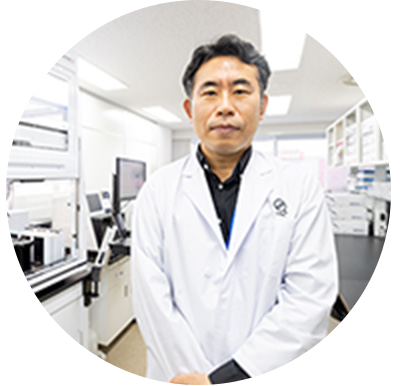 Author
Dr. Tomikane Kihan, M.D., Ph.D.
Master's/Ph.D. graduate, Doctoral Program in Biosystem Studies (Molecular and Regulatory Medicine), University of Tsukuba
In 2017, developed Japan's first prenatal DNA testing(Patent No. 7331325) using a trace-DNA analysis technology(Patent No. 7121440)