
Rewritten on: January 6, 2026
Is DNA testing (paternity testing) possible even after an abortion? A specialized institution explains in detail the types of fetal tissue, how testing works, differences based on abortion method and gestational age, and important precautions.
After choosing to have an abortion due to an unwanted pregnancy or various other circumstances, many people find themselves wanting to clarify who the father of the baby was.
The circumstances vary widely, from cases involving sexual assault to cases involving relationships with multiple partners. Confirming the father-child relationship carries important meaning both for clarifying legal responsibility and for helping victims achieve psychological closure [ref:7].
This raises the question: "Is DNA testing (paternity testing) possible even after an abortion?"
In conclusion, if fetal tissue removed during an abortion procedure has been properly collected and preserved, a specialized institution may be able to perform DNA paternity testing.
DNA analysis technology has advanced dramatically in recent years, making it possible to amplify and analyze DNA even from minute samples. On the other hand, the quality and preservation condition of the sample greatly affects the reliability of the results, so it is extremely important to coordinate with a specialized institution before the abortion takes place [ref:1][ref:5].
This article provides an easy-to-understand explanation of the types of fetal samples that can be used for testing, how the testing works, the differences depending on the abortion method, and important precautions.
- ・What Is DNA Testing After an Abortion?
- ・Types of Fetal Samples Used for Testing
- └ Chorionic membrane
- └ Placenta and umbilical cord
- └ Amniotic fluid
- ・The Basic Mechanism of Post-Abortion DNA Testing
- ・Differences by Abortion Method and Gestational Age
- └ Surgical abortion
- └ Medication abortion
- ・Benefits and Precautions of Post-Abortion DNA Testing
- └ Main benefits
- └ Precautions and limitations
- ・Key Points of Post-Abortion DNA Testing
- ・Summary
What Is DNA Testing After an Abortion?

DNA testing after an abortion refers to DNA profiling used to confirm a father-child or parent-child relationship, using fetal cells (fetal tissue) removed during the abortion procedure.
The fetal DNA is compared with the DNA of the mother and a candidate father, and the statistical probability that the candidate is the biological father is evaluated.
Specifically, the test relies on the genetic principle that a child inherits half of their DNA from the father and half from the mother. The portion of the fetal DNA profile that is not derived from the mother (that is, the alleles inherited from the father) is checked against the candidate father's DNA profile at multiple genetic loci. If there is no discrepancy at any locus, the probability of paternity exceeds 99.99%, providing an extremely high degree of certainty that the father-child relationship is confirmed [ref:1][ref:5].
This method has also been validated in the field of forensic science, and it has been reported that paternity testing using post-abortion fetal tissue is feasible [ref:1][ref:5].
In Japan, some specialized institutions handle DNA testing using post-abortion fetal tissue, one of which is the seeDNA Genetic Medical Research Institute.
However, not all medical or testing institutions offer this service, so prior consultation and coordination are necessary. In addition, depending on the condition of the fetal tissue and the degree of maternal cell contamination, testing may not be possible [ref:2][ref:5].
Post-abortion DNA testing is broadly divided into two types: "private testing" and "legal testing." Private testing is conducted for personal confirmation purposes, and in some cases can even be requested anonymously. Legal testing, on the other hand, is intended for submission to a court, and requires a strict chain of custody covering sample collection, transport, and storage. It is important to consult with a specialized institution in advance about which type of testing is appropriate for your purposes.
Types of Fetal Samples Used for Testing
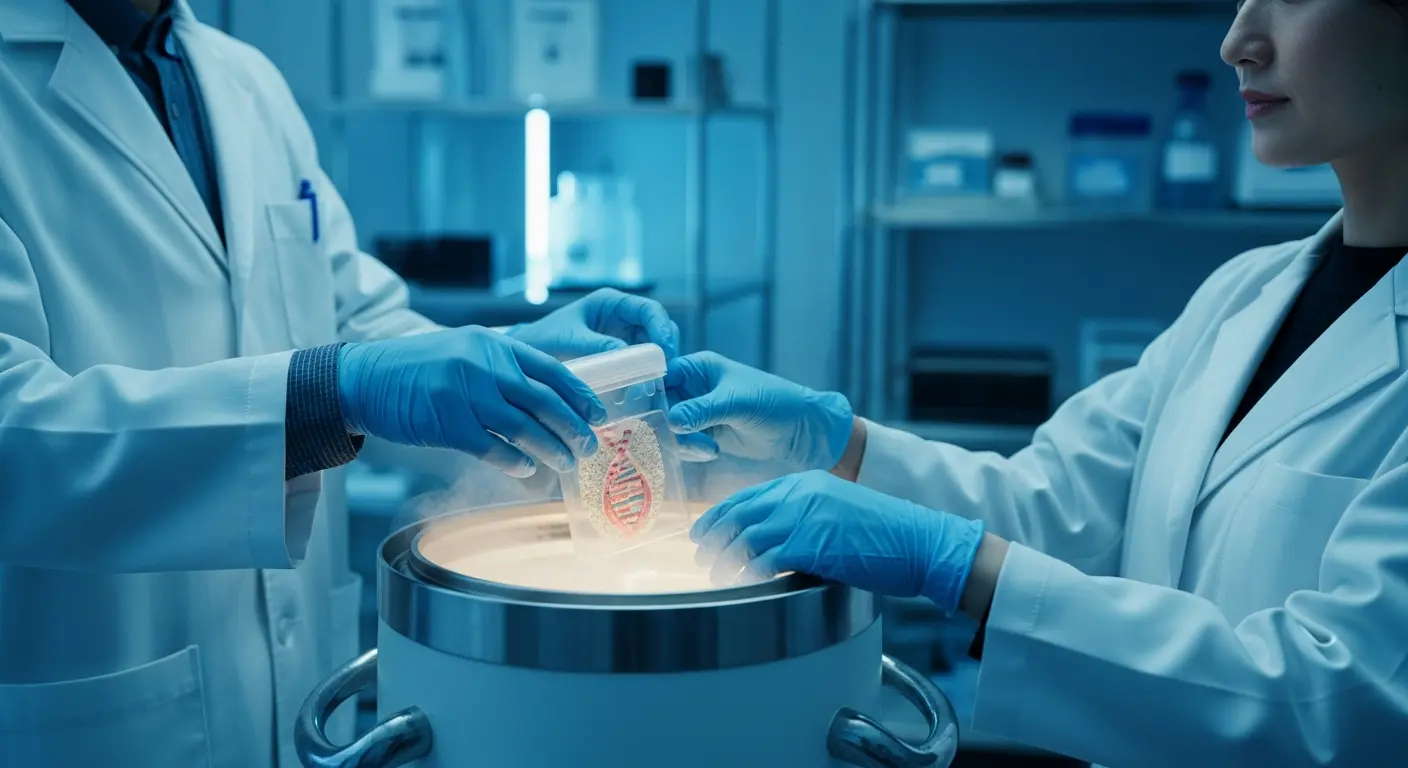
The fetal samples used for post-abortion DNA testing differ depending on the gestational age and the abortion method. The following types of tissue are primarily used.
Chorionic membrane
This is fetal-derived tissue collected during early-pregnancy abortions, and it is the tissue that eventually becomes the placenta. The chorionic membrane begins forming immediately after the fertilized egg implants in the uterine lining and proliferates most actively around 8 to 12 weeks of pregnancy. Because this tissue shares the same genetic information as the fetus, it can be used as a sample for DNA testing. However, since it is in close contact with the mother's decidua (the tissue formed by the transformed uterine lining), maternal tissue tends to mix in easily. Careful separation processing is required for DNA testing, and a step to check for maternal cell contamination before analysis is essential [ref:2][ref:5].
Placenta and umbilical cord
From the middle of pregnancy onward, the placenta and umbilical cord become clearly formed. The placenta is the organ responsible for exchanging nutrients and oxygen between the mother and the fetus, and the umbilical cord is the tube-like structure connecting the placenta to the fetus. These tissues are rich in fetal-derived DNA and allow for relatively stable DNA extraction, making them well-suited samples for testing [ref:3][ref:5]. In the case of a mid-pregnancy abortion (after 12 weeks), it is often possible to have these tissues properly collected and preserved by the medical institution after the procedure, and the sample quality tends to be high.
Amniotic fluid
When a pregnancy is continuing, amniotic fluid collected via amniocentesis contains fetal-derived cells and is used for prenatal paternity testing [ref:4]. The fetal cells contained in the amniotic fluid have shed from the fetus's skin, digestive tract mucosa, and urinary tract, and reflect the fetus's own DNA information. However, since amniocentesis carries risks such as membrane rupture and infection, the procedure is carried out carefully under the supervision of an obstetrician. Generally, around 15 to 18 weeks of pregnancy is considered the appropriate time for collection.
All of the samples described above contain fetal-derived DNA, but their quality is greatly affected by how they are preserved. After collection, it is recommended to refrigerate or freeze the sample as quickly as possible and transport it to a specialized testing institution.
- The chorionic membrane can be obtained during early pregnancy, but carries a high risk of maternal tissue contamination
- Placenta and umbilical cord tend to provide stable sample quality from the middle of pregnancy onward
- Amniotic fluid is collected via amniocentesis during an ongoing pregnancy, so the procedure differs from post-abortion testing
- For any sample, the management from collection through storage and transport greatly affects the test results
The Basic Mechanism of Post-Abortion DNA Testing

Post-abortion DNA testing is carried out using the same method of comparing DNA characteristics as a standard paternity test.
First, the fetal tissue collected during the abortion procedure is preserved refrigerated or frozen to prevent DNA degradation. Since DNA molecules break down rapidly due to heat, dryness, and bacterial growth, the shorter the time between sample collection and preservation, the higher the quality of DNA obtained.
Next, DNA is extracted from the fetus, the mother, and the candidate father, and genetic markers such as STR (Short Tandem Repeat) sequences are analyzed [ref:1][ref:5]. STR analysis typically uses multiplex PCR to simultaneously analyze 16 or more genetic loci, identifying the allele type at each locus.
Based on the degree of match across multiple genetic markers, a value called the "Probability of Paternity" is calculated to determine with high precision whether a father-child relationship exists. Generally, if the probability of paternity is 99.99% or higher, the relationship is judged to be "confirmed," and conversely, if mismatches are confirmed at three or more loci, the conclusion is "no father-child relationship" [ref:6].
However, fetal tissue may contain maternal cell contamination, which can affect the results. For this reason, analysis and separation procedures that account for Maternal Cell Contamination (MCC) are important [ref:2][ref:5]. When MCC is present, the fetal DNA profile may not be read accurately, creating a risk of a false negative (a father-child relationship being denied when it actually exists) or an inconclusive result.
In recent years, methods combining STR analysis with SNP (single nucleotide polymorphism) analysis have also been introduced, allowing for more precise differentiation between maternal and fetal DNA. Thanks to these technological advances, testing is now increasingly possible even in cases involving trace samples or suspected MCC that were previously considered too difficult to test.
Differences by Abortion Method and Gestational Age
The success or failure of post-abortion DNA testing largely depends on the abortion method and the gestational age. It is important to correctly understand the characteristics of each before deciding on the timing and procedure for requesting testing.
Surgical abortion
- Early abortion (up to 11 weeks 6 days)
Since uterine contents are removed by curettage or suction methods, DNA testing is possible if fetal tissue such as the chorionic membrane can be recovered. However, maternal tissue is likely to be mixed in, and the quality of the sample greatly affects the test results. In early abortions, the fetus's body is still very small, making it difficult in some cases to isolate fetal-derived tissue alone from the removed material. For this reason, it is important to inform the obstetrician performing the procedure in advance that you wish to secure a sample for DNA testing, and to ask for their cooperation in separately collecting fetal-derived tissue. - Mid-pregnancy abortion (12 weeks to 21 weeks 6 days)
Since the placenta and umbilical cord have already formed, relatively good samples can be recovered, making this period well-suited for DNA testing. Mid-pregnancy abortions are often carried out by inducing uterine contractions in a form similar to labor, which has the advantage of making it easier to recover the placenta and umbilical cord while keeping their shape intact. Because the sample quality tends to be stable, these samples are also easier for testing institutions to analyze. - After 22 weeks of pregnancy
Once a pregnancy passes 22 weeks, the fetus enters a stage where it has a certain likelihood of survival outside the womb, so legal restrictions become extremely strict, and abortion is, in principle, not permitted. Japan's Maternal Health Act stipulates that induced abortion is only indicated before 22 weeks of pregnancy, and this restriction must be observed without exception [ref:8].
Medication abortion
With medication abortion (using oral abortion pills), fetal tissue is expelled naturally, so
・the tissue tends to break apart easily
・it tends to mix with maternal tissue
・fetal-derived DNA is difficult to recover
For these reasons, securing a good-quality sample suitable for DNA testing is extremely difficult.
In 2023, an oral abortion medication (Mefeego Pack®) was approved in Japan, making medication abortion possible for early pregnancies up to 9 weeks 0 days. However, because it is difficult to control the timing and condition of tissue expulsion, deliberately securing a sample for DNA testing is not realistic. As a result, many testing institutions do not offer DNA testing using samples obtained after a medication abortion [ref:5].
If you are considering DNA testing, one option is to choose a surgical abortion instead of a medication abortion, or to undergo prenatal DNA testing (such as NIPPT) before the abortion.
Benefits and Precautions of Post-Abortion DNA Testing
Main benefits
- Clarifies the father-child relationship
By comparing fetal DNA with the DNA of a candidate father, the biological father can be identified with high precision [ref:1]. Because the result is based on scientific, genetic-level evidence, there is no need to rely on guesswork or speculation between the parties involved. - Prevents future disputes
Confirming the father-child relationship early helps reduce distrust between partners or family members and helps avoid future disputes. In particular, if issues such as child support, damages claims, or inheritance arise later, the results of DNA testing can serve as objective evidence. - Use in legal proceedings
If a sample is collected and managed following the proper procedures, it may be possible to conduct the test as a legal test that can be used as evidence in court or mediation proceedings.
*Whether this is possible must be confirmed with a specialized institution in advance. Since maintaining a chain of custody (an unbroken record of evidence handling) is a requirement for legal testing, the process must follow the testing institution's instructions from the sample collection stage onward. - Can also support victims of sexual assault
For victims of sexual violence, the results of DNA testing can serve as powerful evidence in identifying the perpetrator and pursuing legal responsibility. From the standpoint of victim support, it is recommended to coordinate in advance with a medical institution and a specialized testing institution regarding preservation of samples at the time of the abortion procedure [ref:7].
Precautions and limitations
- Testing may become impossible due to insufficient sample volume, damage, or maternal tissue contamination. This risk is especially high with early abortions, where only a minute amount of tissue is removed, so without prior arrangements, a sample may not be securable.
- Analysis must account for the risk of maternal cell contamination (MCC). The presence of MCC is checked during the sample pre-processing stage, and if contamination is found, additional separation procedures are carried out.
- Because the results can have a significant psychological impact, counseling or professional support should be considered as needed. In sexual assault cases in particular, care must be taken regarding how and when results are disclosed.
- Legal validity and sample handling requirements vary by case, so it is important to consult with a medical institution, testing institution, and a lawyer.
- If a sample was not preserved after the abortion, DNA testing cannot be performed later. If there is any possibility that testing may be needed, be sure to arrange for sample preservation before the abortion procedure.
Key Points of Post-Abortion DNA Testing
The key points regarding post-abortion DNA testing are summarized below for reference when considering testing.
| Item | Overview |
|---|---|
| Purpose of testing | DNA testing to confirm a father-child or parent-child relationship using post-abortion fetal tissue |
| Fetal samples | Fetal-derived tissue such as chorionic membrane, placenta, umbilical cord, and amniotic fluid |
| Parental samples | Oral epithelial cells, toothbrushes, hair, etc. from the mother and candidate father |
| Item | Overview |
|---|---|
| Compatible abortion methods | Primarily surgical abortion (medication abortion is not covered) |
| Gestational age | Early: chorionic membrane; Mid-pregnancy: placenta/umbilical cord; Ongoing pregnancy: amniotic fluid/chorionic villus sampling |
| Analysis method | STR/SNP analysis, etc., comparing DNA profiles of the fetus, mother, and candidate father |
| Item | Overview |
|---|---|
| Result | Father-child relationship evaluated as a probability of paternity (e.g., 99.99% or higher) |
| Main precautions | Sample condition, maternal tissue contamination, ethical considerations, legal requirements |
Summary
Post-abortion DNA testing is technically feasible as long as an appropriate sample has been secured, and it plays an important role in confirming a father-child relationship, preventing disputes, and supporting legal proceedings. The key points of this article are summarized below.
- DNA testing using post-abortion fetal tissue is technically possible if the conditions are met.
- In addition to fetal samples such as the chorionic membrane, placenta, umbilical cord, and amniotic fluid, samples from the mother and candidate father are also required.
- With medication abortion, securing a sample is difficult, and most testing institutions do not offer this service.
- Since sample quality greatly affects the test results, it is extremely important to coordinate with a specialized institution before the abortion.
- If you are considering post-abortion DNA testing, it is important to consult in advance with the medical institution performing the abortion as well as a specialized institution such as the seeDNA Genetic Medical Research Institute.
Confirming a father-child relationship is a decision that carries significant emotional weight for those involved. That is precisely why it is important to make decisions based on accurate information while receiving support from a trustworthy, specialized institution. The seeDNA Genetic Medical Research Institute offers free consultations regarding post-abortion DNA testing, so please feel free to contact us.
 Apply / Purchase a Kit
Frequently Asked Questions
Q1. Can DNA testing really be done after an abortion?
A. Yes, if fetal tissue removed during the abortion procedure (chorionic membrane, placenta, umbilical cord, etc.) has been properly collected and preserved, DNA paternity testing is possible. However, depending on the condition of the sample and the degree of maternal cell contamination, testing may be difficult in some cases, so please consult with a specialized institution in advance [ref:1][ref:5].
Q2. Can DNA testing be done after a medication abortion (oral abortion pill)?
A. With medication abortion, fetal tissue is expelled naturally, and the tissue tends to break apart and mix with maternal tissue, making it very difficult to secure a sample suitable for DNA testing. Many testing institutions do not offer testing using samples obtained after a medication abortion. If you are planning to undergo DNA testing, please consider choosing a surgical abortion or undergoing prenatal DNA testing before the abortion [ref:5].
Q3. Can the results of post-abortion DNA testing be used in court?
A. If the test is conducted as a legal test following the proper procedures (maintaining chain of custody, verifying identity, etc.), it may be possible to submit it as evidence in court or mediation proceedings. However, legal validity varies by case, so please confirm with a lawyer or specialized institution in advance.
Q4. What should I prepare before undergoing an abortion procedure?
A. If you are considering DNA testing, the most important step is to consult in advance with both the medical institution performing the abortion and a specialized DNA testing institution. Since fetal-derived tissue needs to be separately collected and preserved for testing purposes during the procedure, be sure to inform the doctor in advance that you wish to secure a sample for DNA testing. The seeDNA Genetic Medical Research Institute also provides dedicated sample preservation kits and support for coordinating with medical institutions.
Q5. If there is maternal cell contamination (MCC), does that mean testing is impossible?
A. The presence of maternal cell contamination (MCC) does not necessarily make testing impossible. Specialized institutions check for MCC during the sample pre-processing stage, and if contamination is found, they have the technology to isolate and analyze only the fetal-derived DNA through separation procedures or the combined use of SNP analysis. However, testing may not be possible if the level of contamination is severe or the sample volume is extremely small [ref:2][ref:5].
Q6. How long does it take to get the test results?
A. This varies depending on the condition of the sample and the type of test, but generally results are reported within 5 to 10 business days after the sample arrives at the lab. If there are issues with sample quality, additional analysis may be required, which can extend the turnaround time. For details on the expected timeframe, please contact the seeDNA Genetic Medical Research Institute.
Reliable Support from the seeDNA Genetic Medical Research Institute
The seeDNA Genetic Medical Research Institute is a trusted and reliable DNA testing and genetic testing institution that has obtained ISO9001 international quality certification and the Privacy Mark for privacy protection.
If you are concerned about family or parent-child blood relationships, or a partner's infidelity, our DNA testing experts are here to provide you with thorough, reassuring support, so please feel free to contact us.
[Free Consultation with Specialized Staff]

If you have any questions,
please feel free to contact our toll-free number.
\Open every day, including weekends/
Business hours: Monday - Sunday 9:00 AM - 6:00 PM
(excluding holidays)
 Author
Ph.D. / Genetic Analysis Lead: A.M.
Completed a Ph.D. program in Medicine at the Graduate School of Tokyo Medical and Dental University in 2015, after which worked as a specially appointed researcher and research assistant in the university's Department of Orthopedic Surgery.
Joined seeDNA Co., Ltd. in 2018 and has since been responsible for testing, data analysis, and research and development for over 5,000 STR tests and approximately 4,000 NIPPT tests.
Through a thorough commitment to accuracy and quality control, has maintained a record of "zero" testing errors.
Drawing on years of research experience and analytical skill, works daily to improve quality so that customers can feel safe and confident.
[References]
(2) SpringerLink, 2018
(3) free fetal DNA in amniotic fluid supernatant for prenatal diagnosis, 2016
(4) J Biol Chem, March 1997
(5) Legal Regulations on Prenatal Diagnosis and Preimplantation Diagnosis in Foreign Countries (National Diet Library)