
Revised: August 26, 2024
This article explains in detail the "post-divorce 300-day problem," in which a child born within 300 days of a divorce is presumed to be the child of the former husband, covering the intent of Article 772 of the Civil Code, the history of legal reforms, the issue of unregistered children, and the use of DNA paternity testing.
- ・"I want to confirm the biological father of a child born after divorce" (the post-divorce 300-day problem)
- ・The background and historical development of the "presumption of legitimacy" under Article 772 of the Civil Code
- ・Shortening of the remarriage prohibition period through legal reform and the post-divorce 300-day problem
- ・The Civil Code amendment effective April 2024 (Reiwa 6) — Reviewing the presumption of legitimacy system
- ・Specific cases where the post-divorce 300-day problem arises
- ・The serious problem of unregistered children
- ・The role of DNA paternity testing and the importance of scientific proof
- ・Future issues and social challenges
"I want to confirm the biological father of a child born after divorce" (the post-divorce 300-day problem)
 The post-divorce 300-day problem is a legal issue that arises when a child is born within 300 days after a divorce. Article 772 of the Civil Code stipulates that "a child conceived by a wife during marriage is presumed to be the husband's child," and further that "a child born after 200 days have passed from the date of marriage, or within 300 days from the date of dissolution or annulment of marriage, is presumed to have been conceived during the marriage" [ref:1].
Under this provision, if a child is born within 300 days after a divorce, the birth must legally be registered as the child of the former husband, even if the actual father is a new spouse or partner. Because the child is presumed to have been conceived while the couple was still married, the birth cannot be registered as the child of the new spouse even if that person is the biological father.
Many people may already be aware of this issue, as it has been covered in news and media and has even been woven into TV drama storylines. At our company, seeDNA, we receive a great many inquiries regarding DNA paternity testing related to the post-divorce 300-day problem.
The background and historical development of the "presumption of legitimacy" under Article 772 of the Civil Code
 The presumption-of-legitimacy system under Article 772 of the Civil Code originates from the old Civil Code enacted during the Meiji era. At that time, DNA testing technology as we know it today did not exist, so there was no scientific means of proving who the biological father of a newborn child was. The law therefore legally presumed that a child born to a married couple was the husband's child, with the aim of promptly establishing the child's legal status and providing early social protection [ref:1].
The "300-day" period was set based on the medical knowledge of the time regarding the maximum length of pregnancy. A pregnancy is generally considered to last about 280 days (40 weeks), but the figure of 300 days was adopted to account for individual variation. In other words, the provision was designed to cover the period during which a woman could plausibly have been pregnant at the time of divorce.
However, society and family structures have changed dramatically since this system was created. With rising divorce rates, an increase in remarriage, and above all the advancement of DNA testing technology that now makes it possible to scientifically prove biological parent-child relationships, it has long been pointed out that the 300-day rule is out of step with the realities of modern society [ref:2].
Shortening of the remarriage prohibition period through legal reform and the post-divorce 300-day problem
 On June 1, 2016 (Heisei 28), an amendment to the Civil Code was enacted that shortened the period during which women were prohibited from remarrying from six months (about 180 days) after divorce to 100 days after divorce. This amendment followed a Grand Bench ruling by the Supreme Court on December 16, 2015, which held that the portion of the remarriage prohibition period exceeding 100 days violated Article 14, Paragraph 1 of the Constitution (equality under the law) and Article 24, Paragraph 2 (essential equality of both sexes in marriage) [ref:3].
In addition, if a woman was not pregnant at the time of divorce, she became able to remarry even within the 100-day period by attaching a doctor's certificate. There had long been criticism of this law, questioning "why 300 days?" and arguing that it had no rational basis given the current state of medical knowledge, and calls for review of this outdated rule had been mounting. This amendment finally reflected these social conditions and concerns in the law.
However, although some believe that this amendment fully resolved the post-divorce 300-day problem, issues can still arise depending on the circumstances. Both before and after the amendment, a child born to a woman within 300 days of divorce (or within 200 days of remarriage) is still entered into the former husband's family register.
The Civil Code amendment effective April 2024 (Reiwa 6) — Reviewing the presumption of legitimacy system
As a further legal response to the post-divorce 300-day problem, an amended Civil Code was enacted in December 2022 (Reiwa 4) and took effect on April 1, 2024 (Reiwa 6) [ref:4]. This amendment made major changes to the presumption-of-legitimacy system itself.
The main points of the amendment are as follows.
- Even for a child born within 300 days after divorce, if the mother has remarried, the child is presumed to be the child of the new husband
- The remarriage prohibition period for women was completely abolished
- The scope of persons who may bring an action to deny legitimacy was expanded, so that the child and the mother can now also exercise the right of denial
- The filing period for an action to deny legitimacy was extended for the husband to three years from when he learns of the child's birth (previously one year)
With this amendment, even if a remarried woman gives birth within 300 days after divorce, the birth can now be registered as the child of the new husband. This is a major step toward resolving the 300-day problem, which has long been a social issue. However, in cases where the woman has not remarried, the child is still presumed to be the former husband's child as before, so not all cases have been resolved.
Specific cases where the post-divorce 300-day problem arises
The post-divorce 300-day problem seriously affects the lives of those involved in a variety of situations. Let's look at specific cases where this problem arises.
- When a couple has been separated before the divorce was finalized and has a child with a new partner: Even if a couple has been separated for a long period before the legal divorce is finalized, if a child is born within 300 days after the divorce, the child is presumed to be the former husband's.
- When divorce results from domestic violence: Even if a DV victim has a child with a new partner after divorce, the child may still have to be registered as the former husband's. For a victim seeking to sever all ties with an abusive former husband, this is an extremely serious problem.
- When divorce proceedings are prolonged: There are cases in which a child is born with a new partner while divorce proceedings, such as mediation or litigation, are dragging on.
- When giving birth without remarrying: Even after the Reiwa 6 amendment, if a woman gives birth within 300 days after divorce without having remarried, the child is presumed to be the former husband's.
The serious problem of unregistered children
The post-divorce 300-day problem is also closely linked to the issue of unregistered children. Some mothers, reluctant to register the birth as the former husband's child, give up on filing a birth registration altogether, leaving the child in an "unregistered" state without a family register.
According to a survey by the Ministry of Justice, as of 2023 (Reiwa 5) more than 4,000 unregistered individuals have been identified cumulatively, though it has been pointed out that the actual number of unregistered individuals may be even higher [ref:3]. Children without a family register may suffer a range of disadvantages, including:
- Difficulty accessing administrative services because no resident registration is created
- Difficulty obtaining a health insurance card, which can hinder access to medical care
- Difficulty completing school enrollment procedures
- Inability to obtain a driver's license or passport
- Obstacles to everyday procedures such as opening a bank account or signing a rental lease
- Inability to exercise the right to vote
In other words, being unregistered means legally not existing in society, which can fundamentally derail a child's life. Although Article 772 of the Civil Code was originally designed with the child's best interests foremost in mind, it has contained the contradiction of actually placing children in a disadvantageous position.
The role of DNA paternity testing and the importance of scientific proof
DNA paternity testing plays an extremely important role in resolving the post-divorce 300-day problem. Modern DNA testing technology is highly precise and can scientifically prove whether or not a parent-child relationship exists. Using a technique called STR (Short Tandem Repeat) analysis, a biological parent-child relationship can be proven, or completely ruled out, with a probability of 99.99% or higher [ref:5].
In legal proceedings such as actions to deny legitimacy or to confirm the non-existence of a parent-child relationship, DNA test results serve as compelling evidence. Courts are increasingly placing weight on DNA test results, and the determination of parent-child relationships based on scientific evidence continues to advance.
Our company, seeDNA, also offers prenatal paternity testing, making it possible to confirm a parent-child relationship even before birth. Using a non-invasive method that collects fetal DNA from the mother's blood during pregnancy, testing can be carried out while ensuring the safety of both mother and fetus.
Future issues and social challenges
Article 772 of the Civil Code was originally a law designed with the child's interests as the top priority. Its original purpose — to allow a child to receive social protection and be entered into a family register as quickly as possible — remains unchanged today. Parents, whether marrying or divorcing, must always keep their children in mind and take their parental responsibilities seriously, because it is children, not adults, who suffer the greatest harm from problems arising from these decisions.
In reality, however, various concerns and problems between couples lead to divorce, and the 300-day problem can create new difficulties as a result. The April 2024 amendment brought major progress, revising the presumption of legitimacy for remarried women and expanding the scope and extending the filing period for actions to deny legitimacy. Even so, issues remain that require further discussion, such as how to address cases where the woman has not remarried, and how to provide relief for those who became unregistered in the past.
The 300-day problem has still not been fully resolved, and many people first encounter this issue — and realize they themselves are affected — only when submitting a birth registration at a government office. To protect children's rights and welfare, further development of the legal system and rational solutions leveraging scientific technologies such as DNA testing are needed.
In the next article, DNA Paternity Testing and the Post-Divorce 300-Day Problem ② [Solving the Problem], we will introduce in detail the specific ways to resolve the 300-day problem and how DNA testing can be used.
Frequently Asked Questions
Q1. What is the post-divorce 300-day problem?
A. Under the presumption-of-legitimacy system in Article 772 of the Civil Code, a child born within 300 days after a divorce is legally presumed to be the former husband's child. Even if the actual father is someone else, the birth may have to be registered as the former husband's child.
Q2. Did the Reiwa 6 Civil Code amendment completely resolve the 300-day problem?
A. Not completely. Under the amendment, if the mother has remarried, the child is now presumed to be the child of the new husband, but if she gives birth within 300 days after divorce without having remarried, the child is still presumed to be the former husband's, as before.
Q3. How does DNA paternity testing help resolve the post-divorce 300-day problem?
A. In actions to deny legitimacy or to confirm the non-existence of a parent-child relationship, DNA test results serve as compelling evidence that scientifically proves a biological parent-child relationship. STR analysis can prove or disprove a parent-child relationship with an accuracy of 99.99% or higher.
Q4. What effects does being unregistered have on a child?
A. Being unregistered makes it difficult to create a resident registration or obtain a health insurance card, and it can also cause difficulties with school enrollment procedures, obtaining a driver's license or passport, opening a bank account, exercising the right to vote, and various other everyday procedures.
Q5. Who can bring an action to deny legitimacy?
A. Since the amended Civil Code took effect in April 2024 (Reiwa 6), in addition to the husband as before, the child and the mother can also now bring an action to deny legitimacy. The filing period has also been extended from one year to three years.
Q6. Is it possible to undergo DNA paternity testing before birth?
A. Yes, it is possible. seeDNA offers prenatal paternity testing (NIPPT). Using a non-invasive method that collects fetal-derived DNA from the mother's blood during pregnancy, a parent-child relationship can be confirmed while ensuring the safety of both mother and fetus.
Reliable Support from the seeDNA Institute of Genetic Medicine
The seeDNA Institute of Genetic Medicine is a trusted specialist institution for DNA testing and genetic testing, holding the international quality standard ISO9001 and the Privacy Mark for personal information protection.
If you have concerns about family or parent-child blood relationships, or a partner's infidelity, our DNA testing experts are here to support you with care and reassurance — please feel free to contact us.
[Free Consultation with Specialized Staff]

If you have any questions,
please feel free to contact our toll-free number.
/Open every day, including weekends/
Business hours: Monday–Sunday 9:00 AM–6:00 PM
(except public holidays)
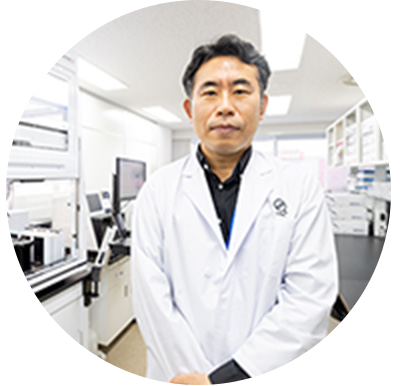 Author
Dr. Tomikane Kihan, M.D.
Graduated from the University of Tsukuba Graduate School, Master's/Doctoral Program in Biosystem Control and Molecular Information Medicine
In 2017, developed Japan's first trace-DNA analysis technology(Patent 7121440), using it to create a prenatal DNA testing method(Patent 7331325)