
Rewritten on: March 21, 2025
Infertility is a global social problem, and in many cases anxiety over marrying later in life leads to regret about the marriage. The genetic testing service "DNA Matching" is drawing attention as a service that scientifically evaluates genetic compatibility with a partner and can also check genetic risks for future children.
Infertility, a Growing Social Problem Worldwide
 The government announced a policy to apply public health insurance to infertility treatment starting in April 2022 [ref:1]. This decision is a major step forward for couples struggling with infertility, and is expected to ease the financial burden. Infertility is now a social problem not only in Japan but around the world. According to a report from the World Health Organization (WHO), about one in six people worldwide is estimated to experience infertility at some point in their lives, and infertility is now recognized not merely as an individual issue but as an important public health challenge [ref:2].
According to literature by Dr. Giulia Gueri and colleagues at Italy's MAGI'S LAB Institute of Medical Genetics, 8-12% of couples wishing to conceive struggle with infertility, and about 30% of them are diagnosed with idiopathic infertility (infertility of unknown cause) [ref:3]. Idiopathic infertility refers to a condition in which no clear cause is found even after general fertility testing—cases where pregnancy does not occur despite no abnormalities being detected in hormone levels, tubal patency, or semen analysis. This "unknown cause" diagnosis places a significant psychological burden on patients and also makes it difficult to determine a treatment plan.
The remaining approximately 70% of causes vary, but genetic factors have increasingly come to light in recent years. For example, advances in next-generation sequencing (NGS) technology have progressively revealed that chromosomal structural abnormalities, microdeletions, and single-gene mutations can all be causes of infertility [ref:4]. In male infertility as well, Y-chromosome microdeletions and CFTR gene mutations are known to cause impaired spermatogenesis and congenital bilateral absence of the vas deferens. On the female side, multiple gene mutations associated with premature ovarian insufficiency (POI) have also been identified, and understanding the genetic background plays an important role in personalizing infertility treatment.
Behind these causes lies the trend toward later marriage. In Japan, the average age of first marriage in Reiwa 1 (2019) was 31.2 for men and 29.6 for women, and this is projected to rise further [ref:5]. According to vital statistics from the Ministry of Health, Labour and Welfare, the average age of first marriage in the 1980s was around 28 for men and around 25 for women, meaning that over roughly 40 years the age has risen by about 3 to 4 years for both men and women.
It is widely known that the quality of both eggs and sperm declines with age in both men and women, making natural conception more difficult. For women, the number of eggs peaks at about 6 to 7 million during fetal development (around 20 weeks of gestation), decreases to about 1 to 2 million at birth, and falls further to about 300,000 by puberty. After age 35, the decline in both the quality and quantity of eggs accelerates, and fertility (the ability to conceive) drops markedly. In men as well, the rate of sperm DNA fragmentation has been reported to rise after age 35, affecting fertilization capacity and embryo development.
Women in particular face various risks associated with pregnancy at an advanced age, including an increased likelihood of fetal chromosomal abnormalities and a greater burden on the mother's body. For pregnancies at age 35 and above, the statistical risk of numerical chromosomal abnormalities such as Down syndrome (trisomy 21) rises, reaching about 1 in 100 at age 40 and about 1 in 30 at age 45 [ref:6]. In addition, the risks of obstetric complications such as pregnancy-induced hypertension, gestational diabetes, and placenta previa also increase with age, making health management and appropriate medical intervention before pregnancy increasingly important.
The Anxiety of Marrying Later in Life
 "I know I need to be careful about who I choose, but I still feel rushed..."
"I'm at what's considered a 'late' age for marriage, but I still want children..."
Many women, once they pass the average age of first marriage, feel this kind of anxiety about getting married. It is not at all uncommon for social pressure and awareness of the biological time limit to cloud calm judgment.
According to promarry, a comprehensive marriage-counseling information site, about 50% of people who married out of a sense of anxiety said they had "regretted getting married." This figure is quite striking, and it clearly shows how much anxiety can distort judgment on such a major life event. Because men and women start out as complete strangers, aligning their values takes a long time, and rushing into marriage or childbirth often leads to regret over mismatched values or personalities.
Several social and psychological factors lie behind the anxiety associated with marrying later in life. First, there is the feeling of "being left behind" caused by a rush of marriages and births among friends and acquaintances. There is also unspoken pressure from parents and relatives, and information about the "optimal age for pregnancy" covered in the media also fuels this anxiety. In addition, concerns about balancing career development with family life are a major factor.
- Anxiety about declining fertility with age
- Social pressure from those around you
- Conflict between career and the timing of childbirth
- Fear of "settling" when choosing a partner
- A vague unease about genetic compatibility and the future health of children
Problems arising from this kind of anxiety also greatly affect life after marriage. If you marry without fully assessing compatibility with your partner, you may face unexpected difficulties such as differences in lifestyle habits, disagreements over child-rearing philosophy, or even infertility rooted in genetic incompatibility. This is precisely why having a scientifically grounded way to check compatibility with a partner beforehand can be a valuable tool for easing anxiety and supporting more confident decision-making.
What Is the Genetic Testing Service "DNA Matching"?
 This is where our company's genetic testing service, "DNA Matching," comes in. By examining 1,525 DNA regions, it can scientifically evaluate the degree of genetic match with a partner. This test performs comprehensive genetic profiling, including polymorphism analysis of immune-related genes such as HLA (human leukocyte antigen) genes, to analyze the genetic complementarity of two people from multiple angles.
HLA genes play an important role in the immune system, and it has been suggested that the greater the HLA diversity between partners, the stronger the immune function of any resulting children may be [ref:4]. In addition, the well-known "T-shirt experiment" conducted by Swiss biologist Dr. Klaus Wedekind showed that women tend to prefer the body odor of men whose HLA type differs from their own, suggesting that genetic compatibility may influence mate selection at an unconscious level.
Under the concept of "for the child who will one day be born," this service also allows you to check the probability of passing on favorable genetic traits—such as talent and ability—to your children, as well as risks of genetic disease. Specifically, for autosomal recessive conditions (now often referred to as "autosomal recessive inheritance"), if both parents are carriers of the same disease, the probability that a child will develop the condition is 25%. DNA Matching screens for such carrier-carrier combinations in advance, allowing you to understand the genetic disease risk for a future child and, if necessary, connect with genetic counseling.
Key Items Checked by DNA Matching
- Scientific evaluation of the degree of genetic match with a partner
- Analysis of favorable genetic traits that may be passed on to children
- Screening for genetic disease risk and confirmation of carrier status
- Analysis of complementarity in immune-related genes
Our genetic testing is also carried out at our own laboratory in Japan, allowing us to report results at the lowest cost and the fastest speed. Unlike testing organizations that outsource to overseas laboratories, we maintain excellent precision in terms of sample transport time and quality control. Because results are provided with support from specialized staff, you can feel confident consulting with us about how to interpret your results and what actions to take next.
Benefits of Using Genetic Testing
Using genetic testing before marriage or while looking for a partner offers several important benefits. First, relying on scientific data allows you to choose a partner without depending solely on emotion or anxiety. Second, being able to understand health risks for future children in advance allows for necessary medical preparation and peace of mind. Furthermore, learning about the genetic compatibility between partners can also be an opportunity to understand your relationship more deeply.
Marriage and childbirth are major, once-in-a-lifetime events. If you have concerns about your relationship with your partner or about the children you hope to have in the future, we encourage you to try "DNA Matching" (a service scheduled to launch soon). By gaining scientifically grounded information, you can avoid being controlled by anxiety and take a step toward designing a life plan you can feel confident about.
Frequently Asked Questions
Q1. What exactly does DNA Matching test for?
A. DNA Matching is a genetic testing service that analyzes 1,525 DNA regions to scientifically evaluate genetic compatibility with a partner. It analyzes, from multiple angles, the complementarity of immune-related genes, genetic traits that may be passed on to future children, and the risk of genetic disease.
Q2. What is the relationship between infertility and genetics?
A. Genetic factors may be involved in roughly 70% of infertility cases. In men, Y-chromosome microdeletions and CFTR gene mutations can cause infertility, while in women, gene mutations associated with premature ovarian insufficiency can be a cause. Understanding these risks in advance through genetic testing can help guide the choice of an appropriate treatment plan.
Q3. What is the relationship between later marriage and infertility risk?
A. Because the quality of eggs and sperm declines with age, marrying later in life is directly linked to a higher risk of infertility. In particular, women experience a marked decline in fertility after age 35, and the risk of chromosomal abnormalities rises significantly after age 40. In men as well, the rate of sperm DNA fragmentation increases after age 35, which has been noted to affect fertilization capacity.
Q4. Where is the DNA Matching test conducted?
A. All of seeDNA's DNA Matching tests are conducted at our own laboratory in Japan. Because we do not outsource to overseas laboratories, sample quality control is thorough, allowing us to report results at the lowest cost and the fastest speed.
Q5. If genetic compatibility is not good, does that mean we can't have children?
A. A genetic compatibility score is simply a scientific reference indicator; "poor compatibility" does not mean "unable to have children." Even if a combination with a high risk of genetic disease is identified, that risk can be addressed through medical options such as genetic counseling or preimplantation genetic testing (PGT).
Q6. How long does it take to get test results?
A. Because testing is conducted at our own laboratory in Japan, results can be delivered faster than with overseas laboratories. Specific turnaround times will be announced in detail when the service launches, so please feel free to contact us.
Reliable Support from the seeDNA Genetic Medical Research Institute
The seeDNA Genetic Medical Research Institute is a trusted DNA testing and genetic testing specialist that holds the international quality standard ISO9001 certification and the Privacy Mark for privacy protection.
If you have concerns about family or parent-child blood relationships, or a partner's infidelity, our DNA testing specialists are here to provide reassuring support—please feel free to contact us.
[Free Consultation with Specialized Staff]

If you have any questions,
please feel free to contact our toll-free number.
/Open every day, including weekends/
Business hours: Mon-Sun 9:00 AM - 6:00 PM
(excluding holidays)
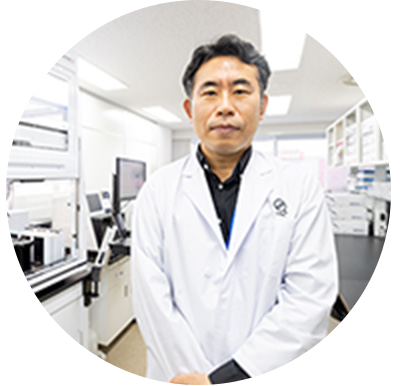 Author
Dr. Yoshinori Tomikane, M.D.
Completed the master's/doctoral program in Biological and Molecular Information Medicine at the University of Tsukuba Graduate School
In 2017, developed Japan's first prenatal DNA testing(Patent 7331325) using trace-DNA analysis technology(Patent 7121440)
[References]
(2) Journal of Japan Academy of Midwifery, Vol. 30, No. 3
(3) Probiotics Antimicrob Proteins, December 2020
(4) Overview of Reiwa 1 (2019) Vital Statistics Monthly Report, Annual Total (Provisional) | Ministry of Health, Labour and Welfare
(5) Clin Infect Dis, January 2017