
Rewritten on: March 18, 2025
We explain whether DNA testing can reveal your personality. We introduce the genetic links between brain neurotransmitters (dopamine, serotonin, and noradrenaline) and the three major temperaments (novelty seeking, harm avoidance, and reward dependence), and consider the possibilities and limitations of predicting personality through genetic analysis.
- ・Can DNA testing reveal your personality?
- ・Genetic tendencies in the three major temperaments and the secretion of brain neurotransmitters
- └ Novelty seeking and dopamine (DRD4 gene)
- └ Harm avoidance and serotonin (COMT gene)
- └ Reward dependence and noradrenaline (Clock gene)
- ・The relationship between the three major temperaments and genes/neurotransmitters
- ・Steps for predicting personality through DNA testing
- ・The interaction between genes and environment
- ・Summary
Can DNA testing reveal your personality?
 Previously, in an article titled "Can DNA testing be used for dieting?", we explained that, in conclusion, it currently cannot. Various images and impressions surround DNA testing, and many people aren't quite sure what it can and can't actually do.
So this time, we'll explain the truth behind the topic of "Can DNA testing reveal your personality?" along with the underlying mechanisms. The relationship between genes and personality has long been studied in the academic field known as behavioral genetics. Twin studies comparing the personalities of identical and fraternal twins have shown that about 30-50% of personality traits can be explained by genetic factors, providing scientific support for the idea that heredity has a non-negligible influence on personality formation [ref:5].
To begin with, personality is shaped by both innate biological temperament and acquired environmental factors. Innate temperament tends to be less changeable compared to personality traits acquired later through environmental factors over the course of one's life. For example, traits observed from early childhood—such as "activeness," "timidity," and "high sensitivity"—are called temperament, and they often form the basis of adult personality.
Environmental factors, on the other hand, refer to the various influences acquired after birth, such as the home environment one grew up in, education, culture, relationships, and life experiences. If genetic temperament is the "foundation" of personality, then environmental factors are like the "building" constructed on top of that foundation. What DNA testing can examine is, ultimately, only the genetic tendencies related to this "foundation."
Genetic tendencies in the three major temperaments and the secretion of brain neurotransmitters
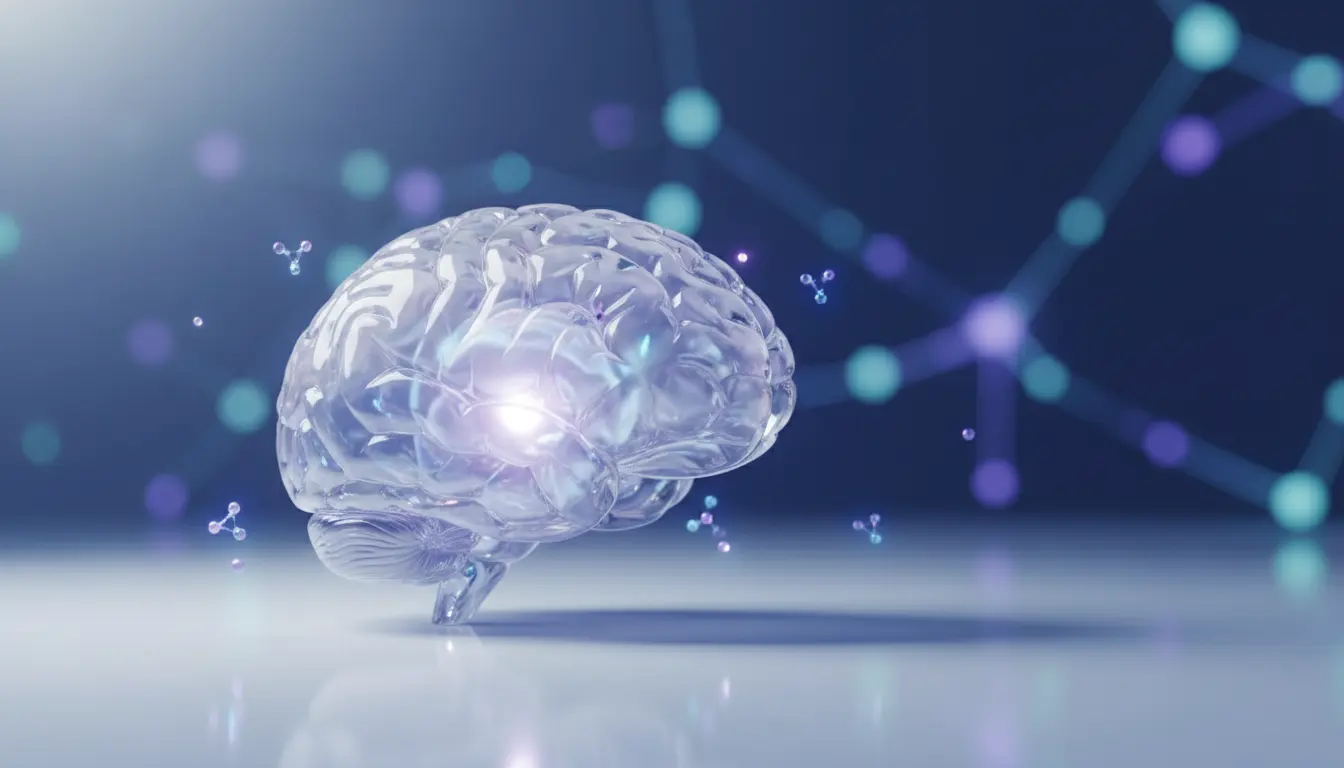 While there is no single gene responsible for individual personality traits, the relationship between personality and heredity has long been the subject of research, and it is known that personality is strongly influenced by brain neurotransmitters. Brain neurotransmitters are hormones used by nerve cells in the brain to exchange the information necessary for life activities. Over 100 types of neurotransmitters have now been identified, but the three most extensively studied in relation to personality are dopamine, serotonin, and noradrenaline.
According to research by Dr. Robert Cloninger of the Department of Psychiatry at Washington University School of Medicine and colleagues, it has been found that there are genetic tendencies linking the secretion of brain neurotransmitters to the three major temperaments of Novelty Seeking, Harm Avoidance, and Reward Dependence. Novelty seeking is linked to the secretion of dopamine, one of the brain's neurotransmitters, harm avoidance to serotonin, and reward dependence to noradrenaline [ref:1].
The "TCI (Temperament and Character Inventory)" proposed by Dr. Cloninger is a psychological test widely used around the world to systematically assess temperament and character. In this model, temperament is considered an automatic emotional response pattern with a biological and genetic basis, and it is characterized by relative stability against environmental factors.
Novelty seeking and dopamine (DRD4 gene)
First, people high in novelty seeking have genetic tendencies related to behavioral activation, such as being curious, impulsive, and prone to extravagance. This temperament is linked to the secretion of dopamine, a hormone responsible for functions related to pleasure, euphoria, excitement, and motivation. Dopamine plays a central role in the brain network known as the "reward system" and works to enhance motivation toward new experiences and stimuli.
According to a study by Dr. Ronai and colleagues at the Max Planck Institute of Psychiatry in Munich, it has been found that variants of the DRD4 (dopamine D4 receptor) gene, which produces the receptor that receives dopamine, are linked to novelty seeking [ref:2]. Specifically, a 48-base-pair repeat sequence (VNTR polymorphism) in exon 3 of the DRD4 gene has drawn attention, and multiple studies have reported that people carrying the "7R" variant—with seven or more repeats—tend to score higher on novelty seeking.
The characteristics of people high in novelty seeking can be summarized as follows.
- Actively seek new experiences and stimuli
- Have a strong curiosity and desire to explore the unknown
- Tend to act impulsively
- Dislike boredom and prefer environments with change
- May tend toward extravagance
Harm avoidance and serotonin (COMT gene)
Next, people high in harm avoidance have genetic tendencies related to behavioral inhibition—they are cautious and skilled at avoiding risk, but on the other hand tend to feel strong anxiety about the future and tire easily. This temperament is linked to the secretion of serotonin, a hormone that, in contrast to the excitatory effect of dopamine, relaxes the mind and sharpens mental clarity.
Serotonin is also known as the "happiness hormone" and is deeply involved in emotional stability, sleep quality, and resistance to stress. People with sufficient serotonin secretion tend to be more mentally stable and experience less anxiety and irritability. Conversely, low serotonin secretion is said to make people more prone to anxiety and cautious behavior patterns.
According to a study by Dr. Hashimoto and colleagues at the Department of Psychiatry, Osaka University Graduate School of Medicine, it has been found that variants of the COMT (catechol-O-methyltransferase) gene, which suppresses the action of dopamine, are linked to harm avoidance [ref:3]. The COMT gene has a variant called the Val158Met polymorphism, which alters the activity of the COMT enzyme and affects the metabolic rate of dopamine and other catecholamines. People with the Met variant have lower COMT enzyme activity, resulting in slower dopamine metabolism and a tendency toward higher dopamine concentrations in the prefrontal cortex.
Another important gene related to harm avoidance is the serotonin transporter gene (5-HTTLPR). People carrying the short variant (S allele) of this gene are said to be more prone to anxiety, and it has been reported that the S allele is particularly common in East Asian populations, including the Japanese [ref:6].
Reward dependence and noradrenaline (Clock gene)
People high in reward dependence have genetic tendencies related to the behavior and persistence needed to build relationships in society—they are warm-hearted and empathetic. This temperament is linked to the secretion of noradrenaline, a hormone with an arousing effect that heightens concentration and judgment and sharpens the mind.
Noradrenaline is also a key neurotransmitter of the sympathetic nervous system and plays an important role in the stress response. Moderate secretion of noradrenaline enhances attention and alertness, as well as sensitivity to social interactions. People high in reward dependence tend to be especially sensitive to approval and affection from others, and they place great value on social connection.
According to a study by Dr. Domine and colleagues at the Department of Psychiatry, Hirosaki University Graduate School of Medicine, it has been found that variants of the Clock gene, which regulates the body's internal clock, are linked to reward dependence [ref:4]. The Clock gene plays a central role in regulating circadian rhythms, and the discovery that its polymorphisms also affect temperament is a fascinating finding. Because the neural circuits involved in regulating circadian rhythm and mood/emotion overlap, it has been suggested that genetic variation in the body's internal clock may extend its influence to personality traits as well.
The relationship between the three major temperaments and genes/neurotransmitters
 The correspondence between the three major temperaments and their related neurotransmitters and genes is summarized below.
| Temperament | Neurotransmitter | Related gene |
|---|---|---|
| Novelty seeking | Dopamine | DRD4 |
| Harm avoidance | Serotonin | COMT |
| Reward dependence | Noradrenaline | Clock |
Steps for predicting personality through DNA testing
When genetic analysis is used to predict temperament, the process generally proceeds as follows.
- Collect a DNA sample from the buccal mucosa or saliva
- Amplify the target gene regions (DRD4, COMT, Clock, etc.) from the collected DNA
- Analyze gene polymorphisms (such as SNPs or VNTRs) to determine the genotype
- Compare the resulting genotype against past research data to estimate temperament tendencies
- Compile a report on the individual's temperament tendencies based on the results
However, it's important to note that what genes can predict is, at best, a "tendency" toward a certain temperament, and actual personality can change significantly due to environmental factors and personal experience. Moreover, recent genome-wide association study (GWAS) research is revealing that personality is not linked to a single gene but involves the complex interplay of hundreds to thousands of genes [ref:7].
The interaction between genes and environment
An important point to consider when thinking about how personality is formed is that genes and environment do not act independently—they interact with each other. This is a concept known as "gene-environment interaction (GxE)," meaning that even people with the same genotype may express different personality traits depending on the environment they were raised in.
For example, people carrying the short variant (S allele) of the serotonin transporter gene tend to be more prone to anxiety, but this tendency may be mitigated if they are raised in a stable home environment. Conversely, if raised in a high-stress environment, genetic vulnerability may become more pronounced. In this way, it is more accurate to understand genes not as "determining" personality but as providing the "raw material" for personality formation.
Summary
As described above, it is possible to some extent to predict the fundamental, innate temperament of a person through DNA testing. For example, someone high in novelty seeking and low in harm avoidance tends to be the type who can act quickly on a whim, while someone low in novelty seeking and high in harm avoidance tends to be the cautious type who prepares thoroughly before acting.
While the number of studies is still limited and there are differences between men and women, as research analyzing the genetic basis of neurotransmitters and personality continues to advance, the accuracy of predicting fundamental personality traits through DNA testing is expected to improve. In particular, recent advances in large-scale biobank data and genome-wide association studies (GWAS) have led to the successive identification of genetic variants related to personality. A large-scale GWAS meta-analysis published in 2019 reported more than 700 genetic loci associated with the Big Five personality traits [ref:7].
Japanese people tend to favor blood type fortune-telling when it comes to personality, but multiple large-scale studies have confirmed that there is no scientific basis for a link between blood type and personality. Predicting temperament through DNA testing, on the other hand, is a scientific approach based on the biochemical mechanisms of brain neurotransmitters. The day when DNA testing can diagnose an individual's personality may not be far off.
That said, genetic information only indicates a "tendency" in personality and does not determine a person's personality in its entirety. While DNA testing results can be useful for self-understanding and improving communication, it's important not to forget the significant influence that environment and experience have on personality formation.
Frequently Asked Questions
Q1. Can DNA testing reveal everything about your personality?
A. No, what DNA testing can reveal is only the innate "tendency" of your temperament. Because personality is shaped by both genetic and environmental factors, it cannot be fully determined by genes alone. Research indicates that about 30-50% of personality traits are explained by genetic factors, with the rest attributable to environmental factors.
Q2. What are the three major temperaments (novelty seeking, harm avoidance, and reward dependence)?
A. These are the basic temperament categories in the personality model proposed by Dr. Cloninger. Novelty seeking is linked to dopamine and influences curiosity and impulsivity, harm avoidance is linked to serotonin and influences anxiety and caution, and reward dependence is linked to noradrenaline and influences empathy and the value placed on social connection.
Q3. Does the type of DRD4 gene change your personality?
A. The DRD4 gene encodes the dopamine D4 receptor, and its polymorphisms (particularly the VNTR polymorphism in exon 3) have been reported to be linked to higher levels of novelty seeking. However, personality is not determined by a single gene alone but is formed through the combined influence of many genes and environmental factors.
Q4. What is the difference between blood type fortune-telling and personality diagnosis through DNA testing?
A. While the link between blood type and personality has been scientifically disproven, predicting temperament through DNA testing is a scientific approach based on the biochemical mechanisms of brain neurotransmitters. There is a clear mechanism by which specific gene polymorphisms affect the metabolism of neurotransmitters and receptor function, which is then reflected in temperament tendencies.
Q5. Will DNA testing be able to accurately predict personality in the future?
A. Through ongoing genome-wide association studies (GWAS) and the growth of large-scale biobank research, gene loci related to personality are being discovered one after another. In the future, methods such as polygenic risk scores (PRS), which integrate many genetic variants, are expected to improve the accuracy of predicting temperament. However, because environmental influence is always present, complete prediction is considered difficult.
Q6. Are there genetic personality tendencies unique to Japanese people?
A. The short variant (S allele) of the serotonin transporter gene (5-HTTLPR) has been reported to occur at a high frequency in East Asian populations, including Japanese people, and this has been suggested to be linked to heightened anxiety sensitivity. However, it should be noted that population-level differences in genotype do not directly determine national character, and cultural and social environmental influences also play a large role.
seeDNA Genetic Medicine Research Institute's Reliable Support
seeDNA Genetic Medicine Research Institute is a trusted DNA testing and genetic testing specialist, certified with the international quality standard ISO9001 and the Privacy Mark for personal information protection.
If you have concerns about family or parent-child blood relationships, or a partner's infidelity, our DNA testing experts are ready to support you with peace of mind, so please feel free to contact us.
[Free consultation with specialist staff]

If you have any questions,
please feel free to contact our toll-free number.
/Open every day, including weekends/
Business hours: Mon-Sun 9:00-18:00
(excluding public holidays)
 Author
Dr. Kihan Tomikane, M.D., Ph.D.
Completed a master's/doctoral program in Biosystem Studies and Molecular Informative Medicine at the University of Tsukuba Graduate School
In 2017, developed Japan's first trace-DNA analysis technology (Patent 7121440)-based prenatal DNA testing (Patent 7331325)