
Rewritten: March 15, 2025
A comparison of criminal investigations using DNA testing in Japan and by the American FBI. We explain in detail the number of DNA database registrations, differences in identification accuracy, and seeDNA's world-class individual identification technology.
- ・What is the reality of DNA-based criminal investigations in Japan and by the American FBI?
- ・The biggest difference: the number of DNA database registrations
- └ Comparing DNA database registration numbers between Japan and the US
- └ Challenges in operating DNA databases
- ・How high is the accuracy of DNA testing?
- └ The evolution of DNA testing technology
- ・seeDNA's world-class individual identification technology
- └ Why seeDNA's forensic genetic testing is chosen
- └ The future outlook for DNA testing
What is the reality of DNA-based criminal investigations in Japan and by the American FBI?
 The rapid advancement of science, technology, and the information society has had a major impact on criminal investigations aimed at solving cases. Among these advances, DNA testing has become an indispensable scientific technology used to identify perpetrators and secure evidence in criminal investigations.
DNA (deoxyribonucleic acid) is the genetic blueprint carried by every human being, and apart from identical twins, no two people are believed to share the same sequence. DNA testing's greatest strength lies in using this one-of-a-kind trait to identify individuals with high precision from trace amounts of biological material left at crime scenes [ref:4].
DNA testing was first introduced into criminal investigations in Japan more than 30 years ago. In the Ashikaga Case that occurred in 1989, DNA testing technology—still in its infancy at the time—was used in the investigation, but the limitations of the testing method were later pointed out, and a retrial ultimately resulted in an acquittal, sparking major debate over the accuracy and operation of DNA testing [ref:3]. Learning from this case, Japan's forensic science field has rapidly advanced both the accuracy of DNA testing and the establishment of proper operational systems.
How is DNA testing conducted in Japan's criminal investigations today? We compare Japan and the American FBI to introduce the reality and accuracy of DNA-based criminal investigations.
The biggest difference: the number of DNA database registrations
 The biggest difference between DNA-based criminal investigations in Japan and the United States is the number of registrations in their DNA databases. A DNA database stores DNA collected with consent from suspects and others, and is used in criminal investigations. The mechanism involves matching DNA collected from a crime scene against the records stored in the database to identify the perpetrator.
Comparing DNA database registration numbers between Japan and the US
| Item | Japan | United States |
|---|---|---|
| Number of registrations | Approx. 1.3 million (2019) | Over approx. 14 million (2020) |
| Ratio to population | Approx. 1 in 100 people | Approx. 1 in 23 people |
As of 2019, Japan's DNA database held approximately 1.3 million registrations, meaning about 1 in 100 Japanese people is registered. The United States, on the other hand, exceeded approximately 14 million registrations as of 2020, meaning about 1 in 23 Americans is registered. In the US, a nationwide unified DNA database system called CODIS (Combined DNA Index System) has been in full operation since 1998, and law enforcement agencies across states share data in coordination, greatly contributing to solving crimes that cross state lines.
Research has shown that criminal DNA databases reduce crime rates [ref:1], and in Japan as well, database searches produce 5,000 to 6,000 matches per year, helping to identify suspects and solve crimes. Database use is also powerful in solving unsolved cases (cold cases). DNA from evidence collected at a crime scene in the past can match the DNA profile of a suspect newly registered in the database, leading to the sudden resolution of cases that had gone unsolved for years.
Challenges in operating DNA databases
Expanding DNA databases directly improves the efficiency of criminal investigations, but at the same time, consideration for privacy and human rights is essential. DNA is often called the "ultimate personal information," containing sensitive information such as the risk of genetic disease and ethnic background. For this reason, it is extremely important to build a legal and ethical framework covering database management systems, strict restrictions on access rights, and prohibition of use for purposes other than intended [ref:5].
- Proper procedures and consent are required to collect DNA from suspects
- Establishing rules for deleting data in cases of acquittal
- Strict management of access rights to the database
- Establishing legal systems that prohibit use of genetic information for purposes other than intended
- Developing international standards for sharing DNA data
How high is the accuracy of DNA testing?
 Going forward, it will be an urgent task to increase the number of registrations in the DNA database and, along with that, to advance legislation for handling DNA as the ultimate form of personal information.
While Japan lags behind the United States in the number of DNA database registrations, how does it compare in terms of DNA testing accuracy? The FBI in the United States has set a guideline of being able to distinguish one person among approximately 600 trillion people. Meanwhile, DNA testing conducted by the Japanese police can now distinguish one person among approximately 565,000 trillion people using the latest testing methods [ref:2], enabling even more accurate individual identification. In other words, Japan's DNA testing accuracy is far higher.
The evolution of DNA testing technology
Looking back at the history of DNA testing, the evolution of the technology has been remarkable. Since Dr. Alec Jeffreys of the United Kingdom developed "DNA fingerprinting" in 1985, testing methods have advanced dramatically [ref:4].
- First generation: MCT118 method (1990s–) — The first DNA testing method adopted by the Japanese police. Since it analyzed only a single genetic locus, its accuracy was about 1 in 1,000 people.
- Second generation: STR method (2000s–) — By simultaneously analyzing multiple genetic loci (STR markers), accuracy improved dramatically, enabling identification of 1 in several million to several billion people.
- Third generation: next-generation STR method (2010s–) — By simultaneously analyzing an even greater number of STR markers, this achieved a remarkable accuracy of 1 in approximately 565,000 trillion people. This is the latest method currently used by the Japanese police.
In this way, the accuracy of DNA testing has improved by several hundred thousand times or more in just over 30 years, becoming a foundational technology that supports the reliability of the justice system, both in preventing wrongful convictions and identifying true perpetrators. In the near future, Japan's DNA database may hold the key to producing new investigative methods that overcome the current limits of investigation.
seeDNA's world-class individual identification technology
Using seeDNA's high-precision forensic genetic testing, we perform individual identification testing using hair, saliva, and other materials left at a scene to identify a specific person. Furthermore, our forensic genetic testing can accurately identify an individual's DNA even when the sample contains as little as 1% of that person's DNA.
With existing DNA testing conducted around the world, when the DNA of multiple people is mixed together, testing is not possible unless the target individual's DNA makes up at least 10% of the sample—meaning our testing accuracy is 10 times greater. As of June 2021, seeDNA is the only organization in the world capable of such high-precision DNA testing for individual identification.
Why seeDNA's forensic genetic testing is chosen
At crime scenes, it is not uncommon for the DNA of multiple people to be detected in a mixed state. Typical examples include bloodstains containing a mixture of the victim's and perpetrator's DNA, material left on a doorknob touched by several people, or mixed samples in sex crimes. With conventional testing technology, accurate identification was difficult when the target individual's DNA made up less than 10% of such a mixed sample.
With seeDNA's proprietary high-sensitivity analysis technology, it is possible to accurately identify an individual even from as little as roughly 1% of their DNA. This technology is especially powerful in situations such as the following.
- Identifying an individual from trace amounts of hair or saliva left at a crime scene
- Separating and identifying target DNA from samples containing mixed DNA from multiple people
- Extracting and testing DNA from samples that have degraded over time
- Handling extremely trace samples that were previously considered impossible to analyze with conventional testing
The future outlook for DNA testing
DNA testing technology is expected to make further leaps forward alongside the evolution of next-generation sequencing (NGS) technology. Using NGS technology makes it possible to obtain detailed genetic information that could not be gained through conventional STR analysis, and practical applications of "forensic DNA phenotyping"—estimating a perpetrator's physical characteristics (hair color, eye color, skin color, etc.) from DNA—are also progressing.
In addition, advances in environmental DNA (eDNA) analysis technology may in the future make it possible to collect and analyze trace amounts of DNA remaining in the air or water at a crime scene. Through these technological innovations, DNA testing will continue to grow in importance as a technology at the core of criminal investigations.
In this article, we introduced how DNA testing is used in criminal investigations in Japan, comparing it with the American FBI. At seeDNA, we perform individual identification testing to identify a perpetrator using hair, saliva, and other materials left at a crime scene.
Forensic Genetic Testing (Individual Identification)
Contact Us
Frequently Asked Questions
Q1. What kinds of criminal investigations is DNA testing used for?
A. DNA testing is used in a wide range of criminal investigations, including murder, sex crimes, theft, and robbery. DNA is extracted from trace amounts of biological material left at a crime scene, such as blood, saliva, hair, or skin fragments, and used to identify suspects or victims. It is also increasingly used in re-investigations of unsolved (cold) cases, where matching against a DNA database leads to identifying the perpetrator.
Q2. How accurate is DNA testing in Japan?
A. The latest DNA testing technology currently used by the Japanese police can identify one person among approximately 565,000 trillion people. This far exceeds the accuracy guideline of about 1 in 600 trillion set by the American FBI. In other words, since it can identify individuals at a scale far exceeding the entire population of the Earth, the probability of misidentifying the wrong person is effectively almost zero.
Q3. How does seeDNA's individual identification testing differ from typical DNA testing?
A. The greatest feature of seeDNA's individual identification testing is that it can accurately identify an individual even from as little as about 1% of DNA present in a sample. With conventional DNA testing, accurate results were difficult unless the target individual's DNA made up at least 10% of the entire sample, but seeDNA's technology achieves 10 times that sensitivity.
Q4. Is the personal information registered in the DNA database managed safely?
A. What is stored in a DNA database is DNA profile information used to identify an individual (such as the number of repeats in STR markers), and it does not directly include information about genetic disease risk or physical characteristics. However, because DNA is the "ultimate personal information," strict security measures and legal regulations are in place for handling this data. Further legislative development is expected to be needed in Japan going forward.
Q5. Can DNA testing prevent wrongful convictions?
A. Yes, DNA testing is an extremely effective tool for preventing wrongful convictions. In fact, in the past Ashikaga Case, advances in DNA testing technology led to a retest, which proved the innocence of the convicted person. With today's latest technology offering identification accuracy at the scale of hundreds of trillions of people, the possibility of misidentification is extremely low, greatly reducing the risk of mistaking an innocent person for the perpetrator.
Q6. Can old DNA samples left at a crime scene still be tested?
A. Yes, it is possible. DNA samples can degrade in quality over time, but with today's highly sensitive extraction and analysis technology, it is increasingly possible to detect DNA profiles even from samples that are decades old. seeDNA performs high-precision analysis that can handle trace amounts of DNA, making it capable of working with degraded samples as well.
seeDNA Genetic Medical Research Institute's Trusted Support
The seeDNA Genetic Medical Research Institute is a trusted, professional DNA testing and genetic testing institution that has obtained the international quality standard ISO9001 and the Privacy Mark for privacy protection.
If you have concerns about family or parent-child blood relationships, or a partner's infidelity, our DNA testing specialists are here to provide reassuring support, so please feel free to contact us.
[Free consultation with specialized staff]

If you have any questions,
please feel free to contact our toll-free number.
/Open every day, including weekends/
Business hours: Monday–Sunday 9:00-18:00
(except public holidays)
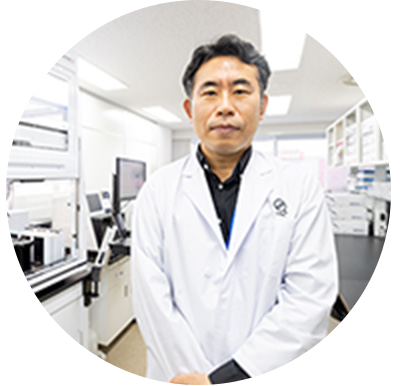 Author
Dr. Kihan Tomikane, M.D.
Completed a master's/doctoral program in Biological and Molecular Information Medicine at the University of Tsukuba Graduate School
In 2017, developed Japan's first prenatal DNA testing(Patent 7331325) using trace DNA analysis technology(Patent 7121440)